Gardening Made Simple.

Are you noticing yellow leaves spreading across your tomato plants? Treatment for Yellow Tomato Leaves is essential, as it helps restore your plants’ health, improve growth, and protect your crop from nutrient deficiencies, pests, or watering issues.
But don’t worry—understanding why this happens and how to treat it can save your plants and boost your harvest. You’ll discover simple, effective ways to bring your tomato leaves back to life. Keep reading to learn the easy steps you can take today to protect your plants and enjoy vibrant, healthy tomatoes.
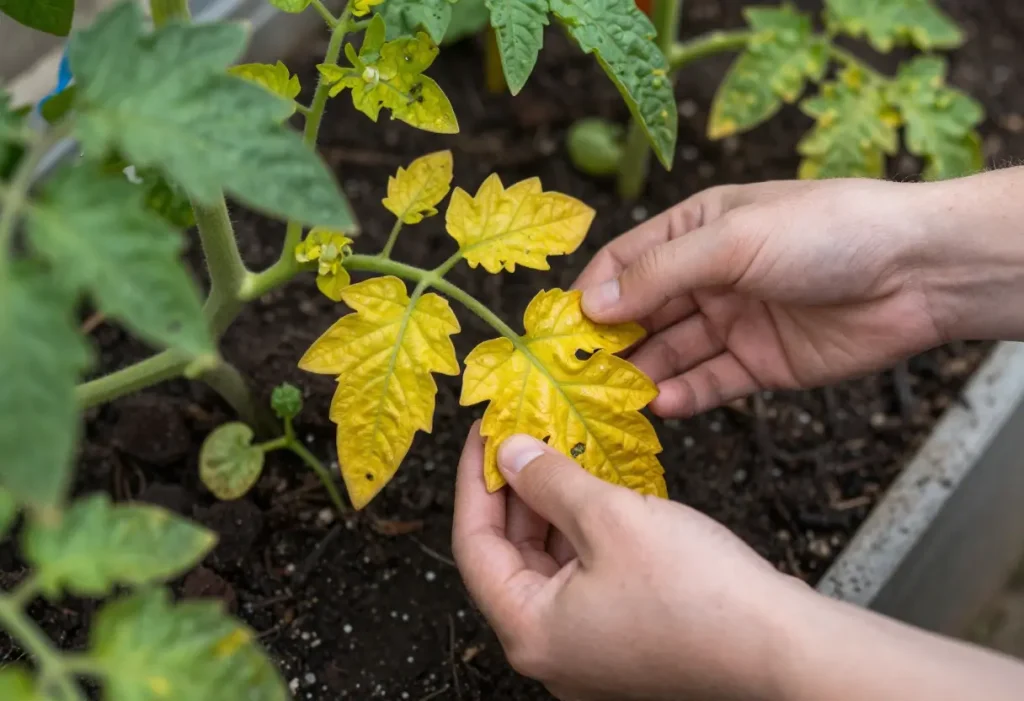
Yellow leaves on tomato plants cause concern for many gardeners. Understanding the causes helps fix the problem fast. Yellowing often signals trouble with the plant’s health. Several factors lead to this issue, from soil problems to pests.
Tomato plants need nutrients like nitrogen, potassium, and magnesium. Lack of these causes yellow leaves. Nitrogen deficiency turns older leaves yellow first. Magnesium shortage makes leaves yellow between veins. Regular feeding with balanced fertilizer keeps plants healthy.
Both too much and too little water cause yellow leaves. Overwatering drowns roots and stops oxygen flow. Underwatering stresses the plant and dries leaves. Keep soil moist but not soggy. Check soil before watering to avoid these problems.
Insects like aphids and whiteflies suck plant sap, causing yellow leaves. Diseases such as blight and wilt also turn leaves yellow. Look for spots, holes, or sticky residue. Treat pests and diseases early to save your tomatoes.
Extreme temperatures stress tomato plants, leading to yellow leaves. Too much sun or sudden cold affects leaf color. Poor soil drainage or strong winds also harm plants. Provide shade and proper shelter to protect your tomatoes.
Yellow leaves on tomato plants signal a problem. Identifying the exact cause helps treat the issue correctly. This section explains how to spot common problems that cause yellowing. Pay attention to signs in leaves, soil, and plant health. Early detection improves treatment success.
Yellow leaves often show nutrient shortages. Look for pale leaves with green veins. This pattern suggests iron deficiency. Uniform yellowing may mean nitrogen is low. Check leaf edges for brown or burnt spots. These signs help decide which fertilizer to use.
Too much water can drown roots and turn leaves yellow. Leaves may feel soft and look swollen. Underwatering causes dry, crispy yellow leaves. Soil moisture tests help find the problem. Keep soil moist but not soggy for healthy growth.
Insects like aphids and spider mites damage tomato leaves. Yellow spots or patches may appear. Check leaf undersides for tiny bugs or webs. Pests suck plant juices, causing discoloration. Treat infestations quickly to save the plant.
Fungal and bacterial diseases often cause yellow leaves. Look for spots, patches, or streaks on leaves. Wilting and leaf drop may also occur. Some diseases create mold or powdery coatings. Removing infected leaves helps control spread.
Nutrient management is key to treating yellow tomato leaves. Proper nutrients help plants grow strong and healthy. Yellow leaves often signal nutrient problems in the soil. Correcting these issues can bring your tomato plants back to life quickly.
Nitrogen is vital for leaf growth and color. Low nitrogen makes leaves pale or yellow. Add nitrogen-rich fertilizers to the soil. Use balanced amounts to avoid overfeeding. Watch leaves for improvement in a week.
Soil pH affects how plants absorb nutrients. Tomatoes prefer a pH between 6.0 and 6.8. Too high or too low pH can cause yellow leaves. Test the soil to find the pH level. Adjust with lime to raise pH or sulfur to lower it.
Organic fertilizers improve soil health naturally. They release nutrients slowly and feed beneficial microbes. Compost, manure, and fish emulsion are good options. Apply them around the base of the plants. This supports steady nutrient supply and greener leaves.
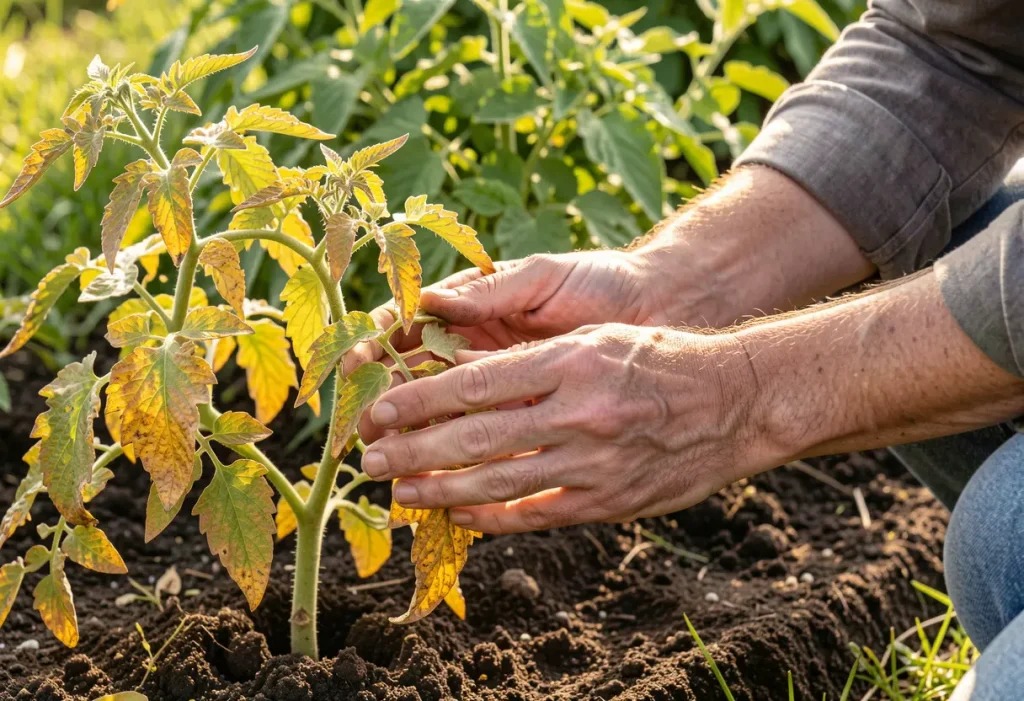
Watering techniques play a key role in treating yellow tomato leaves. Proper water care helps plants grow strong and healthy. It prevents stress that causes leaves to turn yellow. Simple changes in how you water can make a big difference.
Water tomato plants deeply but less often. This encourages roots to grow deep into the soil. Shallow watering causes weak roots and yellow leaves. Check soil moisture before watering again. Water when the top inch of soil feels dry.
Good soil drainage stops water from sitting around roots. Waterlogged soil leads to root rot and yellow leaves. Add sand or organic matter to heavy soil. Raised beds or pots with holes also improve drainage. Keep soil loose and airy for healthy roots.
Mulch keeps soil moist and cool. It reduces water evaporation and prevents soil from drying out. Mulch also blocks weeds that steal water and nutrients. Use straw, wood chips, or grass clippings around plants. Mulching helps maintain even soil moisture and supports leaf health.
Yellow leaves on tomato plants often signal pest or disease problems. Controlling these issues is key to healthy plants and good harvests. Prompt action can stop damage and improve plant growth.
Use neem oil spray to fight many common pests. It works against aphids, whiteflies, and spider mites. Mix with water and spray on affected leaves early morning or late evening. Soap sprays also help. They break down insect bodies safely. Introduce beneficial insects like ladybugs. These insects eat harmful pests naturally.
Choose insecticides carefully to control severe infestations. Use products labeled for tomato plants only. Follow instructions exactly to avoid plant damage. Apply fungicides for diseases like blight or leaf spot. Spray evenly and repeat as needed. Wear gloves and avoid spraying on windy days.
Keep plants spaced for good air flow. Remove old leaves and debris regularly. Water plants at the base to keep leaves dry. Rotate crops yearly to reduce disease buildup. Inspect plants daily to catch pests early. Healthy plants resist pests and diseases better.
Yellow tomato leaves often signal stress from the environment. Adjusting the surroundings helps plants recover and stay healthy. Small changes in temperature, light, and spacing improve leaf color and plant growth.
Tomato plants need steady temperatures. Too hot or too cold makes leaves yellow. Keep daytime temperatures between 70°F and 85°F. Nighttime should stay above 55°F to avoid stress.
Light is vital for healthy leaves. Tomatoes need at least six hours of direct sunlight daily. Too much harsh light can burn leaves. Use shade cloths to soften strong sunlight during peak hours.
Strong winds damage tomato leaves and stems. Use windbreaks like fences or bushes to shield plants. This protection reduces leaf damage and water loss.
Frost harms tomato leaves and causes yellowing. Cover plants with cloth or plastic sheets at night during cold weather. Remove covers in the morning to prevent overheating.
Crowded tomato plants compete for light and nutrients. Proper spacing improves air flow and reduces disease risk. Space tomato plants about 18 to 24 inches apart.
Good air circulation keeps leaves dry and healthy. Dry leaves resist yellowing caused by fungal infections. Proper spacing also helps sunlight reach all parts of the plant.
Yellowing leaves on tomato plants signal stress or poor health. Reviving these plants requires careful steps. Treating yellow leaves helps the plant recover and grow strong again.
Focus on removing damaged parts and supporting the plant’s needs. Regular care prevents further damage and boosts growth. Start with pruning, then improve care and watch closely.
Remove yellow leaves gently using clean tools. Cut at the base where the leaf meets the stem. This stops disease from spreading to healthy parts.
Pruning also allows more light and air to reach the plant. Better airflow reduces the chance of mold and pests. Only remove leaves that are fully yellow or dead.
Feed the plant with balanced fertilizer to replace lost nutrients. Water the tomato plant deeply but avoid waterlogging the soil. Keep the soil moist but not soggy.
Ensure the plant gets at least six hours of sunlight daily. Healthy roots and leaves help the plant fight stress. Mulching around the base keeps soil temperature stable.
Check the plant daily for new yellow leaves or pests. Early detection stops problems from worsening. Adjust watering and feeding based on plant needs.
Keep notes on plant progress and changes in leaf color. Consistent care over weeks helps the plant regain strength. Healthy leaves will return with proper attention.
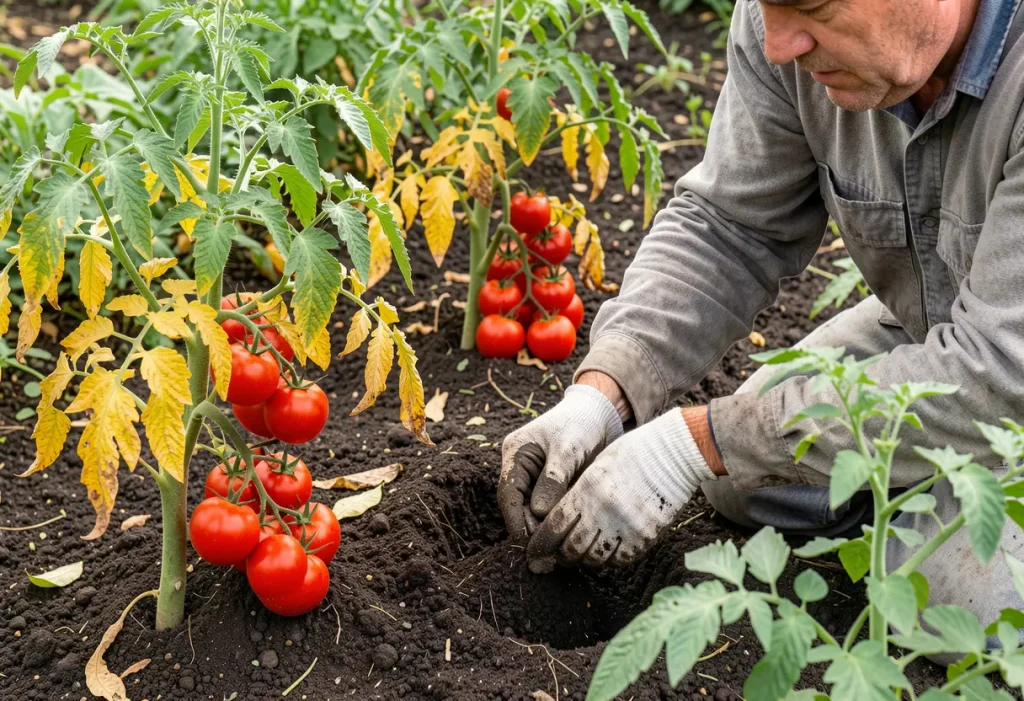
Yellow tomato leaves often mean the plant lacks nutrients or water. It can also be a sign of disease or pests. Check soil moisture and look for spots or bugs.
Remove the yellow leaves to stop disease spread. Water plants evenly and add balanced fertilizer. Use organic pesticides if pests are present.
Common causes include poor watering, nutrient deficiency, fungal infections, or pests. Stress from heat or cold can also cause yellowing. Identifying the cause helps choose the right treatment.
Yes, too much water drowns roots and blocks oxygen. This causes leaves to turn yellow and wilt. Let soil dry slightly before watering again.
Use well-drained soil and water regularly but not too much. Feed plants with tomato fertilizer every few weeks. Keep plants healthy by checking for pests often.
Yellow tomato leaves need quick care to stay healthy. Check plants often for signs of yellowing. Water them properly without making soil too wet. Use natural fertilizers to help leaves grow strong. Remove any badly damaged leaves to stop spread.
Keep plants in good sunlight and fresh air. With regular care, yellow leaves will improve soon. Healthy leaves mean better tomatoes for your garden. Simple steps make a big difference in plant health. Keep watching and caring for your tomato plants daily.