Gardening Made Simple.
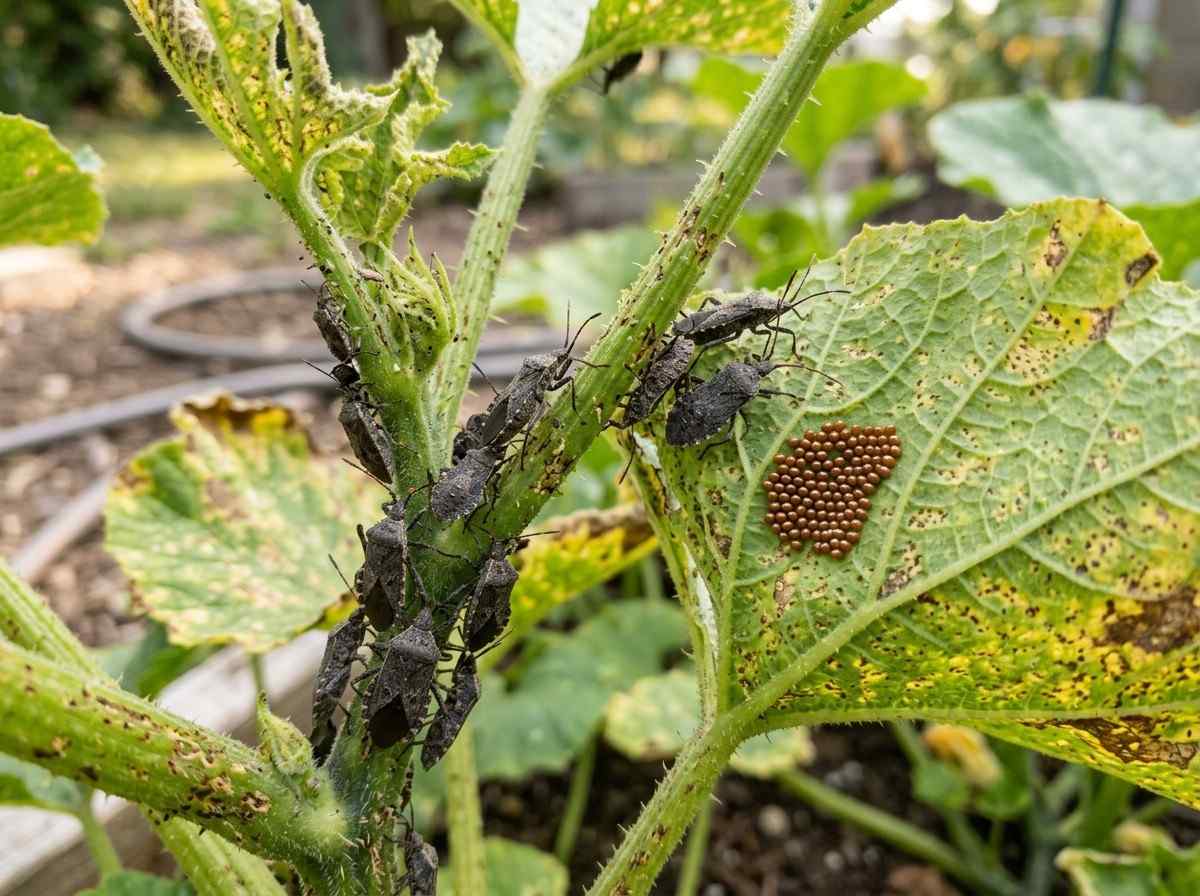
Squash bugs can ruin your garden in just a few weeks. If you grow squash, zucchini, pumpkins, or other cucurbits, you know how quickly these pests multiply and destroy plants. Their feeding weakens leaves, spreads disease, and makes fruit small or misshapen.
Learning How to Get Rid of Squash Bugs is essential for protecting your plants, preventing infestations, and maintaining a healthy, productive garden.
But you don’t have to let squash bugs take over. With the right methods, you can get rid of squash bugs and keep your plants healthy.

Many gardeners give up because squash bugs seem impossible to control. The truth is, you need a mix of smart strategies. Chemical sprays rarely solve the problem. Instead, you must understand how squash bugs behave, spot them early, and use targeted control.
This guide covers everything you need—from basic identification to advanced prevention. Let’s dive in and save your squash!
Identifying squash bugs is the first step. They look similar to stink bugs but have long bodies and orange stripes on their abdomens. Adults are about 5/8 inch long, dark brown or gray. They move slowly and hide under leaves.
Nymphs are smaller, with lighter colors and no wings.
Squash bugs lay eggs on the underside of leaves. Eggs are shiny, oval, and bronze. Each cluster has about 15–40 eggs. If you see these, act fast. Eggs hatch in 7–10 days, so checking weekly is important.
Squash bugs breed quickly. One female can lay hundreds of eggs per season. If you miss the eggs, the next generation will be harder to control. Early detection saves plants and reduces damage.
The simplest way to get rid of squash bugs is handpicking. It’s time-consuming but effective if your garden isn’t too large.
Handpicking works best in the morning when bugs are slow. Wear gloves, as squash bugs release a foul odor.
Physical barriers can keep squash bugs away from plants. Use row covers made of lightweight fabric. These covers let light and water pass but block insects.
Install row covers right after planting. Remove covers only when flowers appear and pollination is needed. Otherwise, bugs will get in.
Here’s a quick comparison:
| Method | Pest Reduction (%) | Cost | Ease of Use |
|---|---|---|---|
| Row Covers | 90-95% | Moderate | Easy |
| Handpicking | 60-70% | None | Labor Intensive |
| Insecticides | 30-60% | Low-High | Easy |
Row covers are one of the most reliable ways to prevent squash bug infestations, especially in small gardens.
Trap crops attract squash bugs away from your main plants. For example, plant blue Hubbard squash near zucchini or pumpkins. Squash bugs prefer blue Hubbard and will gather there. You can then remove them from the trap crop.
Companion planting also helps. Plant nasturtiums or marigolds near squash. These flowers repel squash bugs and attract beneficial insects.
Planting a row of blue Hubbard squash about 5–10 feet away from your main squash patch can reduce squash bug numbers by 50% or more. Check trap crops daily and handpick bugs before they move.
Some insects eat squash bugs. Encourage these natural predators in your garden:
Avoid broad-spectrum insecticides. They kill predators and make squash bug problems worse. Instead, keep your garden diverse and plant native flowers to attract helpful insects.
Research shows that gardens with more flowers and mulch have up to 40% fewer squash bugs due to increased predators.
| Garden Type | Squash Bug Reduction (%) | Predator Presence |
|---|---|---|
| Monoculture Squash | 10% | Low |
| Diverse Planting | 40% | High |
Neem oil is a common organic spray for squash bugs. It disrupts their feeding and reproduction. Mix 2 tablespoons of neem oil with 1 gallon of water and a few drops of dish soap. Spray leaves and stems weekly.
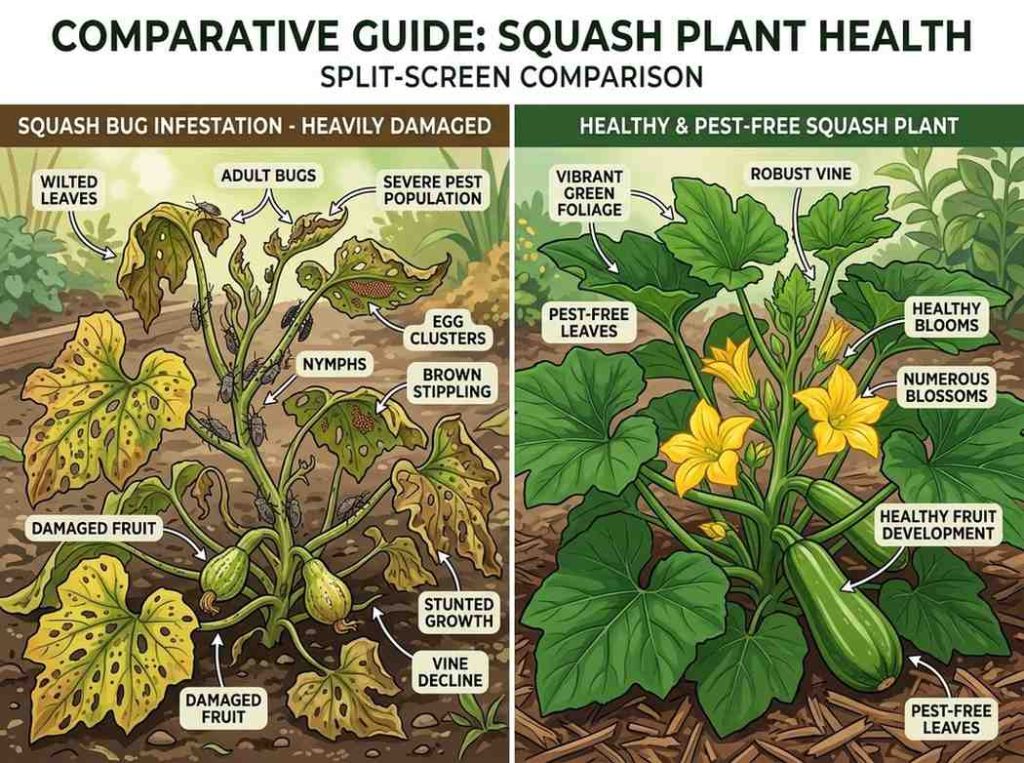
Other organic sprays include pyrethrin (from chrysanthemum flowers) and insecticidal soap. These work best on nymphs, not adults.
Neem oil is less effective on adults, but it slows down nymphs and eggs.
Squash bugs hide in plant debris and under mulch. Clean your garden regularly:
This reduces hiding spots and makes handpicking easier. Don’t compost infested plants; burn or bag them instead.
Crop rotation is a long-term solution. Squash bugs overwinter in garden debris and return to the same spot each year. Move squash to a new location every season.
Plant squash early if possible. Healthy, mature plants resist squash bug damage better. However, avoid late planting, as young plants are more vulnerable.
| Year | Plant Location | Expected Squash Bug Pressure |
|---|---|---|
| 1 | Garden Bed A | High |
| 2 | Garden Bed B | Low |
| 3 | Garden Bed C | Lowest |
Moving your squash every year can reduce squash bugs by up to 70%.
Chemical insecticides rarely work well against squash bugs. Adults are tough and hide under leaves. If you must use chemicals, choose products with permethrin or cyfluthrin. Always follow label instructions.
Spray only as a last resort, and target nymphs for best results. Avoid spraying during bloom to protect pollinators.
Many gardeners make errors when fighting squash bugs. Here are two non-obvious mistakes:
Another mistake is planting squash in the same spot every year. Rotate crops to break the pest cycle.
If you have large gardens, combine methods for best results. Use row covers, trap crops, and regular handpicking. Schedule weekly inspections and keep a garden journal to track bug sightings.
Install yellow sticky traps around squash patches. These attract adult squash bugs, making handpicking easier.
If your area has major squash bug problems, consider resistant squash varieties. Some types, like butternut squash, are less attractive to squash bugs.
A gardener in Kansas reduced squash bugs by 80% in one season. They used row covers, planted blue Hubbard as a trap crop, removed eggs weekly, and rotated squash beds. Their harvest improved, with larger, healthier fruit.
If your squash bugs return every year despite your efforts, consider contacting local extension offices. They offer pest identification and advice specific to your region. For more scientific information, visit the University of Minnesota Extension.

Squash bugs are longer and have orange stripes on their bellies. Stink bugs are rounder and green or brown, without stripes.
Yes. Squash bugs can carry yellow vine disease, which kills plants quickly. Watch for wilting and yellowing leaves.
Neem oil is safe if sprayed early or late in the day. Avoid spraying flowers directly. Bees are less active during these times.
Use mulch sparingly. Too much mulch gives squash bugs places to hide. Thin, dry mulch is best.
Butternut squash and some newer hybrid varieties attract fewer squash bugs. Try growing these if your garden has recurring infestations.
Getting rid of squash bugs takes patience and a mix of strategies. By combining handpicking, barriers, trap crops, and natural predators, you can control squash bugs without harming the environment. Remember to check plants often, remove eggs, and rotate crops.
With smart effort, your squash will thrive and your harvest will be safe.