Gardening Made Simple.

Acorn squash is a favorite among home gardeners and cooks. Its sweet, nutty flesh and firm texture make it perfect for roasting, stuffing, or simply enjoying with a bit of butter and salt. But growing acorn squash isn’t just about planting and watering—timing your harvest is crucial.
Picking too early means bland, watery squash. Waiting too long can lead to tough skin and flavor loss. Knowing when to harvest acorn squash is the key to getting the best taste, texture, and storage life.
This article guides you through everything you need to know about harvesting acorn squash. You’ll learn how to recognize signs of maturity, compare acorn squash to other varieties, avoid common mistakes, and handle your crop for maximum freshness. Along the way, you’ll find useful data, practical examples, and expert tips that most beginners miss.

Whether you’re a first-time grower or seasoned gardener, you’ll leave with confidence—and the best squash you’ve ever tasted.
Acorn squash, a member of the Cucurbitaceae family, grows on trailing vines and develops a distinctive ribbed, dark green skin. Like all winter squash, it needs time to mature fully on the vine before it’s ready for picking. But how do you know it’s truly ripe?
The most reliable way to judge acorn squash maturity is by skin color and texture. Mature acorn squash usually has:
If your squash is shiny, pale, or the skin can be punctured easily, it’s not ready. The presence of an orange spot isn’t a sign of overripeness; it’s normal and shows sun exposure during growth.
Most acorn squash varieties take 80–100 days from planting to harvest. If you know your planting date, you can estimate the harvest window. However, weather, soil, and plant health can influence the timing.
Acorn squash matures faster than many other winter squash. Let’s look at a quick comparison:
| Squash Variety | Days to Maturity | Skin Color at Harvest |
|---|---|---|
| Acorn Squash | 80–100 | Dark green with orange/yellow patch |
| Butternut Squash | 110–120 | Tan/beige |
| Spaghetti Squash | 90–110 | Yellow |
| Delicata Squash | 80–100 | Cream with green stripes |
Notice how acorn squash matures earlier, making it a good choice for shorter growing seasons.
Harvesting acorn squash at the right moment depends on several factors. Understanding these can help you plan and avoid mistakes.
Temperature and rainfall affect squash growth and ripening. Warm, sunny weather encourages faster maturity. If fall frost threatens, squash may need to be harvested early, even if not fully ripe.
Rich, well-drained soil promotes healthy vines and fruit. Poor soil can slow growth and delay maturity. Nutrient deficiencies may cause small or misshapen squash.
Strong vines produce better squash. Watch for signs of disease (like powdery mildew) or pest damage. Weak plants may not mature fruit properly.
Different acorn squash varieties have slightly different harvest windows. Always check your seed packet for the recommended days to maturity.
Most beginners don’t realize that overwatering late in the season can delay ripening and increase risk of rot. Reduce watering once fruit begins to mature.
Checking if your acorn squash is ready involves more than just looking at the color. Here are practical steps:
| Sign | Mature Squash | Immature Squash |
|---|---|---|
| Skin Color | Dark green, orange patch | Light green or shiny |
| Skin Texture | Hard, tough | Soft, easily scratched |
| Stem | Brown, dry | Green, moist |
| Sound | Solid | Hollow |
| Ground Spot | Orange/yellow | None or pale |
Knowing the ideal harvest window is important, but you must also watch the weather and calendar.
Most acorn squash are ready in late summer to early fall. Aim to harvest before the first hard frost. Frost can damage squash and shorten storage life.
Leaving squash too long on the vine can cause:
If you see signs of frost, pick all mature squash immediately.
Suppose you planted acorn squash in mid-May. By early September, check for maturity signs weekly. As days shorten and temperatures drop, prioritize harvesting those with dry stems and hard skin.
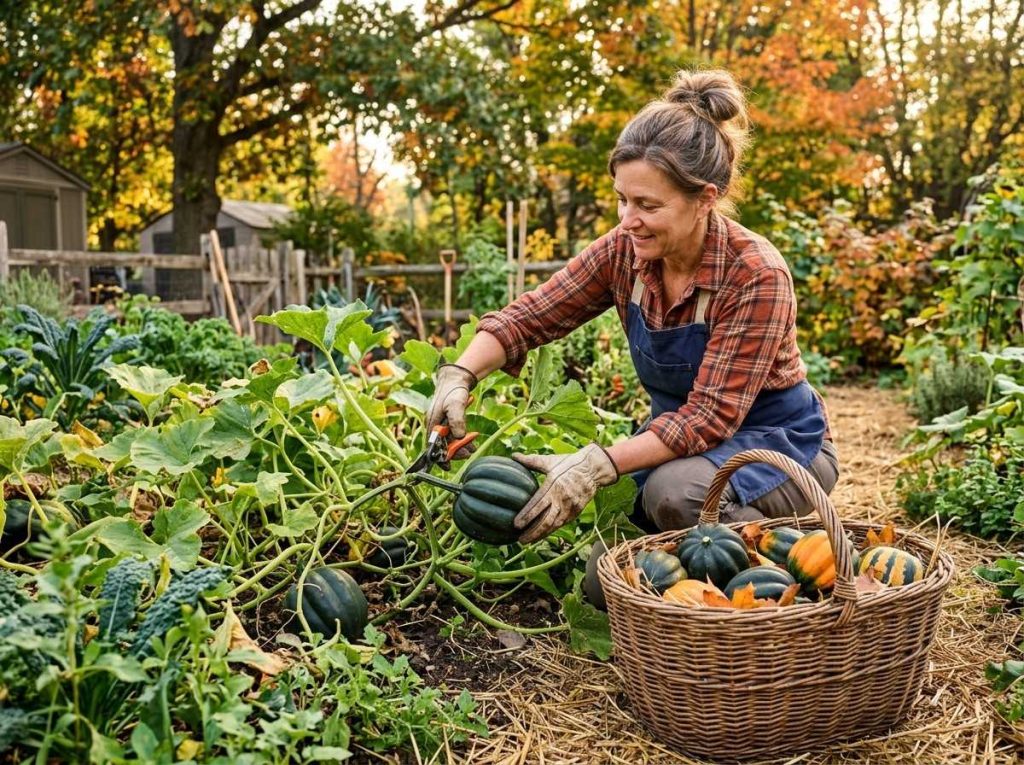
Harvesting is simple, but following a few steps ensures you get the best results.
Many beginners wash squash right after harvest. It’s best to leave them dry and only rinse before cooking to avoid mold growth during storage.

Even experienced gardeners can make errors that ruin the crop. Here are mistakes to avoid:
| Mistake | Impact | How to Avoid |
|---|---|---|
| Harvesting early | Bland flavor, poor storage | Wait for hard skin, dry stem |
| Harvesting late | Tough flesh, rot risk | Pick before frost, monitor maturity |
| Damaging stem | Quick spoilage | Use shears, leave stem |
| Washing squash | Mold in storage | Brush dirt, wash before cooking |
| Ignoring weather | Crop loss | Watch forecasts, harvest early if needed |
Proper handling after harvest is essential for keeping your acorn squash fresh and tasty.
Store acorn squash in a cool, dry place. Ideal temperatures are 50–55°F (10–13°C) with low humidity. Don’t store in the refrigerator; it’s too cold and causes texture loss.
Acorn squash keeps for 1–3 months if stored correctly. Unlike butternut squash, it doesn’t last all winter, so plan to use your crop before it spoils.
Keep squash in a single layer, not stacked, to avoid bruising. Space them so air can circulate. Don’t store near apples or other fruit that release ethylene gas, which speeds spoilage.
Inspect stored squash weekly. Remove any with soft spots, mold, or damaged skin.
A gardener harvested 25 acorn squash in September. She stored them in her basement, checking every week. Most lasted two months, but two developed soft spots—she used those immediately.
Once you’ve harvested your acorn squash, it’s time to enjoy it. Here are popular ways to use it:
Acorn squash is nutritious, with 45 calories per 100 grams, high in fiber, vitamin C, and potassium.
If you notice a slight bitterness, roasting longer can sweeten the flesh. Don’t discard squash for minor taste issues—cooking methods often improve flavor.
To understand the importance of timing, here’s a comparison of early and late harvests:
| Harvest Time | Flavor | Texture | Storage Life |
|---|---|---|---|
| Early (immature) | Mild, watery | Soft, less firm | Short (weeks) |
| Optimal | Sweet, nutty | Firm, tender | Long (1–3 months) |
| Late (overripe) | Bland or bitter | Fibrous, tough | Short (weeks) |
Experienced growers often share advice that goes beyond the basics. Here are two tips you might not find in beginner guides:
Some growers also recommend marking planting dates on a calendar and keeping notes about harvest timing each year. This helps you improve results season by season.
If you pick acorn squash before it’s mature, the flavor will be bland and watery. The skin will be too soft, and it won’t store well. It’s best to wait until the skin is hard and the stem is dry.
Acorn squash does not ripen much after picking. If you harvest slightly early, it may develop a bit more color, but the flavor and texture will not improve. Always aim for full maturity on the vine.
Frost can cause soft spots and rot on acorn squash. Watch your local weather forecast. If temperatures are predicted to drop below 32°F (0°C), harvest all mature squash before frost hits.
Squash with broken stems can spoil quickly. If the flesh is still firm and there’s no mold, it’s safe to eat—but use it soon. Avoid storing squash with damaged stems.
Keep acorn squash in a cool, dry place—ideally 50–55°F. Don’t refrigerate. Check weekly for signs of rot and keep squash in a single layer. With proper storage, acorn squash lasts up to three months.
Acorn squash is a rewarding crop. With careful attention to timing, you’ll enjoy sweet, flavorful squash all fall. By watching for key signs—hard skin, dry stems, and deep color—you can harvest at the perfect moment. Avoid common mistakes, handle your squash gently, and store it wisely. Whether you’re growing for the first time or looking to improve your harvest, these tips will help you get the best results. For more gardening advice, visit National Gardening Association. Happy harvesting!