Gardening Made Simple.

Growing your own vegetables brings a special satisfaction. Among root crops, turnips offer one of the fastest and most rewarding returns for your effort. Whether you have a big backyard or just a small patch of soil, turnips can be a great choice for beginners and experienced gardeners alike. They mature quickly, grow in many climates, and provide both edible roots and leafy greens.
Growing Turnips from Seed is a simple and cost-effective way to enjoy fresh, homegrown produce, and this guide will walk you through every step—from planting and care to harvesting healthy turnips in your own garden.

Turnips are one of the easiest root vegetables to grow from seed. They do not need complicated care, and their seeds are inexpensive and widely available. Turnips grow quickly: many varieties are ready to harvest in as little as 30–60 days. This makes them perfect for gardeners who like quick results or want to fill empty garden spaces between other crops.
Another reason to grow turnips from seed is their dual harvest. You can eat both the round white roots and the green leaves. Turnip greens are rich in vitamins A, C, and K, while the roots contain fiber and nutrients. Plus, growing from seed allows you to choose from a wide range of varieties, with different flavors, sizes, and colors.
Selecting the right variety is important for success. Some are best for their tender greens, while others are grown for sweet, crisp roots. Your climate and taste preferences will guide your choice.
Here’s a comparison of popular turnip varieties:
| Variety | Root Size | Days to Maturity | Best For |
|---|---|---|---|
| Hakurei | Small (2”) | 35-40 | Salads, raw eating |
| Purple Top White Globe | Medium (3-4”) | 50-60 | Cooking, storage |
| Tokyo Cross | Small (2”) | 35-40 | Quick harvest |
| Seven Top | No root | 40-45 | Greens only |
| Golden Ball | Medium (3”) | 60-70 | Sweet flavor |
For most home gardeners, Purple Top White Globe is a classic choice. If you want turnips for salads, try Hakurei or Tokyo Cross for their mild, crisp roots. For greens, Seven Top produces abundant, tasty leaves but little root.
Turnips prefer cool weather. They grow best when daytime temperatures are between 40°F and 75°F (4°C to 24°C). In most regions, you can plant turnip seeds in early spring for a late spring harvest, or in late summer for a fall crop.
Planting in midsummer is not ideal, as hot weather can make turnips tough or bitter.
You can also use the following timing guide:
Planting in late summer for a fall crop often produces the sweetest roots, as cool weather improves flavor.
Turnips need loose, fertile soil to develop round, healthy roots. Heavy or rocky soil can lead to misshapen turnips. Here’s how to prepare:
A common beginner mistake is planting seeds in hard soil, which limits root growth. Always break up clods and remove large stones before sowing.
Turnip seeds are small and easy to scatter. You can sow them directly in the garden—no need to start indoors.
Turnip seeds germinate best at soil temperatures between 45°F and 85°F (7°C to 29°C). If the soil is too cold or hot, germination may be slow.
After covering the seeds, water the soil gently but thoroughly. Keep the soil moist (not soggy) until seeds sprout, which usually takes 3–10 days. Avoid strong streams of water that can wash away seeds.
Turnip seeds often germinate in clusters. If seedlings are too close, roots will not grow well. Thinning is the process of removing extra plants to give each turnip enough space.
You can eat the young thinnings as baby greens in salads. Overcrowding is a common mistake; proper spacing is key for round, healthy turnips.
Turnips need consistent moisture, some nutrients, and protection from pests. Here’s how to care for your crop:
Turnips prefer even moisture. Dry soil can make roots tough or cause them to split. Aim for about 1 inch (2. 5 cm) of water per week, either from rain or by watering.
Tips:
If you prepared the soil with compost, extra fertilizer is often not needed. If growth is slow or leaves look pale, side-dress with a balanced fertilizer (such as 10-10-10) once or twice during the season.
Avoid high nitrogen fertilizers, as they encourage leafy growth but small roots.

Keep the area weed-free, especially while the plants are small. Weeds compete for water and nutrients. Hand-pull weeds or use a hoe, being careful not to damage shallow turnip roots.
Mulching helps keep soil moist and cool. Use straw, shredded leaves, or grass clippings. Mulch also reduces weed problems.
Turnips are usually easy to grow, but some pests and diseases can affect them. Early action helps prevent big losses.
Ways to reduce pests:
To reduce disease:
Knowing when and how to harvest is key to getting the best flavor and texture.
Turnip roots are ready when they reach the size listed on the seed packet, usually 2–4 inches (5–10 cm) in diameter. Smaller roots are tender and sweet; if left too long, they can become woody or bitter.
Turnip greens can be picked when leaves are 4–6 inches (10–15 cm) long. Cutting outer leaves allows the plant to keep growing.
Tip: Harvest in the morning for the freshest taste.
Turnips store well, making them a reliable crop for winter use.
For longer storage, turnips need cooler temperatures and high humidity.
| Storage Method | Temperature | Humidity | Storage Life |
|---|---|---|---|
| Root cellar | 32–40°F (0–4°C) | 90–95% | 4–5 months |
| Refrigerator crisper | 35–40°F (2–4°C) | 90% | 2–3 weeks |
| Sand or sawdust box | 32–40°F (0–4°C) | High | 3–4 months |
Before storing, cut off greens to prevent moisture loss from the roots.
If you want to save your own seeds for next year, remember that turnips are biennial. This means they flower and set seed in their second year, after a period of cold weather.
Steps:
Tip: Turnips can cross-pollinate with other brassicas like Chinese cabbage and rutabaga. If you want pure seeds, isolate your plants or grow only one brassica type for seed.
Turnips do well with many garden crops. Planting the right neighbors can help with pest control and space use.
Good companions:
Avoid planting near:
Both turnip roots and greens are versatile in the kitchen.
Try simple recipes like roasting diced turnips with olive oil and herbs, or cooking greens with garlic and a splash of vinegar.
Including turnips in your garden rotation helps prevent soil disease and improves soil structure. Avoid planting turnips in the same spot more than once every three years. Rotate with crops from other families, such as beans or grains, to break pest and disease cycles.
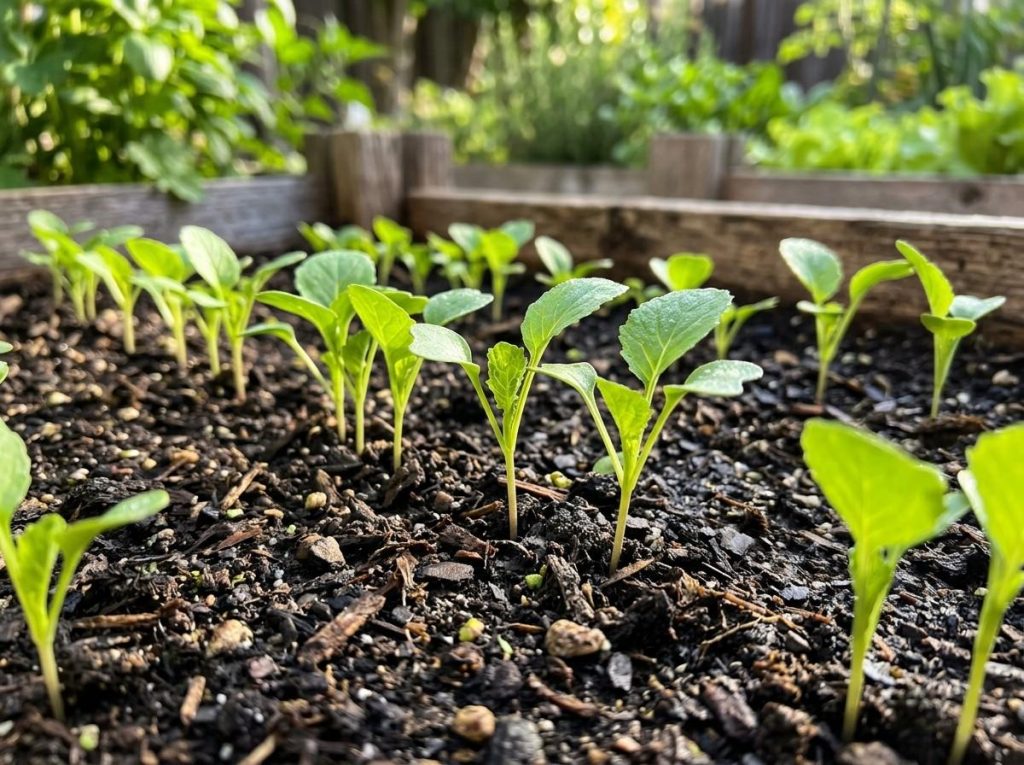
Turnip seeds usually sprout in 3–10 days if the soil is warm and moist. Cooler soil can slow germination. For best results, keep the soil temperature above 45°F (7°C) and water gently until seedlings appear.
Yes, turnips grow well in deep containers at least 8–10 inches (20–25 cm) deep. Use loose potting mix and keep the container evenly moist. Space seeds as you would in the garden, and thin seedlings for best root growth.
This is often caused by overcrowding or hard, rocky soil. Thin seedlings to the right spacing and loosen soil before planting. Also, avoid too much nitrogen fertilizer, which can reduce root size.
The most common pests are flea beetles, root maggots, and aphids. Using row covers and rotating crops helps reduce pest problems. Hand-picking and removing plant debris after harvest also helps.
Yes! Turnip roots are low in calories and rich in fiber, vitamin C, and minerals. Turnip greens are packed with vitamins A, C, and K and are considered one of the healthiest leafy vegetables. For more on nutritional value, see the Wikipedia page on turnips.
Growing turnips from seed is simple, fast, and rewarding. With just a bit of care—good soil, right timing, and proper spacing—you can enjoy crisp roots and leafy greens in your meals. Try a few varieties, experiment with planting times, and enjoy the fresh flavors from your own garden.