Gardening Made Simple.
Growing your own vegetables can be deeply satisfying, and turnips are a great choice for gardeners at all levels. These root vegetables are known for their quick growth and adaptability. If you want to plan your harvest, it’s important to know How Long Do Turnips Take to Grow.
The answer depends on several factors, including the turnip variety, local climate, soil conditions, and the care you provide. Understanding the growth timeline will help you manage your garden more effectively and enjoy a successful harvest from seed to table.

Turnips (Brassica rapa) are cool-season crops, often grown for both their roots and leafy tops. They are related to other brassicas like cabbage and radish. Gardeners love them because they grow quickly, require little maintenance, and can be sown multiple times a year in many regions.
The average time from planting turnip seeds to harvesting mature roots is 30 to 60 days. However, the actual time depends on several details, such as:
Knowing these basics helps you plan your garden and avoid common mistakes that can delay your harvest.
Not all turnips grow at the same speed. Some are bred for fast root development, while others focus on leafy greens. Here’s a look at common varieties and their average days to maturity.
| Turnip Variety | Days to Harvest | Notable Features |
|---|---|---|
| Hakurei | 30-38 | Very fast, sweet flavor, tender roots |
| Purple Top White Globe | 40-55 | Classic appearance, reliable yield |
| Tokyo Cross | 35-40 | Hybrid, uniform growth, mild taste |
| Golden Ball | 45-65 | Yellow flesh, unique color |
| Seven Top | 35-40 (greens only) | Grown for greens, not roots |
Key insight: Choosing a fast-maturing variety like Hakurei can give you edible roots in just a month. If you prefer larger roots or special colors, expect a longer wait.
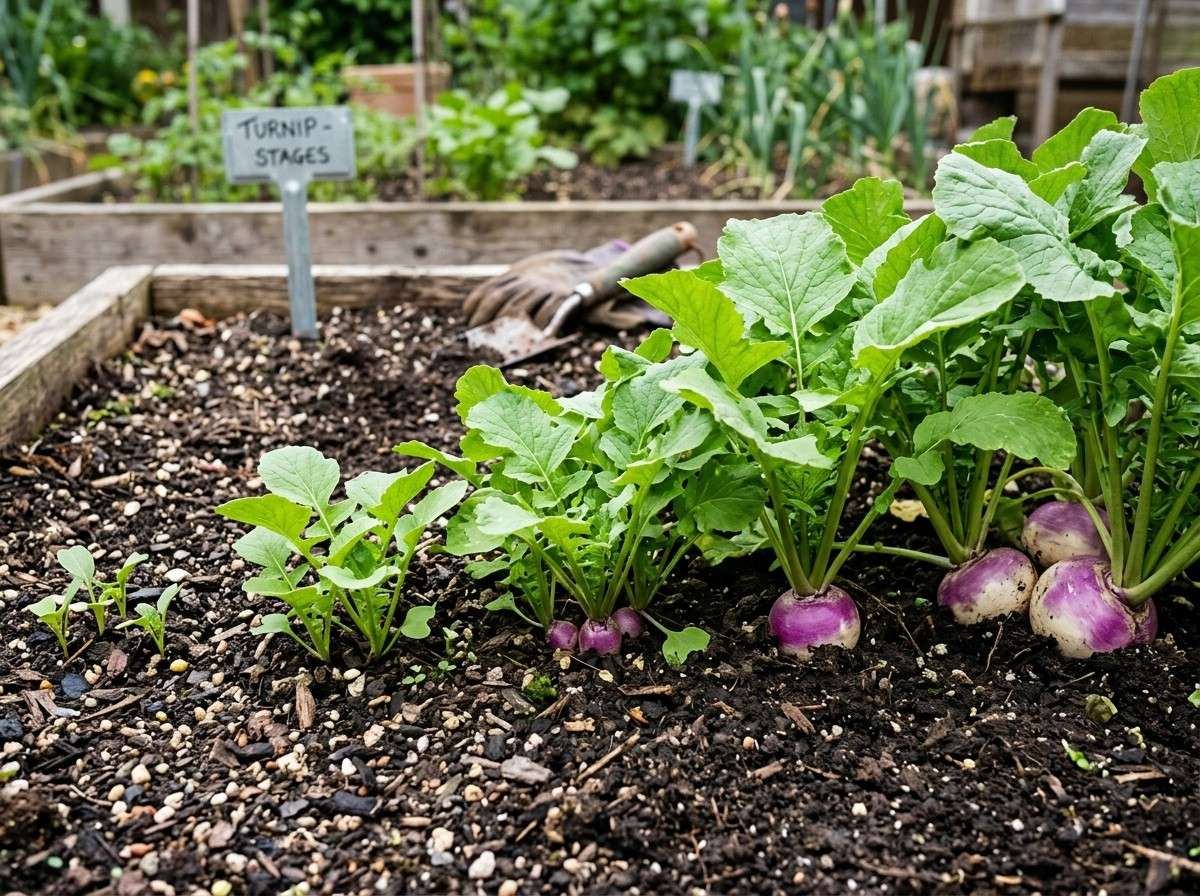
Turnips go through several clear stages from seed to table. Understanding these stages helps you predict growth time accurately.
Non-obvious tip: If turnips grow too slowly during the seedling stage, the final harvest can be delayed by one to two weeks. Early care is critical for a fast harvest.
Turnips grow best in cool weather, so the time you plant seeds has a big effect on how fast they mature.
| Planting Season | Average Days to Maturity | Best For |
|---|---|---|
| Early Spring | 30-50 | Quick roots, tender flavor |
| Late Summer/Fall | 40-60 | Larger roots, storage crops |
Practical advice: If planting in late summer, check your local frost dates. Sowing too late can mean turnips won’t reach full size before frost.
Healthy soil is the foundation for quick, reliable turnip growth. Turnips prefer loose, fertile soil that drains well.
Non-obvious insight: Over-fertilizing with nitrogen leads to lush leaves but small roots. Use balanced fertilizer focused on root growth.
Sowing turnip seeds is simple, but a few details make a big difference in how fast your crop grows.

When seedlings are 2 inches tall, thin to 2-4 inches apart. Crowded turnips stay small and take longer to mature.
Practical tip: Thin by snipping extra seedlings with scissors to avoid disturbing nearby roots.
Turnips are not demanding, but a few care details can speed up (or slow down) their growth.
Experience-based tip: Mulch around plants to keep soil cool and moist. This can shave a week off the growing time in hot climates.
Even with good care, a few problems can delay your harvest. Knowing them helps you act fast.
Solution: Use row covers to protect young plants and rotate crops each year.
Solution: Avoid planting turnips in the same spot every year, and choose resistant varieties.
Helpful advice: If you notice slow growth, check for signs of pests, water stress, or too many plants.
Knowing when to harvest is just as important as knowing how long turnips take to grow. Wait too long, and roots become woody and bitter; harvest too early, and they may be too small.
Important insight: If you want both roots and greens, harvest leaves sparingly so the root can keep growing.
Turnips grow best in cool weather, but what happens if conditions are not ideal? Here’s how different weather can change the days to harvest.
| Weather Condition | Effect on Growth | Adjusted Days to Harvest |
|---|---|---|
| Cool & consistent (60-65°F) | Ideal, fast growth | 30-40 days |
| Hot spells (75°F+) | Slowed growth, possible bolting | 40-55 days |
| Cold snaps (below 45°F) | Slower germination and growth | 45-65 days |
| Drought | Stunted roots, late harvest | 60+ days |
Non-obvious insight: For the fastest crops, time your planting so that roots develop during a period of steady, mild temperatures.
If you love turnips and want a steady supply, succession planting is the answer.
Practical tip: Mark planting dates on your calendar. This helps track when each crop will be ready and prevents gaps in your harvest.
Proper storage keeps your turnips fresh for weeks or even months.
Non-obvious tip: Small, tender turnips are best for eating fresh. Larger roots store better but can become woody if left too long in the ground.
Turnips are often compared to vegetables like radishes, carrots, and beets. Here’s how their growth time stacks up:
| Vegetable | Average Days to Harvest | Notes |
|---|---|---|
| Turnip | 30-60 | Quick, cool-season crop |
| Radish | 20-30 | Fastest root crop |
| Carrot | 60-80 | Slower, prefers loose soil |
| Beet | 50-70 | Similar care to turnips |
Key takeaway: Turnips grow faster than most root vegetables except radishes, making them a great choice for gardeners who want quick results.
Even experienced gardeners can make mistakes that add weeks to turnip growth. Here are common errors to avoid:
Experience-based guidance: Take notes on your planting and results each season. Over time, you’ll find the best timing and methods for your location.

Most turnip varieties take 30 to 60 days from sowing seeds to harvest. Fast types like Hakurei can be ready in as little as 30 days, while larger or specialty types may need up to 60 days. The exact time depends on variety, weather, and care.
Yes, you can begin picking turnip greens when the plants are about 4-6 inches tall, usually 3-4 weeks after sowing. Harvesting a few leaves at a time allows the root to keep developing. If you remove all the leaves, root growth may stop.
Slow growth is usually caused by cool temperatures, poor soil, overcrowding, or lack of water. Check for pests, and make sure your soil is loose and fertile. Sometimes, late sowing or a cold snap can delay harvest by several weeks.
The best time to plant turnips is early spring (2-4 weeks before the last frost) or late summer (6-8 weeks before the first fall frost). These windows give your turnips cool weather for quick growth and sweet flavor.
Turnips are generally easier and faster to grow than carrots or beets. They tolerate a wider range of soils, need less thinning, and are ready in as little as 30 days. They’re a great choice for beginners or anyone wanting a quick harvest.
Knowing how long turnips take to grow helps you plan your garden and enjoy a steady supply of fresh vegetables. Most varieties are ready within 30 to 60 days, and with the right care—good soil, regular watering, and proper spacing—you can look forward to healthy, tasty roots in a short time. If you’re new to growing turnips, start with a fast-maturing type and plant a few batches during the season. Over time, you’ll fine-tune your process and enjoy even better harvests.
For more detailed advice, you can visit the University of Minnesota Extension which offers research-backed tips on growing turnips successfully.
Happy gardening, and may your next batch of turnips be your best yet!