Gardening Made Simple.
Are you ready to save money and grow cucumbers year after year? Learning How to Harvest Cucumber Seeds is easier than you think, and it gives you full control over your garden’s future. By following the right steps, you can collect healthy seeds for consistent, productive cucumber plants season after season.
Imagine picking fresh cucumbers from your own plants, knowing you grew them from seeds you saved yourself. In this guide, you’ll discover simple, step-by-step tips to collect, clean, and store cucumber seeds the right way. Keep reading to unlock the secret to a thriving cucumber patch that keeps giving season after season.
Choosing the right cucumbers is a key step in harvesting seeds. Good seed quality depends on picking the best fruits. Healthy, mature cucumbers produce strong seeds. The selection process helps avoid problems later.
Mature cucumbers have fully developed seeds inside. These cucumbers are usually larger and slightly yellow or dull green. Immature cucumbers have soft, underdeveloped seeds. Seeds from young fruits may not grow well. Wait until the cucumber is firm and ripe. This ensures seeds are ready for harvesting.
Healthy cucumbers make better seeds. Avoid fruits with spots, mold, or damage. Disease can spread through seeds and harm future plants. Check for smooth skin and no signs of insects. Choosing clean fruits helps keep your garden healthy. Only harvest seeds from strong, disease-free cucumbers.
Preparing cucumbers for seed extraction is a key step for successful harvesting. The quality of seeds depends on how well you prepare the fruit. It takes patience and attention to details. This section guides you through the process to get healthy seeds.
Start by selecting the right cucumbers and letting them reach the best stage for seed collection. Proper preparation helps avoid mold and spoilage. The seeds inside should be fully developed and mature.
Choose cucumbers that are mature but not yet spoiled. Let them stay on the vine longer than usual. This process is called overripening. The cucumber skin may turn yellow or orange. The fruit becomes softer. Seeds inside mature fully and become easier to extract.
Overripening ensures seeds are fertile and strong. Pick cucumbers just before they start to rot. Avoid green, hard cucumbers, as seeds may not be ready.
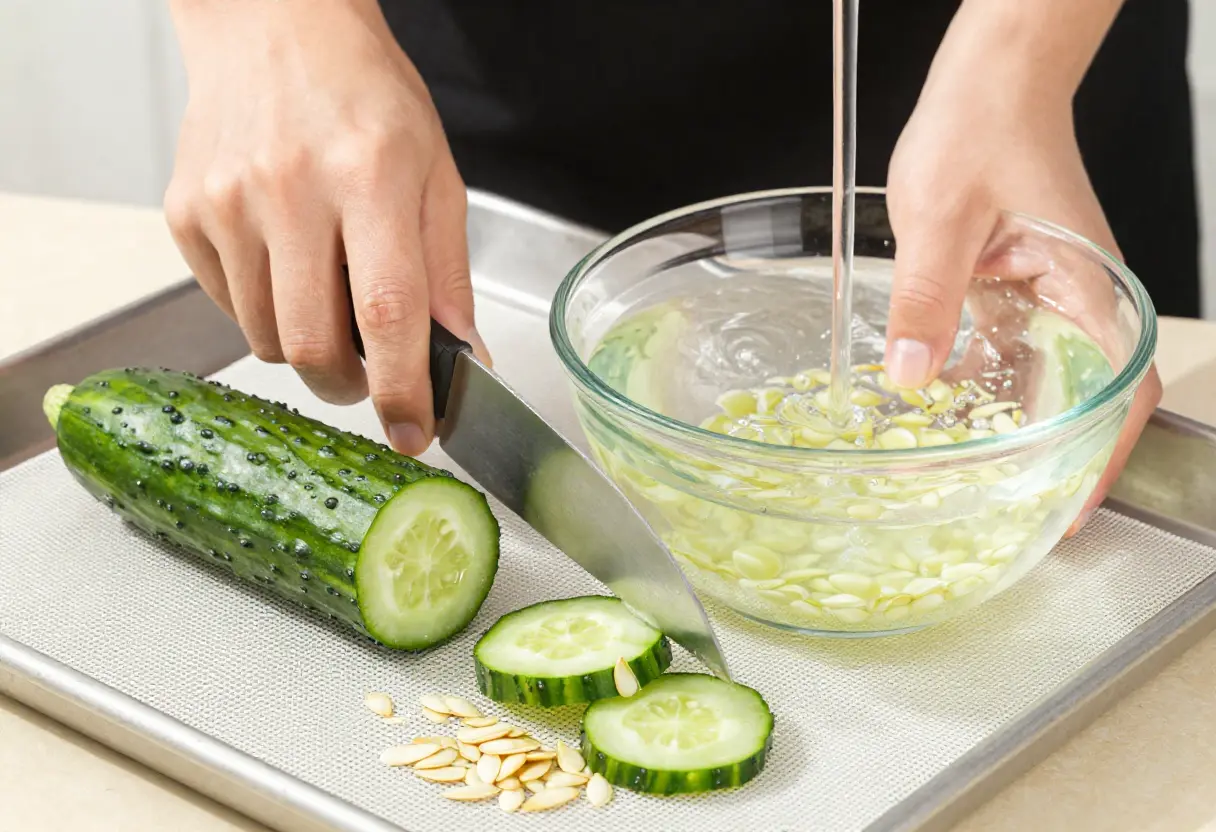
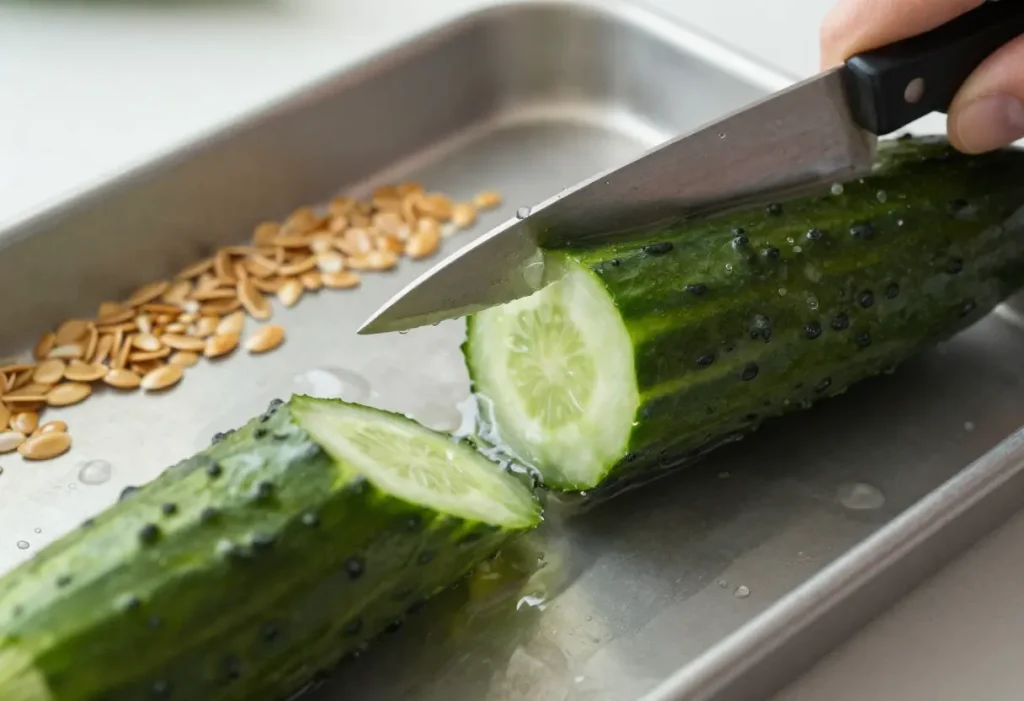
Use a sharp knife to cut the cucumber in half. Cut lengthwise to expose the seed cavity. Avoid damaging the seeds during cutting. Use a spoon to scoop out the seed mass gently.
Place the seeds and pulp into a clean container. Keep the seeds wet for the next cleaning steps. Handle seeds carefully to keep them healthy and ready for drying.
Cleaning cucumber seeds is a key step before saving them for planting. Seeds come covered in soft pulp and sticky residue. Removing these helps prevent mold and improves seed quality. Clean seeds dry faster and last longer in storage.
Start by scooping seeds from the cucumber carefully. Place seeds in a bowl with water. Rub seeds gently between fingers to separate pulp. The pulp will float or sink depending on its density. Skim off floating bits with a spoon or pour off water slowly. Repeat until most pulp is gone.
After removing pulp, rinse seeds under cool running water. Use a fine mesh strainer to hold seeds during rinsing. Stir seeds gently to wash off leftover residue. Avoid harsh scrubbing to prevent seed damage. Drain well to remove excess water. Spread seeds on a clean cloth or paper towel to dry thoroughly.
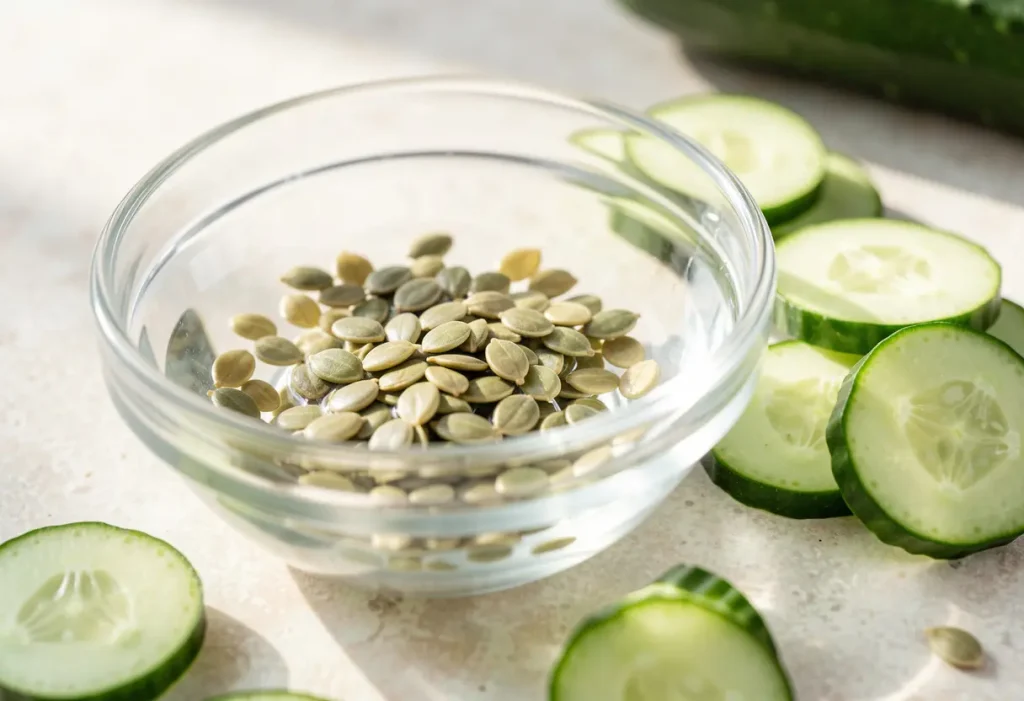
Fermenting cucumber seeds improves their germination rate. It removes the gel coat around seeds that can slow growth. This process also kills some seed diseases. The result is cleaner, healthier seeds ready for planting.
Start by scooping seeds and pulp from a ripe cucumber. Place this mixture in a glass jar or bowl. Add a little water to cover the seeds. Stir the mixture gently to mix well. Cover the container loosely with a cloth or lid. This allows air in but keeps bugs out.
Let the seeds ferment for three to five days at room temperature. Stir the mixture once a day to check progress. After two days, the surface will form a mold layer. This is normal and helps break down the gel. Stop fermenting when seeds sink to the bottom and pulp looks clear. Rinse seeds well under running water. Spread them on paper towels to dry completely before storing.
Drying and storing cucumber seeds is a vital step to keep seeds healthy and ready for planting. Proper drying stops seeds from rotting or growing mold. Storing seeds well protects them from moisture and pests. This process helps save seeds for many seasons.
Spread the seeds on a paper towel or plate. Keep them in a warm, dry spot away from sunlight. Stir the seeds daily to dry evenly. Let the seeds dry for about one week. Check that seeds feel hard and dry before storing.
Store dried seeds in a clean, airtight container. Use glass jars or sealed plastic bags. Label the container with the date and cucumber type. Keep seeds in a cool, dark place like a cupboard. Avoid places with heat or humidity to keep seeds fresh.
Harvesting cucumber seeds can have some challenges. Problems like mold, rot, or weak seeds can spoil your efforts. Knowing how to fix these issues helps you save good seeds for the next planting season. The tips below focus on common problems and how to avoid them.
Mold and rot often appear when seeds are wet or stored improperly. Dry seeds well before storing. Spread them out on a paper towel or screen in a dry place. Avoid sealed plastic bags unless seeds are fully dry.
Check seeds daily for any damp spots. If you see mold, remove those seeds immediately. Use a paper towel to absorb moisture around seeds. Good airflow helps prevent mold growth.
Viable seeds grow healthy plants. Old or damaged seeds may not sprout. Use fresh seeds from ripe cucumbers. Let seeds ferment for a few days to remove the gel coat. This process boosts germination.
Test seed viability by placing some seeds on a wet paper towel. Keep them warm and moist. Seeds that sprout in a week are good to plant. Discard any seeds that do not sprout.
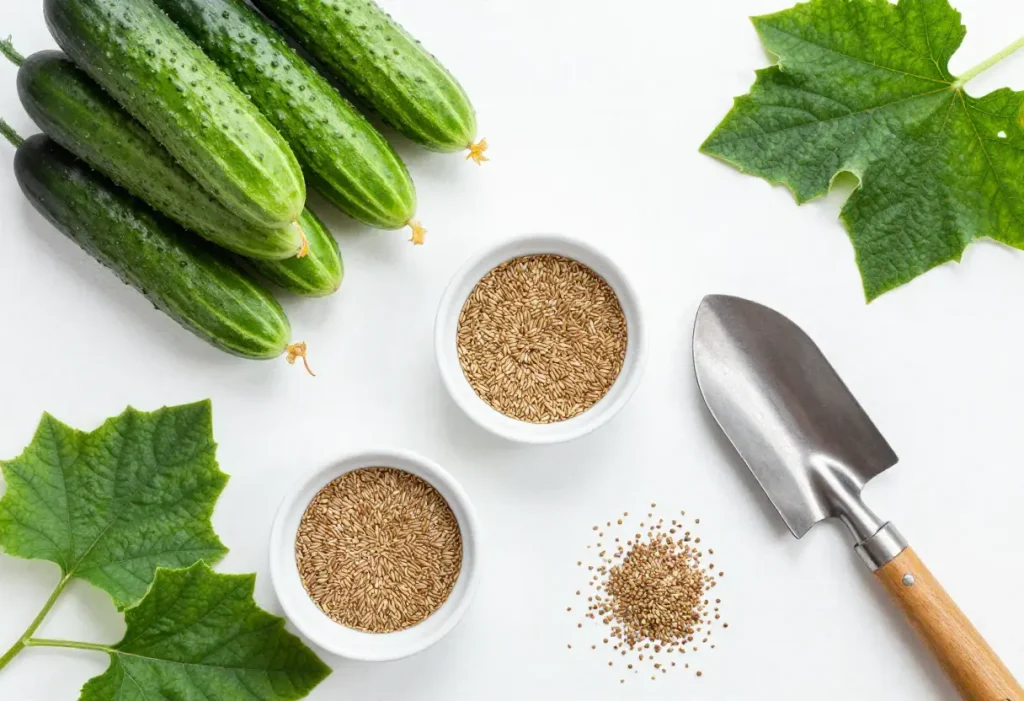
Cucumber seeds are ready when the fruit turns yellow and soft. This means the seeds inside are mature and fully developed. Harvesting too early gives weak seeds.
Cut the cucumber open and scoop out the seeds with pulp. Place seeds in water and stir to separate good seeds from pulp. Good seeds sink to the bottom.
Spread the seeds on a paper towel or screen in a dry place. Let them dry for about one week, stirring daily. Seeds must be fully dry to store.
Seeds from hybrid cucumbers may not grow true to the parent plant. They can produce weak or different plants. For best results, save seeds from open-pollinated types.
Store dry seeds in an airtight container in a cool, dark place. Avoid heat and moisture to keep seeds viable. Proper storage keeps seeds good for several years.
Harvesting cucumber seeds is simple and rewarding. Pick ripe cucumbers and scoop out the seeds. Rinse the seeds well to remove any pulp. Let them dry completely before storing in a cool, dry place. Save seeds from healthy plants for better growth next season.
This process helps you grow cucumbers easily and saves money. Try it yourself and enjoy fresh cucumbers year after year. Happy gardening!