Gardening Made Simple.
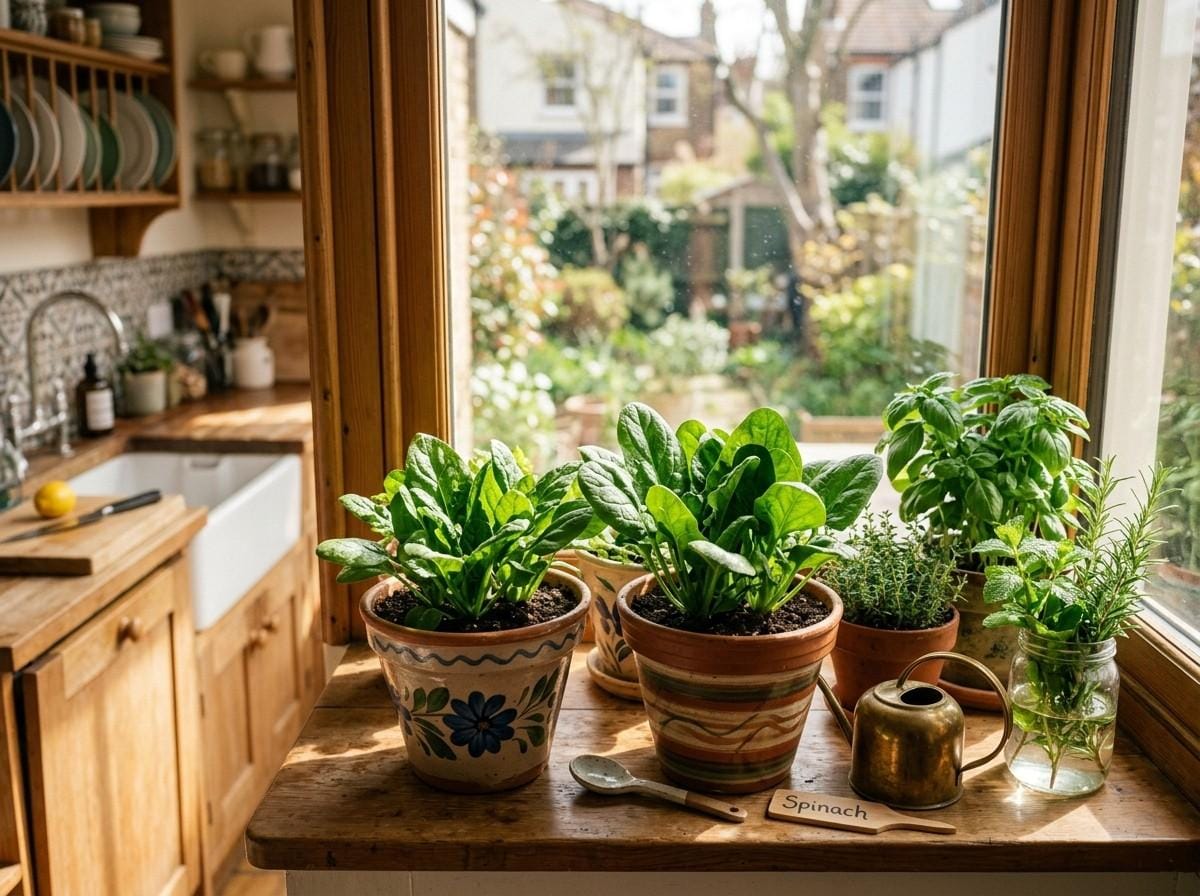
Imagine having fresh, crisp spinach ready to pick whenever you want—right in your own home. Growing spinach indoors lets you enjoy this nutritious green all year round, no matter the weather outside.
If you’ve ever thought about starting your own little garden but worried about space or climate, this guide is made just for you. You’ll discover simple steps to grow healthy spinach plants indoors, making your meals tastier and your lifestyle healthier.
Keep reading to unlock the secrets of indoor spinach growing and transform your kitchen into a green oasis.
Choosing the right spinach variety is key to growing healthy plants indoors. Different types respond differently to indoor conditions. Some grow faster, while others handle low light better. Picking the best variety saves time and effort. It also gives you fresh, tasty leaves all year.
Understanding the types helps you decide which suits your space and needs. Consider leaf size, growth speed, and taste. These factors affect your indoor garden’s success.
Baby spinach varieties work well indoors. They grow quickly and need less space. Varieties like 'Space' and 'Tyee' produce tender leaves fast. They tolerate low light and small containers.
Flat-leaf spinach grows better than curly types indoors. It is easier to harvest and clean. This type often has a sweeter taste, perfect for salads or cooking.
Spinach varieties that resist bolting are ideal. Bolting means the plant flowers and stops leaf growth. Look for types labeled as slow-bolting or heat-tolerant.
Heirloom spinach comes from old, natural seed lines. It has rich flavors and varied leaf shapes. These plants may need more care but offer unique tastes.
Hybrid spinach is bred for specific traits. These include faster growth, disease resistance, and uniform leaves. Hybrids are often easier to grow indoors.
Heirlooms offer diversity but hybrids give reliability. Choose based on your gardening experience and preference. Both types can thrive indoors with proper care.
Setting up an indoor garden for spinach is simple and fun. It needs the right containers, soil, and light. These factors help spinach grow strong and healthy inside your home. Careful setup leads to a good harvest.
Choose containers with good drainage holes. Spinach roots need space to grow well. Pots around 6 to 8 inches deep work best. Use lightweight containers for easy moving.
Pick soil that drains well but holds moisture. A mix of potting soil and compost is ideal. Avoid garden soil, which can be too heavy.
Spinach needs plenty of light to grow indoors. Place containers near a sunny window with south or west exposure. At least 6 hours of light daily helps leaves stay green.
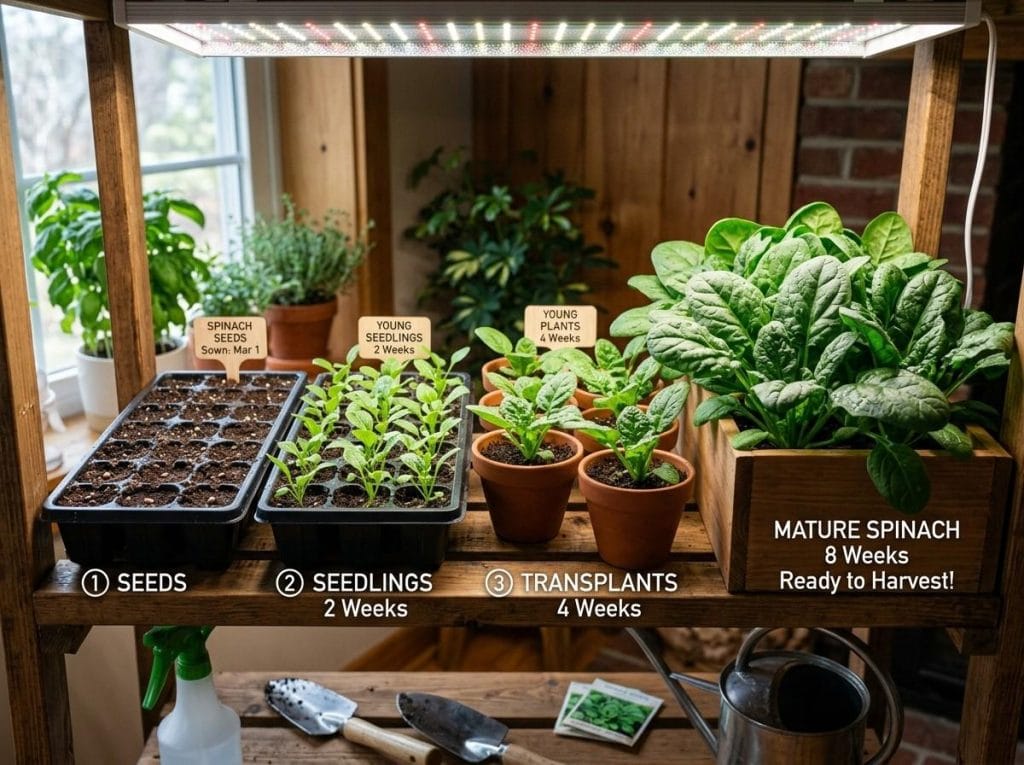
If natural light is low, use a grow light. Keep lights on for 12 to 14 hours a day. Rotate pots to ensure even light on all sides.
Planting spinach seeds indoors is a great way to enjoy fresh greens year-round. Growing spinach inside lets you control the environment. This control helps seeds sprout faster and stronger. Starting with the right steps ensures healthy plants and a good harvest.
Choose fresh spinach seeds for the best results. Soak seeds in water for 6-8 hours. This softens the seed coat and speeds up sprouting. Use a seed tray or small pots filled with light, well-draining soil. Plant seeds about ½ inch deep. Cover seeds gently with soil. Avoid burying them too deep, as this can stop growth.
Space seeds 1 to 2 inches apart. Good spacing lets seedlings grow without crowding. Keep the soil moist but not soaked. Use a spray bottle to water gently. Place the containers in a warm spot with indirect sunlight. Spinach seeds usually sprout in 7 to 14 days. Thin seedlings by removing weaker ones. Leave the strongest plants to grow healthy and strong.
Watering and feeding spinach are key to healthy growth indoors. Spinach needs steady moisture but not soggy soil. Proper feeding helps leaves grow big and green. Both water and nutrients work together to keep plants strong. Understanding how to care for spinach with water and fertilizer will boost your indoor garden's success.
Spinach likes soil that stays moist all the time. Dry soil can stop growth and cause leaves to wilt. Check soil daily with your finger to feel moisture. Water spinach when the top inch of soil feels dry. Use a gentle spray or pour water slowly. Avoid overwatering, which can cause root rot. Good drainage in pots helps keep moisture balanced.
Spinach grows best with balanced fertilizer. Use a liquid fertilizer with equal parts nitrogen, phosphorus, and potassium. Nitrogen helps leaves grow large and green. Feed plants every two weeks for steady growth. Avoid too much fertilizer; it can harm roots and leaves. Organic options like compost tea work well too. Proper feeding gives spinach the nutrients it needs indoors.
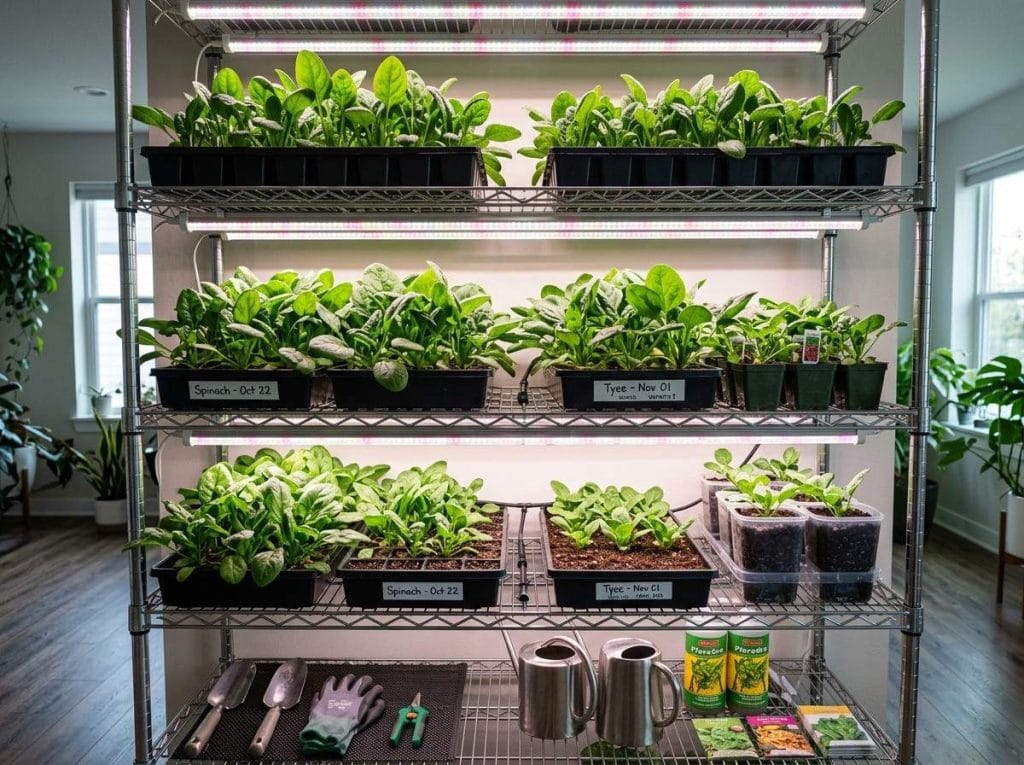
Managing temperature and humidity is key to growing spinach indoors successfully. Spinach thrives in cool and moist conditions. Too much heat or dry air can stress the plants. Proper control helps spinach grow strong and healthy. It prevents problems like wilting or slow growth.
Spinach grows best between 50°F and 70°F (10°C to 21°C). Temperatures above 75°F (24°C) cause spinach to bolt. Keep humidity levels around 50% to 70%. Low humidity dries out leaves quickly. High humidity may lead to mold or fungus. Monitor conditions daily to keep the environment balanced. A cool, moist climate encourages leafy growth and fresh taste.
Humidifiers add moisture to dry indoor air. Use them if the room feels too dry. This helps keep spinach leaves hydrated. Heaters raise the temperature during cold months. Set them to maintain a steady climate. Avoid overheating or drying out the air. Combine humidifiers and heaters for the best results. This way, spinach plants stay comfortable and healthy indoors.
Growing spinach indoors requires careful attention to pests and diseases. These problems can damage leaves and stunt growth. Preventing them helps keep your spinach healthy and tasty. Good care and early action protect your plants effectively.
Spider mites are tiny and cause yellow spots on leaves. Aphids suck sap and make leaves curl or turn yellow. Whiteflies are small flying insects that feed on the plant sap. They spread diseases and weaken spinach plants quickly. Fungus gnats live in soil and damage roots. Watch for these pests regularly to catch problems early.
Use neem oil spray to repel many insects safely. Soap water spray kills soft-bodied pests like aphids and whiteflies. Introduce ladybugs or lacewings; they eat harmful insects naturally. Keep the growing area clean and remove dead leaves. Avoid overwatering to stop fungus gnats from thriving. These methods protect your spinach without harmful chemicals.
Harvesting and storing spinach grown indoors is simple and rewarding. Knowing the right time to pick leaves and how to keep them fresh helps maintain flavor and nutrition. Proper care extends your spinach’s shelf life and reduces waste.
Pick spinach leaves when they reach 3 to 4 inches long. Younger leaves taste mild and tender. Harvest before flowers or seed stalks appear. Morning is the best time to harvest. Leaves have the most moisture then. Use scissors to cut outer leaves first. Leave inner leaves to grow more. Regular harvesting encourages new growth.
Rinse spinach gently in cold water to remove dirt. Dry leaves carefully using a clean cloth or salad spinner. Store spinach in a plastic bag with a paper towel. The paper towel absorbs extra moisture. Keep spinach in the refrigerator’s crisper drawer. Use spinach within 3 to 5 days for best taste. Avoid washing spinach before storage if you want it to last longer. Wash just before use instead.
Growing spinach indoors can be very rewarding but sometimes problems occur. Troubleshooting helps keep plants healthy and strong. Identifying issues early stops damage and improves growth. Here are common problems and ways to fix them.
Yellow leaves often mean nutrient shortage or too much water. Spinach needs balanced feeding with nitrogen-rich fertilizer. Avoid overwatering as roots can rot and leaves yellow. Check soil moisture before watering. Poor light can also cause yellowing. Place plants near a bright window or use grow lights.
Slow growth may result from low light or cold temperatures. Spinach grows best in cool, bright spots indoors. Keep temperature between 60-70°F (15-21°C). Poor soil quality slows growth too. Use loose, rich soil with good drainage. Regular feeding with mild fertilizer helps speed growth.
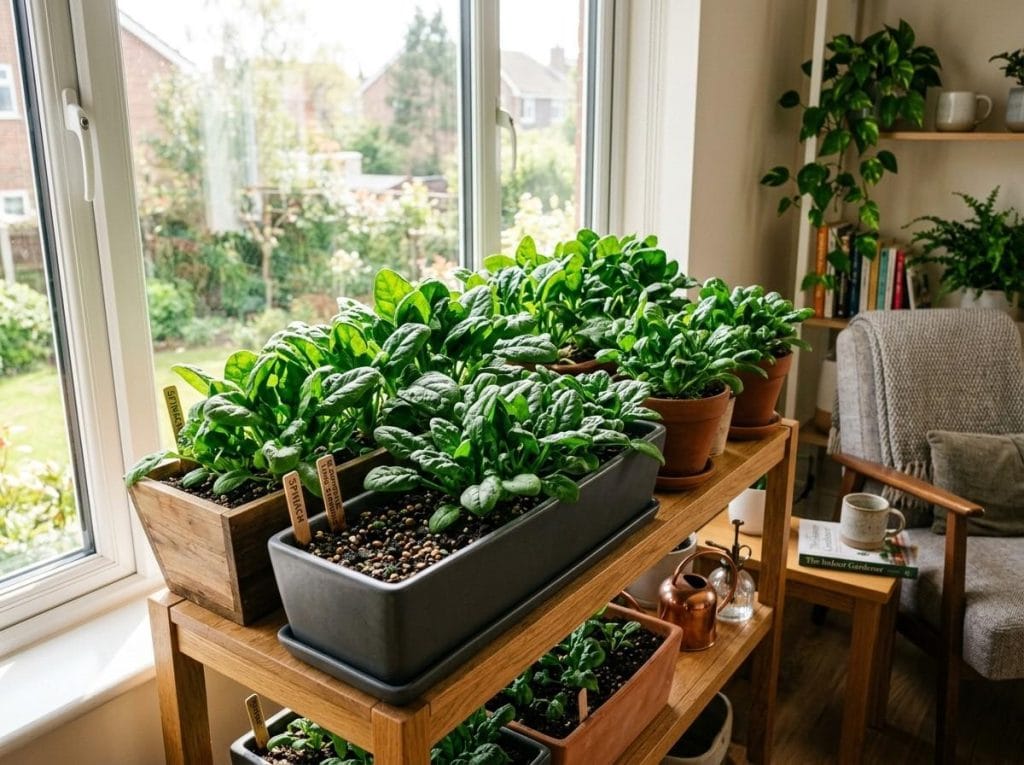
Spinach needs about 6 hours of bright, indirect light daily for healthy growth indoors.
Use well-draining, rich soil with organic matter for the best spinach growth indoors.
Water spinach when the top inch of soil feels dry, usually every 2-3 days.
Yes, spinach grows well indoors all year if given enough light and water.
Spinach typically takes 4 to 6 weeks from planting to harvest inside.
Growing spinach indoors brings fresh greens to your home all year. It saves money and adds nutrition to your meals. Small pots and good light create a perfect spinach garden. Water regularly and watch the leaves grow fast. Enjoy the crisp taste right from your windowsill.
Anyone can start with simple steps and patience. Spinach indoors means healthy eating made easy and fun. Why wait? Start planting and enjoy fresh spinach every day.