Gardening Made Simple.
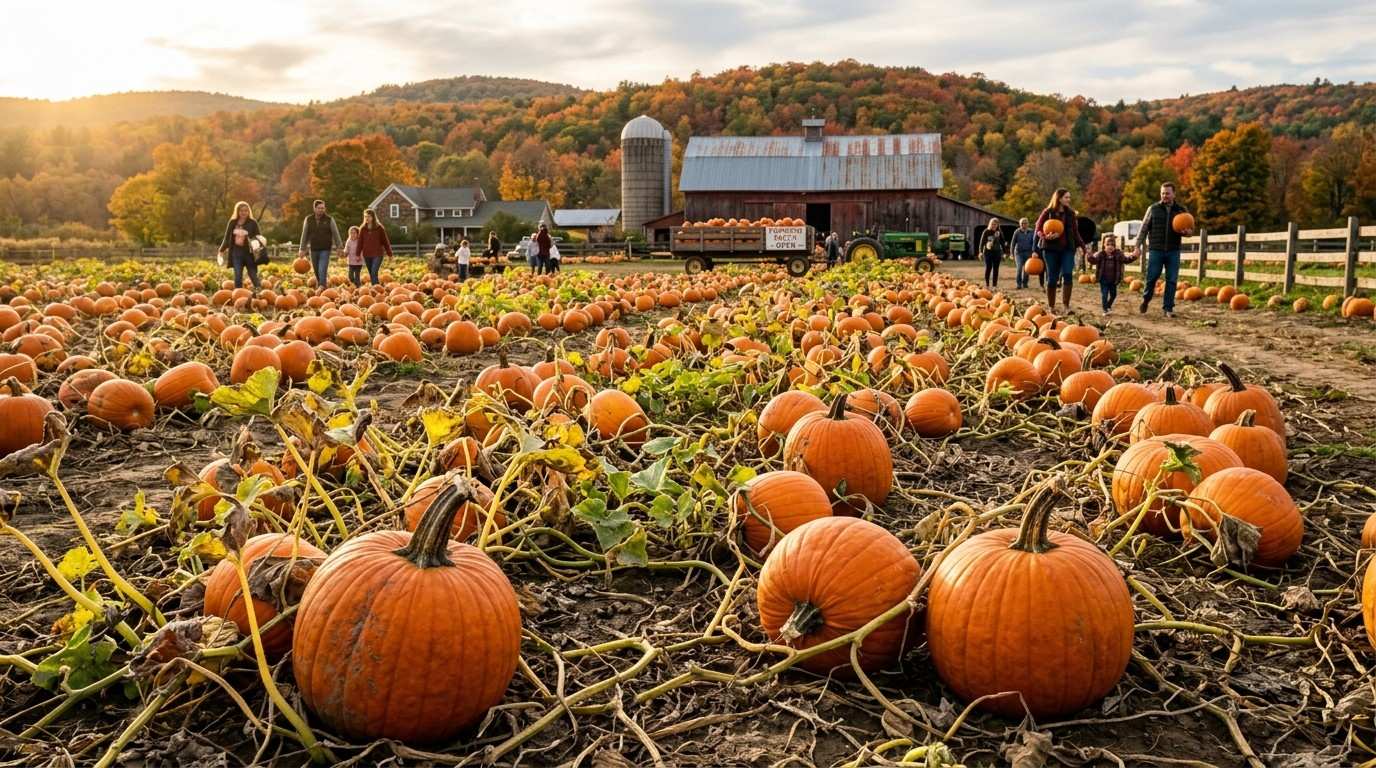
Pumpkins are a classic symbol of fall. From Halloween decorations to Thanksgiving pies, these bright orange fruits play a big role in autumn traditions. But if you’re growing your own pumpkins, knowing when to pick them is not always easy.
Picking them too soon can mean small, tasteless pumpkins. Waiting too long can lead to rot or damage from frost. So, how do you know when are pumpkins ready to pick? Let’s explore the signs, timing, mistakes to avoid, and tips to get the best harvest.
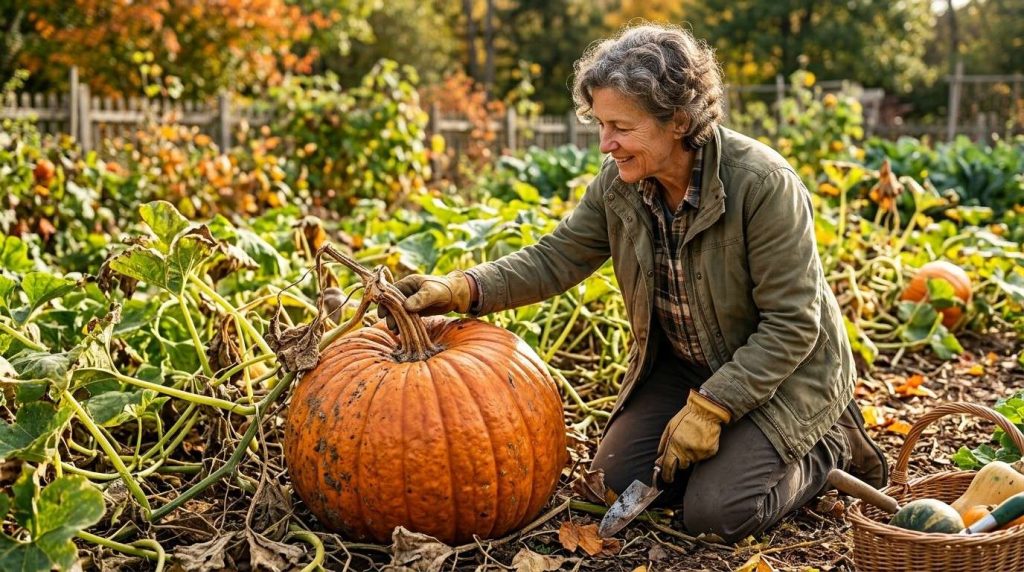
Harvesting pumpkins at the right time is more than just a matter of taste. Pumpkin ripeness affects everything from shelf life to flavor and even the way the pumpkin looks. If you pick too early, the pumpkin may not have reached its full size or color. If you wait too late, the pumpkin can become soft, rot, or get damaged by cold weather.
Pumpkins are actually a type of winter squash, and they need time to mature on the vine. In the United States, most pumpkin varieties need 75 to 120 days to grow from seed to harvest. This means you must plan your planting and harvesting carefully, especially if you live in a region with early frosts.
Knowing the signs of ripeness is the most important part of pumpkin harvesting. Here are the main clues to look for:
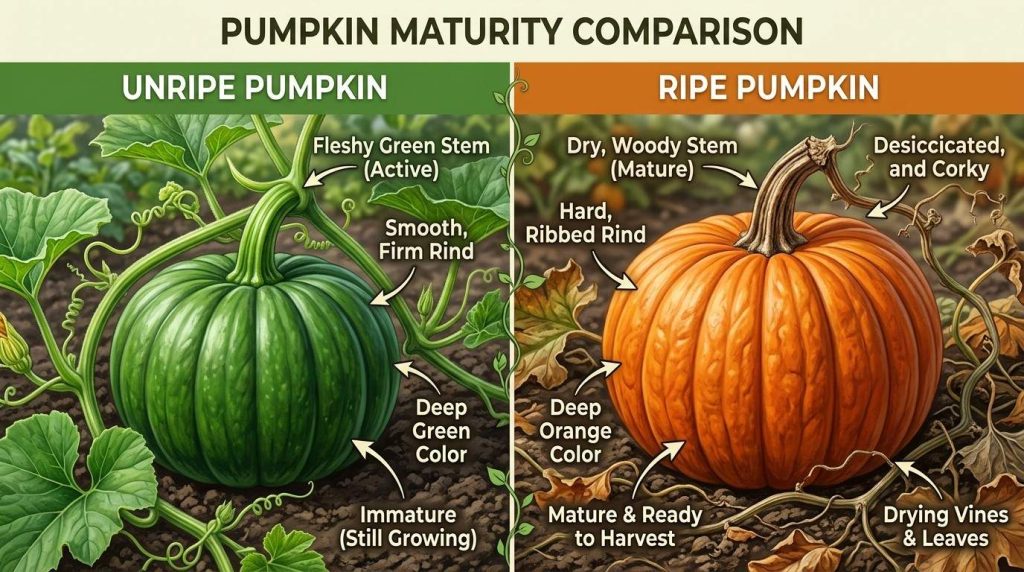
A ripe pumpkin should have a deep, uniform color. Most pumpkins turn a solid orange, but some types may be white, green, yellow, or even blue. Check that the color is even, with no green patches left on the skin.
The skin of a mature pumpkin is tough and hard. Try pressing your fingernail into the skin. If it resists puncture, your pumpkin is ready. If your nail leaves a mark or breaks the skin, it’s still immature.
A mature pumpkin will have a dry, brown stem. If the stem is green and flexible, the pumpkin is still growing. The stem should look woody and feel firm.
Gently tap the pumpkin. A ripe pumpkin will sound hollow. If it sounds dense or solid, it’s not ready.
Pumpkins should reach their expected size and shape. Each variety has its own standard. For example, Jack-o’-lantern types often grow 12-18 inches across. Check the seed packet or variety description to know what size to expect.
Usually, pumpkins are ready 45 to 55 days after flowering. If you keep track of when the vines flower, you can use this as a guide.
The leaves and vines may start to die back as the pumpkin matures. This is a natural signal that the fruit is almost ready.
Pumpkins need warm days and cool nights to ripen fully. But weather can change your harvest timing:
In regions with short growing seasons, you may need to start seeds indoors or use row covers to protect plants early on.
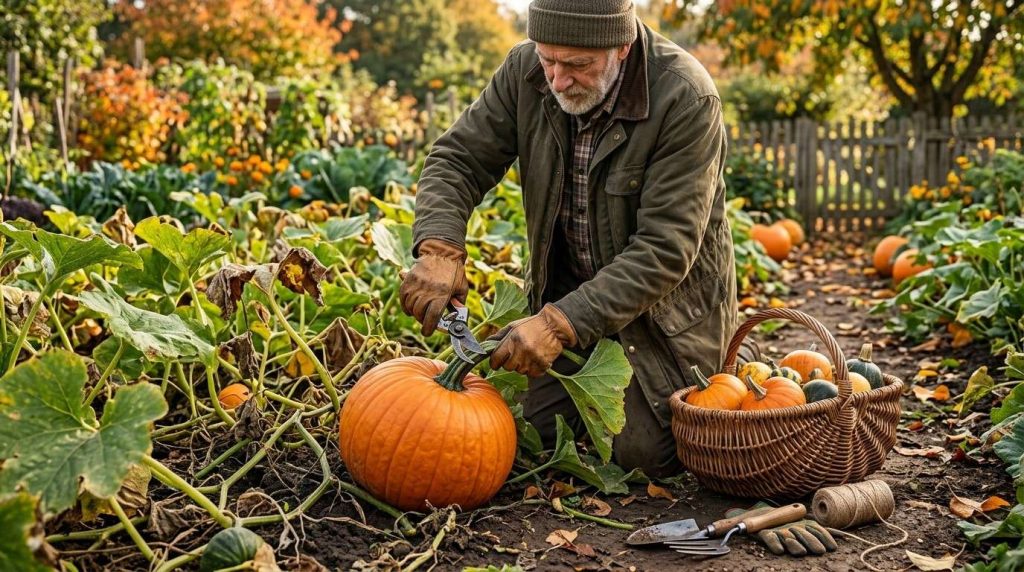
Harvesting pumpkins is simple if you follow these steps:
Even experienced gardeners make mistakes. Here are some to avoid:
Not all pumpkins ripen at the same time. Here’s a comparison of popular types:
| Variety | Days to Harvest | Typical Color | Average Size |
|---|---|---|---|
| Jack-o’-Lantern | 85-100 | Orange | 12-18 inches |
| Pie Pumpkin | 90-110 | Orange | 6-8 inches |
| Mini Pumpkin | 75-90 | Orange/White | 3-5 inches |
| Cinderella (Rouge Vif d’Etampes) | 100-120 | Red/Orange | 12-15 inches |
| Blue Hubbard | 110-120 | Blue-Gray | 15-20 inches |
Each variety needs its own timing and care. For example, mini pumpkins mature faster, while large types like Blue Hubbard need more time.
Curing is a step many beginners skip, but it’s crucial for long-term storage and flavor. After picking, pumpkins should sit in a warm, dry spot (70-80°F) for about two weeks. During this time, the skin hardens and minor wounds heal.
Here’s a quick comparison of pumpkins before and after curing:
| Before Curing | After Curing |
|---|---|
| Skin may be soft | Skin is hard |
| Short shelf life | Long shelf life (up to 3 months) |
| Higher risk of rot | Lower risk of rot |
| Flavor not fully developed | Improved flavor |
Curing is especially important if you plan to store pumpkins for weeks or use them in cooking.
Proper storage keeps pumpkins fresh and edible for months. Here are some tips:
| Type | Storage Duration |
|---|---|
| Pie Pumpkin | 2-3 months |
| Jack-o’-Lantern | 1-2 months |
| Mini Pumpkin | 1-2 months |
| Blue Hubbard | 4-5 months |
| Cinderella | 3-4 months |
Sometimes, you have to pick pumpkins before they are fully ripe—maybe frost is coming or the vines are dying. Here’s what to do:
Pumpkins can finish ripening off the vine, but results may vary. Some may not reach full color or flavor. Still, it’s better than losing your crop to frost or disease.
Let’s look at a real-life scenario. Sarah, a home gardener in Ohio, planted Jack-o’-Lantern pumpkins in mid-May. By late August, her pumpkins started turning orange. She noticed the stems were drying out and the leaves on the vine were yellowing. Sarah checked the skin with her fingernail—it was hard and resisted puncture.
A few pumpkins had green patches, so she waited another week. She checked the weather forecast and saw a cold snap coming. Sarah harvested all her pumpkins, leaving 3 inches of stem attached. She cured them in her garage, where the temperature stayed around 75°F.
After two weeks, her pumpkins had a deep orange color and hard skin. She stored them in her basement, keeping them off the floor. By Halloween, her pumpkins were perfect for carving and cooking.
Large farms use a different method. They monitor fields for uniform color and maturity. Workers use knives to cut pumpkins, leaving stems attached. The pumpkins are often left in the field for a few days to dry out, then gathered and sorted.
Some farms use machines, but most harvest by hand to avoid damaging the fruit. Farms also pay attention to weather, often rushing to pick before frost.
Pumpkin harvest in the U.S. usually peaks in September and October. In 2023, American farmers produced about 1.5 billion pounds of pumpkins. Illinois grows the most, especially for canned pumpkin.
Many beginners miss these points:
Sometimes, life gets busy or weather surprises you. If you missed the ideal harvest window:
It’s always better to pick slightly early than risk losing your whole crop.
Once you’ve picked your pumpkins, there are many ways to use them:
A ripe, well-cured pumpkin is useful for much more than just decoration.
Learning these steps helps you get the best from your pumpkin patch, whether you’re a beginner or an experienced grower.
Check for deep color, hard skin, and a dry stem. Try pressing your fingernail into the skin—if it resists, the pumpkin is ripe.
Yes, but flavor and texture may be less sweet or firm. Some varieties are ripe at different colors (like white or blue). If picked early, let them finish ripening indoors.
Frost can cause pumpkins to rot quickly. If frost is expected, harvest all mature pumpkins, even those not fully colored. Damaged pumpkins may not store well.
No. Washing can introduce moisture, which increases the risk of mold and rot. Wipe off dirt with a dry cloth and cure pumpkins before storing.
With proper curing and storage, pumpkins can last 1 to 5 months depending on type. Pie pumpkins and Blue Hubbard last longest; Jack-o’-lanterns last about 1-2 months.
Pumpkin harvest is a blend of science and art. Knowing the right signs, understanding your climate, and following good harvest and storage practices will help you enjoy a successful pumpkin season. For more detailed information on pumpkin cultivation, visit the Wikipedia Pumpkin page. With these tips, your pumpkins will be ready for the spotlight—whether on your front porch, in your kitchen, or at your next fall celebration.