Gardening Made Simple.
Planting garlic in Colorado can be a rewarding experience for gardeners of all skill levels. This state’s unique climate, with its cold winters and dry summers, affects when and how you should plant garlic. If you time your planting right, you’ll enjoy bulbs with excellent flavor and long storage life.
But timing is everything. Plant too early or too late, and you risk poor growth or disappointing harvests. This guide will help you understand when to plant garlic in Colorado, why timing matters, and how to ensure your crop thrives.
Colorado’s climate varies across regions, but there are common features: cold winters, hot summers, and low humidity. Most of the state falls into USDA Hardiness Zones 3–7, with areas like Denver, Boulder, and Fort Collins in Zones 5–6. These zones are crucial because garlic needs a period of cold to develop strong bulbs. Winters are cold enough to give garlic the chilling it needs, but spring can be unpredictable, with late frosts and sudden warm spells.
Garlic is a hardy crop. It survives cold temperatures, but it does not like extreme heat or sudden changes. The dry air in Colorado means diseases are less common, but irrigation becomes important. The state’s elevation also affects planting times, as higher altitudes cool faster in autumn and warm up later in spring.
There are two main types of garlic: hardneck and softneck. Hardneck varieties are better for colder climates like Colorado. They produce scapes (flower stalks), which you can harvest and eat. Hardneck garlic also offers bigger cloves and stronger flavor. Softneck garlic is usually grown in warmer regions and stores well, but it can be less reliable in Colorado’s cold winters.
Some popular hardneck garlic varieties for Colorado include:
Softneck varieties like Inchelium Red can work in milder areas or lower elevations, but most gardeners in Colorado choose hardneck types for best results.
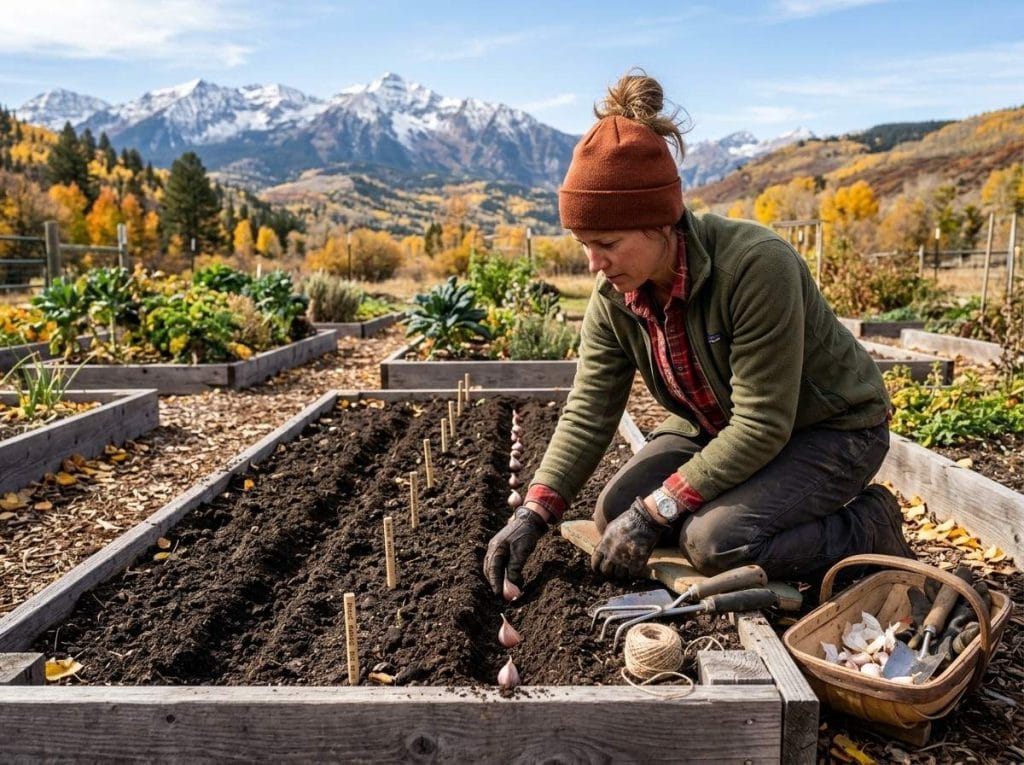
The ideal time to plant garlic in Colorado is fall—specifically from mid-September to late October. This timing allows the garlic to establish roots before winter. The goal is to give the cloves about four to six weeks to root, but not enough time to produce shoots above the soil.
Planting too early can result in green shoots that are damaged by winter cold. Planting too late means the roots may not develop enough, leading to weak plants and small bulbs.
Here’s a simple table showing typical planting windows for different Colorado regions:
| Region | USDA Zone | Recommended Planting Time |
|---|---|---|
| Northern Colorado (Fort Collins, Greeley) | 5 | Late September – Early October |
| Denver Metro | 5–6 | Mid September – Mid October |
| Southern Colorado (Colorado Springs, Pueblo) | 6 | Mid September – Early October |
| Western Slope (Grand Junction) | 6–7 | Mid September – Early October |
| Mountains (Aspen, Vail) | 3–4 | Early September – Mid September |
If you are at higher elevations, plant earlier. Lower areas can wait until mid-October, but don’t go later. The ground needs to be workable, not frozen.
A successful garlic crop starts with the right soil preparation. Garlic prefers loamy, well-drained soil with a pH between 6.0 and 7.0. Heavy clay soils, common in Colorado, should be amended with compost or well-rotted manure to improve drainage.
Steps to prepare your bed:
Garlic is sensitive to soggy conditions. If the bed stays wet, bulbs can rot. Mulching helps keep moisture in, but don’t overdo it.
Planting garlic is simple, but a few key details make a big difference. Here’s how to do it:
One common mistake is planting cloves too shallow. This leaves bulbs exposed to cold and drying winds. Another mistake is overcrowding—bulbs need space for air and sunlight.
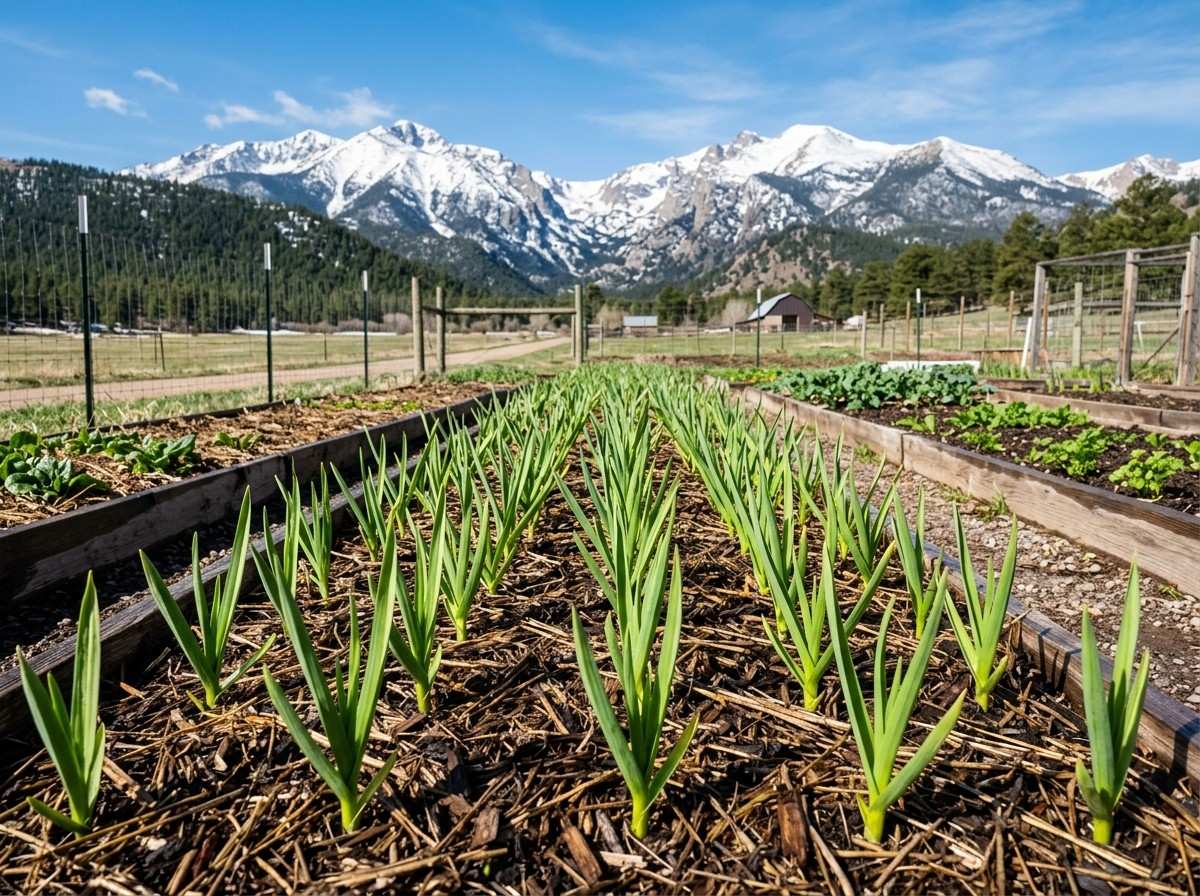
Mulch is essential in Colorado. Winters can be harsh, and mulch protects garlic from freeze-thaw cycles. It also stops weeds and keeps the soil moist.
Best mulch materials:
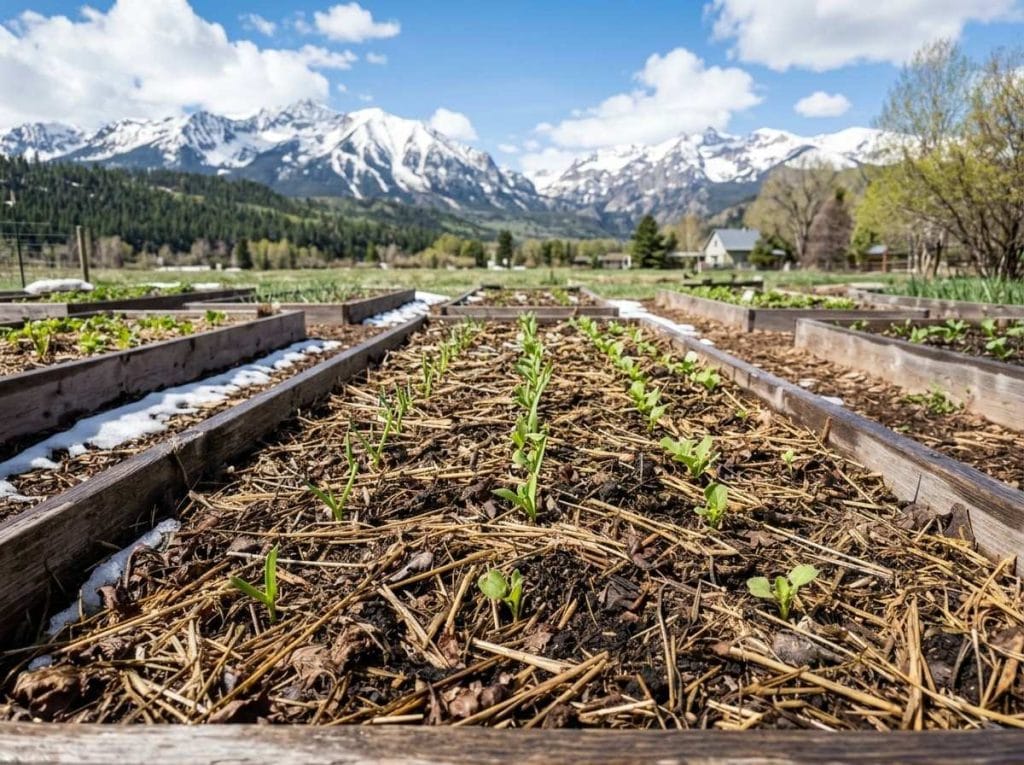
Apply mulch after planting, but before the first frost. Mulch keeps the soil temperature stable and prevents cloves from drying out. In spring, pull mulch aside as shoots appear, but leave some to protect against late frosts.
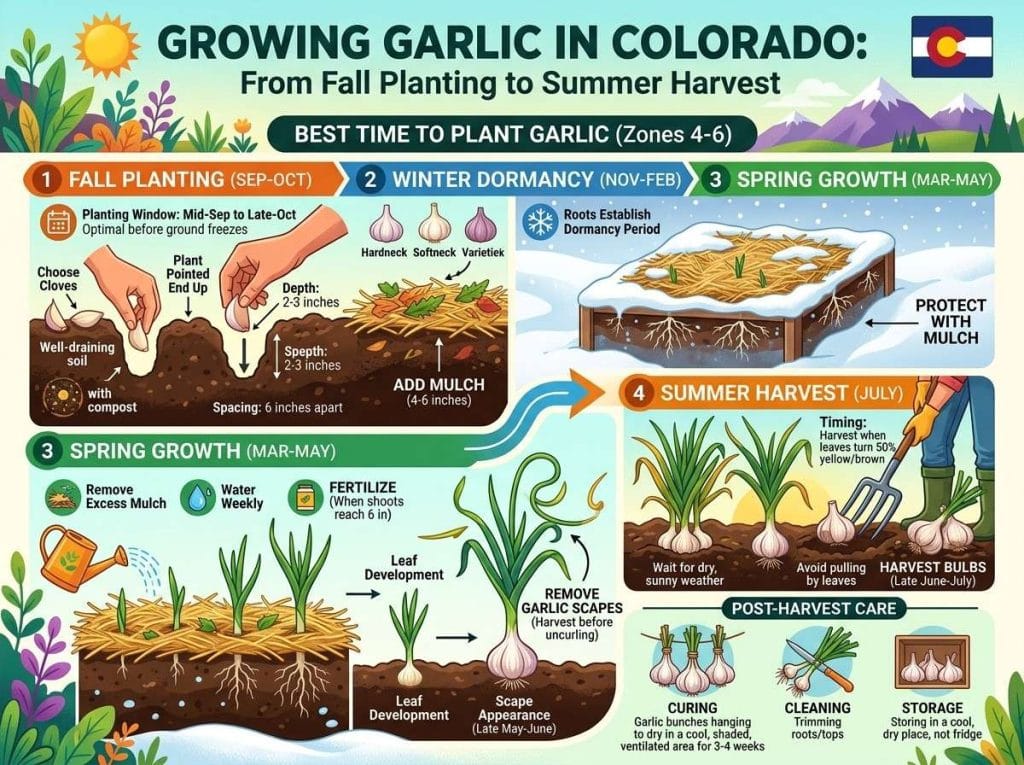
After winter, garlic starts growing fast. Shoots appear as soon as the soil warms up. This period is critical—good care leads to big bulbs.
Tasks for spring:
Garlic sends up scapes in late spring. These are edible and should be removed to help bulbs grow larger. Scapes taste like mild garlic and can be used in stir-fries or pesto.
Garlic is ready for harvest in Colorado from late June to early August, depending on the variety and planting time. The key sign is when the lower leaves turn brown and dry, but at least five green leaves remain.
To harvest:
Proper curing is essential for long storage. If bulbs stay wet or are bruised, they rot quickly.
Even experienced gardeners face challenges. Here are some common issues and solutions:
A non-obvious tip: Don’t water garlic in the last two weeks before harvest. Drying out helps bulbs mature and store longer.
Garlic stores well if cured properly. Keep bulbs in a cool (50–60°F), dry, dark place. Avoid plastic bags, which trap moisture. Mesh bags or baskets are best.
Softneck garlic can be braided and hung, but hardneck is usually stored loose. If bulbs sprout or rot, the storage area is too warm or moist.
Here’s a comparison of storage methods:
| Storage Method | Pros | Cons |
|---|---|---|
| Mesh bags | Good airflow, prevents rot | Bulbs can dry out if humidity is too low |
| Baskets | Easy access, good airflow | Can attract mice if not protected |
| Braiding (softneck only) | Looks nice, saves space | Hardneck garlic cannot be braided |
| Plastic bags | Convenient | Traps moisture, causes rot |
For hardneck garlic, storing in mesh bags or baskets works best.
Some gardeners ask if they can plant garlic in spring. In Colorado, this is not recommended. Spring-planted garlic doesn’t get enough cold exposure, so bulbs stay small and don’t store well. Fall planting gives cloves the chilling they need to grow big and flavorful.
Here’s a quick comparison:
| Planting Time | Bulb Size | Flavor | Storage Life |
|---|---|---|---|
| Fall | Large | Strong | Long |
| Spring | Small | Mild | Short |
A second non-obvious insight: If you missed fall planting, try “green garlic” in spring. Plant cloves for tender shoots, not bulbs. Green garlic tastes mild and can be used like scallions.
Here are practical tips to get the best garlic crop:
Many beginners skip soil testing, but it’s vital. Garlic is sensitive to soil pH and nutrients—test every year and adjust as needed.
Plant garlic in Colorado from mid-September to late October. For mountain areas, plant earlier in September. The goal is to give cloves four to six weeks to root before winter.
It’s not recommended. Grocery store garlic may be treated to prevent sprouting and can carry diseases. Always buy seed garlic from local farms or reputable suppliers.
Yes. Mulching is essential to protect against cold, stop weeds, and keep soil moist. Use straw, leaves, or dried grass clippings.
Harvest when lower leaves turn brown but five green leaves remain. This usually happens from late June to early August.
Cure bulbs in a dry, shady spot for 2–3 weeks. Store in mesh bags or baskets in a cool, dry place. Avoid plastic bags.
Growing garlic in Colorado is not difficult if you understand the climate and follow best practices. Fall planting gives the best results, and mulching protects your crop through the cold months. With careful timing and proper care, you’ll harvest flavorful bulbs that last through the winter. For more details on garlic varieties and growing tips, visit the Colorado State University Extension. Gardening is about learning and adapting—each season brings new lessons. Plant garlic at the right time, and you’ll enjoy a rich harvest year after year.