Gardening Made Simple.
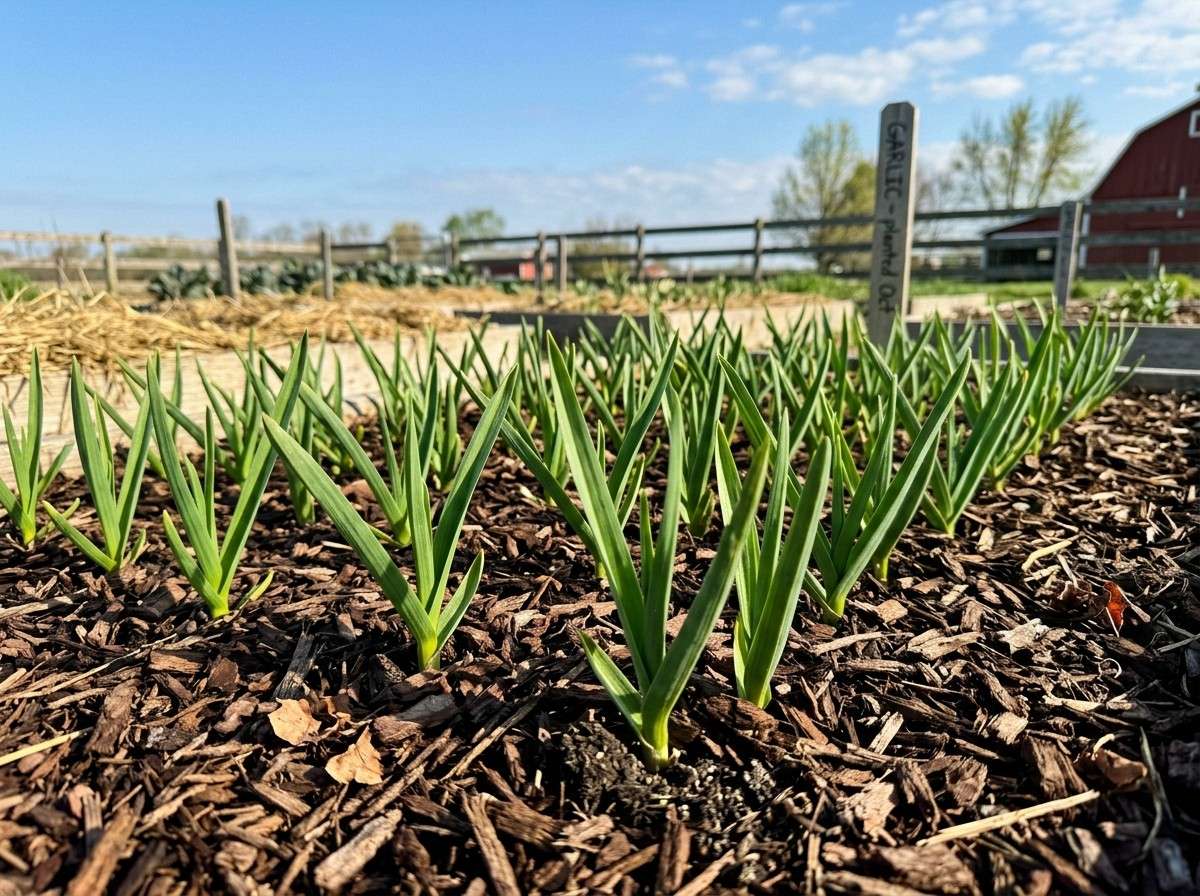
Planting garlic in Indiana is a rewarding experience for gardeners of all skill levels. Garlic, with its robust flavor and health benefits, is a staple in kitchens around the world. But growing it successfully in Indiana’s unique climate requires some knowledge and planning. Timing is everything—plant too early or too late, and you risk poor growth or a weak harvest.
This guide will explain exactly when to plant garlic in Indiana, why timing matters, and how to give your garlic the best start possible. Along the way, you’ll discover expert tips, local insights, and proven techniques for a bountiful garlic crop.
Indiana sits in the heart of the Midwest and has a humid continental climate. Winters are cold, summers are warm, and the state experiences all four seasons. The USDA Hardiness Zones for Indiana range from Zone 5b to Zone 6b. This is important because garlic is a hardy plant that needs a period of cold to form healthy bulbs.
Garlic requires several weeks of chilling, called vernalization. In Indiana, the winter months provide the perfect conditions for this process. The cold period triggers the garlic to split into cloves and form a head. If you plant at the right time, Indiana’s climate will do much of the work for you.
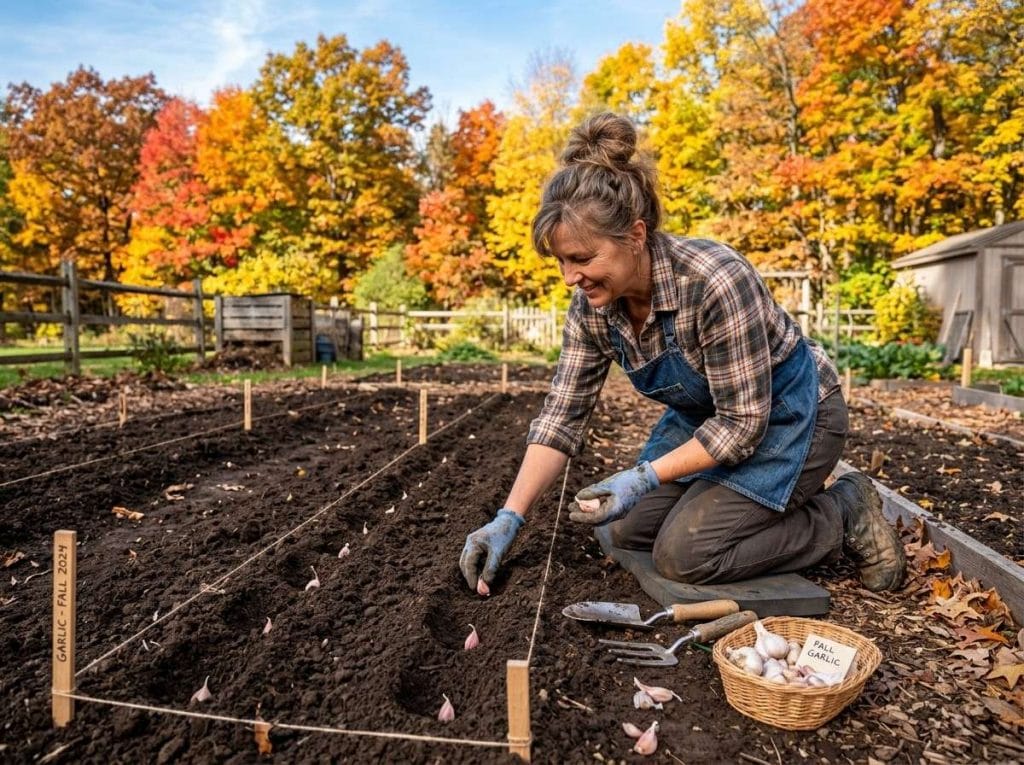
The ideal time to plant garlic in Indiana is in the fall, from mid-October to early November. This window allows the garlic to establish roots before the ground freezes, but not enough time for the shoots to grow tall above ground, which can be damaged by winter cold.
Garlic planted in the fall takes advantage of the soil’s residual warmth. The cloves begin to grow roots almost immediately. As winter arrives, the top growth slows, and the plant focuses energy below ground. By spring, the garlic is ready to grow quickly, leading to larger, healthier bulbs.
If you plant garlic in spring, the bulbs often remain small. They don’t have enough time for proper root and bulb development before harvest.
Indiana is a long state north to south, so the exact planting date can vary slightly. Here’s a quick overview:
| Region | USDA Zone | Typical Planting Window |
|---|---|---|
| Northern Indiana | 5b | October 10–25 |
| Central Indiana | 6a | October 15–31 |
| Southern Indiana | 6b | October 20–November 5 |
A good rule of thumb: Plant garlic about 2-3 weeks before the ground typically freezes in your area. If you’re not sure, local extension offices or experienced gardeners can share the average first freeze date.
Not all garlic is the same. There are two main types: hardneck and softneck. Each has pros and cons, and the choice can affect your planting time and harvest success.
For most Indiana gardeners, hardneck garlic is the top choice. Varieties such as ‘Music,’ ‘German Extra Hardy,’ and ‘Rocambole’ perform especially well. If you prefer longer storage, try a softneck like ‘Inchelium Red’ as an experiment.
Garlic thrives in well-drained, fertile soil with plenty of organic matter. Poor soil can lead to small bulbs, disease, or rot. Preparing your garlic bed in advance is one of the most important steps.
Garlic is a moderate feeder. At planting, mix in a balanced fertilizer (like 10-10-10) or blood meal. Avoid over-fertilizing, especially with nitrogen, after garlic starts growing in spring, as this can lead to lush tops but small bulbs.
Planting garlic isn’t difficult, but doing it right makes a big difference. Here’s how to plant garlic in Indiana for the best results.
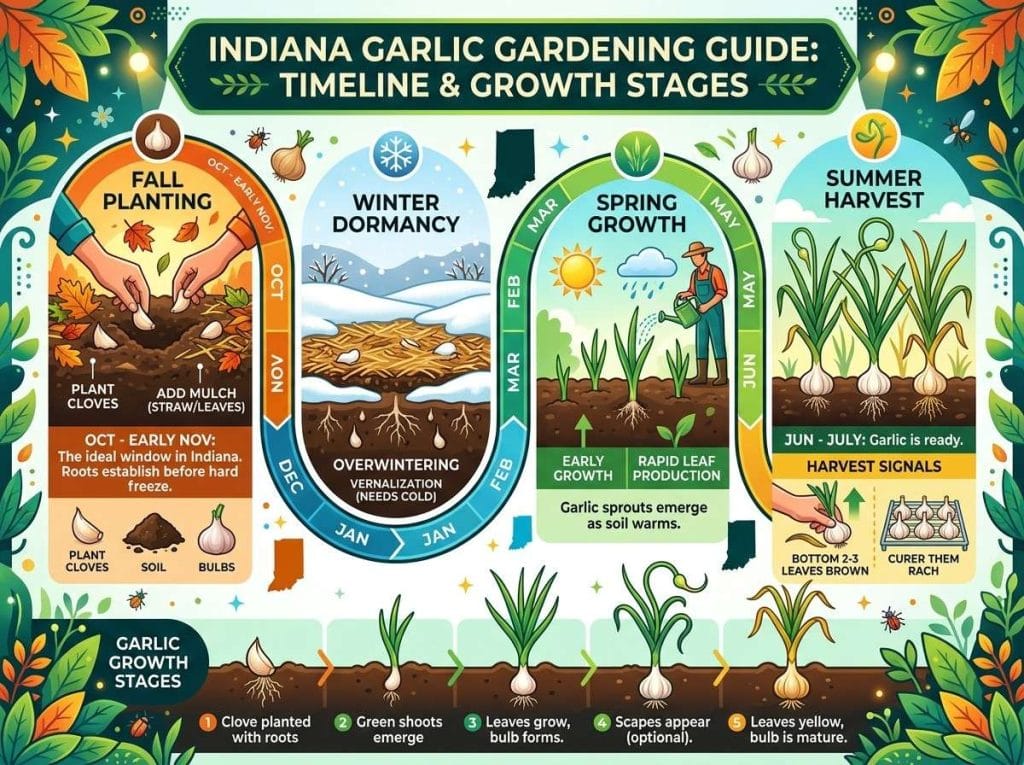
Cover the bed with 3–4 inches of mulch, such as straw, chopped leaves, or grass clippings. Mulch helps insulate the soil, prevents heaving from freeze-thaw cycles, and suppresses weeds. In spring, pull the mulch back slightly as temperatures warm to help shoots emerge.
After planting and mulching, garlic needs little attention until spring. If fall is dry, water the bed after planting to help roots develop, but avoid saturating the soil. Once winter sets in, additional watering isn’t needed.
One often overlooked tip: Don’t remove the mulch too early in spring. Indiana weather can be unpredictable. A late cold snap can damage early garlic shoots, so leave the mulch until consistent warm days arrive.
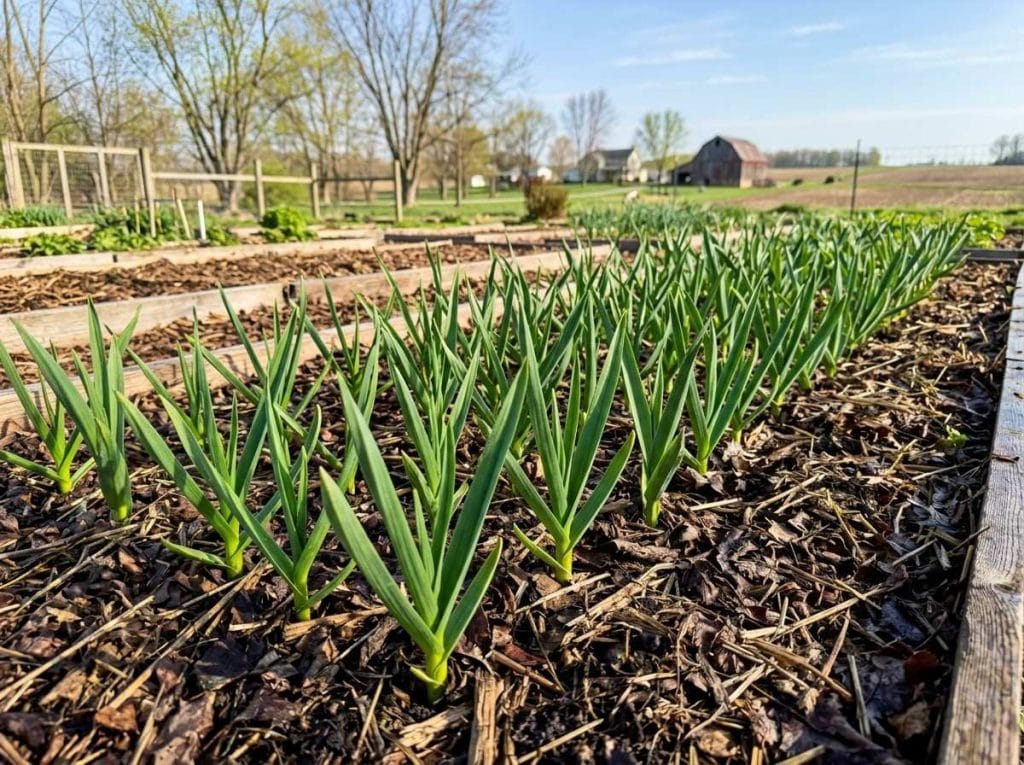
When temperatures rise in March or April, garlic begins to grow rapidly. Here’s how to care for your plants:
Garlic needs about 1 inch of water per week during active growth. Keep the soil evenly moist but not waterlogged. Reduce watering as the leaves start to yellow in early summer.
In spring, you can side-dress with a nitrogen-rich fertilizer when shoots are 4–6 inches tall. Stop adding nitrogen by late May to encourage bulb formation.
Weeds compete for nutrients and water. Keep the bed weed-free by hand-pulling or lightly cultivating around the plants.
Hardneck garlic produces a curly flower stalk called a scape in late spring. Cutting scapes as soon as they appear directs energy to the bulb, increasing size. Plus, garlic scapes are edible and delicious in stir-fries and pesto.
Garlic is usually ready to harvest in mid-to-late July in Indiana. Timing is crucial; harvest too early and the bulbs are small, too late and the cloves split apart or rot.
To check, gently lift a bulb with a garden fork and inspect it. The wrapper should be thick and papery, but not falling apart.
After curing, trim the tops and roots. Store garlic in a cool, dry place out of direct sunlight.
Even experienced gardeners make mistakes. Here are a few to avoid:
A non-obvious mistake: Failing to rotate crops. Planting garlic in the same spot year after year can build up pests and diseases. Rotate garlic with unrelated crops for better health.
Here’s a rough guide to what you should be doing throughout the garlic season in Indiana.
| Month | Task |
|---|---|
| September | Order seed garlic, prepare soil, test pH |
| October | Plant cloves, mulch bed |
| November–February | Monitor mulch, no major care needed |
| March–April | Remove some mulch, fertilize, weed |
| May–June | Water, weed, remove scapes (hardneck) |
| July | Harvest, cure, store garlic |
Growing garlic in Indiana can seem simple, but a few advanced tips make a big difference:
If you want to grow garlic year after year, save some of your harvest for seed. Choose the largest, healthiest bulbs. Store them in a cool, dry place until planting time. Over a few seasons, you’ll notice your garlic adapting and improving in your own Indiana soil.
Garlic not only tastes great but also helps other plants. When grown alongside crops like tomatoes, peppers, or carrots, garlic can repel some pests. Avoid planting garlic near beans or peas, as it may stunt their growth.
Indiana has a strong community of garlic growers. Events like the Indiana Garlic Fest in West Lafayette celebrate this beloved crop with tastings, recipes, and seed sales. Local extension offices, such as Purdue Extension, offer classes and advice tailored to Indiana’s conditions.
For more detailed climate data and recommendations, the Purdue University Horticulture Department is a valuable resource.
Planting garlic too early, such as in late September or early October, can cause the cloves to sprout above ground before winter. These shoots may be damaged or killed by freezing temperatures, weakening the plant and reducing bulb size. It’s better to wait until mid-October to early November, so roots develop but top growth stays minimal.
You can plant garlic in spring, but the results are usually disappointing in Indiana. Spring-planted garlic has less time to develop roots and undergo vernalization, often resulting in smaller bulbs. For the best harvest, stick with fall planting.
Garlic cloves should be planted about 2 inches deep from the top of the clove to the soil surface. In lighter soils, you can plant a bit deeper (up to 3 inches) for extra winter protection. Always plant cloves with the pointed end facing up.
After fall planting and an initial watering, garlic does not need extra water during Indiana’s winter. Overwatering can cause rot. Resume watering in spring as the soil warms and the plants begin to grow.
After harvesting, cure garlic in a dry, well-ventilated area for 2–3 weeks. Once cured, trim the roots and tops, then store bulbs in a cool (50–60°F), dry, and dark location. Avoid storing garlic in the refrigerator, as this can trigger early sprouting.
Planting garlic in Indiana is both an art and a science. With the right timing, preparation, and care, you can enjoy homegrown garlic that’s fresh, flavorful, and abundant. Whether you’re a beginner or a seasoned gardener, following these tips will set you up for success each season.
Happy planting!