Gardening Made Simple.
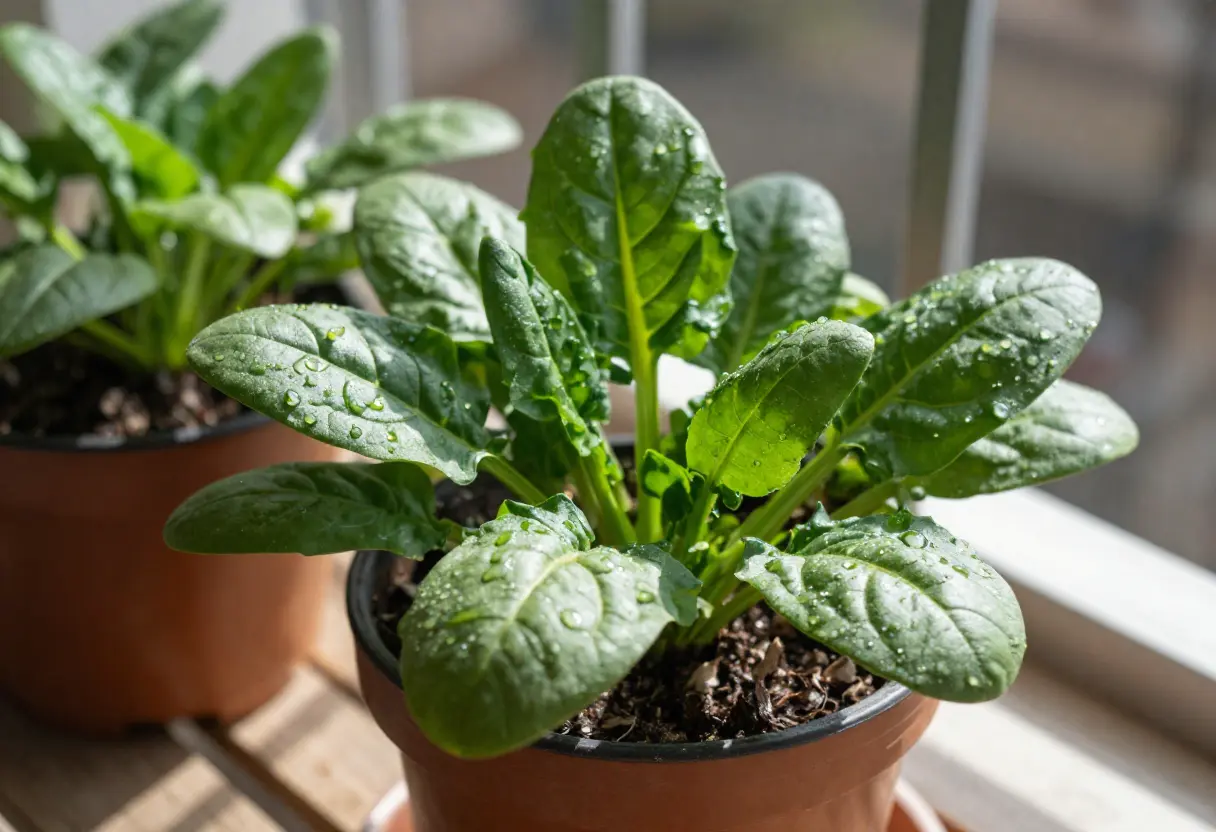
Growing fresh, vibrant spinach right on your windowsill or balcony is easier than you think. Imagine picking crisp, green leaves whenever you want, without trips to the grocery store. Learning How to Grow Spinach in a Pot will help you enjoy a continuous supply of healthy, homegrown greens.
If you’ve ever wondered how to grow spinach in a pot, this guide is made just for you. You’ll discover simple steps to get your spinach thriving, even if you don’t have a big garden space. Keep reading, and soon you’ll be enjoying homegrown spinach that’s fresh, healthy, and full of flavor.
Choosing the right pot is the first step to grow healthy spinach in containers. The pot affects the plant’s growth and how easy it is to care for. Spinach needs enough space for roots to spread and strong support to stay upright. Picking the right size and material helps spinach thrive and makes watering and moving the pot simple.
Select a pot at least 8 to 10 inches deep for spinach. This depth lets roots grow without crowding. Wider pots allow more leaves to grow and catch sunlight better. Use pots made of plastic, ceramic, or terracotta. Plastic pots keep soil moist longer. Terracotta pots dry faster and need more watering but offer good air flow. Choose a pot that fits your space and watering habits.
Drainage holes are vital for spinach pots. They stop water from collecting at the bottom. Standing water causes root rot and kills plants. Make sure the pot has several holes for water to flow out. Place a tray under the pot to catch extra water. Good drainage keeps the soil healthy and roots strong. It helps spinach grow green and tasty leaves.
Choosing the right soil is key to growing healthy spinach in pots. Good soil supports roots and keeps the plant happy. It holds water and nutrients, making spinach strong and green. Poor soil can make spinach weak and slow to grow. Focus on soil quality before planting your spinach.
Spinach grows best in light, loose soil. A mix of potting soil and compost works well. The soil should drain water but keep moisture inside. Avoid heavy clay or sandy soils alone. These soils can hold too much or too little water. A balanced soil helps spinach roots breathe and grow deep.
Start with fresh potting mix made for vegetables. Add compost to give nutrients and improve texture. Mix well before filling your pot. Test soil moisture by squeezing it. It should feel damp, not wet or dry. Avoid compacting soil too much to keep air pockets. This helps roots access oxygen and water easily.
Picking the right spinach variety is key for successful pot growing. Different types of spinach suit different conditions and tastes. Choosing the best variety helps your spinach grow healthy and fast. It also affects the flavor and leaf size.
Choose spinach types that grow well in small spaces. Baby leaf varieties work great in pots. They produce tender, small leaves and grow quickly. Some popular pot-friendly types include 'Bloomsdale', 'Space', and 'Tyee'. These varieties handle limited soil well and need less room. Compact plants save space and give more harvests.
Spinach grows best in cool weather. Pick varieties that match your local climate. For cooler areas, try 'Bloomsdale' or 'Giant Winter'. They tolerate frost and cold well. In warmer climates, select heat-resistant types like 'Melody' or 'Indian Summer'. These resist bolting and stay fresh longer. Matching variety with climate keeps your spinach healthy and tasty.
Planting spinach seeds in a pot is simple and fun. It allows you to grow fresh spinach on your balcony or windowsill. Knowing how to plant seeds correctly helps your spinach grow strong and healthy.
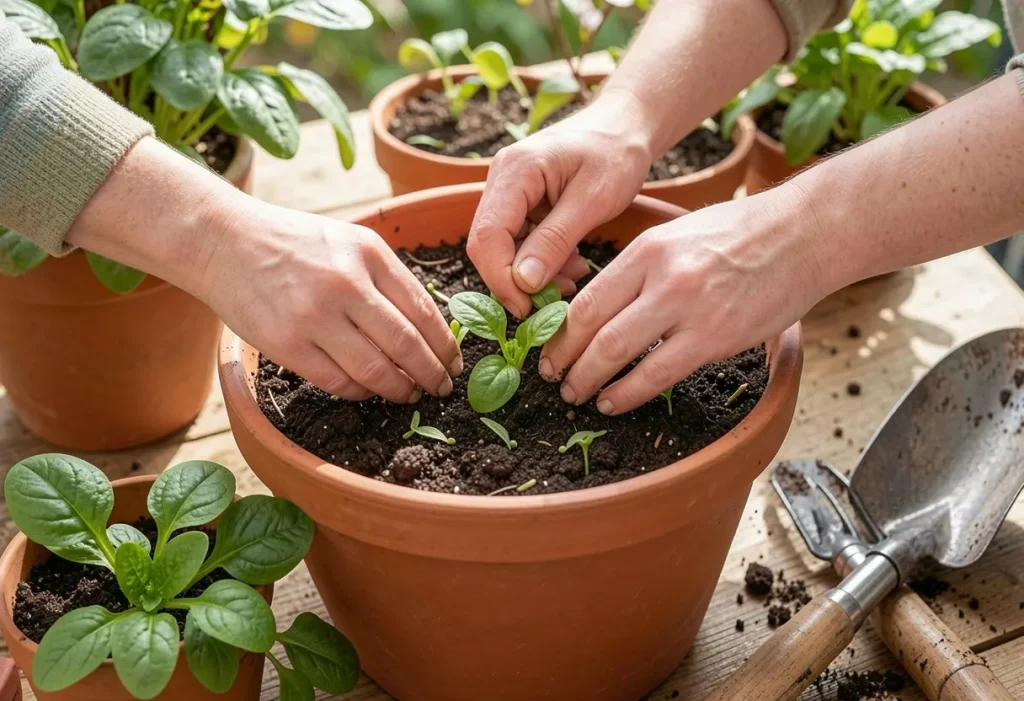
Plant spinach seeds about ½ inch deep in the soil. This depth keeps seeds moist and safe. Space each seed at least 2 inches apart. Good spacing gives each plant room to grow. Crowded plants may not grow well or produce many leaves.
Plant spinach seeds in early spring or late summer. Spinach grows best in cool weather. Avoid planting in hot summer months. Cooler temperatures help seeds sprout quickly. Spinach planted at the right time tastes fresh and sweet.
Watering is a key part of growing spinach in a pot. Proper watering helps the plant stay healthy and grow strong. Knowing how often and how much to water keeps the roots happy. It also stops problems like root rot or dry leaves.
Spinach needs steady moisture but not soaking wet soil. Water the pot when the top inch feels dry. This might be every two to three days, depending on weather and pot size. Give enough water to moisten the soil evenly. Avoid letting water pool on the surface.
Too much water can harm spinach roots. It causes the soil to stay soggy, which stops air from reaching roots. Watch for yellow leaves or wilting, signs of overwatering. Make sure pots have drainage holes to let extra water escape. Water less often if the soil stays wet for days.
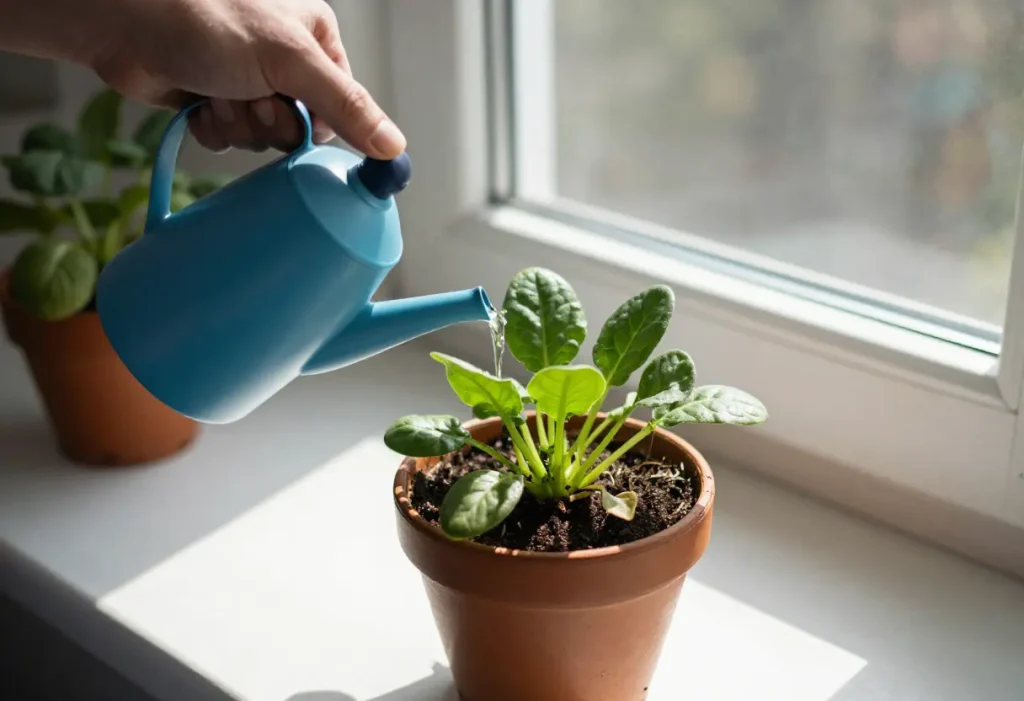
Spinach needs the right amount of light to grow strong and healthy. Light helps spinach make food through photosynthesis. Without enough light, spinach plants get weak and grow slowly. Too much light can cause leaves to turn yellow or dry out. Giving your spinach the proper light is key to a good harvest.
Spinach grows best with about 6 hours of sunlight daily. Morning sun is gentle and ideal. Afternoon sun can be too hot and harm the leaves. Partial shade can help during hot summer days. Observe the light pattern where you place your pot. Adjust the pot to get enough light without overheating the plant.
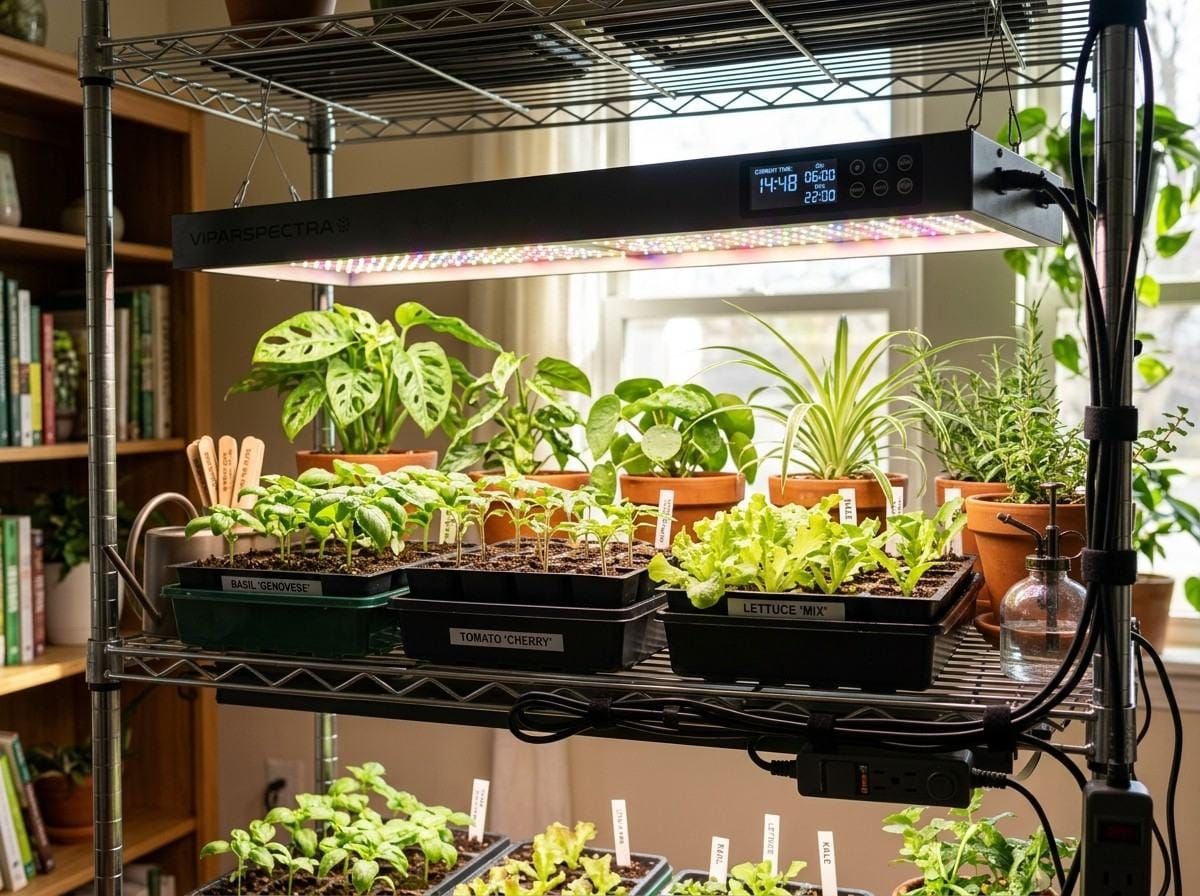
Outdoor spinach enjoys natural sunlight, which is full spectrum and balanced. Indoor spinach needs a bright spot near a south-facing window. If natural light is weak, use grow lights to help the plant. LED grow lights work well and save energy. Keep indoor spinach under light for 12 to 14 hours each day. Rotate the pot regularly so all sides get light evenly.
Fertilizing spinach grown in pots helps plants get the nutrients they need. Healthy soil alone may not supply enough food for strong growth. Good fertilizing supports leafy, green spinach that grows fast. It keeps the plants from getting weak or yellow. Choosing the right fertilizer and using it correctly makes a big difference. Below are tips on types of fertilizers and how to apply them well.
Spinach needs fertilizers rich in nitrogen for leafy growth. Organic options like compost or fish emulsion work well. They release nutrients slowly and improve soil health. Chemical fertilizers provide quick nutrients but use carefully to avoid burning roots. Balanced fertilizers labeled for leafy vegetables also suit spinach. Avoid fertilizers high in phosphorus, which is for flowers and roots. Stick to nitrogen-focused types for best results.
Start fertilizing spinach about two weeks after planting. Use a light dose at first to avoid overload. Repeat feeding every two weeks during the growing season. Water the plants well before and after applying fertilizer. This helps nutrients spread evenly in the soil. Stop fertilizing one week before harvesting. This prevents a strong taste and keeps leaves fresh. Regular feeding encourages steady, healthy spinach growth in pots.
Growing spinach in pots can face challenges from pests and diseases. Managing these problems early keeps plants healthy and productive. Recognizing pests and using safe control methods protect your spinach without harming the environment.
Aphids are small insects that suck plant juices. They cause leaves to curl and become sticky. Leaf miners tunnel inside the leaves, leaving white trails. Spider mites create tiny webs and make leaves look speckled. Slugs and snails chew large holes in leaves, especially at night. Each pest can reduce your spinach yield and quality.
Spray plants with a strong water jet to remove aphids. Introduce ladybugs to eat aphids naturally. Use neem oil or insecticidal soap for safe pest control. Handpick slugs and snails during early morning or evening. Keep the area clean of fallen leaves and debris. Plant herbs like basil nearby to repel pests naturally.
Harvesting spinach leaves is an important step in growing healthy plants. Picking leaves at the right time keeps your spinach fresh and tasty. It also helps the plant grow more leaves. Knowing how and when to harvest makes a big difference.
Harvest spinach leaves when they are young and tender. Usually, leaves are ready to pick 4 to 6 weeks after planting. Look for leaves that are about 3 to 4 inches long. Early morning is the best time to harvest. The leaves will be crisp and full of moisture. Avoid harvesting leaves that look yellow or damaged.
Use clean scissors or garden shears to cut leaves. Cut the outer leaves first, near the base of the plant. Leave the inner leaves to keep growing. Do not pull or tear leaves from the plant. This can damage the roots and reduce future growth. Pick leaves carefully to keep the plant healthy. Regular harvesting encourages new leaf growth.
Growing spinach in a pot is easy and rewarding. To keep your spinach plants producing fresh leaves for a long time, follow some simple tips. These tips help your plants stay healthy and strong. They also make sure you have a steady supply of spinach.
Plant spinach seeds every two weeks. This keeps new plants growing as older ones finish. You avoid gaps in your harvest. Successive planting means you always have fresh spinach ready to pick. It works well in small pots and balconies.
Use small containers for each batch. Label them with planting dates. This helps track growth and plan your next planting. Rotate seed varieties for more flavor and color. Spinach grows fast, so a new batch grows before the last one ends.
Healthy soil keeps spinach strong and tasty. Use a good potting mix with compost. Compost adds nutrients and improves soil texture. Water spinach regularly but avoid waterlogging. Let the top inch of soil dry between watering.
Fertilize every few weeks with a balanced liquid fertilizer. This gives plants the nutrients they need. Remove yellow or dead leaves to keep the plant healthy. Refresh soil each season by mixing in fresh compost. Good soil health helps spinach grow continuously and resist pests.
Choose a pot at least 6-8 inches deep to allow roots to grow well.
Water spinach when the top inch of soil feels dry to keep it moist but not wet.
Use well-draining, rich soil with organic matter for healthy spinach growth.
Spinach needs about 4-6 hours of direct sunlight daily to grow strong.
Yes, place the pot near a sunny window or use grow lights for best results.
Growing spinach in a pot is simple and rewarding. Choose a pot with good drainage and use fresh soil. Water regularly but avoid overwatering. Place the pot where spinach gets enough sunlight. Watch your plants grow and pick leaves often for best taste.
Spinach grows fast and adds fresh greens to your meals. With a little care, you can enjoy homegrown spinach anytime. Gardening in pots fits small spaces and busy lives. Give it a try and enjoy fresh spinach at home!