Gardening Made Simple.
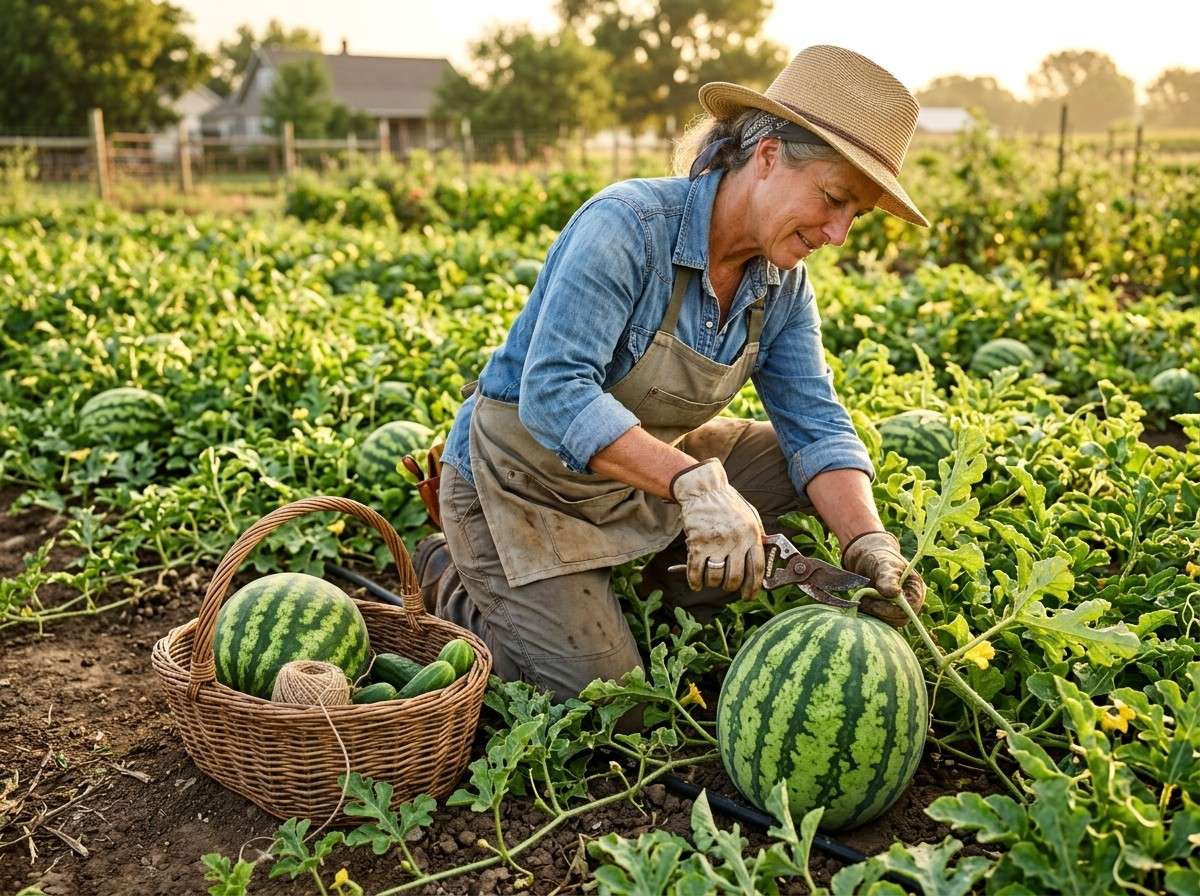
Picking a watermelon at the perfect time can feel a little mysterious. Many gardeners and buyers struggle to know exactly When to Pick Watermelon for the best flavor and texture. Pick it too early, and you may end up with a bland, underdeveloped fruit. Pick it too late, and it can become mushy or overripe. Knowing the signs of ripeness will help you harvest sweet, juicy watermelons at their peak.
But you don’t need special tools or expert knowledge to get it right. With a bit of attention and some practical tips, you can learn to spot the signs of a perfectly ripe watermelon.
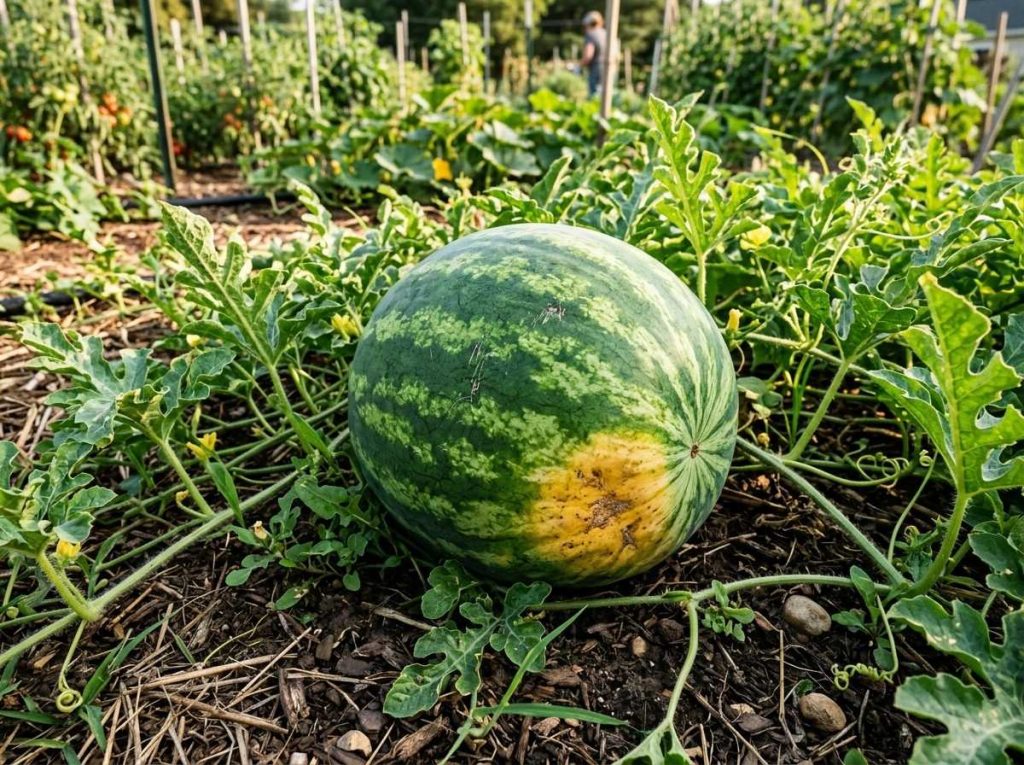
Watermelon is more than just a sweet treat. It’s packed with water, vitamins, and antioxidants. The right timing for picking means you get the best flavor and nutrition. Whether you grow watermelons in your backyard or choose them from a field or store, knowing when to harvest is key.
This guide will help you understand the clues for picking watermelon, mistakes to avoid, and how to get the most from each melon you select.
The moment you pick a watermelon, its ripening process stops. Unlike some fruits, watermelon cannot ripen further after harvest. If you pick it too soon, you get a fruit that tastes dull and has a hard texture. If you wait too long, the watermelon can become grainy, dry, or even split open.
Getting the timing right means more than just flavor. It affects:
According to the USDA, watermelons grown in the US usually mature in about 80–100 days from planting. But actual timing depends on variety, climate, and growing conditions. Harvesting at the right stage makes a difference in every bite.
Knowing when a watermelon is ripe is not about guesswork. You can use several clues to check for readiness. Here are the most reliable signs:
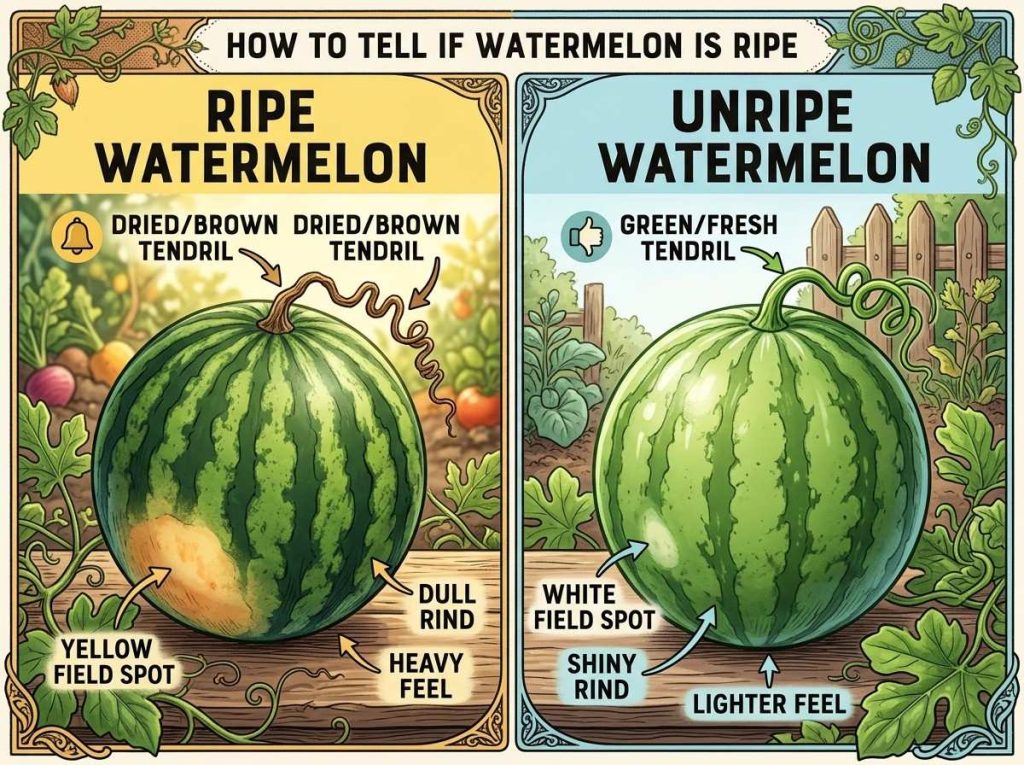
When a watermelon sits on the soil, the part touching the ground develops a ground spot. As the fruit ripens, this spot changes color.
The ground spot is one of the easiest signs to check. If it’s yellow, the watermelon is usually ready.
Look at the curly tendril closest to where the watermelon connects to the vine. This tendril dries up as the fruit matures.
This signal is more reliable than just looking at the fruit’s size.
A ripe watermelon has a dull, matte finish. Shiny watermelons are often immature.
Check for firmness too. The fruit should feel solid and heavy for its size.
Tap the watermelon gently with your knuckles. Listen for the sound.
This test takes practice, but many growers use it every season.
Ripe watermelons are usually symmetrical. Odd shapes can mean uneven ripening.
Compare the fruit to its expected size for the variety. Ripe watermelons often feel heavier than they look, because they’re full of juice.
Brown, rough patches called sugar spots or webbing can appear on ripe watermelons. These marks often mean the fruit is sweet.
Different types of watermelons ripen at different speeds. Knowing your variety helps you plan harvest timing.
Here’s a comparison of common watermelon types and their average days to maturity:
| Variety | Days to Maturity | Typical Size | Ripening Signs |
|---|---|---|---|
| Crimson Sweet | 80–90 | 20–25 lbs | Yellow ground spot, dry tendril |
| Sugar Baby | 75–80 | 7–10 lbs | Yellow spot, hollow sound |
| Charleston Gray | 85–100 | 20–35 lbs | Uniform shape, dry tendril |
| Black Diamond | 90–100 | 30–50 lbs | Yellow spot, dull skin |
| Jubilee | 90–100 | 25–40 lbs | Yellow spot, sugar webbing |
Most watermelons take about 80–100 days from planting to harvest. But climate, soil, and care can speed up or slow down ripening.
Watermelons need warm weather to grow and ripen. If the season is cool or rainy, fruit can take longer to mature. Very hot weather can sometimes speed up ripening, but may also stress the plant.
Here are some factors that affect picking time:
If you notice your watermelons growing slower or faster than usual, check the weather patterns. Adjust expectations based on the conditions.
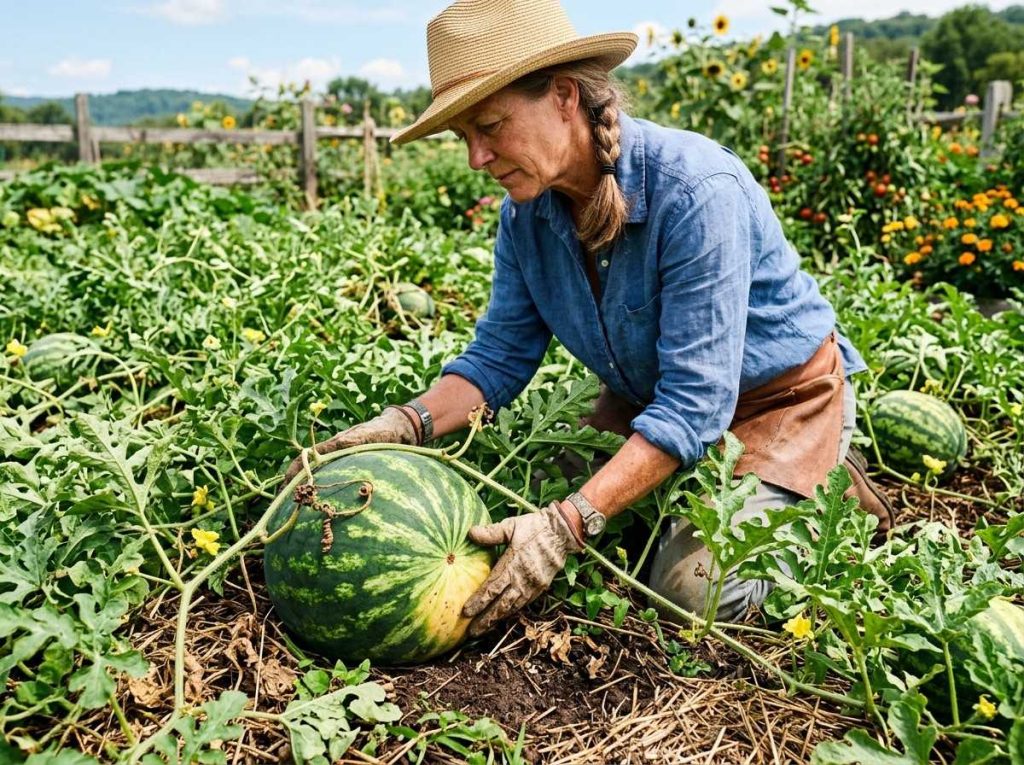
If you’re growing watermelons, follow these steps to pick at the right time:
Use a sharp knife or pruners to cut the watermelon from the vine. Leave a small length of stem attached to prevent rot.
Many beginners make simple errors. Avoid these mistakes:
If you’re buying watermelons rather than picking from a vine, some clues are still useful.
If the store allows, compare several watermelons side by side. Pick the one with the best combination of these signs.
Watermelon grows best in warm places, but harvest time can vary. Here’s a comparison of average harvest dates in different US regions:
| Region | Planting Window | Average Harvest Time |
|---|---|---|
| Southern US | March–April | June–July |
| Midwest | May | August–September |
| Northeast | May–June | August–September |
| Pacific Coast | April–May | July–August |
Knowing your local climate helps you plan when to check for ripeness. In cooler areas, watermelons may need extra weeks to mature.
Some growers use extra methods to fine-tune their harvest. These tips can help if you want the very best results:
A non-obvious insight: Watermelons on the same vine may ripen at different times. Always check each fruit individually.
Picking watermelon at the wrong time leads to disappointment. Here’s what you can expect:
If you accidentally pick a watermelon early, there’s no way to fix it. Watermelon does not ripen after harvest. If overripe, use it for smoothies or juice.
After picking, proper storage keeps watermelon fresh longer.
A useful tip: Store whole watermelons in a cool, dry place. Cold storage below 50°F can cause chilling injury and reduce flavor.
Home gardeners usually pick watermelons by hand and rely on visual signs. Commercial farms often check ripeness using a mix of visual and scientific tests.
| Picking Method | Home Gardeners | Commercial Farms |
|---|---|---|
| Visual signs | Ground spot, tendril, sound | Same, plus scheduled sampling |
| Sugar testing | Rare | Common with refractometers |
| Harvest tools | Knife, pruners | Special cutters, machines |
| Harvest timing | Individual fruit checked | Blocks or rows harvested together |
Commercial farms often harvest by area for efficiency, but home gardeners can check each fruit for perfect ripeness.
Organic gardeners focus on soil health and natural pest control. These practices can influence harvest time:
Sustainable practices also encourage picking at the right time to reduce waste.
Watermelon is grown in many countries. Timing and methods differ based on climate and tradition.
Different cultures use unique signs and customs for picking watermelon. Some rely on knock tests, while others look for specific color changes.
After picking, watermelon can be enjoyed in many ways:
A practical tip: If a watermelon is slightly underripe, sprinkle with salt to enhance flavor. This old trick can help bring out sweetness.
Many people miss these details:
These points help you get the most from your garden or shopping trip.
Look for a yellow ground spot, a dry tendril near the stem, a dull skin, and a hollow sound when tapped. These signs work for most varieties.
No, watermelon does not ripen after harvest. It cannot improve in sweetness or texture once cut from the vine.
Overripe watermelon may have grainy texture, watery taste, and may split open. It’s still safe to eat, but flavor and quality are reduced.
The knock test can help, but it’s best used with other signs like the ground spot and tendril. Practice helps you hear the right sound.
Whole watermelon can be stored for up to 2 weeks at room temperature. Cut watermelon should be refrigerated and used within 3–5 days.
Picking watermelon at the right moment makes all the difference. With these tips, you can enjoy juicy, sweet fruit every season—whether you grow it yourself or buy from a store. For more in-depth information, see this resource: Wikipedia. Use the signs, avoid common mistakes, and you’ll always get the best from your watermelon harvest.