Gardening Made Simple.
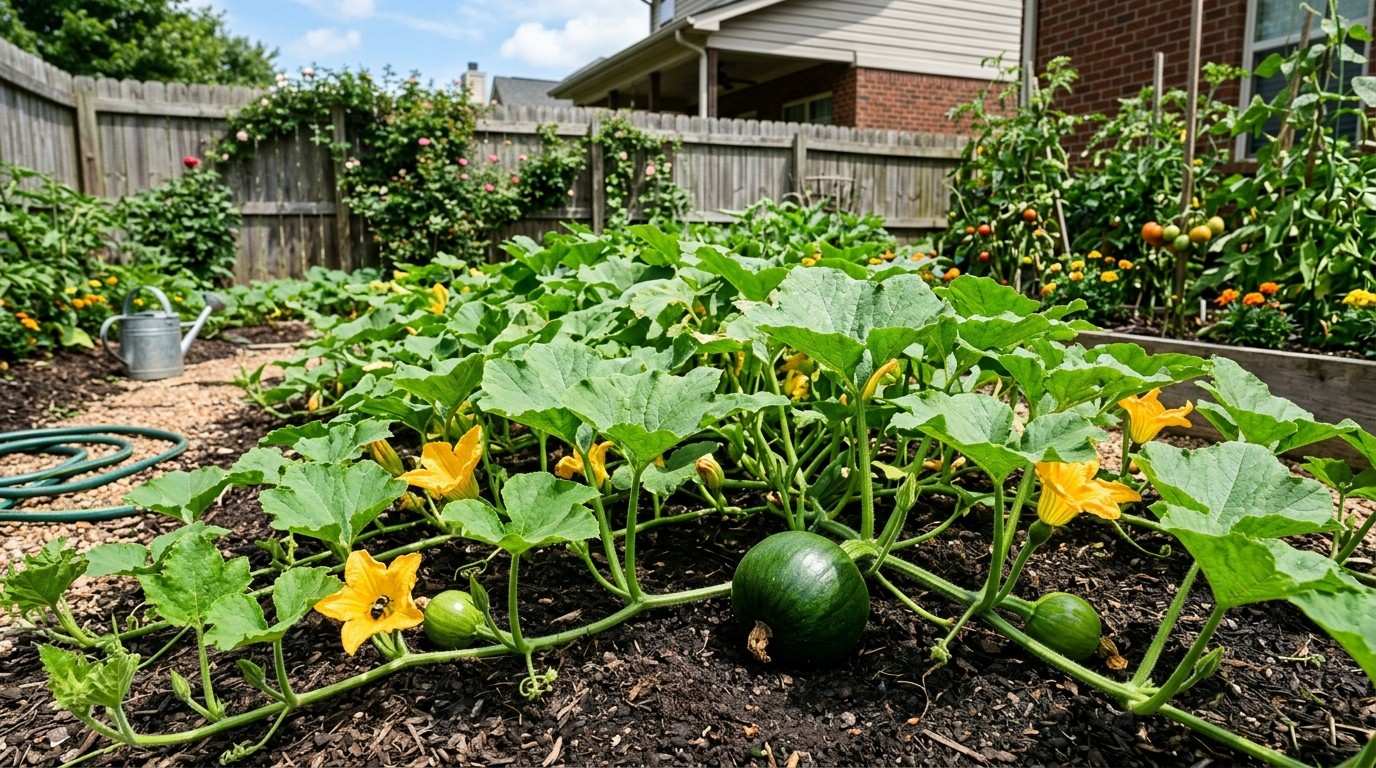
Planting pumpkins in Tennessee brings both excitement and a bit of planning. While pumpkins are a classic symbol of fall and Halloween, growing them successfully means understanding local weather, soil, and timing.
Tennessee’s climate is friendly for pumpkins, but getting the timing right can make the difference between big, beautiful gourds and a patch of tiny, underdeveloped fruit. Knowing When to Plant Pumpkins in Tennessee is essential for achieving strong vines and a healthy, productive harvest.
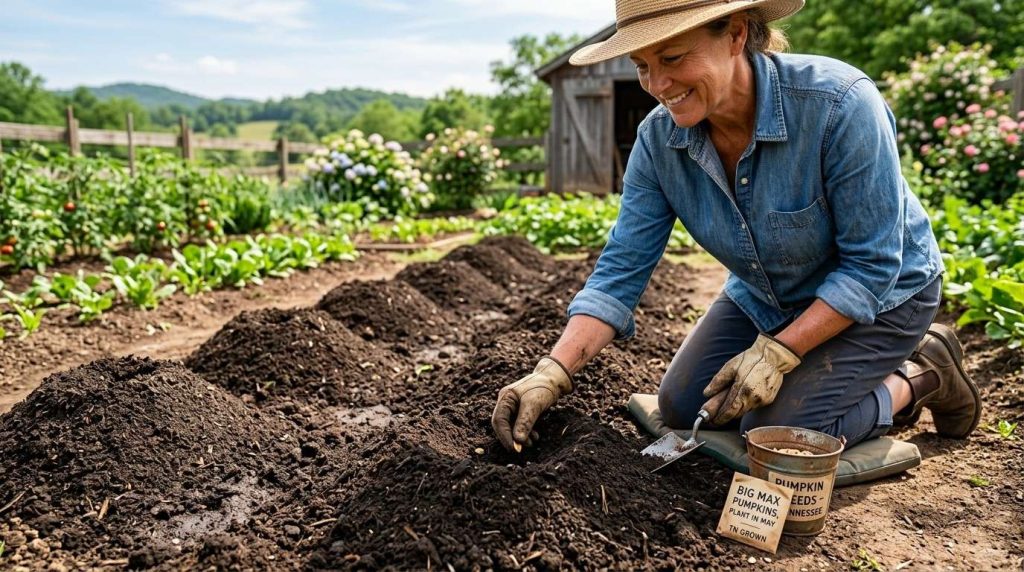
If you’re eager to grow pumpkins in Tennessee, this guide covers everything you need to know—when to plant, how to prepare, what to watch for, and even how to avoid common mistakes.
Tennessee sits in the USDA Hardiness Zones 6 and 7, which means winters are mild and summers get hot and humid. These conditions favor pumpkin growth, but the state’s unpredictable spring frosts and varied rainfall make timing crucial.
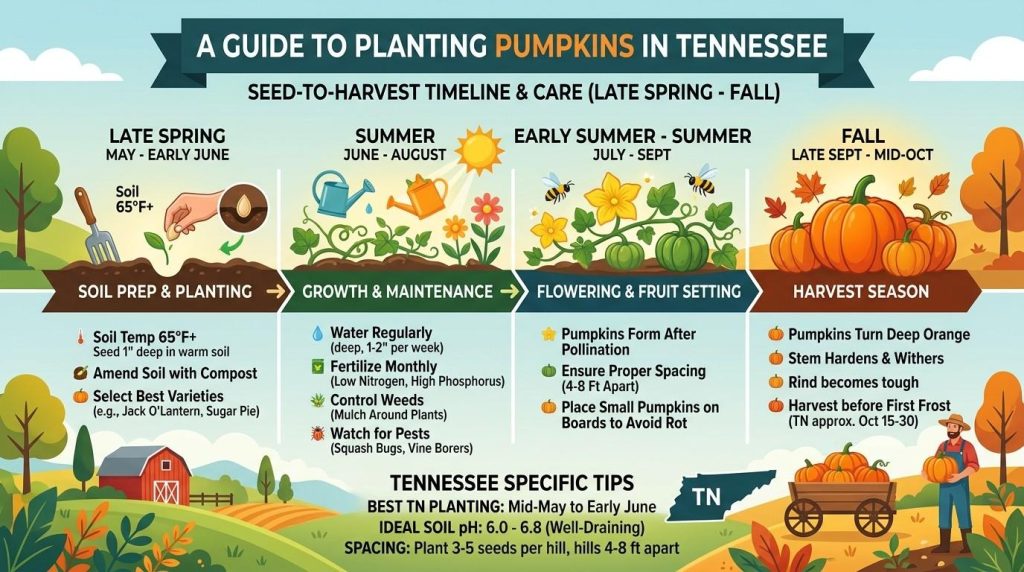
Pumpkins need a long, warm growing season—about 90 to 120 days from seed to harvest. That means you’ll want to plant so that your pumpkins mature before the first hard frost in fall.
For most gardeners, the question is simple: When do you put pumpkin seeds in the ground? The answer depends on your goals:
The best time to plant pumpkins in Tennessee is late April to early June. Here’s a quick breakdown:
| Region | Recommended Planting Window | Last Frost Date | First Frost Date |
|---|---|---|---|
| West Tennessee (Memphis, Jackson) | April 20 – June 1 | April 5 – April 15 | October 15 – October 25 |
| Middle Tennessee (Nashville, Murfreesboro) | April 25 – June 5 | April 10 – April 20 | October 10 – October 20 |
| East Tennessee (Knoxville, Chattanooga) | May 1 – June 10 | April 15 – May 5 | October 5 – October 15 |
Key insight: Many beginners plant too early—right after a warm spell in March or early April. But a late frost can kill young pumpkin plants. Always wait until soil temperatures are reliably above 60°F (16°C).
Tennessee’s climate supports many pumpkin types. Your choice should match your goals:
Not every variety matures at the same speed. Some need just 85 days, others up to 120. Check the “days to maturity” on your seed packet.
| Pumpkin Variety | Days to Maturity | Best Use | Size Range |
|---|---|---|---|
| Howden | 110 | Carving | 18–25 lbs |
| Sugar Pie | 100 | Baking | 4–7 lbs |
| Atlantic Giant | 120 | Giant/Show | 100+ lbs |
| Jack Be Little | 95 | Decoration | 0.5–1 lb |
Non-obvious tip: Smaller varieties are less likely to suffer from rot or splitting in Tennessee’s humid summers. If you’re new to pumpkin growing, start with a pie or miniature variety.
Pumpkins are heavy feeders. They need nutrient-rich, loose soil with good drainage. Tennessee’s clay soils may need improvement.
Pro tip: Create small hills or mounds about 12–18 inches high and 2–3 feet wide. This warms the soil faster and improves drainage, which is especially helpful after spring rains.
Should you start pumpkin seeds inside or plant them directly in the garden? Both methods work, but each has pros and cons.
Warning: Pumpkins dislike root disturbance. If you start indoors, use containers that can be planted directly into the soil to avoid damaging the roots.
Success starts with the right planting method. Here’s how to do it:
Advanced tip: If space is tight, train pumpkin vines along a fence or trellis. Use slings to support developing fruit.
Tennessee summers can swing from dry spells to heavy rains. Pumpkins need 1–2 inches of water per week, especially during fruit set and growth.
Beginner mistake: Over-fertilizing with nitrogen after flowering can cause lush vines but few pumpkins. Balance is key.
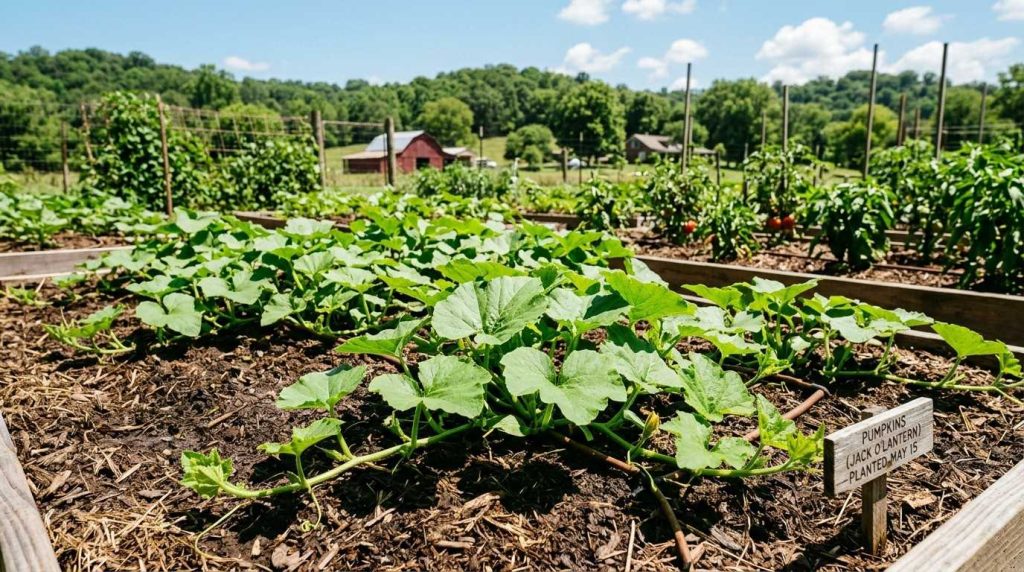
Pumpkins in Tennessee face several common pests and diseases. Watch out for:
| Pest/Disease | Symptoms | Control Methods |
|---|---|---|
| Squash Bugs | Wilting, yellow leaves, visible bugs | Hand-pick, use row covers, remove debris |
| Cucumber Beetles | Chewed leaves, stunted growth | Floating row covers, neem oil, trap crops |
| Powdery Mildew | White powder on leaves | Space plants, remove affected leaves, fungicidal sprays |
| Downy Mildew | Yellow spots, fuzzy growth | Improve air flow, copper fungicides, avoid overhead watering |
Non-obvious insight: Early planting increases disease risk because cool, damp weather helps fungi grow. Waiting for warm soil can reduce mildew and rot.
Knowing when to pick pumpkins is just as important as planting them at the right time. Harvest too soon, and they won’t store well. Too late, and frost may damage them.
Harvesting steps:
Tip: If a frost is coming, pick your pumpkins—even if they’re not fully ripe. Some may finish ripening indoors.
If you want Halloween pumpkins, timing is everything. Count backward from October 15 (the typical carving season) by the days to maturity for your variety.
But don’t cut it too close. Pumpkins left too long in the field can rot or be attacked by pests.
Pro advice: In Tennessee, planting in late May to early June is usually perfect for Halloween pumpkins. This allows for growth, harvest, and curing before the weather turns cold.
Tennessee’s weather is mostly friendly, but if you want to get a head start or push your season longer, try these tricks:
Even experienced gardeners make errors with pumpkins. Here are some to watch out for:
Extra tip: Don’t forget to rotate your crops. Growing pumpkins in the same spot each year encourages pests and diseases.
Tennessee celebrates pumpkins in many ways. From local pumpkin patches to festivals and contests, there’s a lot of community knowledge to tap into.
For science-based advice, visit the University of Tennessee Extension.
For most parts of Tennessee, the last planting date for carving pumpkins is around late June. This gives enough time for the pumpkins to mature and cure before Halloween. If you plant later than July 1, your pumpkins might not reach full size or could be at risk from early fall frost.
Yes, you can start pumpkin seeds indoors 2–3 weeks before your last expected frost. Use peat pots or other biodegradable containers to avoid disturbing roots during transplanting. Move them outside after the soil is warm and danger of frost has passed.
Powdery mildew is common in Tennessee’s humid climate. Improve air circulation by spacing plants properly, avoid overhead watering, and remove affected leaves. If needed, apply an approved fungicide early, before the disease spreads.
Pumpkin vines are large and need plenty of room. Standard varieties require 4–6 feet between hills, and rows should be 6–10 feet apart. Miniature varieties can be spaced closer, but always allow for good airflow.
Giant pumpkins need extra care: very rich soil, lots of water, and protection from pests. Start seeds indoors for a head start, and use floating row covers early in the season. Prune vines to focus energy on one or two fruits per plant for maximum size.
Growing pumpkins in Tennessee is rewarding, whether for pies, carving, or just the joy of seeing big orange fruits in your garden. With the right timing and care, you can enjoy a bumper crop every year. Remember, patience and observation are your best tools—watch the weather, tend your soil, and you’ll soon be harvesting beautiful pumpkins, right on schedule.