Gardening Made Simple.

Are you ready to grow fresh, tasty spinach right in your garden? Knowing exactly when to plant spinach can make all the difference between a handful of leaves and a bountiful harvest.
If you want your spinach to thrive and avoid common pitfalls, this guide is made just for you. Keep reading to discover the best times to plant spinach, so you can enjoy crisp, nutritious greens straight from your backyard. Your garden—and your taste buds—will thank you!

Spinach grows best in cool weather. Picking the right season helps the plant thrive. Knowing the best times to plant spinach increases your chances of a healthy harvest.
Spinach prefers temperatures between 50°F and 70°F. Planting at the right time avoids heat stress and bolsters growth. Two main seasons suit spinach planting well.
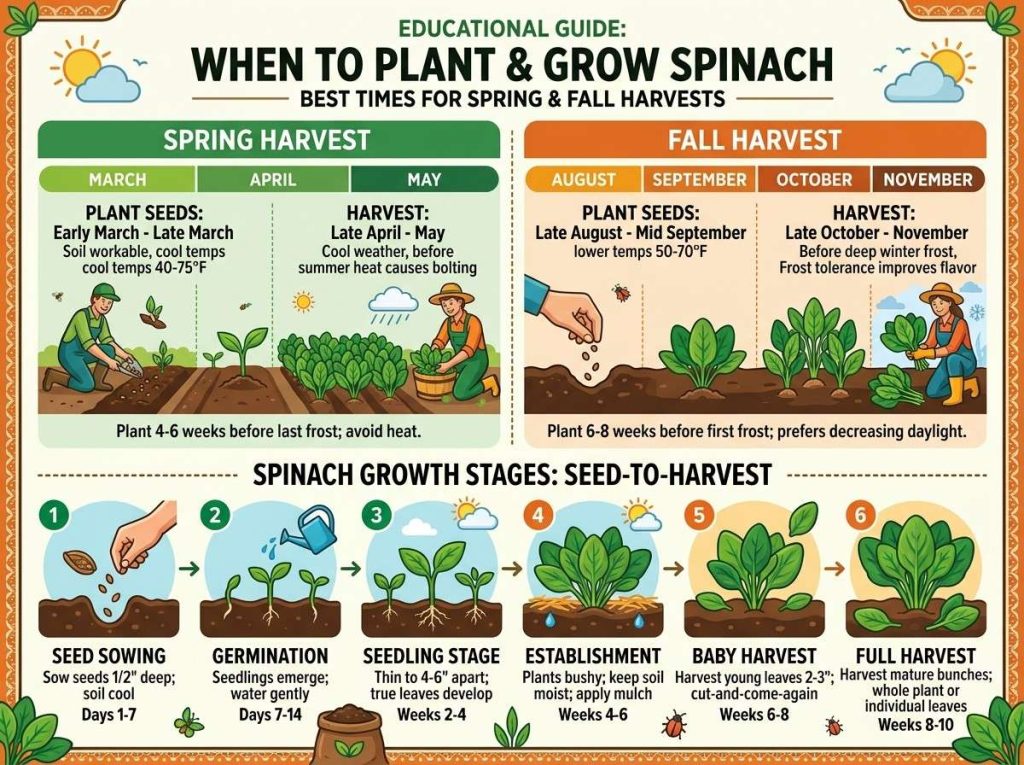
Spring is a great time to start spinach seeds. Soil warms enough for seed germination but stays cool overall. Early spring planting lets spinach mature before heat arrives. This timing reduces the risk of bolting or leaf bitterness.
Fall also offers ideal conditions for spinach. Cooler air and soil temperatures slow growth slightly but improve leaf quality. Planting in late summer to early fall ensures spinach grows through mild weather. This season often produces sweeter, tender leaves.
Spinach does not like hot weather. High temperatures cause it to bolt quickly. Bolting means the plant produces flowers and seeds early, making leaves bitter. Avoid planting spinach in mid-summer or during heat waves. Shade and mulch can help if summer planting is necessary.
Preparing the soil properly helps spinach grow strong and healthy. Good soil makes roots spread well and take in water easily. It also gives spinach the right nutrients to grow big leaves. Follow these tips to get your soil ready for planting spinach.
Spinach grows best in loose, well-drained soil. Sandy loam or silty loam works great. Avoid heavy clay soil. It holds too much water and can cause root rot. Good soil drains water but keeps some moisture for roots.
Spinach prefers soil with a pH between 6.0 and 7.5. This range helps plants absorb nutrients easily. Test your soil with a kit before planting. If pH is too low, add lime to raise it. If too high, add sulfur to lower it.
Spinach needs plenty of nutrients to grow well. Mix compost or well-rotted manure into the soil. This adds organic matter and nutrients. Use a balanced fertilizer with nitrogen to boost leaf growth. Avoid too much fertilizer; it can harm plants.
Selecting the right spinach variety is important for a good harvest. Spinach types differ in leaf shape, growth speed, and cold tolerance. Choose the variety that suits your climate and taste. This helps you get fresh, healthy leaves all season.
Understanding leaf types, cold-resistant options, and fast growers will guide your choice. Each kind offers unique benefits for your garden.
Spinach leaves come in different forms: flat, savoy, and semi-savoy. Flat leaves are smooth and easy to clean. Savoy leaves are curly and textured, adding extra crunch. Semi-savoy is a mix of both, offering some curl with easier washing. Pick the leaf type you enjoy eating and cooking with.
Spinach grows best in cool weather. Cold-tolerant varieties survive frost and low temperatures. These types let you plant early in spring or late in fall. Examples include ‘Winter Bloomsdale’ and ‘Giant Winter’. They keep producing leaves even in chilly weather.
Some spinach varieties grow quickly. They provide fresh leaves in just a few weeks. Fast growers are great for quick salads and continuous harvesting. ‘Space’ and ‘Tyee’ are popular fast-growing types. Plant them to enjoy fresh spinach sooner.
Planting spinach seeds properly helps your plants grow healthy and strong. Follow simple guidelines for sowing seeds. This ensures good germination and a bountiful harvest.
Direct seeding means planting seeds straight into the soil. It is the easiest and most common method. Spinach grows quickly this way. Transplanting starts seeds indoors and moves seedlings outside later. This method works well in colder climates. Choose the method based on your weather and space.
Plant seeds about ½ inch deep in loose soil. Space seeds 1 to 2 inches apart. Thin seedlings to 4 to 6 inches apart once they sprout. Proper spacing lets spinach leaves get enough air and sunlight. Avoid crowding to reduce disease risk.
Water the soil gently after planting. Keep soil moist but not soggy. Water daily if the soil dries quickly. Moist soil helps seeds sprout faster. Avoid overwatering to prevent seed rot.
Temperature and climate play a big role in growing healthy spinach. This leafy green grows best in cool weather. Understanding the right temperature and how spinach reacts to cold and heat helps you choose the best planting time. Proper timing leads to strong plants and a good harvest.
Spinach grows best between 50°F and 70°F (10°C to 21°C). This range helps leaves stay tender and flavorful. Planting spinach during these temperatures ensures steady growth. Temperatures outside this range can slow growth or cause problems.
Spinach can handle light frost. It even tastes sweeter after a frost. Young spinach plants survive brief cold spells near 28°F (-2°C). Protect plants during hard freezes to avoid damage. Use covers or mulch to keep roots safe.
Spinach struggles when temperatures rise above 75°F (24°C). Heat makes leaves turn bitter and causes the plant to bolt. To avoid heat stress, plant spinach early in spring or late in fall. Provide shade or water often if heat comes early.
Knowing the signs of ready soil and weather is key for planting spinach. Spinach grows best in cool, moist conditions. Planting too early or late can harm growth. Watch the soil and weather closely before planting.
Soil must be moist but not soaked. Dry soil stops seeds from sprouting. Water the soil a day before planting if it feels dry. Soft soil helps roots grow strong and deep.
Spinach can handle light frost but not hard freezes. Check your area’s last frost date. Plant spinach about two weeks before this date. This timing protects young plants from cold damage.
Spinach needs 10 to 12 hours of daylight daily. Too much heat from longer days makes it bolt. Early spring or fall offers the best daylight for growth. Keep track of daylight hours for best results.
Planting spinach can be simple, but common mistakes can reduce your harvest. Avoid these errors to grow healthy, tasty spinach. Small changes in planting habits make a big difference.
Spinach grows best in cool weather. Planting too early means seeds may not sprout well. Cold soil slows growth and can cause seeds to rot. Wait until soil temperature reaches 40°F (4°C) or higher. This helps seeds grow strong and fast.
Spinach leaves need space to grow. Planting seeds too close leads to small, weak plants. Overcrowded spinach also invites pests and diseases. Leave at least 2 inches between seeds for good air flow. Thin seedlings if too many sprout together.
Healthy soil is key to strong spinach. Poor soil causes slow growth and weak leaves. Spinach prefers loose, well-drained soil with organic matter. Test soil pH; aim for 6.0 to 7.0. Add compost or aged manure before planting for best results.
Taking good care of spinach after planting helps it grow strong and healthy. Proper care ensures the leaves stay fresh and tasty. Knowing how to water, mulch, and manage pests makes a big difference.
Spinach needs regular watering to keep the soil moist. Water deeply once or twice a week. Avoid overwatering to stop root rot. Early morning watering is best for healthy growth.
Mulch keeps soil cool and moist around spinach plants. It prevents weeds from growing and stealing nutrients. Organic mulch also adds nutrients as it breaks down. Spread mulch in a thin layer around plants.
Watch for common pests like aphids and leaf miners. Remove damaged leaves to stop disease spread. Use natural remedies or insecticidal soap to control pests. Keep the garden clean and avoid overcrowding plants.

Plant spinach in early spring, as soon as the soil can be worked and is cool.
Spinach grows well in fall; plant 6-8 weeks before the first frost date.
Spinach prefers cool weather; plant when temperatures are between 35°F and 75°F.
Spinach seeds usually sprout in 7 to 14 days under good conditions.
Starting spinach indoors can help but direct sowing outside is often easier and faster.
Plant spinach when the soil is cool and moist. Early spring or late summer works best. Spinach grows fast in mild weather. Avoid hot temperatures to prevent bitterness. Regular watering helps leaves stay fresh and tender. Watch for pests and remove them quickly.
Harvest leaves when they reach a good size. Growing spinach at the right time ensures a healthy, tasty crop. Simple steps lead to a successful garden. Start planting soon and enjoy fresh spinach at home.