Gardening Made Simple.
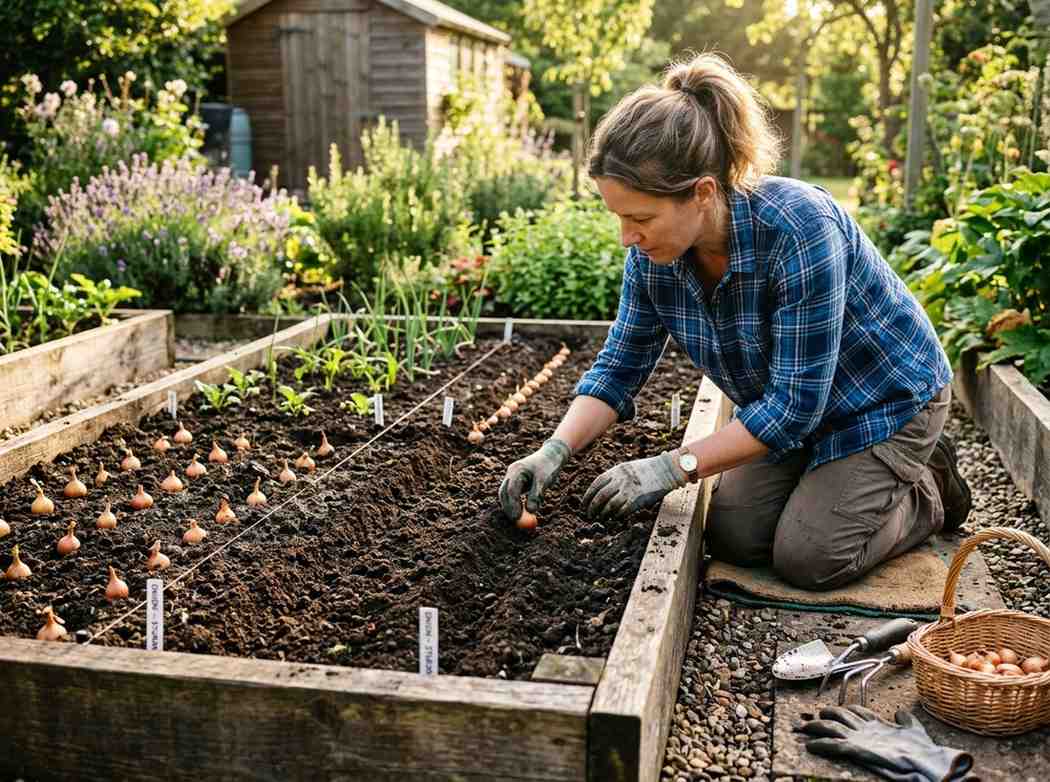
Planting onion sets might seem simple, but getting the depth just right can make all the difference in your harvest. If you plant them too shallow, your onions may struggle to grow strong. Knowing How Deep to Plant Onion Sets ensures proper root development and helps your bulbs grow bigger and healthier.
Too deep, and they might take longer to sprout or even fail altogether. You want to give your onions the best start possible, right? You'll discover exactly how deep to plant onion sets for healthy, juicy bulbs. Keep reading to unlock the secret to a thriving onion crop that will impress your family and friends.
Choosing the right onion sets is important for a good harvest. Healthy sets grow faster and produce bigger onions. The first step is to know the types of onion sets available. Then, pick the healthiest bulbs for planting. This helps avoid diseases and ensures strong plants.
Onion sets come in several types. Common types include yellow, red, and white onions. Each type has a different flavor and use. Some sets grow well in warm climates. Others are better for cooler areas. Choose the type that suits your garden's climate and your cooking needs.
Healthy bulbs are firm and free from spots. Avoid sets that look soft or moldy. Small, round bulbs with dry skins work best. They should not be sprouting before planting. Healthy sets grow quickly and resist pests better. Check bulbs carefully before buying to ensure a strong start.
Preparing the soil is a key step before planting onion sets. Good soil helps onions grow strong and healthy. It also makes planting easier and helps roots take hold quickly. Taking time to prepare soil well leads to better onion bulbs later.
Focus on soil texture, nutrients, and drainage. These factors affect how deep to plant onion sets and their growth. Below are important points about soil preparation for onions.
Onions need loose, well-draining soil. Heavy clay or waterlogged soil causes bulbs to rot. Sandy loam or light soil works best. The soil should be soft enough for roots to spread easily.
A soil pH between 6.0 and 7.0 is ideal. This range helps onions absorb nutrients well. Avoid very acidic or alkaline soils. Keep the ground free of large rocks and debris.
Add organic matter like compost or aged manure. This improves soil texture and adds nutrients. Mix it well into the top 6 to 8 inches of soil. This layer supports root growth and moisture retention.
Apply a balanced fertilizer before planting. Use one with equal nitrogen, phosphorus, and potassium. Follow package instructions to avoid over-fertilizing. Water the soil after amending to settle it.
Planting onion sets at the right depth is key for healthy growth. The depth controls moisture, temperature, and root development. Too shallow or too deep can harm the onion’s chances to grow well. Understanding the essentials helps you plant with confidence and get a good harvest.
Small changes in depth affect how onions sprout and form bulbs. The soil must cover the sets enough to protect them but allow shoots to reach the surface easily. Let’s explore the recommended depths and what can change them.
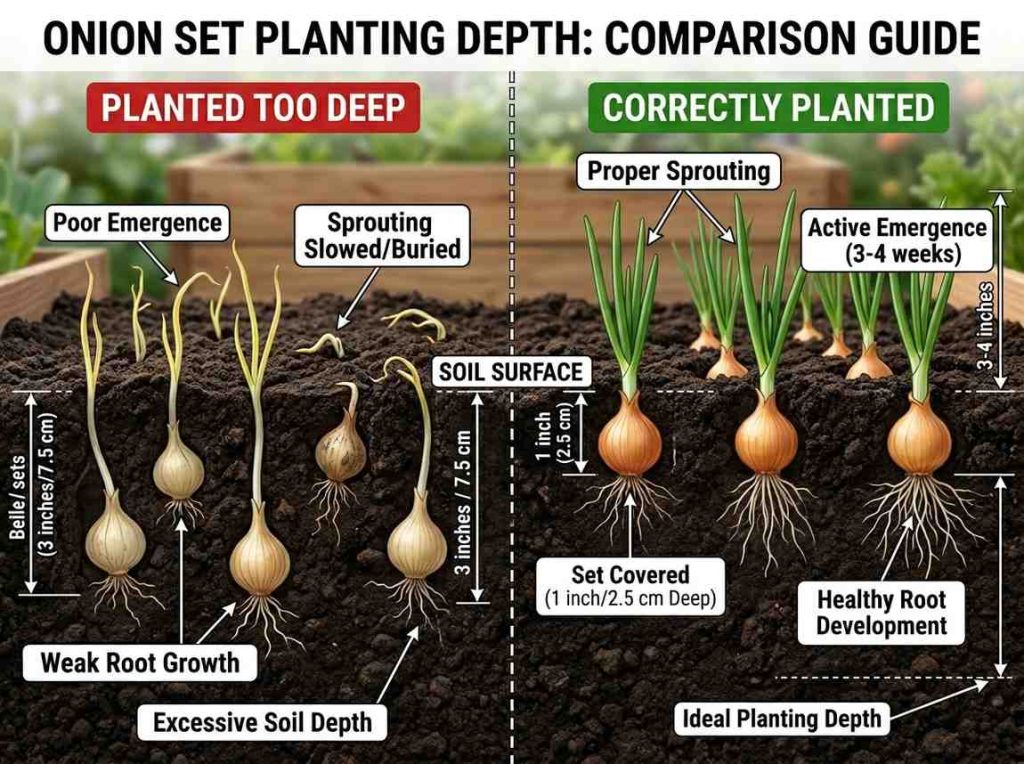
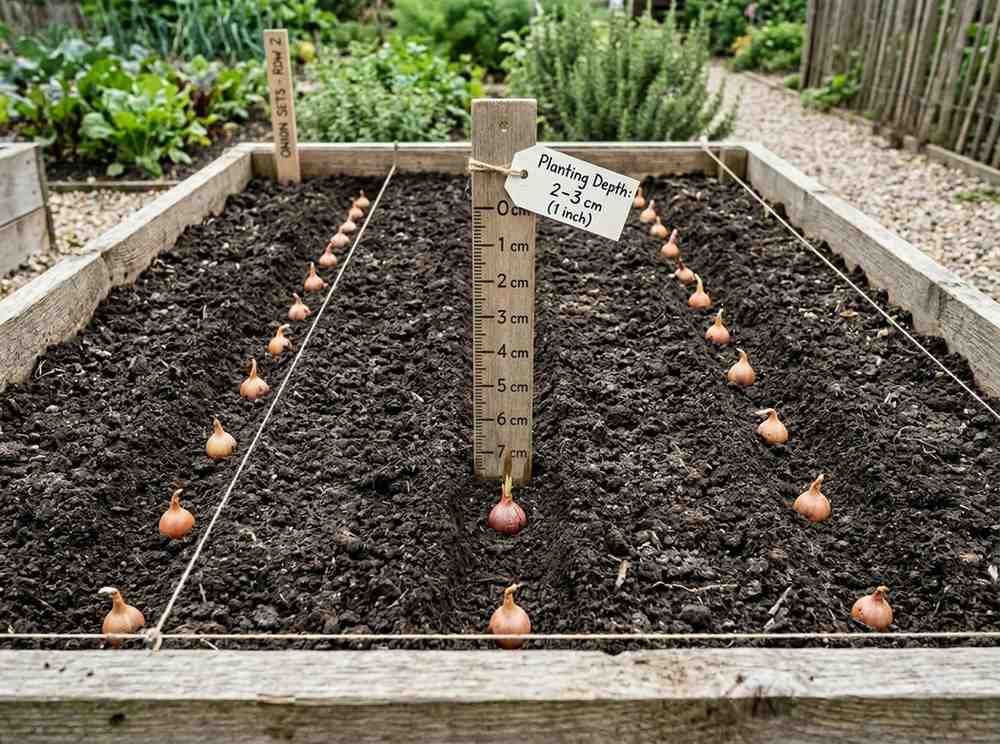
Plant onion sets about 1 to 2 inches deep. This depth covers the set fully and protects it from drying out. It also keeps the soil temperature steady around the roots.
For larger sets, plant closer to 2 inches. Smaller sets do better near 1 inch. If planted too shallow, the sets may dry out quickly or be damaged by birds.
Too deep planting can slow growth. The shoots struggle to break through thick soil, causing weak plants or no bulbs.
Soil type matters a lot. Sandy soil dries fast. Plant sets a bit deeper here to keep moisture around roots. Clay soil holds water longer. Plant sets shallower to avoid rot.
Weather also affects depth. In cooler climates, deeper planting helps protect sets from frost. In warm areas, shallow planting lets sets start growing quickly.
Set size influences depth too. Larger sets need more soil coverage. Smaller sets need less so they can sprout without struggle.
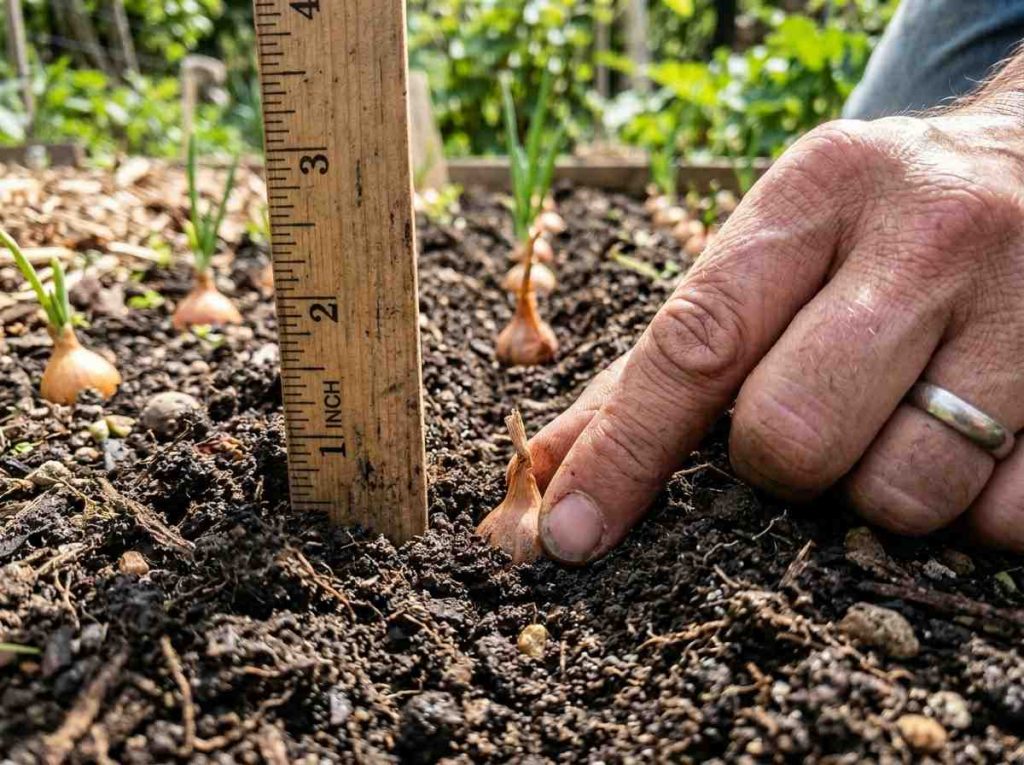
Planting onion sets correctly helps them grow strong and healthy. The right depth and spacing allow each onion room to develop. Proper techniques prevent crowded plants and boost your harvest.
Small mistakes in planting can slow growth or cause disease. Follow clear steps to plant onion sets for the best results.
Space onion sets 4 to 6 inches apart in rows. This distance gives onions enough space to grow big bulbs. Crowding leads to smaller onions and poor air flow.
Leave about 12 inches between rows. This spacing helps you move easily for weeding and watering. Well-spaced sets also reduce competition for water and nutrients.
Plant onion sets with the pointed end facing up. The root side should go down into the soil. This position helps onions sprout quickly and grow straight.
Push sets about 1 to 2 inches deep. Cover them lightly with soil. Planting too deep slows growth; too shallow exposes sets to sun and pests.
Watering and mulching are key steps after planting onion sets. They help young onions grow strong roots and keep the soil healthy. Proper water and mulch use can protect your plants and improve their growth.
Onion sets need steady moisture to start growing. Water them right after planting to settle the soil around the roots. Keep the soil damp but not soaked. Water deeply once or twice a week depending on rain. Dry soil slows growth and can cause stress to the onions.
Mulching keeps soil moist and reduces weeds around onion sets. It also protects the soil from temperature swings. Organic mulches like straw or grass clippings break down and add nutrients to the soil. Mulch helps onions grow evenly and reduces the need for frequent watering.
Onion sets need the right planting depth to grow strong and healthy. Planting too deep or too shallow causes growth problems. Knowing how to spot these issues helps save your crop. Quick fixes can improve onion growth and avoid losing your plants.
Onions planted too deep may have slow growth and small bulbs. Leaves might turn yellow or dry out early. Bulbs can rot if the soil stays too wet around them.
Shallow planting causes onions to fall over easily. Bulbs may be exposed and dry out. The plants might grow quickly but produce weak, small onions.
Gently loosen soil around shallow-set onions. Add a thin layer of soil to cover bulbs better. Water the plants to help roots settle into the new soil.
For onions planted too deep, carefully remove excess soil from the top. Avoid damaging bulbs or roots. This lets leaves get more sunlight and air, boosting growth.
Harvesting onions is an important step after planting onion sets. Proper timing and knowing the right signs help you get the best quality onions. Careful harvesting also ensures the onions store well for longer use.
Watching your onion plants closely makes a big difference. You want to pick them at the perfect time to avoid soft or spoiled bulbs. Here are some tips on when and how to harvest your onions.
Onions usually take 90 to 120 days to mature. The exact time depends on the variety and growing conditions. The best time to harvest is when most of the green tops fall over and start to dry. This means the onions have stopped growing and are ready to pull.
Do not wait too long. Overripe onions may split open or rot in the ground. Check your onion bed often as the season ends. Pull the onions on a dry day for easier curing and storage.
Look for these signs to know if onions are ready to harvest. First, the green tops will yellow and fall down. This is the main sign. The bulb should look full and firm under the soil.
Another sign is the neck of the onion becoming soft and thin. This means the bulb has stopped growing. You can also gently dig one onion to check its size. If it is large and firm, it is ready to harvest.
Plant onion sets about 1 to 2 inches deep in well-drained soil.
Yes, proper depth helps onions grow strong bulbs and prevents drying out.
Yes, shallow planting can cause drying and weak bulb development.
Loose, sandy, and well-drained soil works best for healthy onion growth.
Space sets 4 to 6 inches apart to allow enough room for bulbs.
Plant onion sets at the right depth for healthy growth. Too deep, and they may struggle to sprout. Too shallow, and they could dry out quickly. Aim to cover the sets with about one inch of soil. This helps protect them and encourages strong roots.
Keep soil moist but not wet. Watch your onions grow and enjoy a good harvest. Simple steps lead to great results in your garden.