Gardening Made Simple.
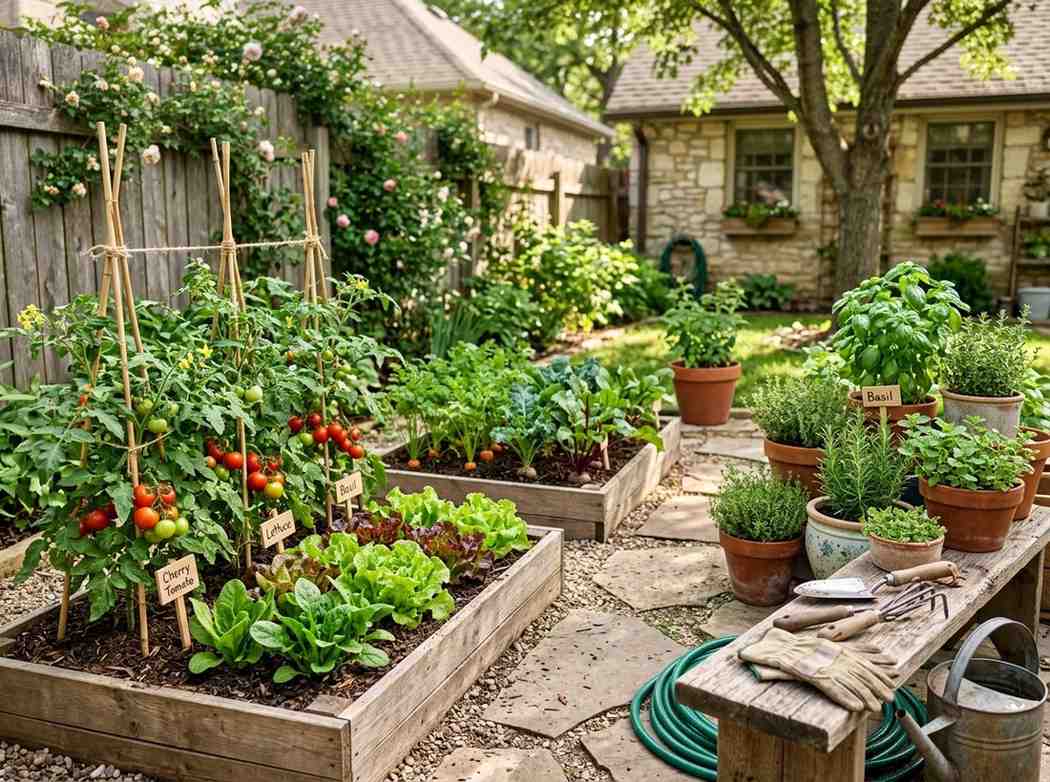
Growing your own food sounds big at first, but it often starts with one pot, one packet of seeds, and a sunny corner. A small home vegetable garden can cut grocery costs, make meals taste better, and give you that rare feeling that dinner came from your own hands. Learning How to Grow Vegetables at Home is the first step toward building a simple, rewarding garden right where you live.
You don't need a large yard or years of practice. You need a setup that fits your space, a few easy crops, and simple care you can repeat each week. Start small, stay consistent, and the whole process feels far more doable.
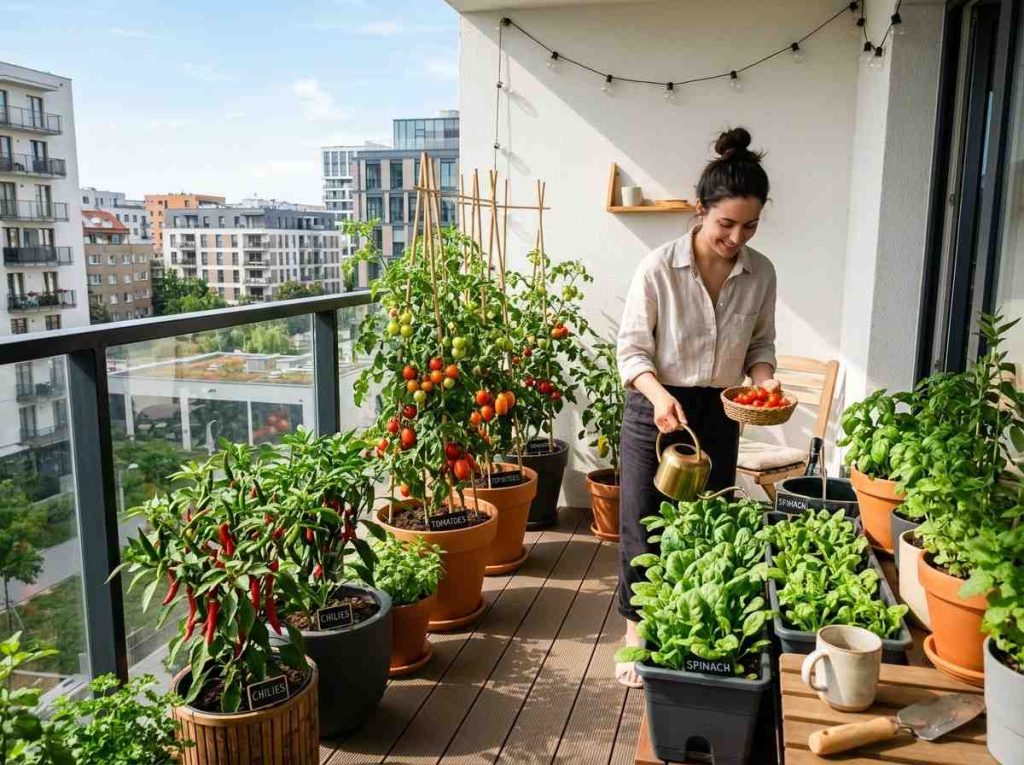
A good garden begins with the space you already have, not the one you wish you had. A backyard bed is great, but so is a patio with three containers. Even a balcony can grow fresh food if it gets enough light and drains well after watering.
Before you plant anything, look at how sun moves across the area. Also check how close it is to a hose or watering can. If watering feels like a chore, you'll skip it on hot days.
Most vegetables need 6 to 8 hours of direct sun each day. Tomatoes, peppers, and cucumbers want the brightest spot you can give them. Leafy greens, on the other hand, can manage with a bit less.
Watch the area in the morning, at noon, and late afternoon. A spot that looks bright may still be shaded by a fence or wall for half the day. Sunlight is the fuel, so this step matters more than many beginners think.
Containers work well for renters, small patios, and anyone who wants a low-commitment start. They also let you move plants if the light changes. Still, pots dry out fast in summer, so they need closer attention.
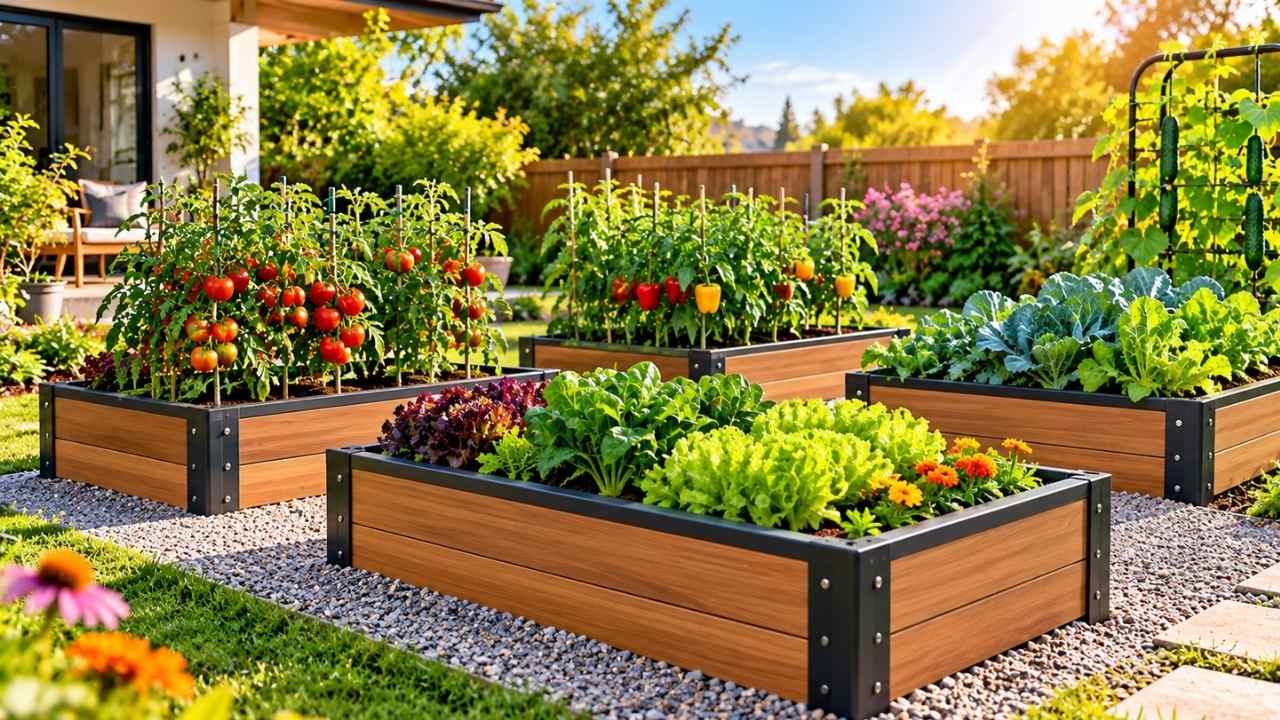
Raised beds give you better control over soil and drainage. They also make weeding and harvesting easier. In-ground planting costs less if your soil is decent, but poor soil can slow everything down.
The best choice is the one that matches your space, budget, and schedule. A tiny garden you can care for beats a larger one that gets ignored.
Many new gardeners make the same mistake. They plant too much, pick hard crops, and feel defeated when half of it struggles. A better plan is to grow a few vegetables that sprout fast, bounce back well, and earn your confidence early.
It also helps to grow what you already eat. If your family never touches eggplant, skip it. Put that space into lettuce, peppers, or herbs you use every week.
Lettuce and spinach are forgiving and quick, so they give you early wins. Radishes are even faster, which makes them fun for impatient growers. Bush beans grow with little fuss and often produce well in small beds.
Tomatoes are popular for a reason. One healthy plant can give you weeks of fruit. Cucumbers grow fast too, although they like warmth and steady water. Peppers take a bit longer, but they do well in containers. Herbs such as basil, parsley, and chives fit easily into small spaces and reward you often.
If this is your first season, grow fewer types and grow them well.
Timing can make the difference between a strong plant and a weak one. Cool-season crops, such as lettuce, spinach, and radishes, grow best in mild weather. Warm-season crops, such as tomatoes, cucumbers, and peppers, prefer heat and hate frost.
Check your area's last frost date before planting outside. Local planting calendars help, too. When you plant at the right time, growth is smoother and setbacks are fewer.
Vegetables don't need constant fuss, but they do need regular care. Water, soil, spacing, and quick checks for problems matter more than fancy tools. When those basics are steady, plants grow with less stress.
Healthy roots need loose, rich soil. If you're growing in containers, use a quality potting mix rather than soil from the yard. Garden soil can get hard in pots, and then water runs off instead of soaking in.
Compost improves most garden beds because it adds nutrients and helps the soil hold moisture. If you use fertilizer, feed lightly and steadily. Vegetables usually respond better to small, regular doses than one heavy feeding.
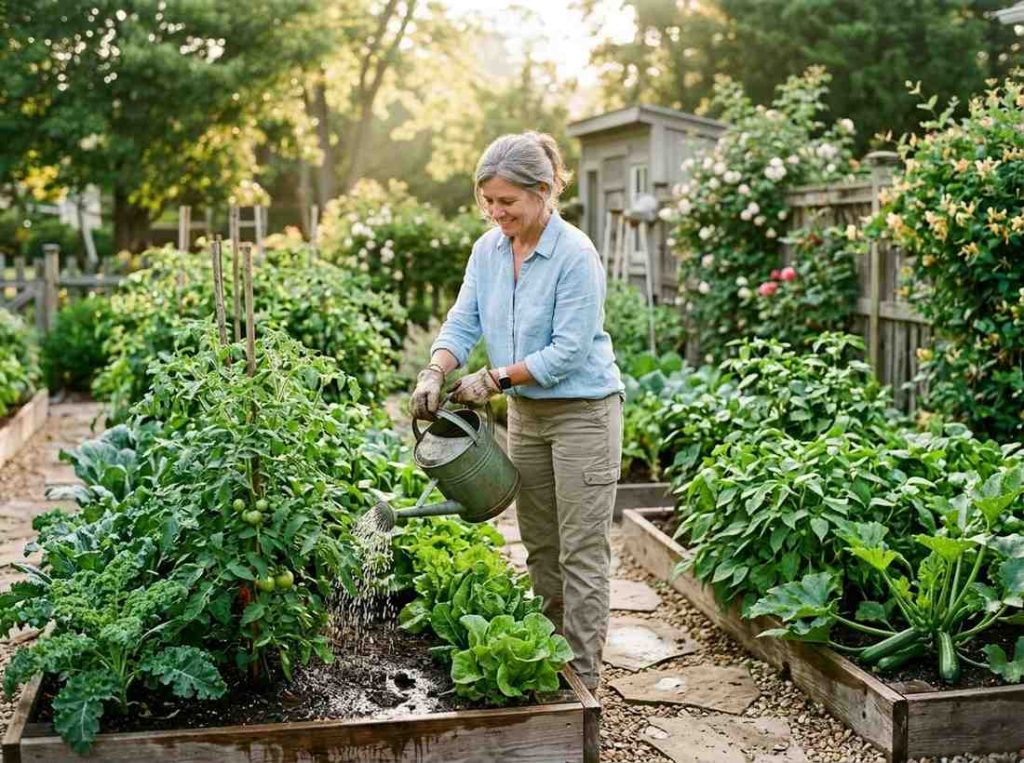
A fixed watering schedule sounds simple, but plants don't live by the calendar. Heat, wind, rain, and container size all change how fast soil dries. So check the soil with your finger before you water. If the top inch feels dry, it's usually time.
Deep watering helps roots grow down where the soil stays cooler. Shallow watering keeps roots near the surface, and then plants wilt faster. Containers often need water more often than raised beds or in-ground gardens. Water at the base when you can, because wet leaves can invite disease.
Most garden problems start small. A few holes in leaves, a patch of mildew, or weeds around young plants can spread fast if you miss them for a week. That's why short, regular checks work so well.
Give plants enough room for air to move between them. Pull weeds before they seed. Remove yellow or dead leaves, and look under leaves for pests. Many bugs can be picked off by hand or washed away with water. Simple action early often saves the crop.
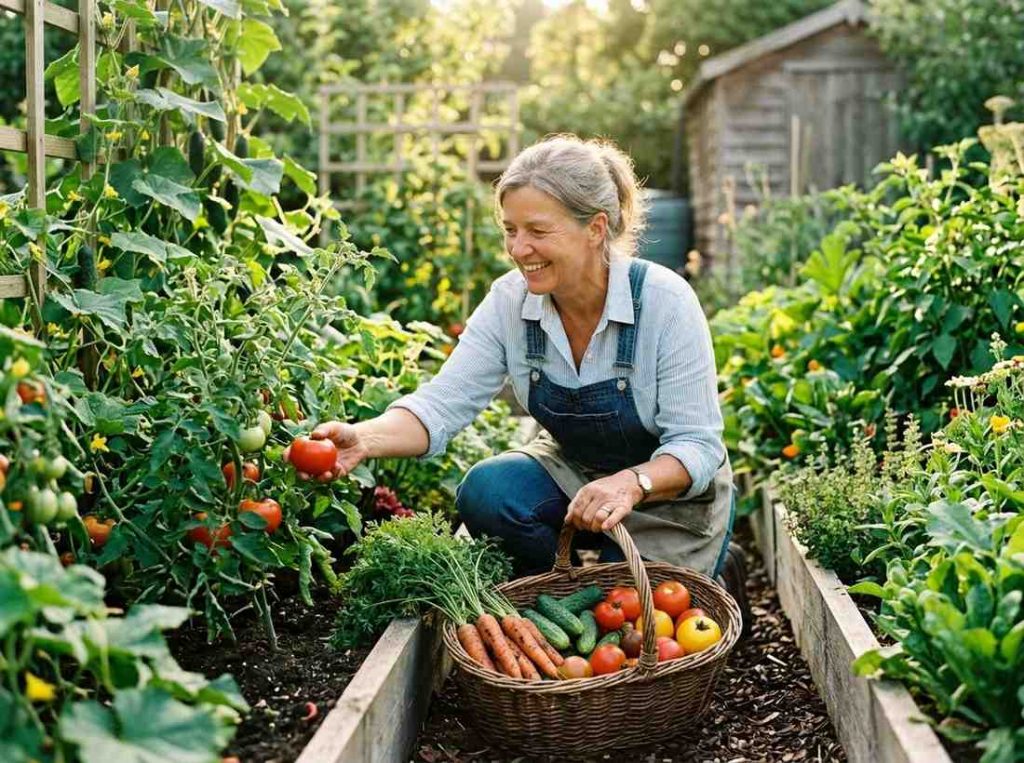
Harvest is the fun part, but it also helps plants stay productive. Many vegetables taste better when picked young and tender, not when left to grow as large as possible. Regular picking can also tell the plant to keep producing.
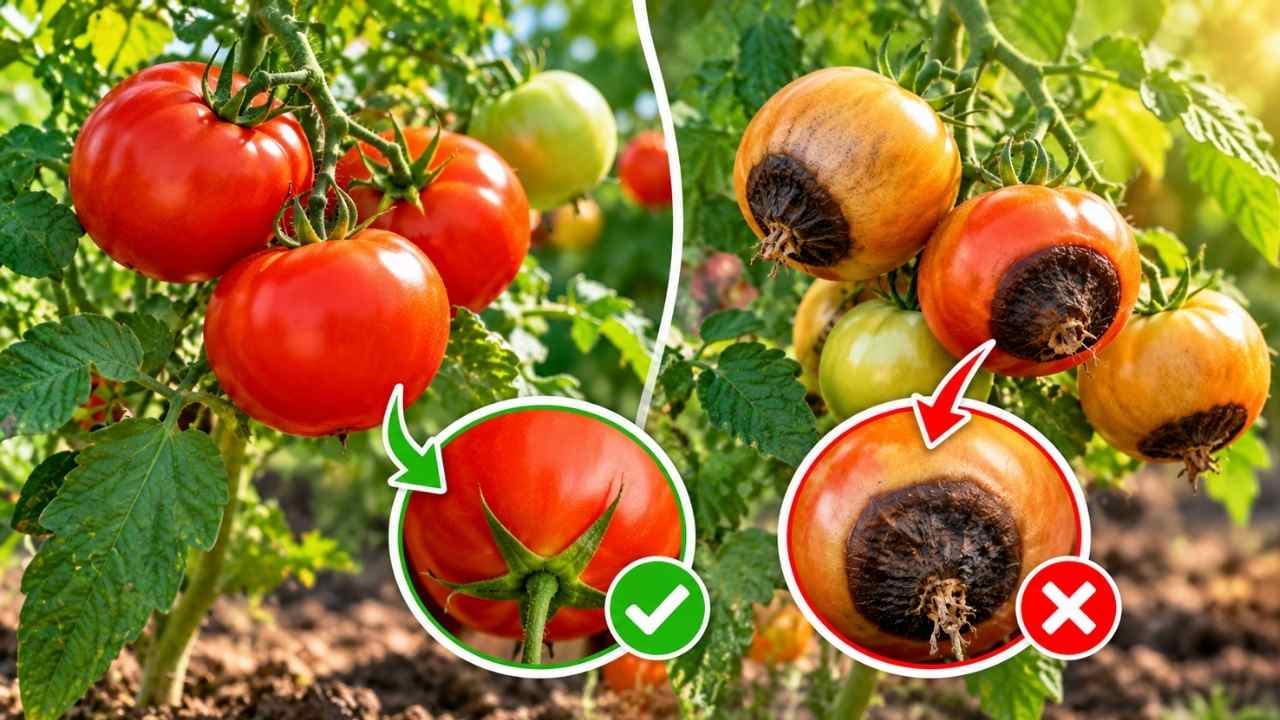
Lettuce is best while leaves are soft and sweet. Beans taste better before the pods get tough. Cucumbers turn seedy and bitter if they stay too long on the vine. Tomatoes should color up fully, then feel slightly soft when gently pressed.
Check the garden often, especially in warm weather. A plant can go from perfect to overripe faster than you expect.
After one crop finishes, plant another in its place if the season allows. Quick crops like lettuce, radishes, and spinach are good for repeat sowing. Remove spent plants so they don't take up light and space.
Add a little compost between plantings to freshen the soil. If you can, avoid putting the same crop in the same spot every time. Small changes help the garden stay productive longer.
Growing vegetables at home gets easier once you stop trying to do everything at once. Choose a sunny spot, start with easy crops, give them steady care, and harvest before they pass their prime.
You'll learn more from one small season than from hours of planning. A single pot of basil or one raised bed is enough to begin. Those first handfuls of fresh food are small, but they feel big in the best way.
Beginner-friendly vegetables include tomatoes, lettuce, spinach, radishes, and herbs like basil.
No, many vegetables grow well in small spaces, containers, or even balconies with enough sunlight.
Most vegetables need 6–8 hours of direct sunlight daily for healthy growth and good yields.
Well-draining, nutrient-rich soil with compost or organic matter works best for most vegetables.
Water regularly to keep the soil moist but not waterlogged, adjusting based on weather and plant needs.