Gardening Made Simple.
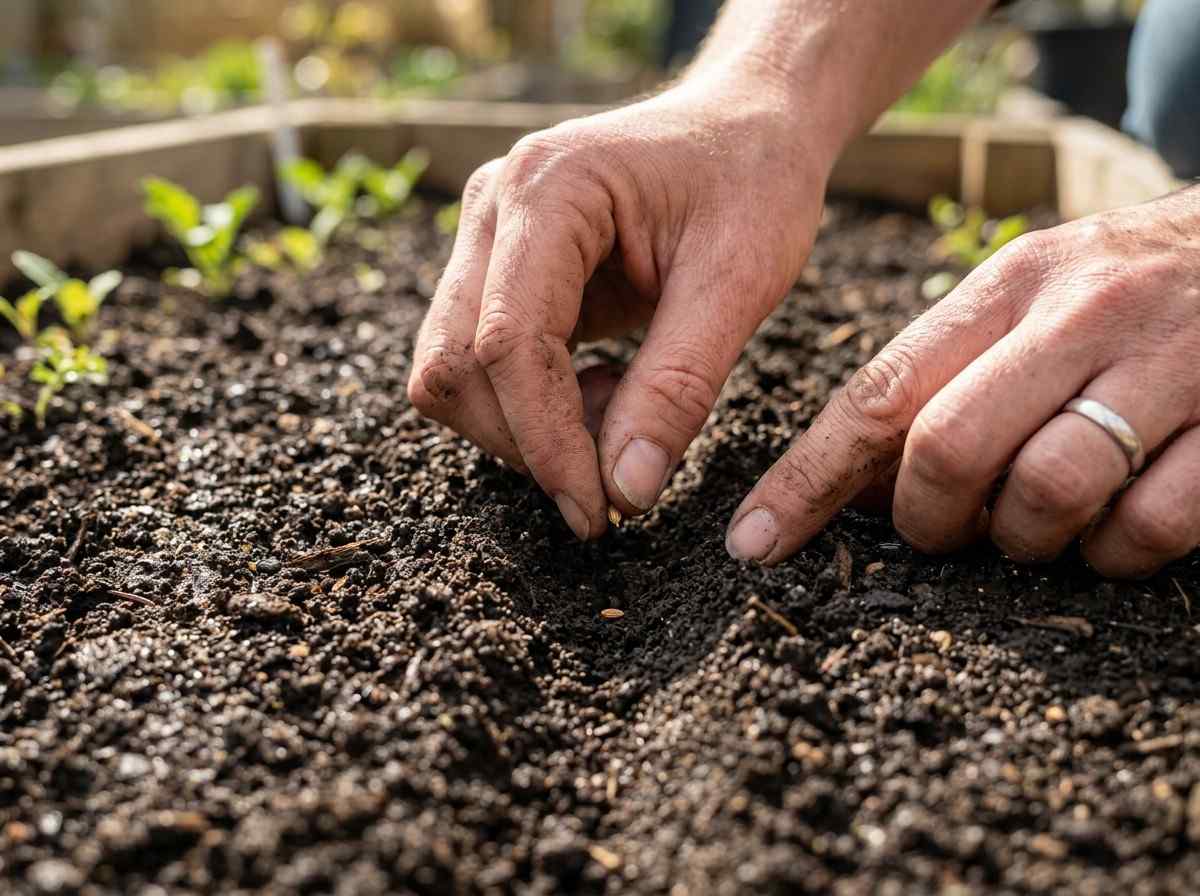
Are you ready to grow sweet, crunchy carrots in your garden? One simple step can make all the difference: knowing How Deep to Plant Carrot Seeds for healthy germination and strong root development.
Plant them too shallow, and they might dry out or get eaten by birds. Plant them too deep, and they may never sprout. Getting this just right is the secret to a healthy, bountiful harvest. Keep reading to discover exactly how deep to plant your carrot seeds so you can enjoy fresh, homegrown carrots all season long.
Choosing the right soil is key to growing healthy carrots. Carrot seeds need soil that supports easy root growth and good moisture. The soil must be loose and free of stones. This helps carrots grow straight and smooth.
Good soil also holds water well but drains excess water fast. This balance stops the seeds from rotting. Preparing the soil well makes planting easier and improves seed germination.
Carrots grow best in sandy or loamy soil. These types are light and allow roots to move freely. Heavy clay soils can block root growth and cause misshapen carrots.
The soil should feel soft and crumbly. Avoid soil that is hard or compacted. Check the soil by squeezing a handful. It should break apart easily without clumps.
Start by removing stones and debris from the soil. Stones can block root growth and make carrots forked. Next, loosen the soil to a depth of 12 inches or more.
Add organic matter like compost to improve soil texture. This helps retain moisture and provides nutrients. Rake the soil smooth before planting the seeds.
Keep the soil moist but not waterlogged. This helps seeds sprout quickly and evenly. Proper soil preparation sets the stage for a strong carrot crop.
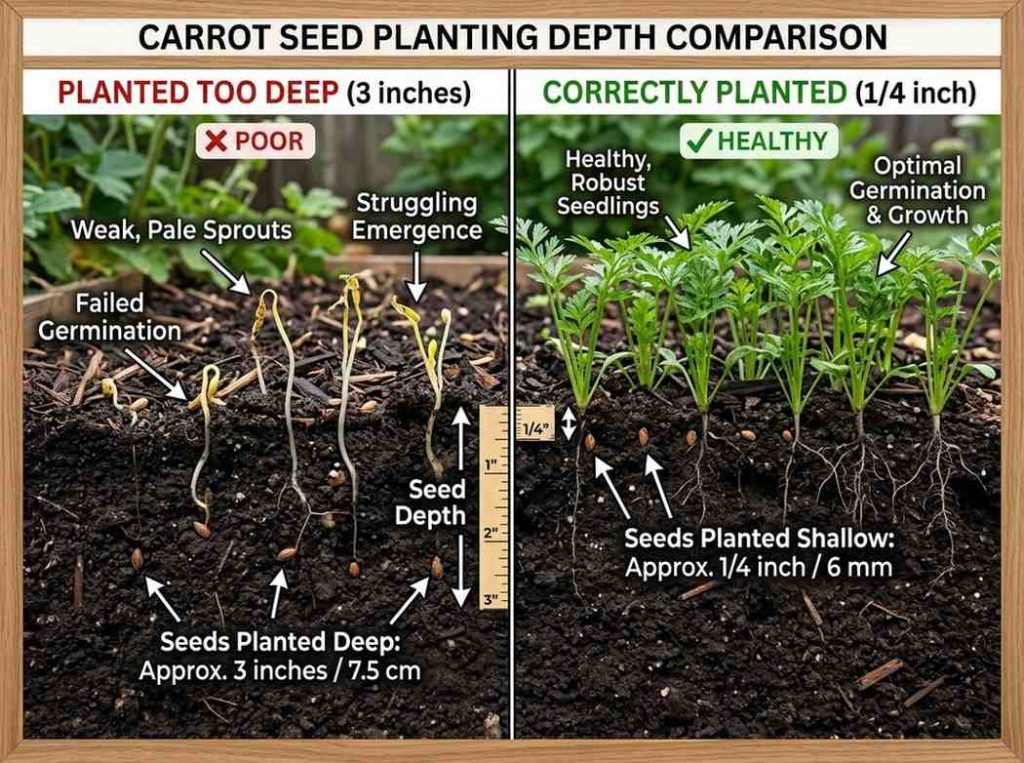
Planting carrot seeds at the right depth is key for healthy growth. Seeds placed too deep may struggle to sprout. Seeds too shallow might dry out or wash away. Finding the optimal depth helps seeds get enough moisture and warmth. This section explains the best depth for planting carrot seeds.
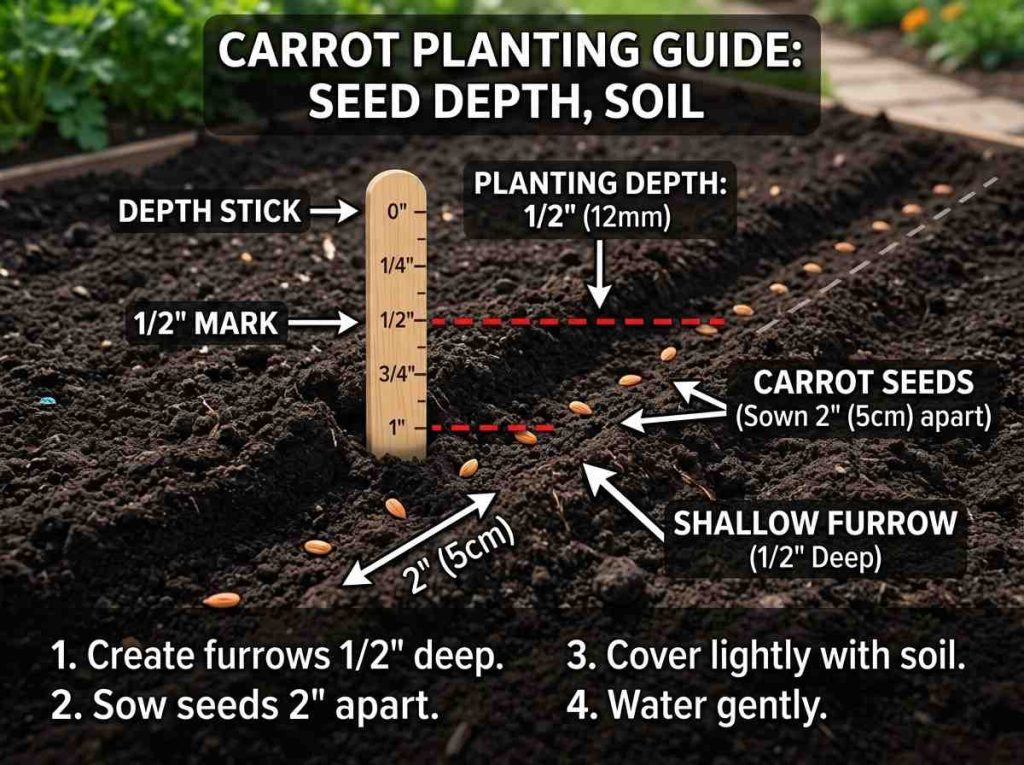
Carrot seeds should be planted about ¼ to ½ inch deep. This depth protects seeds from drying out. It also keeps them close enough to the surface to get sunlight. Planting within this range helps seeds sprout quickly and evenly. Avoid planting deeper than ½ inch, as seedlings may have trouble reaching the surface.
Soil type affects how deep to plant carrot seeds. Loose, sandy soil allows deeper planting. Clay or heavy soil needs shallower planting. Moisture levels also matter. In dry soil, plant seeds a little deeper for moisture. In wet soil, keep seeds shallow to prevent rotting. Temperature plays a role too. Cooler soil needs seeds closer to the surface to warm faster.
Seed spacing and arrangement play a big role in growing healthy carrots. Proper spacing helps each carrot get enough nutrients, water, and sunlight. Crowded seeds can lead to thin, small roots and poor growth.
Planning the right distance between seeds and rows makes harvesting easier too. It also reduces problems with pests and diseases.
Plant carrot seeds about 1 to 2 centimeters apart. Thin seedlings to 3 to 5 centimeters after they sprout. This gives roots room to grow wide and long. Seeds too close can cause crowding and weak roots.
Space rows about 30 to 45 centimeters apart. Wider rows allow better air flow and easier access for weeding. This spacing keeps the plants healthy and strong. It also helps you water and care for carrots well.
Watering and moisture are key for growing healthy carrot seeds. Carrots need the right amount of water to sprout and grow strong. Too little water can stop seeds from growing. Too much water can cause seeds to rot. The soil must stay damp but not soaked.
Water the soil gently right after planting carrot seeds. Use a spray bottle or light watering can. Soak the top 1 inch of soil evenly. Avoid washing seeds away or making puddles. Keep the soil moist until the seeds sprout, usually in 10 to 14 days.
Keep watering carrot seeds regularly to keep soil moist. Check soil every day by touching the surface. Water when the top inch feels dry. Water slowly to let moisture reach deep roots. Mulch around seeds to keep soil damp longer and reduce water loss.
Temperature and light are key for carrot seed growth. They affect how fast seeds sprout and how healthy seedlings become. Understanding these needs helps you plant seeds at the right depth and time.
Carrot seeds germinate best in cool soil. The ideal temperature is between 50°F and 85°F (10°C to 29°C). Soil colder than 50°F slows germination. Above 85°F, seeds may fail to sprout.
Keep soil moist but not soggy. Consistent temperature speeds up sprouting. Seeds usually take 1 to 3 weeks to germinate under these conditions.
Carrots need full sun for strong growth. At least 6 to 8 hours of direct sunlight daily is best. Sunlight helps seedlings develop thick stems and healthy leaves.
In hot climates, some afternoon shade protects young plants. Too much shade causes weak, leggy growth. Choose a sunny spot for your carrot bed.
Planting carrot seeds sounds easy, but many gardeners make common mistakes. These errors affect seed growth and final carrot size. Knowing what to avoid helps grow healthy carrots.
Planting seeds too deep stops them from sprouting well. Carrot seeds need light soil covering, about ¼ to ½ inch deep. Planting too shallow can dry out the seeds quickly. Both extremes slow growth or stop it completely.
Planting too many seeds close together causes crowding. Crowded carrots compete for water and nutrients. This leads to thin, small, or misshaped carrots. Thin seedlings to give each carrot enough space to grow strong.
Carrot seeds can be tricky to grow well. Sometimes seeds take longer to sprout or grow unevenly. These problems usually happen because of how deep the seeds were planted or the soil conditions. Fixing these issues can help get your carrots growing strong and healthy.
Carrot seeds often take 2 to 3 weeks to sprout. Planting seeds too deep slows down germination. Deep soil means seeds stay cold and dry longer. Shallow planting keeps seeds warmer and moist. The soil should be loose and fine for easy sprouting. Water the soil gently after planting. Avoid heavy watering that pushes seeds deeper.
Uneven carrot growth happens when seeds are planted at different depths. Some roots grow faster, others struggle. Soil that is hard or has rocks also blocks roots. Thin the seedlings once they appear. Give each carrot enough space to grow. Keep soil moist but not soaked. Consistent watering helps carrots grow evenly.
Advanced planting techniques can improve carrot seed growth and yield. These methods help seeds sprout evenly and protect them from pests. They also make planting easier and more efficient. Two popular techniques are using seed tape and pre-soaking seeds.
Seed tape is a thin strip with carrot seeds attached at set intervals. It helps plant seeds at the right depth and spacing. This method reduces seed waste and prevents crowding. Just lay the tape in a shallow trench about ¼ inch deep. Cover it lightly with soil and water gently. Seed tape is great for gardeners who want neat rows and less thinning later.
Pre-soaking carrot seeds softens their outer shell. This speeds up germination and improves sprouting rates. Soak the seeds in water for 6 to 12 hours before planting. Avoid soaking longer, or seeds may rot. After soaking, plant seeds about ½ inch deep in loose soil. This technique helps seeds start quickly, especially in cooler weather.
Plant carrot seeds about 1/4 to 1/2 inch deep. This depth helps seeds sprout well.
Yes, planting seeds too deep may prevent sprouting and slow growth.
Loose, sandy soil is best. It allows roots to grow straight and long.
Space seeds about 2 to 3 inches apart for healthy root development.
Plant carrot seeds in early spring or late summer for best results.
Plant carrot seeds about half an inch deep for best growth. Too deep, and they may struggle to sprout. Too shallow, and birds might eat them. Keep soil loose and moist to help seeds grow strong. Thin seedlings to avoid crowding and allow roots to develop well.
Proper planting depth makes a big difference in your carrot harvest. Start with this simple step, and enjoy fresh carrots from your garden.