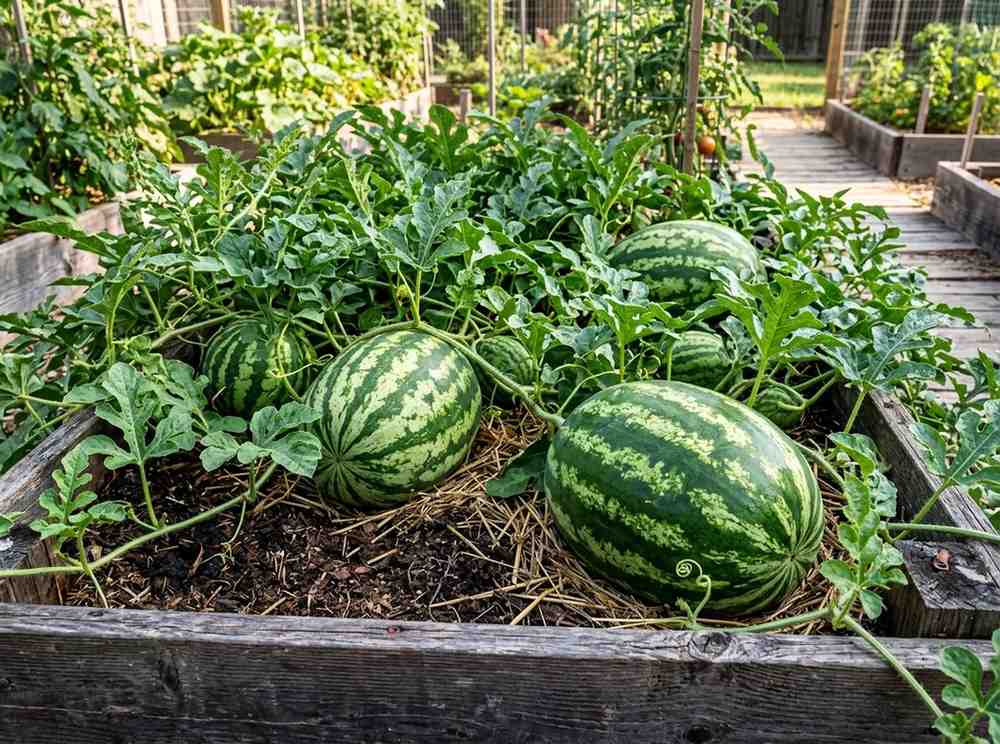
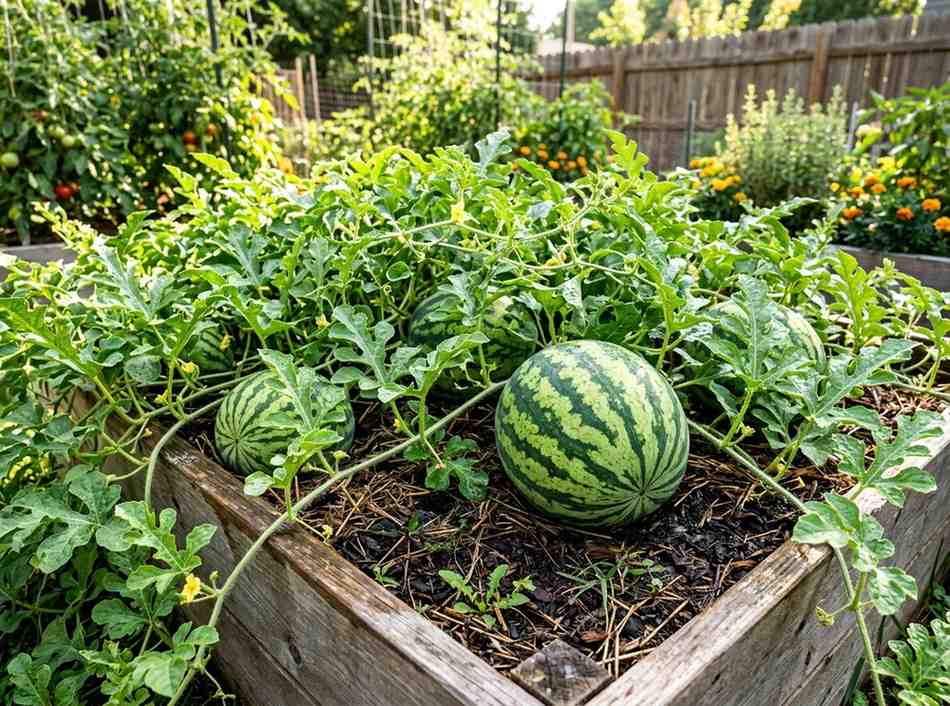
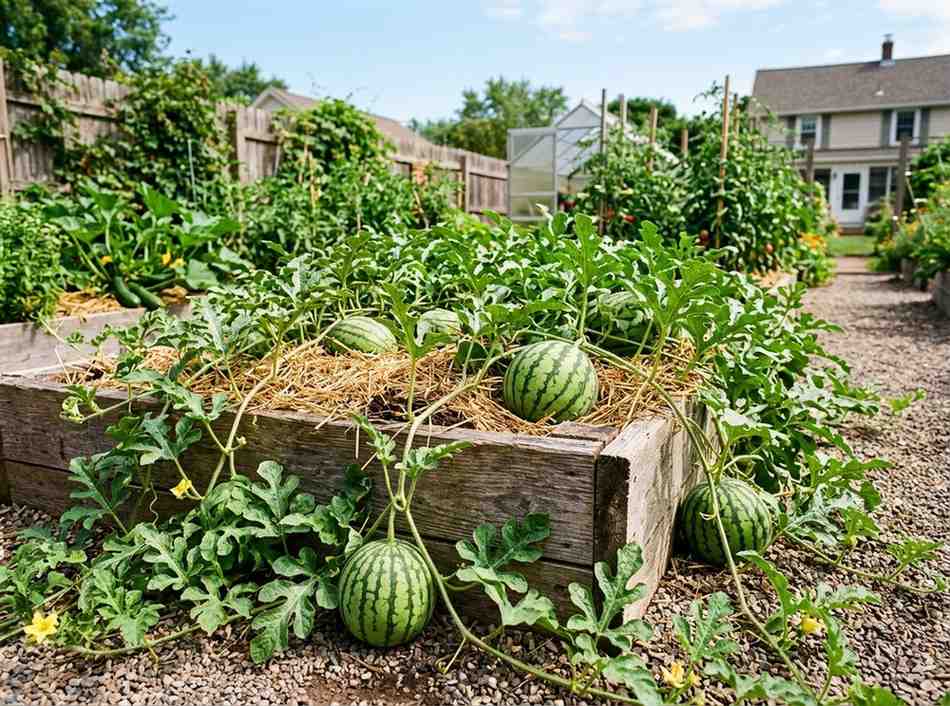
Growing watermelon in a raised bed can transform a small backyard into a productive, sweet oasis. Many gardeners believe watermelons need a huge field, but with careful planning and some practical know-how, you can enjoy juicy, homegrown fruits even in limited space.
Raised beds offer better soil control, fewer weeds, and improved drainage—key factors for healthy watermelon vines. Let’s explore how you can succeed with this rewarding project, even if you’re new to gardening.
Why Grow Watermelon In A Raised Bed?
Watermelons are heat-loving, sprawling plants. Traditional wisdom says they take up lots of space, but raised beds offer unique advantages:
Improved soil quality: You choose the soil, making it rich, loose, and well-drained—ideal for watermelon roots.
Better drainage: Raised beds prevent waterlogging, which can cause root rot.
Faster soil warming: Beds warm up earlier in the spring, letting you plant sooner.
Fewer weeds: The defined area makes weed control easier.
Higher yields per square foot: Intensive planting and vertical supports can maximize your harvest.
However, raised beds require more frequent watering and careful fertilizing, since nutrients and moisture can drain away faster. Still, the benefits often outweigh these challenges, especially in small gardens or poor native soil.
Choosing The Best Watermelon Variety For Raised Beds
Not all watermelons are the same. Some grow into small, tidy vines, while others can sprawl over 20 feet. For raised beds, focus on compact or “bush” varieties and those with shorter growing seasons.
Top Varieties For Raised Beds
Sugar Baby: Early maturing (75-80 days), small 8-12 lb fruits, compact vines.
Bush Sugar Baby: Even more compact, round fruits, great for containers and raised beds.
Mini Love: Sweet, seedless, about 6 lbs, vines stay under 3 feet.
Golden Midget: Yellow-skinned, matures in just 70 days, 3 lb fruits.
Blacktail Mountain: Cold-tolerant, small fruits, matures in about 70-75 days.
Comparison Of Popular Raised Bed Watermelon Varieties
Variety
Fruit Size
Days to Maturity
Vine Length
Special Feature
Sugar Baby
8-12 lbs
75-80
6-8 ft
Classic, sweet
Bush Sugar Baby
8-10 lbs
75
3-4 ft
Very compact
Mini Love
5-7 lbs
70
2-3 ft
Seedless
Golden Midget
3 lbs
70
4-5 ft
Yellow skin
Blacktail Mountain
6-12 lbs
70-75
5-6 ft
Cold-tolerant
Insight: Many gardeners overlook the importance of “days to maturity.” If your summer is short, always choose varieties under 80 days.
Building The Ideal Raised Bed For Watermelon
The right raised bed design makes a big difference. Watermelons have deep roots and need space to sprawl or climb.
Size And Depth
Minimum size: 4 feet wide by 8 feet long, and at least 12-18 inches deep.
Depth is crucial: Shallow beds dry out too quickly; watermelons have long taproots.
Materials
You can use wood (cedar lasts longest), stone, brick, or composite boards. Avoid old railroad ties or treated wood that may leach chemicals.
Location
Choose a spot with full sun—at least 8-10 hours daily.
Avoid low spots where cold air or water collects.
Spacing
Even compact varieties need room. For a 4x8 foot bed, plant 2-3 watermelon plants, spacing them as recommended on the seed packet.
Example Layout For A 4x8 Bed
Bed Size
Number of Plants
Recommended Spacing
Possible Trellis?
4x8 ft
2-3
3-4 ft apart
Yes
3x6 ft
1-2
3 ft apart
Yes
Tip: For larger varieties, one plant per bed may be best. Overcrowding leads to small or tasteless fruit.
Preparing Soil For Watermelon Success
Good soil is the most important factor in watermelon growth. Watermelons are heavy feeders, needing lots of nutrients, but also excellent drainage.
Soil Composition
Loamy soil is ideal. Combine garden soil with compost and some sand for drainage.
Target a pH of 6.0–6.8.
Enriching The Soil
Before planting, mix in:
2-3 inches of well-rotted compost
1 cup of balanced organic fertilizer (such as 10-10-10) per plant area
A handful of bone meal for calcium (prevents blossom end rot)
Soil Preparation Steps
Remove old plants and roots from the bed.
Loosen the soil to at least 12 inches deep.
Mix in compost, fertilizer, and other amendments.
Water the bed thoroughly and let it settle for 1-2 days before planting.
Insight: Many beginners forget to check soil drainage. After watering, the soil should not stay soggy for hours. If it does, add more sand or compost.
Planting Watermelon: Seeds Or Seedlings?
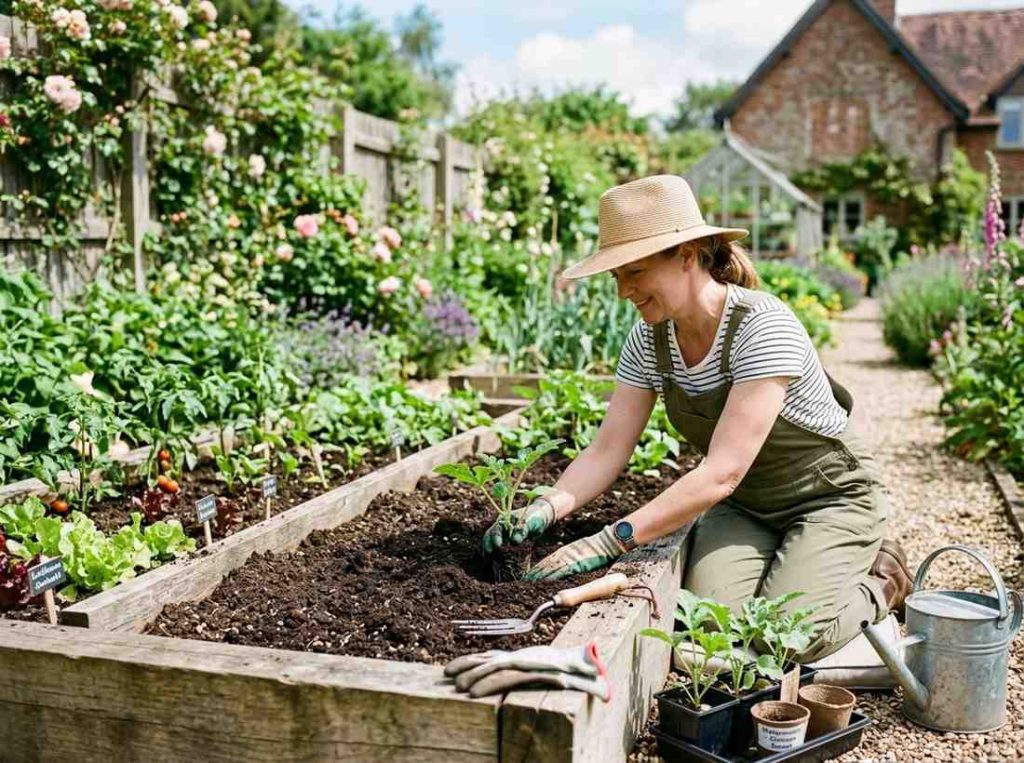
You can start watermelons from seed or buy young plants.
Starting From Seed
Direct sowing: After the last frost date and soil is at least 70°F.
Indoors: Start seeds 2-4 weeks before your last frost date in peat pots.
How To Plant
Make a small hill or mound, 4-6 inches tall.
Plant 2-3 seeds per hill, 1 inch deep.
Thin to the strongest seedling after true leaves appear.
Use floating row covers early (remove at flowering for pollination).
Water at the base, not on leaves.
Rotate crops—don’t plant melons in the same bed each year.
Remove and destroy infected plants.
Organic Solutions
Neem oil or insecticidal soap for aphids.
Handpick beetles and bugs early in the morning.
Mulch with straw to deter soil-borne fungi.
Non-obvious advice: Don’t ignore ants. They “farm” aphids for honeydew and can make infestations worse.
Harvesting Watermelon At Peak Sweetness
Knowing when to pick is key for flavor. Watermelons don’t ripen off the vine, so timing matters.
Signs A Watermelon Is Ready
Ground spot: The part touching the soil turns creamy yellow.
Tendrils: The curly tendril nearest the fruit stem dries and turns brown.
Dull sound: Thump the melon; ripe ones sound hollow.
Surface: The skin loses its shine and resists scratching.
How To Harvest Watermelon
Use a sharp knife or pruning shears—twisting can damage vines.
Leave a few inches of stem on the fruit to prevent rotting.
Storing Your Harvest
Watermelons keep 2-3 weeks at room temperature.
Refrigerate cut melons and eat within 3-5 days.
Insider tip: Many people pick too early. Be patient; immature melons look full-size but taste bland.
Extending The Season And Maximizing Yield
Want more melons or a longer harvest? Some simple tricks can help.
Season Extension
Row covers or low tunnels: Protect young plants from cool weather.
Black plastic mulch: Warms soil and speeds growth.
Start seeds indoors: Get a head start in cool climates.
Successive Planting
Plant a second crop 2-3 weeks after the first for a later harvest.
Boosting Production
Prune side shoots after 2-3 melons have set per vine. This focuses energy on fewer, sweeter fruits.
Remove the first few female flowers for a stronger, later main crop.
Advanced tip: Track which variety performs best in your bed. Some gardeners keep a simple log to improve results each year.
Common Mistakes And How To Avoid Them
Learning from others’ errors saves time and disappointment.
Planting too early: Melons planted in cold soil often rot or fail to sprout.
Overcrowding: Vines need airflow; too many plants lead to disease.
Over-fertilizing: Too much nitrogen makes leaves, not fruit.
Irregular watering: Causes fruit cracking or bland flavor.
Harvesting too soon: Wait for all ripening signs.
Non-obvious pitfall: Don’t move or twist vines too much when training them; roots are sensitive and damage easily.
Frequently Asked Questions
How Many Watermelons Can I Grow In A 4x8 Raised Bed?
Most gardeners can fit 2-3 compact watermelon plants in a 4x8 foot bed. Each plant typically produces 2-4 fruits, depending on variety and care. Avoid crowding for best results.
What Is The Best Soil Mix For Watermelon In Raised Beds?
A mix of equal parts garden soil, compost, and coarse sand or perlite works well. The soil should be loose, rich in organic matter, and drain quickly. Aim for a pH between 6. 0 and 6. 8.
Can I Grow Large Watermelons In A Raised Bed?
While it’s possible, large varieties like Crimson Sweet need much more space and deeper beds. Most raised beds suit small to medium melons (up to 12 lbs). Use a sturdy trellis and strong supports if you attempt larger types.
When Should I Fertilize Watermelons In Raised Beds?
Fertilize at planting with a balanced fertilizer, again when vines start to run, and once more at flowering (switching to a bloom/fruiting formula). Don’t overdo nitrogen—focus on phosphorus and potassium during fruiting.
How Do I Know When My Watermelon Is Ripe?
Check for a creamy yellow ground spot, a dry curly tendril near the stem, and a dull, hollow sound when tapped. The fruit should also resist scratching and have a sweet aroma at the stem end.
Growing watermelon in a raised bed is both practical and rewarding. With careful planning, good soil, and regular care, you can enjoy sweet, homegrown melons—even from a small space. Remember, the key to success is patience and observation. Every season teaches something new, and your harvest will be a tasty reward for your effort. For more details on watermelon cultivation, you can visit the University of Minnesota Extension. Happy gardening!