Gardening Made Simple.
Growing turnips is rewarding for gardeners of all skill levels. These root vegetables are simple to plant, fast to mature, and versatile in both cooking and nutrition. However, many beginners—and even some experienced gardeners—ask the same question: When are turnips harvested? The answer depends on several factors, including climate, variety, and desired taste. If you want to enjoy turnips at their best, understanding the right harvest time is essential. This article explores every aspect of turnip harvesting, from growth stages and climate impacts to tips for maximizing flavor and yield.
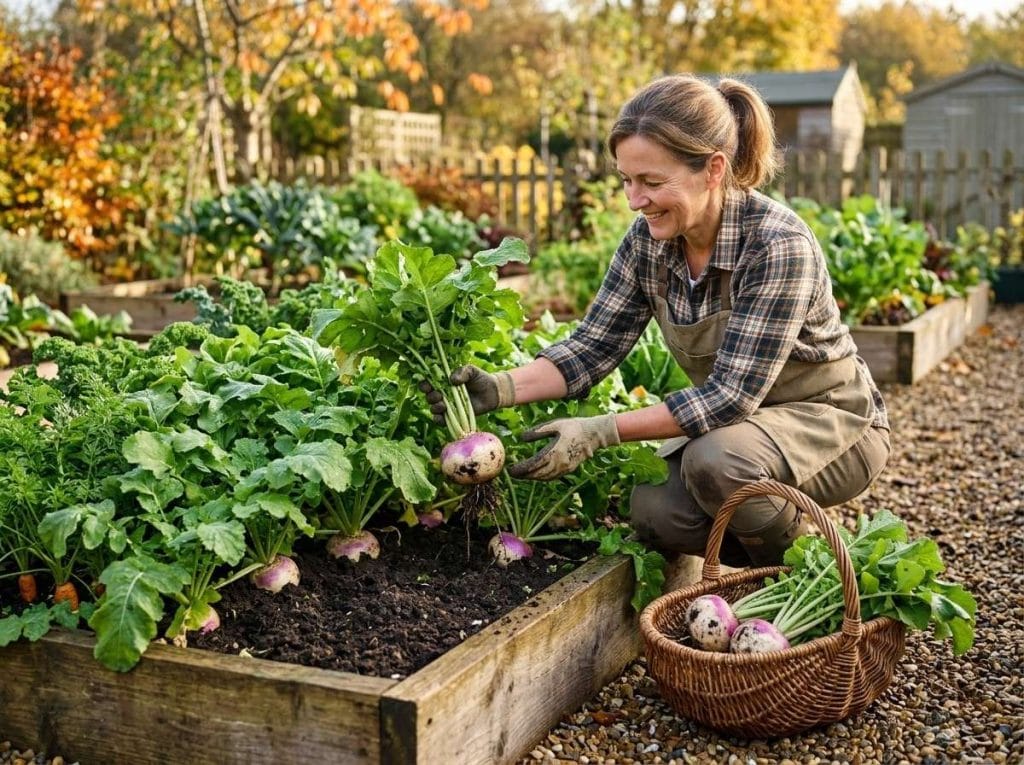
Turnips belong to the Brassica family, which includes cabbage and radishes. The part you eat is usually the root, although the leafy tops—called turnip greens—are also edible and nutritious. Turnips are cool-season crops, meaning they grow best in moderate temperatures.
After sowing seeds, turnips begin to sprout within 5–10 days. The roots start developing quickly, and the plants mature in a relatively short time compared to many other vegetables. Most varieties reach harvestable size in 40–60 days, but this window can change depending on weather, soil quality, and turnip type.
One insight many beginners miss: turnips can be grown both in spring and fall. Timing your planting carefully lets you enjoy two harvests per year.
The main keyword here is timing. Harvesting turnips too early results in small, underdeveloped roots. Waiting too long can make the roots woody, bitter, or tough. So, what’s the sweet spot?
Most turnip varieties are ready in 40–60 days from planting. Early-maturing types like ‘Tokyo Cross’ can be harvested in about 35–40 days, while larger varieties may take closer to 60 days.
Here’s a simple comparison:
| Turnip Variety | Days to Harvest | Root Size at Harvest |
|---|---|---|
| Tokyo Cross | 35–40 | Small/Medium |
| Purple Top White Globe | 50–60 | Medium/Large |
| Golden Ball | 55–65 | Medium |
| White Lady | 45–55 | Small |
Keep in mind, these numbers are guidelines. The real harvest time is influenced by local conditions.
Turnips can be harvested in spring or fall. Spring turnips are planted as soon as the soil can be worked—usually late March or early April in temperate climates. They’re ready in late May or June.
Fall turnips are sown in late summer (July or August), and harvested in September, October, or even November if frost is mild.
Many gardeners report that fall-harvested turnips are sweeter and less bitter. This is because cooler temperatures cause the plant to convert starches into sugars.
Visual cues are the best way to determine readiness, especially if you don’t track days.
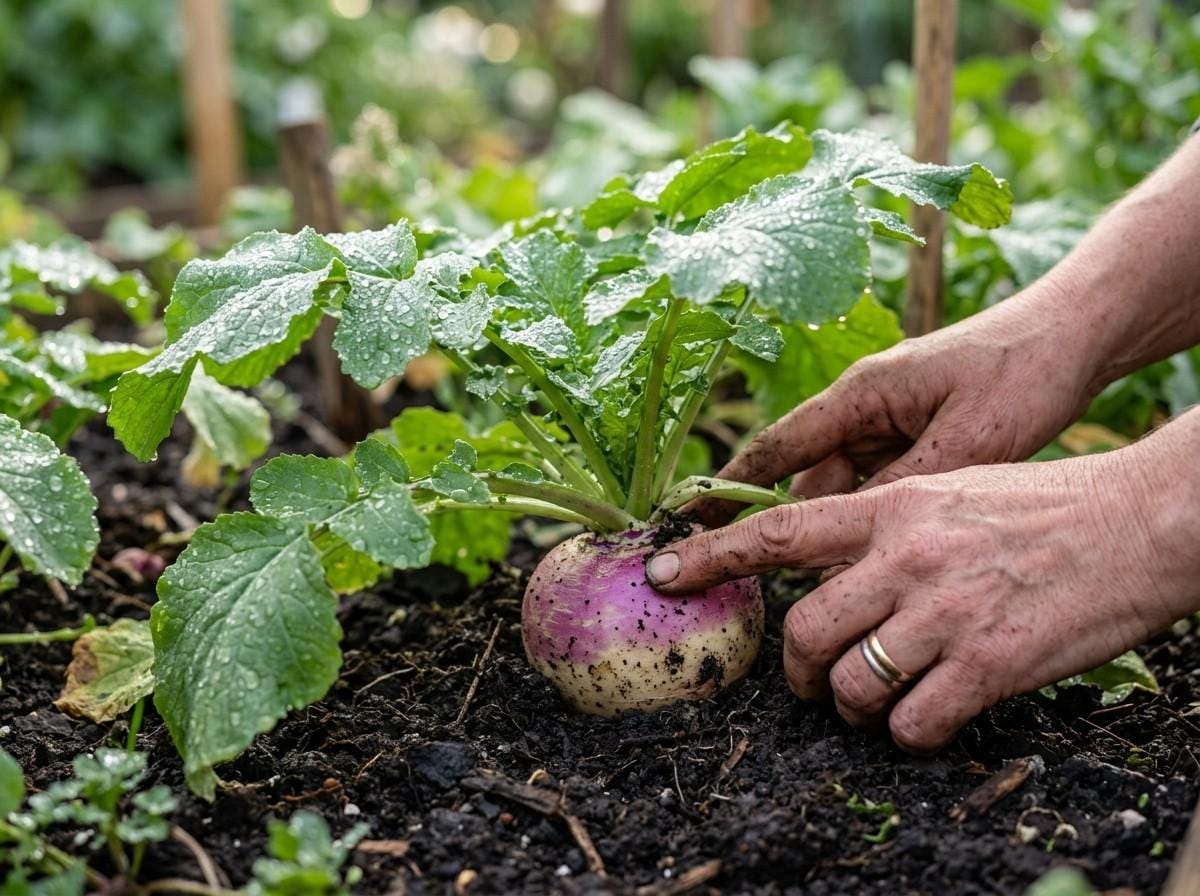
Turnips are usually harvested when the root reaches 2–3 inches in diameter. This is roughly the size of a tennis ball or golf ball. Some varieties grow larger, but harvesting at this stage ensures tenderness and flavor.
Don’t wait for the roots to become baseball-sized—they often turn woody and lose their taste.
Healthy turnip leaves are green and vibrant. If leaves begin to yellow or wilt, it may be a sign the plant is nearing maturity or experiencing stress.
Turnip greens can be harvested earlier, when they’re young and tender. Many people pick the leaves for salads or cooking while the root continues to grow.
Gently scrape away soil around the base to inspect root size. If you see a firm, round root about 2–3 inches across, it’s time to harvest.
For gardeners who want the best flavor, picking a single turnip and tasting it is a smart move. If the flesh is crisp, juicy, and slightly sweet, the batch is ready.
One tip: turnips harvested after a light frost tend to be sweeter. The cold triggers sugar production, improving taste.
Climate plays a big role in turnip growth and harvest timing.
In regions with mild spring and fall, turnips can be grown almost year-round. Spring plantings mature in late spring; fall plantings are ready in late fall.
Turnips struggle in hot weather. High temperatures cause bolting (premature flowering) and bitter roots. In these areas, plant turnips in late winter for a spring harvest, or early fall for a winter harvest.
Turnips tolerate light frost, but not hard freezes. In colder areas, plant as soon as soil thaws in spring. For fall crops, sow seeds about 2 months before first expected frost.
Here’s a comparison for different US zones:
| US Zone | Spring Planting | Fall Planting | Harvest Window |
|---|---|---|---|
| Zone 4–5 | April–May | July–August | June & Sept–Oct |
| Zone 6–7 | March–April | August–September | May & Oct–Nov |
| Zone 8–9 | Feb–March | Sept–Oct | April & Nov–Dec |
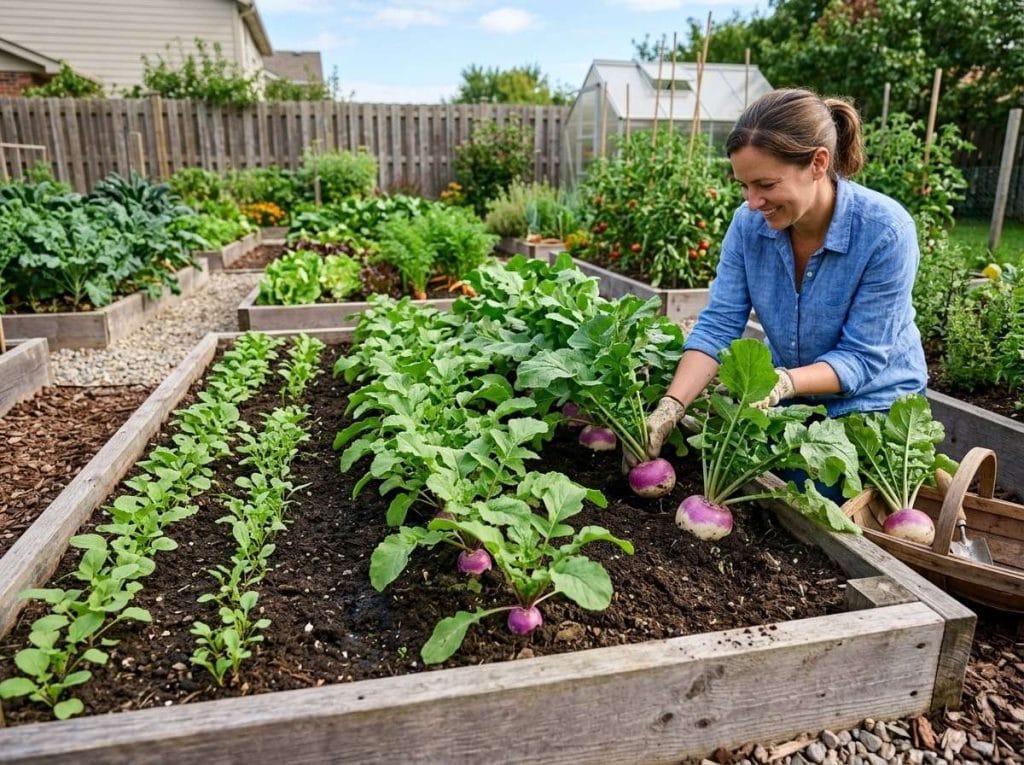
Harvesting turnips is simple, but a few details help you get the best roots and greens.
Turnip greens can be picked when they’re 4–6 inches tall. Use scissors or your fingers to snip leaves, leaving the root undisturbed. This allows the plant to keep growing.
Some gardeners harvest greens multiple times before pulling the root. This “cut-and-come-again” method works well in fertile soils.
Not all turnips mature at the same speed or size. Choosing the right variety impacts harvest timing.
‘Tokyo Cross’ and ‘White Lady’ are known for quick maturity. These types are ideal for gardeners who want a rapid crop and tender roots.
‘Purple Top White Globe’ and ‘Golden Ball’ are better for fall harvest and storage. They take longer to mature but stay fresh longer after harvesting.
Some turnips are grown mostly for their greens (‘Seven Top’), while others focus on flavor or color. Each variety has its own ideal harvest window.
One insight: planting different varieties at the same time lets you stagger your harvest, enjoying turnips over several weeks.
Several elements impact when your turnips are ready:
Rich, loose soil helps roots grow quickly and evenly. Compact or rocky soil slows growth and creates misshapen roots.
Consistent moisture is key. Turnips grow best with regular watering, but soggy soil can cause rot.
Balanced nutrients encourage steady growth. Too much nitrogen makes lush greens but small roots. Use a fertilizer with more phosphorus and potassium for better root development.
Turnips need at least 6 hours of sunlight per day. Less light means slower growth and smaller roots.
Root maggots, flea beetles, and fungal diseases can slow maturity or ruin crops. Inspect plants regularly and use safe pest controls.
After harvesting, proper handling keeps turnips fresh and tasty.
Turnips keep well in the fridge for up to 2 weeks. Store roots in a plastic bag or container with a damp cloth. Greens last only a few days—use them quickly.
For longer storage, turnips can be kept in a cool, dark place (like a root cellar) at 32–40°F. Remove most of the leaves and check for any damaged roots.
Here’s a storage comparison:
| Method | Storage Life | Notes |
|---|---|---|
| Refrigerator | 1–2 weeks | Use plastic bag, keep moist |
| Root Cellar | 2–4 months | Remove most leaves, keep cool |
| Freezing | 6–12 months | Blanch first, then freeze |
If you want better yields and flavor, try these proven tips:
Many beginners overlook thinning. Crowded turnips stay small and misshapen.
Most gardeners harvest for roots and greens, but turnips can also provide seeds. To collect seeds:
Seed harvesting is usually done in late summer or early fall. Turnip seeds stay viable for 4–5 years if kept dry and cool.
Turnips are grown globally, but harvest timing varies with culture and climate.
Each region adapts harvest timing to local tastes and weather patterns.
The timing of harvest affects nutrition and culinary uses.
Turnips are used in soups, stews, roasted dishes, and salads. Fall-harvested roots are best for hearty meals, while spring turnips shine in fresh recipes.
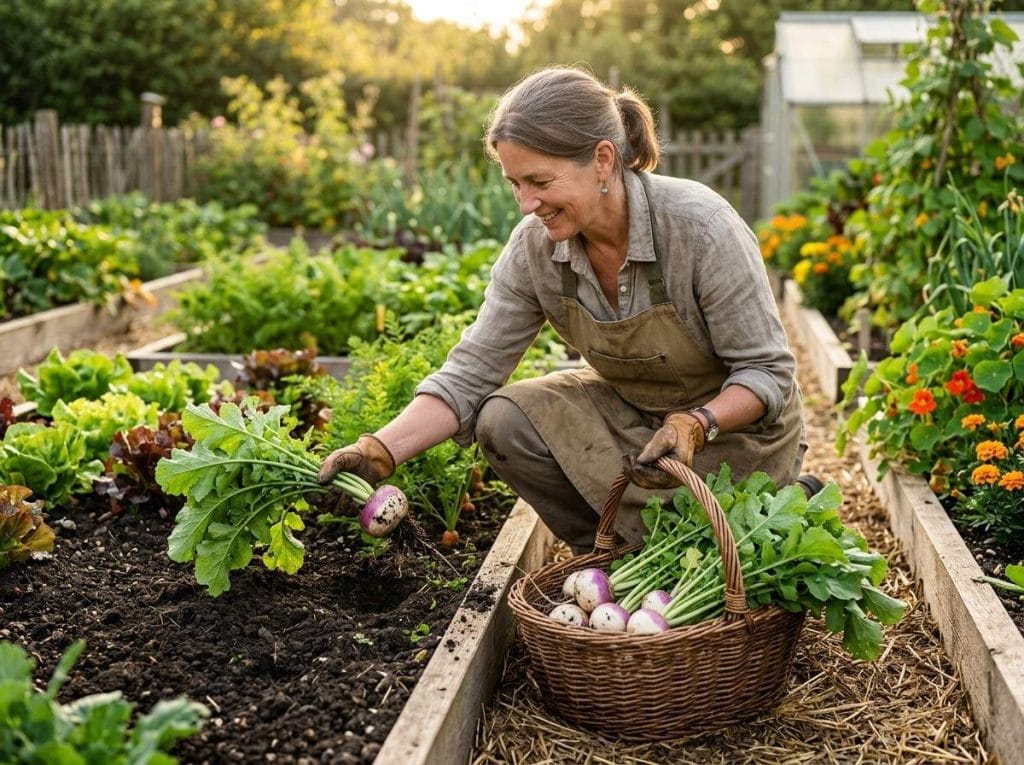
Turnip greens are best picked when they’re 4–6 inches tall. Young leaves are tender and less bitter. You can harvest greens several times before pulling up the root.
Yes, and it’s often recommended. Frost causes the plant to convert starches into sugars, making the root sweeter. However, avoid harvesting after a hard freeze, which can damage roots.
Turnips become woody or bitter if left in the ground too long or exposed to high temperatures. Harvest at the right size (2–3 inches diameter) and pick fall crops after a light frost for best flavor.
Store roots in the refrigerator for up to 2 weeks, or in a root cellar for several months. Remove most of the leaves and keep roots cool and moist. Don’t store with ethylene-producing fruits.
‘Tokyo Cross’ and ‘White Lady’ are fast-maturing varieties, ready in 35–40 days. These are ideal for gardeners who want a quick, tender crop.
If you’d like to explore more about turnip cultivation and best practices, the Wikipedia Turnip page offers a reliable overview.
Harvesting turnips at the right time brings out their best qualities—sweetness, tenderness, and nutrition. By understanding the signals and adapting to your climate and variety, you’ll enjoy a successful crop season after season. Whether you grow for roots, greens, or seeds, timing and technique make all the difference.