Gardening Made Simple.
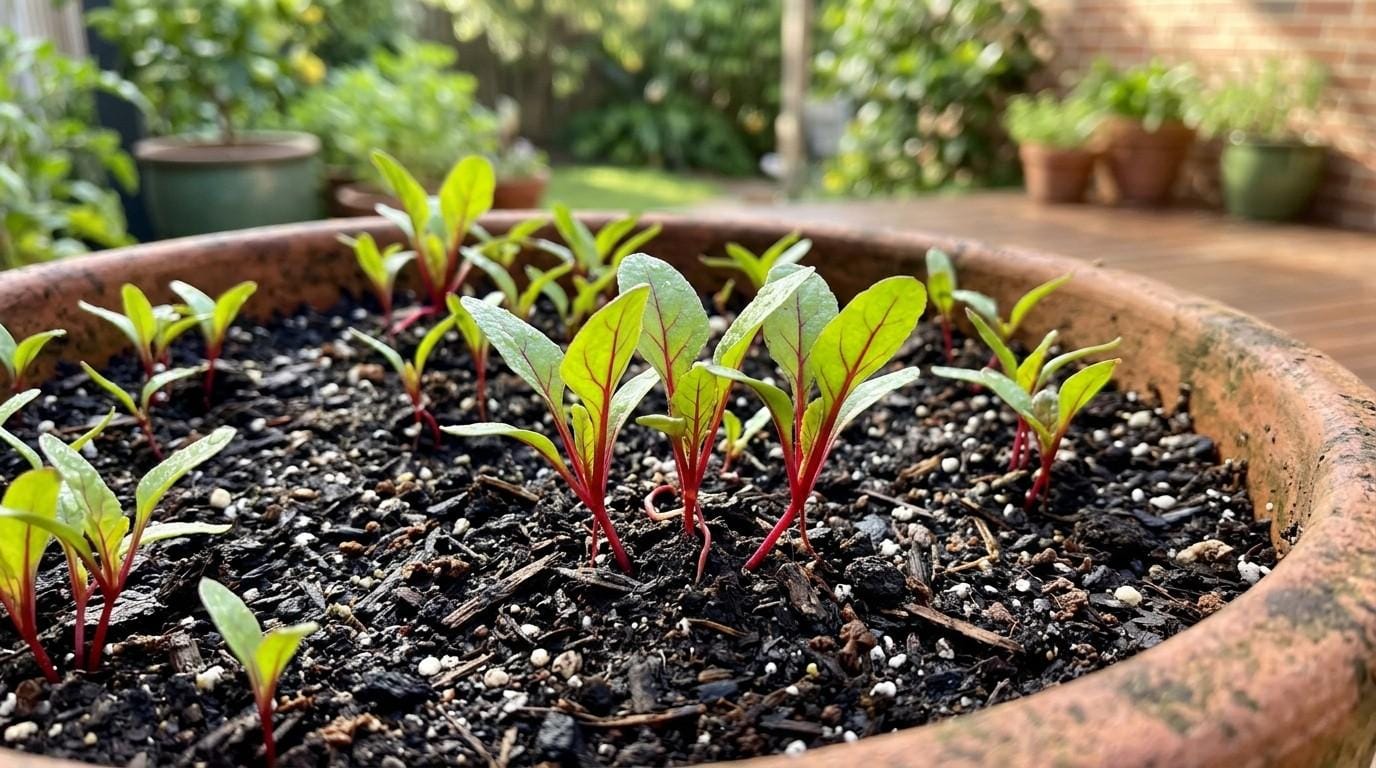
How to Plant Beets in Containers is a great solution for gardeners with limited space who still want to enjoy fresh, homegrown vegetables. If you're wondering how to plant beets in containers, choosing the right pot, using loose, well-drained soil, and providing consistent watering will help you grow healthy, flavorful beets on a patio, balcony, or small outdoor space. This guide walks you through every step for a successful container harvest.
This approach is beginner-friendly, requires minimal space, and delivers surprisingly good results when done right.
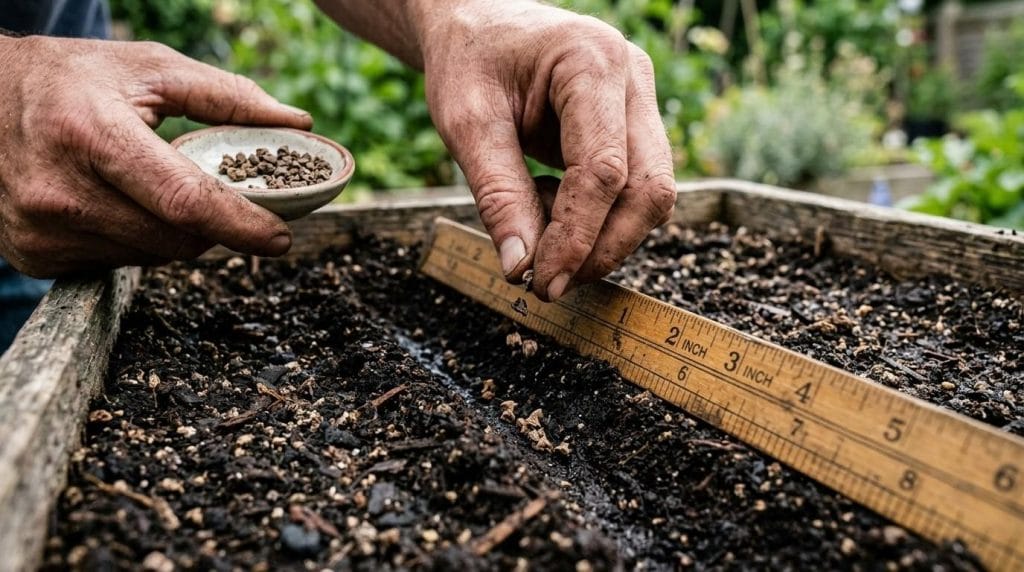
Beets are unique. They offer tasty roots and edible greens, and they’re packed with vitamins, minerals, and antioxidants. With the right setup and a bit of patience, you can harvest fresh beets just steps from your door. Here’s your complete guide to growing healthy, beautiful beets in containers—even if you’re new to gardening.
Container gardening is more than a trend. For many, it’s a solution to limited outdoor space, poor soil, or unpredictable weather. Beets are an ideal choice for containers because they don’t need deep soil and thrive in controlled conditions.
Some benefits of planting beets in containers:
A less obvious advantage: container-grown beets often have smoother roots and fewer deformities than those grown in compacted ground soil. You also get cleaner harvests, since container soil is less likely to be muddy or weedy.
Not all beet varieties perform equally well in pots. Some types grow large roots or need more space, making them less practical for small containers.
Look for these characteristics when selecting beet seeds:
Popular container-friendly beet varieties include:
Most seed packets will say if a variety is suitable for containers. For something special, try a mix of red, golden, and striped beets for a colorful harvest.
Container choice is critical for beet success. The right size and material support healthy roots and steady growth.
Beets need room for their roots to swell but don’t require very deep soil. A container should be:
Shallower pots risk stunted roots, while overly large containers waste soil and water.
Different materials have pros and cons:
Plastic and fabric containers are often best for beginners. Just be sure any pot has good drainage holes at the bottom.
Beets hate soggy soil. Without proper drainage, roots rot and growth stalls. Make sure your container has at least 3–4 holes in the base, and elevate it slightly to let water escape.
Place containers where they’ll get at least 6 hours of direct sunlight daily. South- or west-facing spots are ideal. If you notice slow growth, try moving the container to a sunnier location.
Beets grow best in soil that is loose, rich, and well-draining. Regular garden soil is usually too dense for containers and can harbor pests.
A good beet potting mix should:
A sample mix:
Avoid mixes with a lot of wood chips, as they can steal nitrogen from the soil.
Beets need nutrients to grow sweet, tender roots. Mix a slow-release, balanced fertilizer (like 10-10-10) into the potting mix before planting. Too much nitrogen will give you lush leaves but small roots, so don’t overdo it.
Some gardeners add a handful of bone meal for extra phosphorus, which encourages strong root development.
Here’s a quick soil comparison for reference:
| Soil Type | Pros | Cons |
|---|---|---|
| Regular Garden Soil | Cheap, available | Too dense, poor drainage, may have pests |
| Store-Bought Potting Mix | Light, sterile, consistent | Can dry out quickly, needs extra nutrients |
| Homemade Mix (Soil + Compost + Sand/Perlite) | Customizable, nutrient-rich, good drainage | Requires mixing effort, ingredients needed |
Planting beets in containers is simple if you follow a few key steps. Let’s break down the process from sowing to harvest.
Fill your chosen pot with the prepared potting mix, leaving about 1 inch of space at the top for watering. Gently pat down the surface but don’t compact the soil too much.
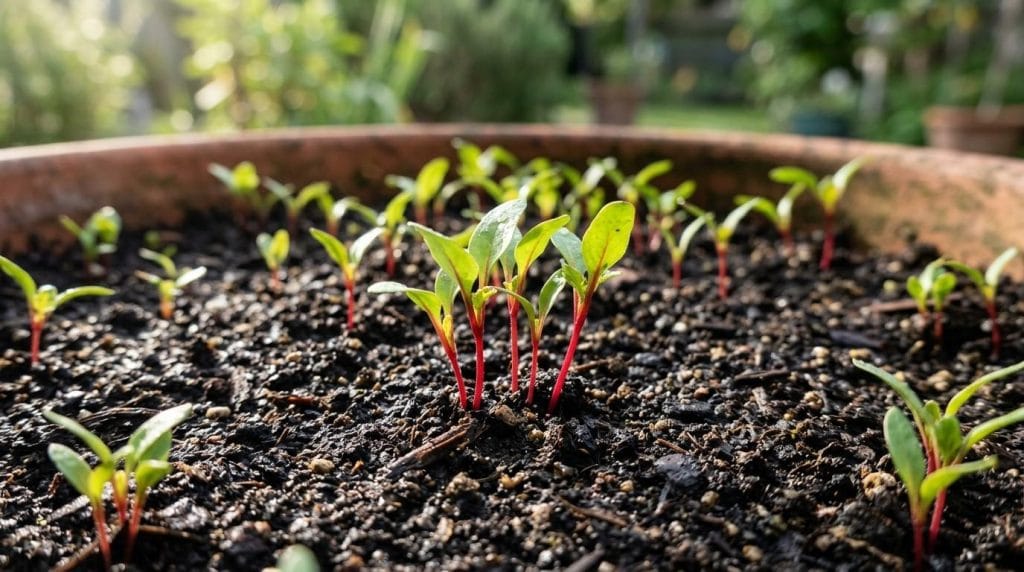
Beet seeds are actually small clusters, so you may get more than one seedling from each. Here’s how to sow:
For a 12-inch pot, you can usually fit 8–10 seeds. Don’t worry if this seems crowded—beets can be thinned later.
After sowing, water the soil thoroughly but gently. The goal is to keep the soil evenly moist, not soggy.
Once seedlings have 2–3 true leaves, thin them to 3–4 inches apart. This gives roots enough room to grow round and full. Gently remove extra seedlings with scissors, not by pulling, to avoid disturbing neighbors.
Don’t waste the thinnings—tender beet greens are delicious in salads.
Beets grow best in cool weather. If you’re planting in a hot climate, provide afternoon shade or plant in early spring and late fall.
Success with container beets depends on several factors:
Beets need 6–8 hours of sunlight per day. Too little sun results in small roots and pale leaves. If you have only partial sun, try a lighter-skinned variety like ‘Golden Detroit’, which can tolerate slightly less light.
Consistent moisture is vital. Too little water makes roots woody; too much can cause rot. Aim for soil that is moist but not soggy. Stick your finger an inch into the soil—if it feels dry, water.
Crowded beets produce small, misshapen roots. Give each plant at least 3 inches of space. If you want baby beets, you can plant more closely and harvest earlier.
Beets prefer temperatures between 50°F and 75°F. They can handle mild frosts, but extreme heat can cause bolting or bitter roots. In summer, move pots to a cooler spot or add mulch to keep soil temperatures down.
Over-fertilizing beets leads to large leaves but disappointing roots. Use a balanced fertilizer at planting, then feed lightly every few weeks.
Here’s a quick look at how different factors impact beet growth:
| Factor | Ideal Condition | Common Problem |
|---|---|---|
| Sunlight | 6–8 hours/day | Small roots if under 4 hours |
| Spacing | 3–4 inches apart | Misshapen roots if crowded |
| Water | Evenly moist, never soggy | Woody roots if dry, rot if soaked |
| Soil | Loose, rich, well-draining | Stunted growth in compact soil |
Even in containers, you might face challenges. Here’s how to spot and fix the most frequent issues:
Solution: Adjust watering, improve drainage, and ensure balanced fertilizer.
Solution: Thin seedlings properly and use a fine-textured potting mix.
Beets bolt when exposed to sudden temperature swings or long, hot days.
Solution: Grow in spring or fall, or provide shade during heat waves.
A non-obvious tip: If you see slow or uneven growth, try rotating the container every week. This ensures even sunlight and helps prevent spindly stems.
Beets are ready to harvest when roots are about the size of a golf ball (1.5–2 inches across). This usually takes 50–70 days from sowing, depending on variety and temperature.
To harvest:
Don’t forget the greens! Beet leaves are rich in nutrients and can be sautéed, steamed, or added to salads.
If you’d like a steady supply, try succession planting—sow a new batch every 2–3 weeks for a continuous harvest.
Freshly harvested beets store well if handled properly. Cut off the greens, leaving about 1 inch of stem to prevent bleeding. Store roots in a cool, dark place for up to a month, or in the fridge for 1–2 weeks.
Beet greens are best used within a few days. Wrap in a damp towel and refrigerate.
Some tasty ways to enjoy your harvest:
A less-known idea: Pickle small beets whole for a tangy snack.
Once you’re comfortable with basics, try these strategies for even better results:
A surprising insight: Beets can be grown indoors under strong grow lights. If you have limited outdoor space or want year-round greens, try a deep container near a sunny window or under LED grow lights.
For more on container gardening, see this helpful resource from the University of Minnesota Extension.
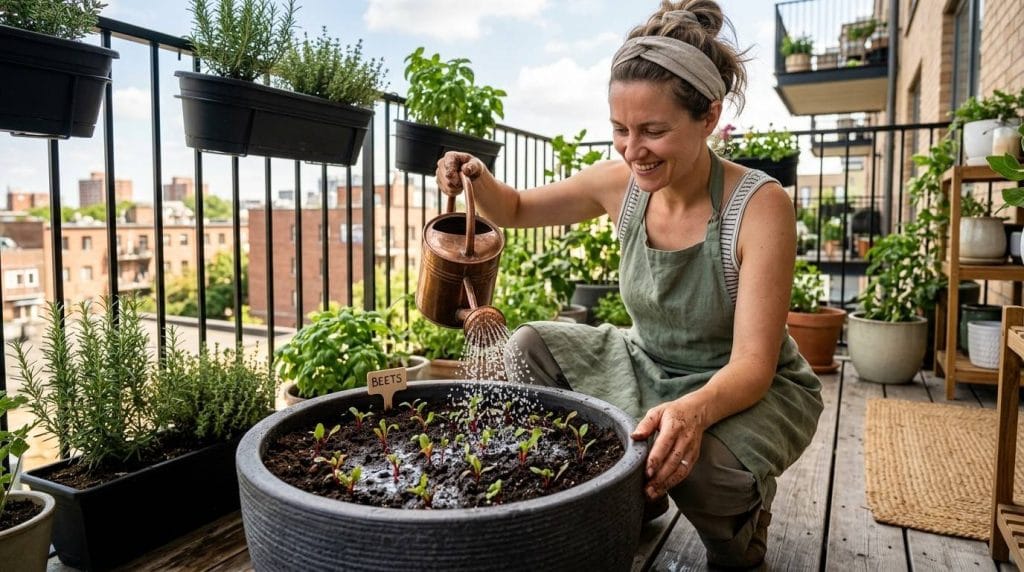
In a standard 12-inch pot, you can grow about 4–5 mature beets comfortably, spacing them 3–4 inches apart. If you harvest as baby beets or for greens, you can sow more densely but will need to thin as they grow.
You can reuse potting soil if you refresh it with new compost and check for pests or diseases. Remove old roots, fluff up the mix, and add some slow-release fertilizer before planting again.
Beets prefer cool weather. In most regions, plant in early spring as soon as frost danger passes, or in late summer for a fall crop. In mild climates, you can plant almost year-round—just avoid peak summer heat.
Small or missing roots are usually caused by overcrowding, insufficient sunlight, or poor soil. Thin seedlings early, provide at least 6 hours of sun, and use a loose, rich potting mix. Too much nitrogen fertilizer can also cause large leaves but tiny roots.
Absolutely! Beet greens are edible and full of vitamins A, C, and K, plus minerals like iron and calcium. Use them like spinach in salads, sautés, or soups. Just wash well to remove any soil or insects.
Container beet gardening is simple, rewarding, and fits nearly any lifestyle. With the right setup and a bit of care, you’ll enjoy fresh, colorful beets and greens—even if you only have a small patio or balcony. Get started today and enjoy the unique flavor and nutrition of homegrown beets, all from a pot just outside your door.