Gardening Made Simple.
Are you confused about whether to choose basil seeds or chia seeds for your health boost? Basil Seeds vs Chia Seeds is a common comparison, as both are tiny powerhouses packed with nutrients—but they work differently in your body.
Knowing which one fits your lifestyle and goals can make a big difference in how you feel every day. Keep reading to discover the surprising benefits of each, so you can make the best choice for your well-being. Your body will thank you!
Basil seeds and chia seeds are popular superfoods. Both offer many nutrients. Comparing their nutritional profiles helps choose the best one for you. Each seed has unique benefits. Let’s explore their calories, vitamins, minerals, fiber, and antioxidants.
Basil seeds and chia seeds have similar calorie counts. One tablespoon of basil seeds contains about 60 calories. Chia seeds have around 58 calories per tablespoon. Both seeds provide healthy fats, protein, and carbohydrates. Chia seeds contain slightly more protein. Basil seeds have fewer fats but similar carbs. Both are good energy sources for your body.
Basil seeds contain calcium, magnesium, and iron. These minerals support bones and blood health. Chia seeds have higher calcium levels. They also provide phosphorus and zinc. Both seeds offer B vitamins, like niacin and riboflavin. These vitamins help convert food into energy. Each seed supports different mineral needs well.
Fiber content in chia seeds is higher than basil seeds. Chia seeds offer about 10 grams of fiber per ounce. Basil seeds provide around 7 grams. Both seeds help digestion and keep you full longer. Antioxidants in chia seeds are more abundant. They protect cells from damage. Basil seeds also contain antioxidants but in smaller amounts.
Basil seeds and chia seeds are popular superfoods. Both offer many health benefits. Comparing them helps you choose the right one for your needs. Below, we explore their effects on digestion, heart health, blood sugar, and weight management.
Basil seeds are rich in fiber. They help ease constipation and support gut health. Chia seeds contain soluble fiber that forms a gel-like texture. This slows digestion and promotes regular bowel movements. Both seeds aid digestion but in slightly different ways.
Chia seeds contain omega-3 fatty acids. These fats help lower bad cholesterol and reduce heart disease risk. Basil seeds also support heart health by lowering cholesterol levels. Both seeds encourage a healthy heart through their nutrients.
Basil seeds can help control blood sugar spikes after meals. They slow down sugar absorption in the body. Chia seeds also stabilize blood sugar by releasing glucose slowly. Including these seeds may benefit people with diabetes or insulin resistance.
Both seeds absorb water and expand in the stomach. This creates a feeling of fullness and reduces hunger. Basil seeds and chia seeds can help control appetite. They support weight loss efforts by lowering overall calorie intake.
Basil seeds and chia seeds are popular choices in many kitchens. Both add nutrition and texture to dishes. Their preparation and use vary, affecting the final taste and feel. Understanding these differences helps you use them well in cooking.
Basil seeds swell quickly in water, forming a jelly-like coating. They become soft but slightly crunchy inside. Chia seeds absorb more water, forming a thick gel. Their texture is smoother and more gelatinous than basil seeds. Soaking time differs: basil seeds take 10-15 minutes, chia seeds need about 30 minutes.
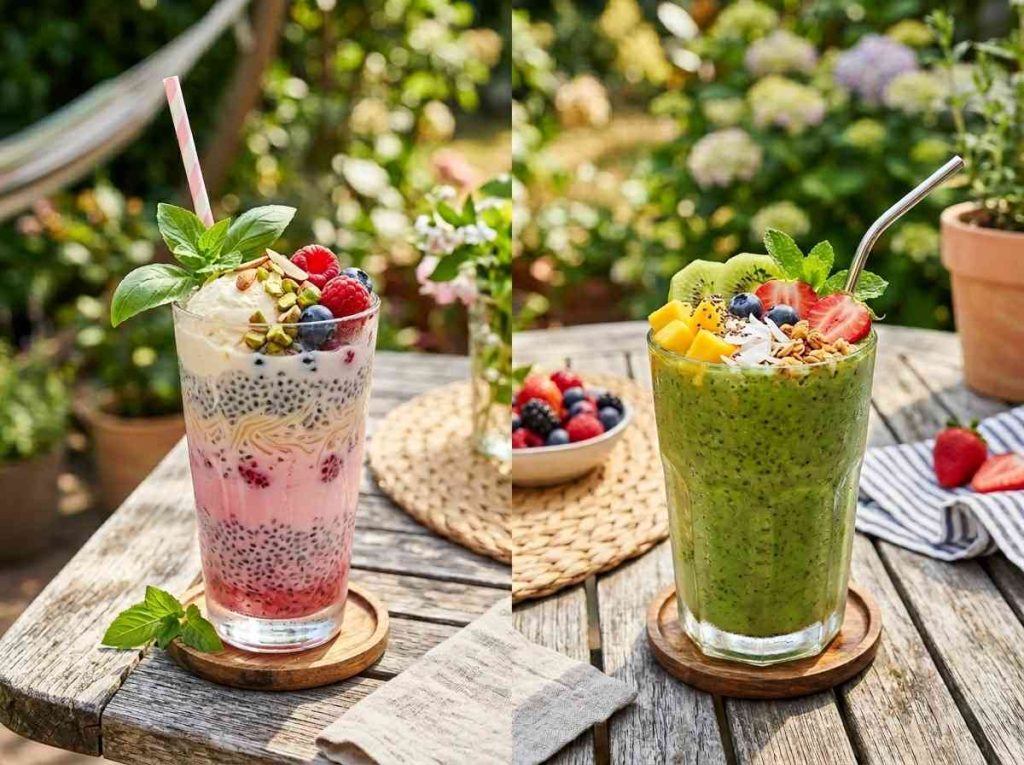
Basil seeds are common in drinks and desserts in Asian cuisine. They suit cold beverages, like falooda or lemonade, adding crunch. Chia seeds appear in smoothies, puddings, and baked goods. They mix well in oatmeal and yogurt. Both seeds enhance salad toppings and energy bars.
Basil seeds have a mild, neutral taste with a hint of earthiness. They blend well with sweet and fruity flavors. Chia seeds have a slight nutty taste. They pair nicely with berries, nuts, and spices. Both seeds absorb flavors, making them versatile for many dishes.
Basil seeds and chia seeds offer many health benefits. Still, they can cause side effects in some people. Knowing these potential risks helps you use them safely. This section covers allergy risks, digestive issues, and recommended daily intake.
Both basil and chia seeds can cause allergic reactions. Symptoms may include itching, swelling, or rashes. People with allergies to plants in the mint family should be careful. Stop use and see a doctor if any allergic signs appear.
Basil and chia seeds absorb water and expand in the stomach. Eating them dry or in large amounts may cause choking. Some people may feel bloated or have stomach cramps. Drink plenty of water to avoid digestive discomfort.
Experts suggest 1 to 2 tablespoons of basil or chia seeds per day. Eating more can lead to side effects like stomach pain or diarrhea. Start with a small amount to check your body’s reaction. Adjust the intake based on how you feel.
Environmental and sustainability factors are important when choosing between basil seeds and chia seeds. These factors affect the planet and future food supplies. Understanding how these seeds grow and their impact helps make better choices.
Basil seeds come from the sweet basil plant. Farmers grow basil in warm climates. It needs less care and fewer chemicals. This reduces soil damage and pollution.
Chia seeds grow on the Salvia hispanica plant. Chia plants need good soil and stable weather. Some farms use pesticides to protect the crop. This can harm the environment.
Basil seeds require less water. They grow well with natural rainfall. This lowers water use and stress on water supplies.
Chia seeds need more water during dry seasons. Irrigation is often needed. This increases water use and energy consumption.
Both seeds have a low carbon footprint compared to animal foods. Basil seeds have a slight edge due to simpler farming needs.
Cost and availability are key factors in choosing between basil seeds and chia seeds. Both seeds offer health benefits, but their price and how easy they are to find can vary. Understanding these differences helps you make a smart choice for your budget and needs.
Basil seeds generally cost less than chia seeds. Prices depend on the brand and package size. Chia seeds are often seen as a premium product, raising their price. Buying in bulk usually lowers the cost per serving for both seeds. Store type also affects prices. Local markets may offer lower prices than health food stores.
Chia seeds are widely available across many countries. They come from Central and South America but have spread globally. Basil seeds, common in Asia, are less known in Western countries. Chia seeds appear in most supermarkets and online shops. Basil seeds might need a special store or online order. Availability affects how often people use each seed.
Both seeds come in organic and conventional forms. Organic seeds cost more due to farming methods. Some people prefer organic for health and environment reasons. Conventional seeds are cheaper and easier to find. Check labels carefully to choose the right type. Organic options may be limited for basil seeds in some areas.
Choosing the right seed for your diet depends on several factors. Both basil seeds and chia seeds offer unique benefits. Picking the best one means thinking about your daily routine, health targets, and taste choices. This guide helps you decide which seed fits your needs.
Basil seeds absorb water quickly, making them great for fast recipes. Chia seeds take longer to soak but last well in smoothies. If you need a quick snack, basil seeds suit you. For meal prep, chia seeds work better.
Basil seeds support digestion and help reduce body heat. Chia seeds are rich in omega-3 and fiber, helping heart health. Choose basil seeds for digestion support. Pick chia seeds for heart and brain benefits.
Basil seeds have a mild, slightly herbal flavor and a jelly-like texture. Chia seeds are nutty with a gel-like coating when soaked. If you prefer softer seeds, basil seeds are ideal. For crunch and nuttiness, choose chia seeds.
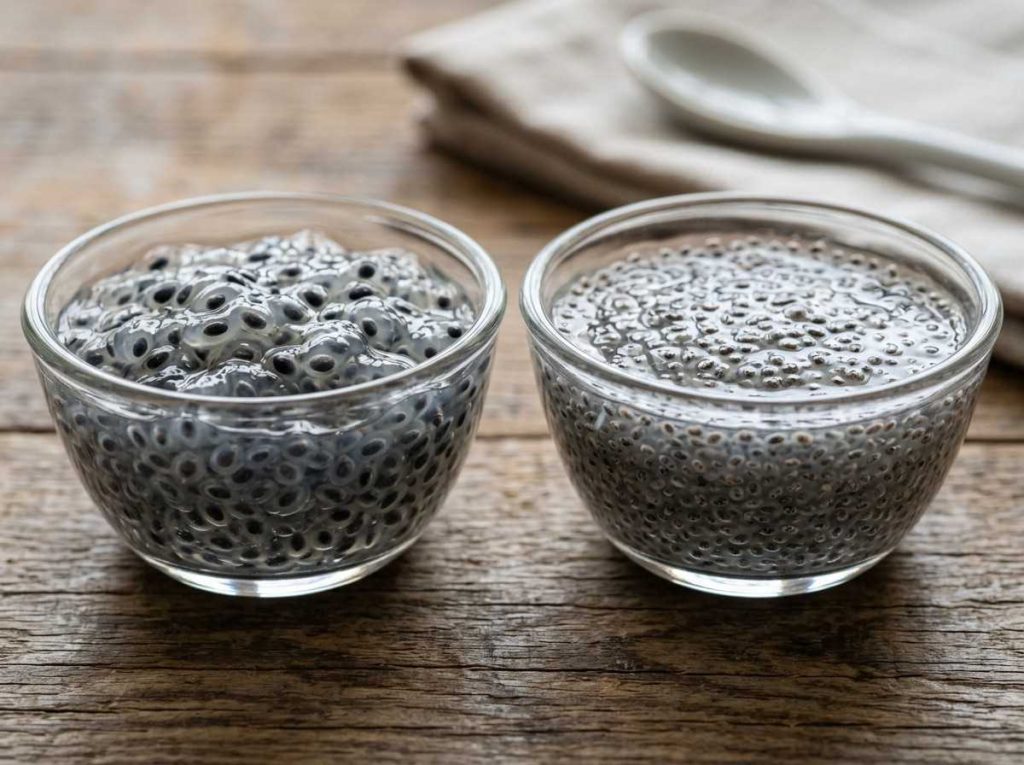
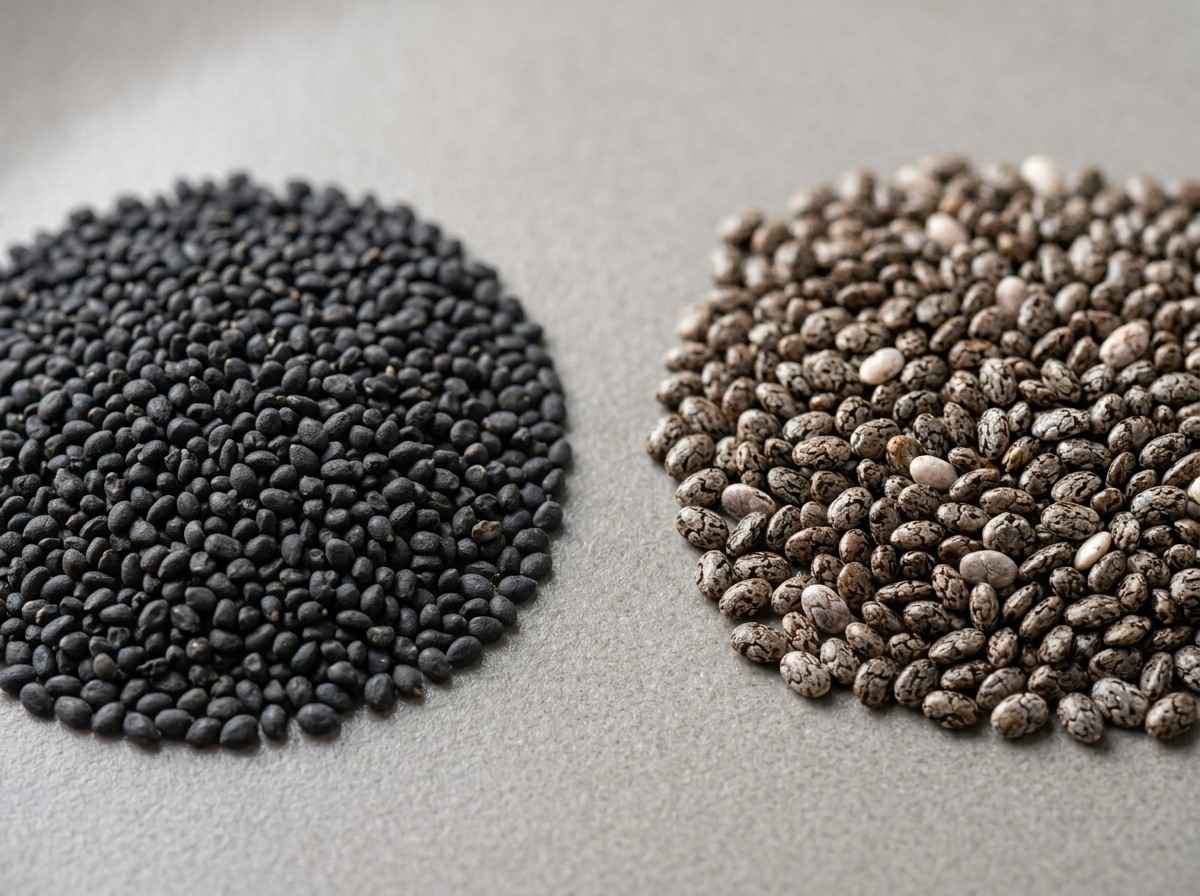
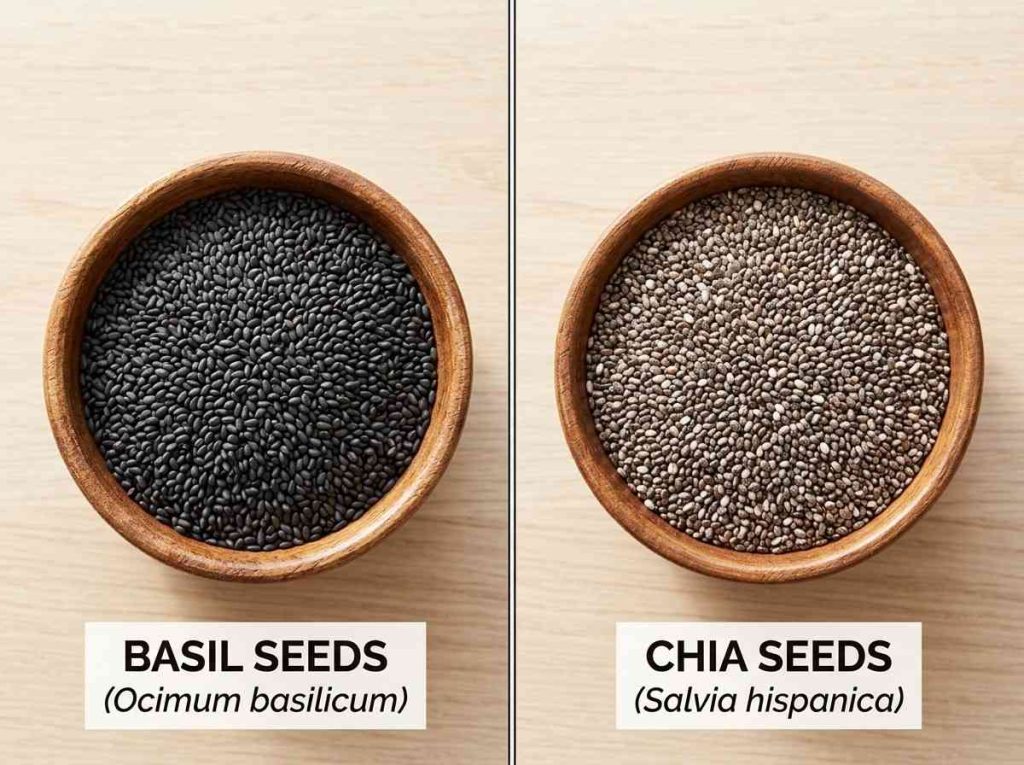
Basil seeds are smaller and black, while chia seeds are slightly larger and have a gray-white mix. Both swell in water but differ in texture and taste.
Chia seeds have more fiber, which helps keep you full longer. Basil seeds also aid digestion but with slightly less fiber.
Both seeds absorb water and form a gel, easing bowel movements. This gel helps reduce constipation naturally.
Yes, both can be eaten raw but taste better after soaking. Soaking makes them easier to digest and softer to eat.
Basil seeds absorb more water and can keep you hydrated longer. Chia seeds also hold water but in a lighter gel form.
Basil seeds and chia seeds both offer great health benefits. Each has unique nutrients and uses in recipes. Basil seeds swell quickly and provide cooling effects. Chia seeds absorb more water and add crunch to dishes. Choosing depends on your taste and needs.
Both support digestion and add fiber to meals. Try them in drinks, smoothies, or desserts. Small changes like these can boost your daily nutrition. Simple, healthy, and easy to include in your diet. Give both a chance and see what you like best.