Gardening Made Simple.
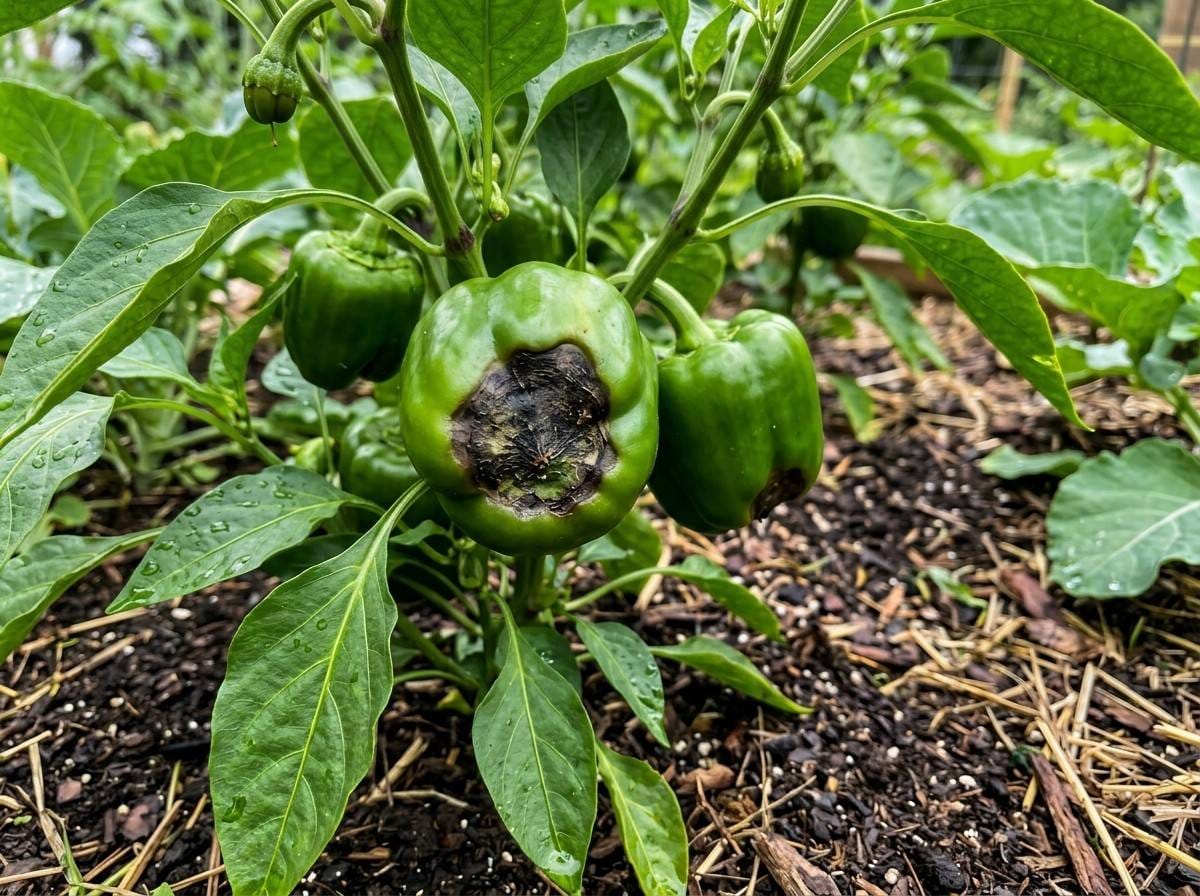
Growing bell peppers can be rewarding, but sometimes you may find dark, sunken spots at the bottom of your peppers. This is called Blossom End Rot on Bell Peppers. It can ruin your harvest and leave you feeling frustrated. If you want healthy, tasty bell peppers, understanding what causes blossom end rot and how to prevent it is essential. This guide explores the common causes, prevention methods, and practical care tips to help you grow healthier bell peppers and reduce the risk of blossom end rot.
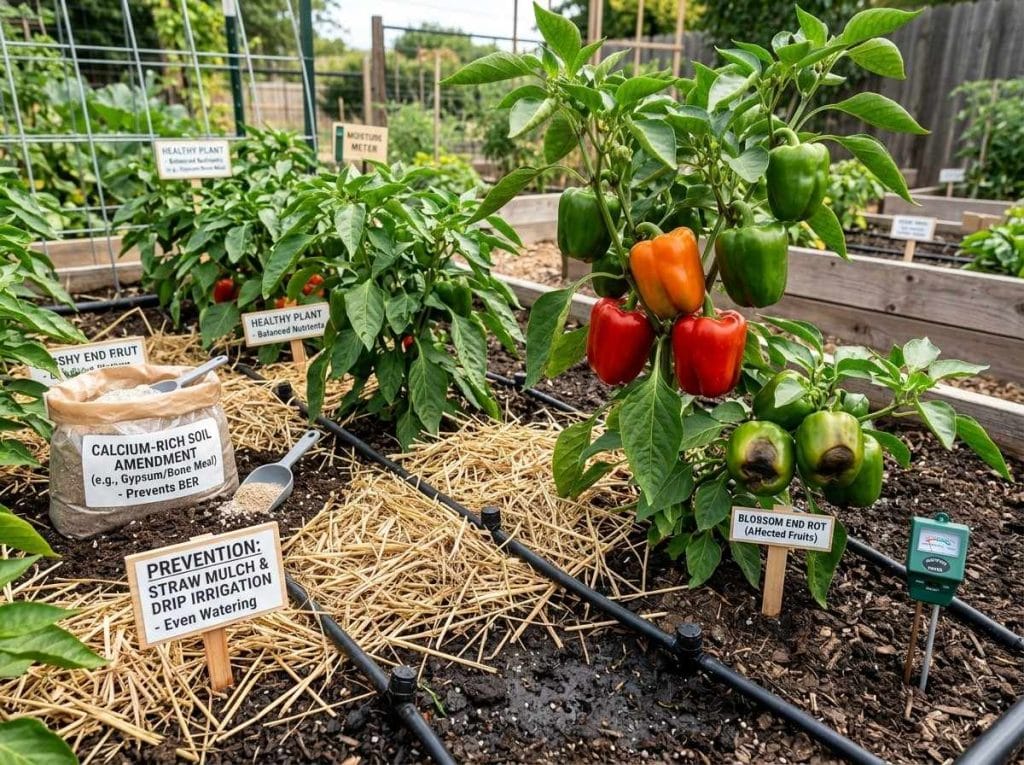
Blossom end rot is a common disorder in bell peppers, tomatoes, and other fruits. It appears as a brown or black spot on the bottom (blossom end) of the fruit. The spot is soft at first, but later becomes sunken and leathery. Many gardeners mistake it for a disease, but it’s actually a physiological disorder—not caused by bacteria or fungi.
The affected area can cover a small portion or most of the fruit. Sometimes the spot becomes dry and shrinks. In severe cases, the pepper can rot completely. It’s not dangerous to humans, but affected peppers are less appealing and may taste bitter.
Blossom end rot is mainly caused by calcium deficiency in the developing fruit. Calcium is an important mineral for cell walls. If the fruit does not get enough calcium, cells break down and rot starts. But lack of calcium is rarely because the soil has no calcium; usually, other factors prevent the plant from absorbing it.
Here are the main causes:
Even if your soil has plenty of calcium, your bell peppers may still get blossom end rot if these conditions are present.
Spotting blossom end rot early can help you act before losing your whole crop. Look for these signs:
Sometimes, blossom end rot is confused with other problems like sunscald or anthracnose. But sunscald appears on the side facing the sun, not the bottom. Anthracnose is caused by fungus and spreads differently.
All bell peppers can get blossom end rot, but certain conditions make it more likely:
If you notice blossom end rot in one fruit, check others closely. Often, several peppers will show symptoms at the same time.
Understanding how bell pepper plants absorb calcium helps prevent problems. Calcium moves from the roots to the fruits with water. If the plant is stressed or water is inconsistent, calcium may not reach the peppers.
Unlike other nutrients, calcium does not move freely inside the plant. Once it enters a leaf or fruit, it stays there. That’s why early problems can’t be fixed by adding calcium later—it needs to be available when the fruit is forming.
Some soils have plenty of calcium, but it’s locked up and not available. Too much nitrogen or potassium can compete for uptake, making it harder for plants to get calcium.
Here is a quick comparison of how different nutrients move in plants:
| Nutrient | Mobility in Plant | Effect on Fruit |
|---|---|---|
| Calcium | Low | Needed for cell walls; deficiency causes blossom end rot |
| Nitrogen | High | Promotes leaf growth; excess can cause fruit problems |
| Potassium | Medium | Supports fruit development; excess can block calcium |
Prevention is much easier than cure. Here are proven ways to avoid blossom end rot in your bell peppers:
Water regularly and evenly. Do not let the soil dry out completely, then flood it. Use mulch to retain moisture and prevent evaporation. Aim for about 1–1.5 inches of water per week.
Avoid high-nitrogen fertilizers. Look for balanced formulas or organic compost. Too much nitrogen can make plants grow fast but increase blossom end rot.
Check soil pH and calcium levels. Ideal pH for bell peppers is 6.2–6.8. If pH is too low (acidic), calcium is not available. Lime can raise pH and add calcium.
Be gentle when transplanting. Do not dig near roots once the plant is established. Damaged roots take up fewer nutrients.
Apply a layer of mulch around each plant. This keeps soil temperature steady and prevents water loss.
If your soil is low in calcium, add gypsum or lime before planting. Foliar sprays can help, but only if the plant is actively growing. However, sprays are less effective than soil amendments.
Flush soil with water if you use fertilizers often. Too much salt blocks calcium uptake.
Keep an eye on weather, soil, and plant growth. Act quickly if you see symptoms.
Here’s a comparison of prevention methods and their effectiveness:
| Prevention Method | Effectiveness | Best Time to Apply |
|---|---|---|
| Regular watering | Very High | Throughout growing season |
| Balanced fertilizer | High | Planting and early growth |
| Mulching | Medium-High | After planting |
| Soil calcium amendment | High | Before planting |
| Foliar calcium spray | Low-Medium | Early fruiting stage |
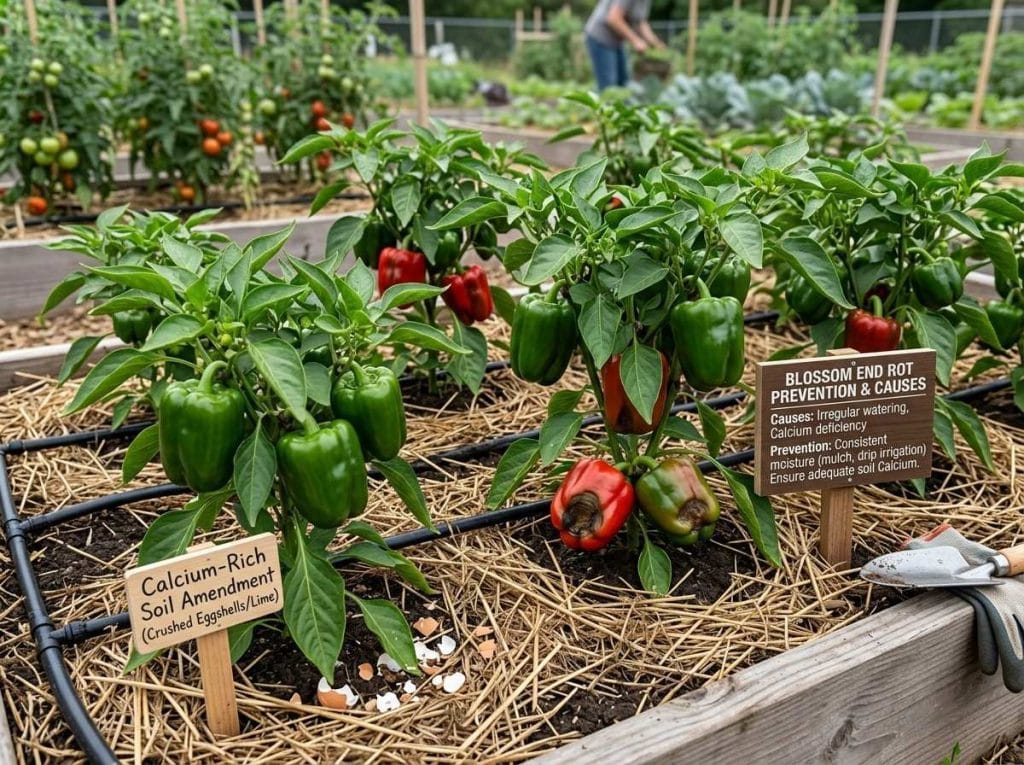
Once blossom end rot appears, it cannot be reversed in affected fruits. However, you can take action to prevent it spreading to new peppers.
Do not use pepper fruits with severe rot, but mildly affected peppers can be trimmed and used if you cut away the bad part.
Many gardeners make mistakes that worsen blossom end rot. Avoid these pitfalls:
Let’s look at some practical examples:
Case 1: Container-grown Peppers
A gardener in California noticed blossom end rot in nearly every pepper grown in containers. After testing, the soil was found to dry out quickly. By switching to a larger container and using mulch, the problem disappeared.
Case 2: Greenhouse Peppers
In a commercial greenhouse, bell peppers developed blossom end rot after a heatwave. The grower increased watering and reduced nitrogen fertilizer. Within weeks, new fruits were healthy.
Case 3: Backyard Garden
A home gardener had good soil but kept adding fertilizer. After a soil test, they discovered high salt levels. Flushing the soil and using less fertilizer solved the problem.
These examples show that blossom end rot can happen in many different settings, but simple changes often fix it.
Sometimes, gardeners confuse blossom end rot with other pepper problems. Here’s a quick comparison:
| Disorder | Main Symptoms | Cause | Solution |
|---|---|---|---|
| Blossom End Rot | Sunken, dark spot at blossom end | Calcium deficiency | Improve watering, add calcium |
| Sunscald | White, papery spot on side | Direct sun exposure | Provide shade, mulch |
| Anthracnose | Soft, spreading spots | Fungal infection | Use fungicide, rotate crops |
Many people think blossom end rot is just a calcium problem, but there are deeper factors:
These points are often missed by beginners. Smart watering and balanced nutrients are more effective than simply adding calcium.
If you want to avoid blossom end rot, follow these practices:
Healthy bell peppers are a sign of good soil, steady watering, and proper care.
Local climate affects how often you see blossom end rot. In hot, dry regions, soil dries quickly and peppers suffer more. In rainy climates, water may wash away nutrients and cause pH changes.
Tropical climates: Rapid growth during rainy season can lead to blossom end rot.
Cool climates: Slow growth means less risk, but sudden heat waves increase risk.
Adapt your watering and mulching based on your weather. In containers, check soil daily.
Recent studies show that genetics play a role. Some pepper varieties resist blossom end rot better than others. Researchers are developing new types with improved calcium uptake.
Also, advances in soil testing and monitoring help gardeners spot problems early. Smart irrigation systems can keep soil moisture steady, reducing risk.
To learn more, see this Wikipedia article on blossom end rot.
Blossom end rot is mainly caused by calcium deficiency in the fruit, often due to irregular watering, rapid growth, or high nitrogen fertilizer.
Yes, you can eat peppers if you cut away the affected part. The rot is not harmful to humans, but the damaged area may taste bitter.
You cannot fix affected fruits, but you can prevent it in new peppers by improving watering, adjusting fertilizer, and adding calcium to the soil.
No, blossom end rot is not contagious. It affects individual fruits based on plant health and conditions.
Calcium sprays help only if applied when fruit is forming. They are less effective than soil amendments and proper watering.
Bell peppers are a favorite for many gardeners and cooks. With smart watering, balanced nutrients, and a little attention, you can avoid blossom end rot and enjoy a healthy harvest. If you see symptoms, don’t panic—small changes can make a big difference.
Keep learning, keep growing, and soon your peppers will be bright, tasty, and rot-free.