Gardening Made Simple.
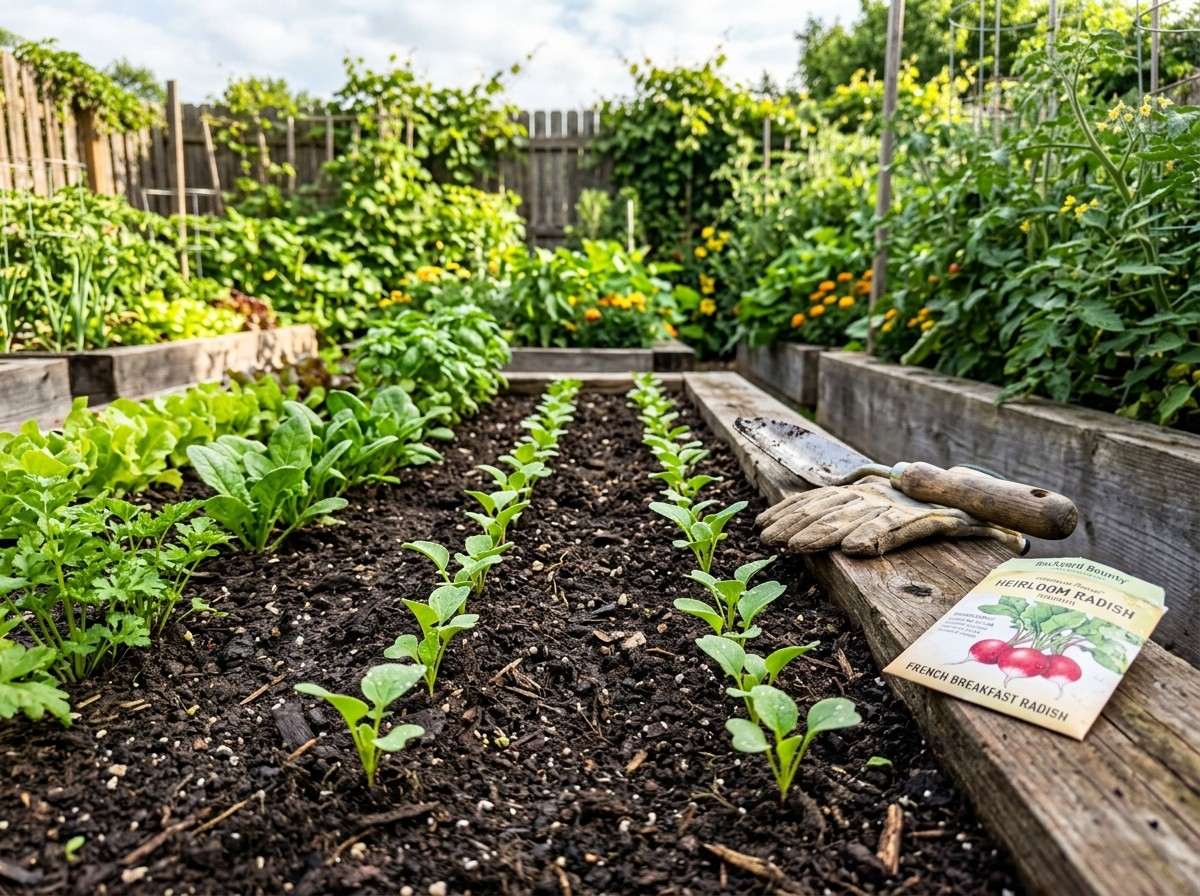
Planting radish seeds is simple, but knowing the right depth is important if you want healthy plants and a good harvest. Many gardeners make mistakes with seed depth, and this can affect how well radishes grow. If you plant seeds too shallow, they may dry out or get washed away. If you plant them too deep, they may not sprout. In this article, you’ll learn exactly how deep to plant radish seeds, why it matters, and how to set up your garden for success.
Radishes are popular because they grow fast and are easy to care for. But even the simplest vegetables require careful planting. Whether you’re growing radishes in a backyard, container, or raised bed, you need to understand how seed depth affects germination and growth.
This guide will cover everything from soil prep to common mistakes, and even give you real-world comparisons so you can see how depth affects results. By the end, you’ll feel confident planting radish seeds at the right depth every time.
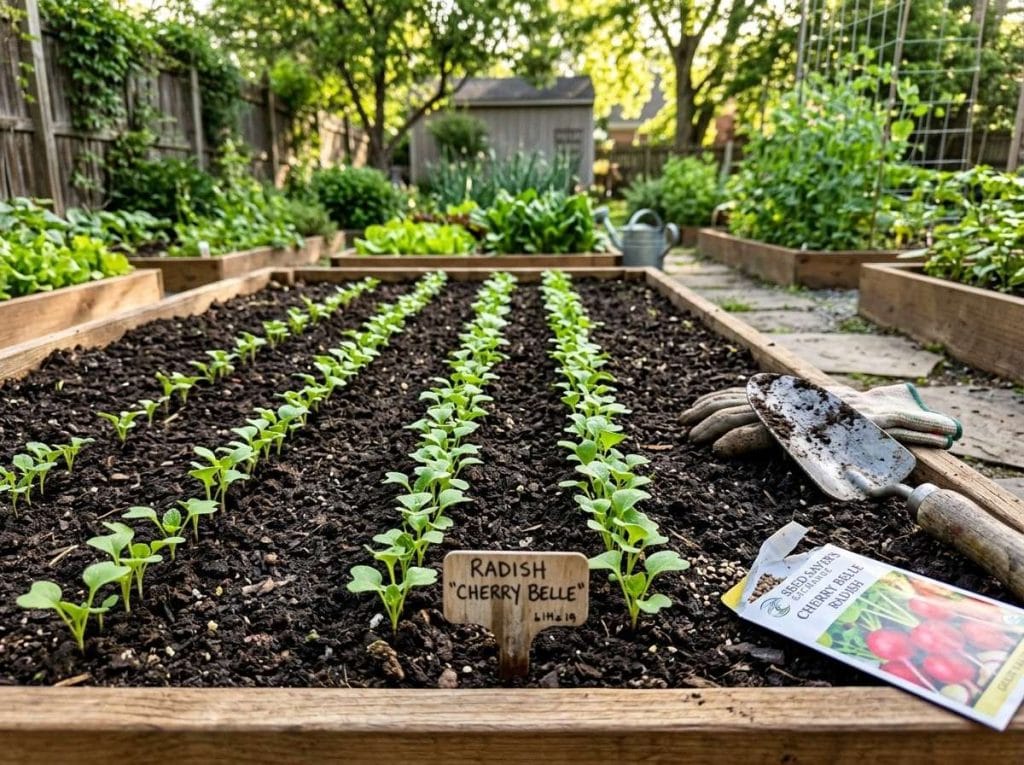
Radishes are among the fastest vegetables, sometimes ready to harvest in just 3–4 weeks. But their speed comes with sensitivity. The seed’s depth influences moisture access, temperature stability, and seedling strength.
If seeds are planted too shallow:
If seeds are planted too deep:
Most radish varieties have small seeds, so the correct depth is typically ¼ to ½ inch (6–12 mm). This range helps seeds stay moist and protected, but not buried so deep that they can’t sprout.
Radish seeds need moisture, oxygen, and warmth to germinate. Planting at the right depth ensures these conditions.
Researchers found that radish seeds planted at ¼ inch had a germination rate of 92%, while seeds at 1 inch dropped to 68%. This difference shows how depth affects results. Even a small mistake can mean fewer plants.
| Planting Depth | Germination Rate (%) | Average Days to Sprout |
|---|---|---|
| ¼ inch (6 mm) | 92 | 5 |
| ½ inch (12 mm) | 87 | 6 |
| 1 inch (25 mm) | 68 | 8 |
This table shows that ¼ to ½ inch is best for radish seeds. Deeper planting slows sprouting and reduces success.
Good soil helps radish seeds grow well at the proper depth. Radishes need loose, well-drained soil so roots can develop and seeds can sprout.
Soil that is too hard or clay-rich can block radish roots. Loose, crumbly soil allows seeds to be planted at the right depth and makes sprouting easier.
Planting radishes is straightforward if you follow these steps:
If you’re new to gardening, remember: shallow is safer for radishes. If you’re unsure, aim for the lower end (¼ inch). This reduces risk and speeds up sprouting.
Radishes can grow in containers, raised beds, or open soil. Each method affects planting depth and care.
| Growing Method | Recommended Seed Depth | Typical Success Rate (%) |
|---|---|---|
| Container | ¼ inch (6 mm) | 90 |
| Garden Bed | ½ inch (12 mm) | 87 |
| Raised Bed | ¼–½ inch (6–12 mm) | 89 |
Container gardeners often see faster sprouting because soil warms up quickly and is easy to control. Raised beds offer flexibility; you can adjust depth based on weather and soil type.
Radish seeds respond to weather. In spring and fall, soil is cool and moist. In summer, it can be dry and hot. Adjusting depth helps seeds survive different conditions.
If you live in a hot climate, consider planting a bit deeper to keep seeds moist. In cooler areas, shallow planting helps seeds warm up and germinate faster.
Radishes come in many shapes and sizes. Some varieties have larger seeds, but most are similar. Popular types include Cherry Belle, French Breakfast, and Daikon.
| Radish Variety | Seed Size | Recommended Depth |
|---|---|---|
| Cherry Belle | Small | ¼ inch |
| French Breakfast | Small | ¼ inch |
| Daikon | Medium | ½ inch |
| Watermelon Radish | Medium | ½ inch |
| White Icicle | Small | ¼ inch |
Daikon and Watermelon radish are larger and can handle slightly deeper planting. Most garden radishes, like Cherry Belle, do best at ¼ inch.
Even experienced gardeners make mistakes. Here are some pitfalls to avoid:
A non-obvious mistake is planting seeds in uneven soil. If some seeds are deeper than others, you’ll see uneven sprouting and growth. Take time to level your soil and plant seeds at the same depth.
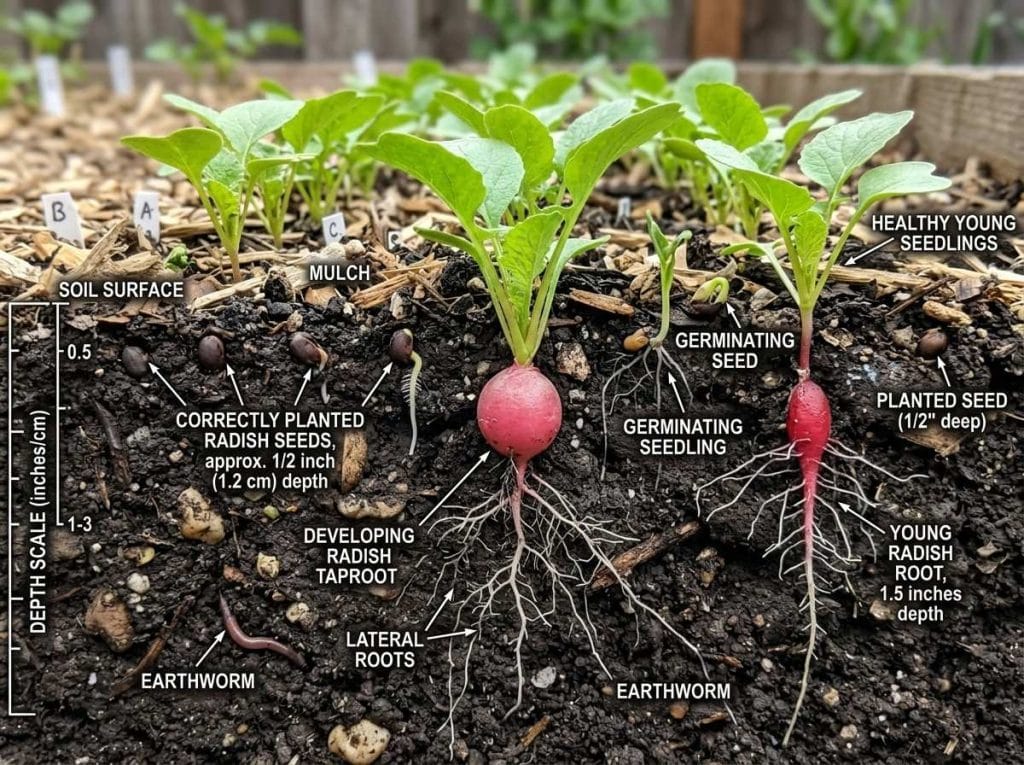
To get the depth right every time, use these tips:
If you’re planting multiple rows, keep seed depth and spacing consistent. This helps all radishes sprout together and grow evenly.
Sometimes, you might plant radishes in less-than-ideal spots—rocky soil, clay, or containers with limited depth.
Radishes are flexible, but always aim for shallow planting. If the soil is tough, use compost or potting mix to create a better environment.
Most guides focus only on numbers. But real gardeners adjust based on soil, weather, and microclimates. Watch your garden and learn from each planting.
Once your radish seeds are planted, care is just as important as depth.
Radish seedlings appear quickly—sometimes within five days. If you see uneven sprouting, check for depth issues or soil problems.
Studies show the impact of planting depth on harvest quality. Radishes planted at ¼ inch produce larger, rounder roots and higher yields. Deeper planting leads to smaller, less tasty radishes.
This data shows why shallow planting is best. You get better, tastier radishes and more consistent harvests.
If seeds don’t sprout within 8–10 days, you may have planted too deep, watered too much, or used poor soil. Don’t be afraid to replant.
It’s better to replant than wait too long. Radishes grow fast, so mistakes can be fixed quickly.
Radishes are unique, but other vegetables have different depth requirements. Knowing these helps you plan mixed gardens.
| Vegetable | Seed Size | Recommended Planting Depth |
|---|---|---|
| Radish | Small | ¼–½ inch |
| Carrot | Very Small | ¼ inch |
| Beet | Medium | ½ inch |
| Lettuce | Tiny | ⅛ inch |
| Cucumber | Large | 1 inch |
This comparison shows that radishes are planted similarly to carrots and lettuce, but not as deep as cucumbers. Always check seed size and depth for each crop.
A gardener in Ohio planted Cherry Belle radishes in April. She used loose compost, marked shallow furrows at ¼ inch, and watered lightly every day. Within five days, seedlings appeared. She thinned them to 2 inches apart after a week. Her harvest: large, round radishes, crisp and tasty.
Her neighbor planted the same seeds at 1 inch depth. Sprouting took longer, and the radishes were thin and less flavorful. This example shows that even small changes in depth affect results.
Garden experts recommend:
If you want more detailed planting advice, visit the National Gardening Association.
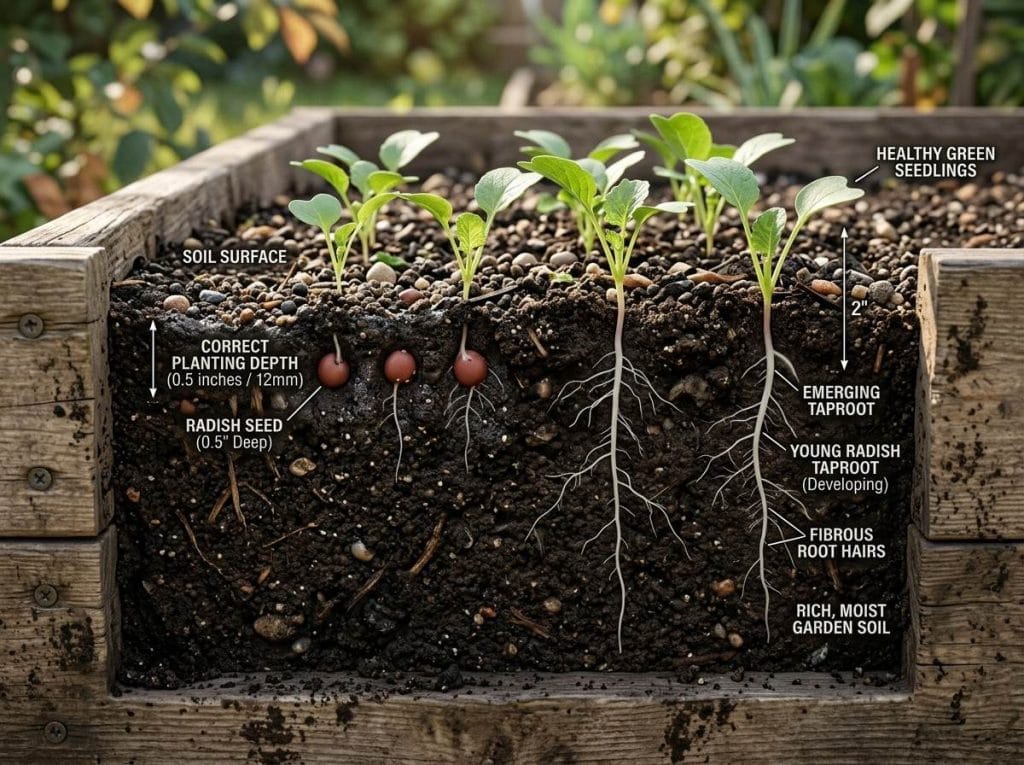
Plant seeds at ¼ inch depth in pots. Container soil dries out fast, so shallow planting helps seeds sprout quickly.
Yes. If you plant seeds on the surface or less than ¼ inch deep, they can dry out or get washed away. Always cover lightly with soil.
Seeds may not sprout or will take longer. Deep planting leads to weak, thin radishes and lower harvest.
Most varieties need ¼–½ inch depth. Larger radishes, like Daikon, can be planted at ½ inch. Always check seed size.
Use your fingertip—about ¼ inch thick—as a guide. Make shallow furrows and cover seeds lightly.
Planting radish seeds at the right depth is a simple step, but it makes a big difference. With the tips in this guide, you can expect strong sprouting, healthy roots, and delicious radishes every time you grow. Remember: shallow is safer, soil texture matters, and small details count. Happy planting!