Gardening Made Simple.
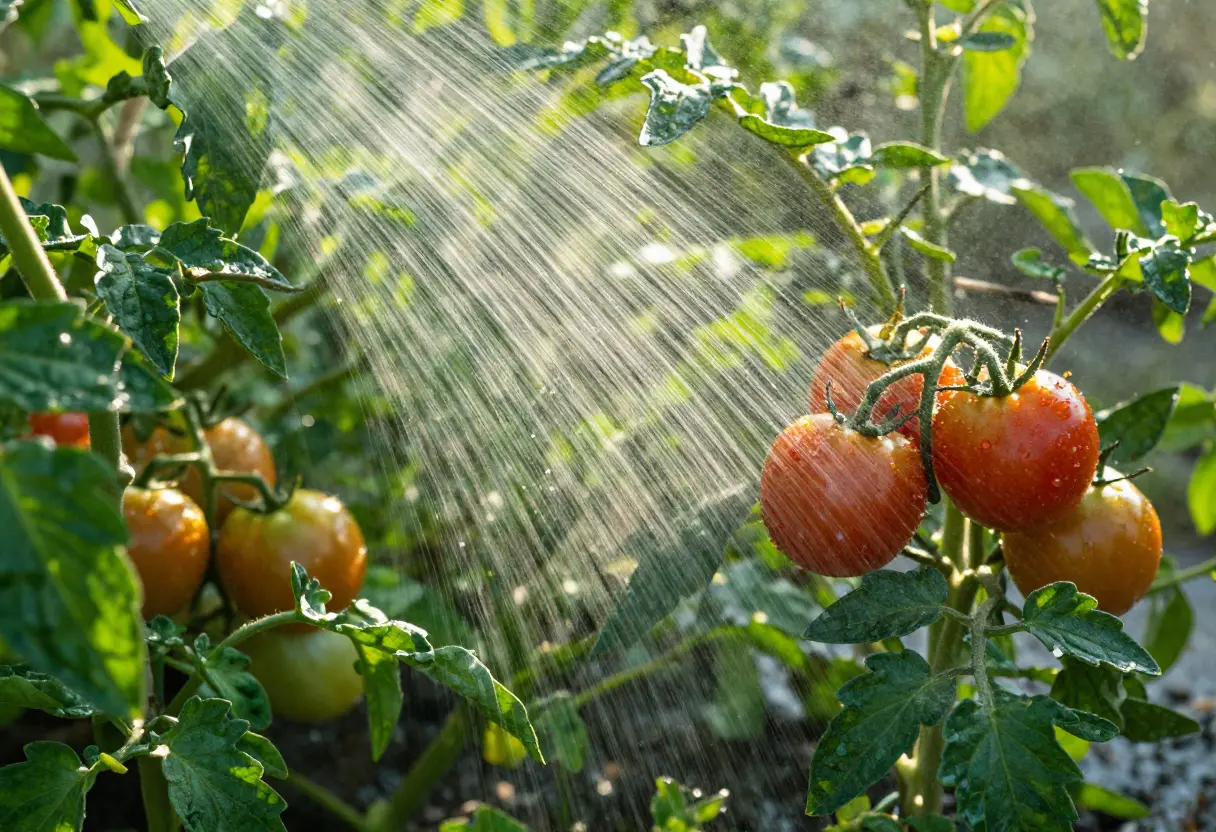
Are you unsure how often should you water tomato plants? Finding the right balance is essential, because too much or too little water can affect growth, fruit quality, and the size of your harvest.
But don’t worry—getting the watering schedule right isn’t as tricky as it seems. You’ll discover simple, practical tips to keep your tomato plants healthy and thriving. By the end, you’ll know exactly when and how much to water your tomatoes for the best results.
Keep reading to unlock the secret to juicy, vibrant tomatoes straight from your garden!
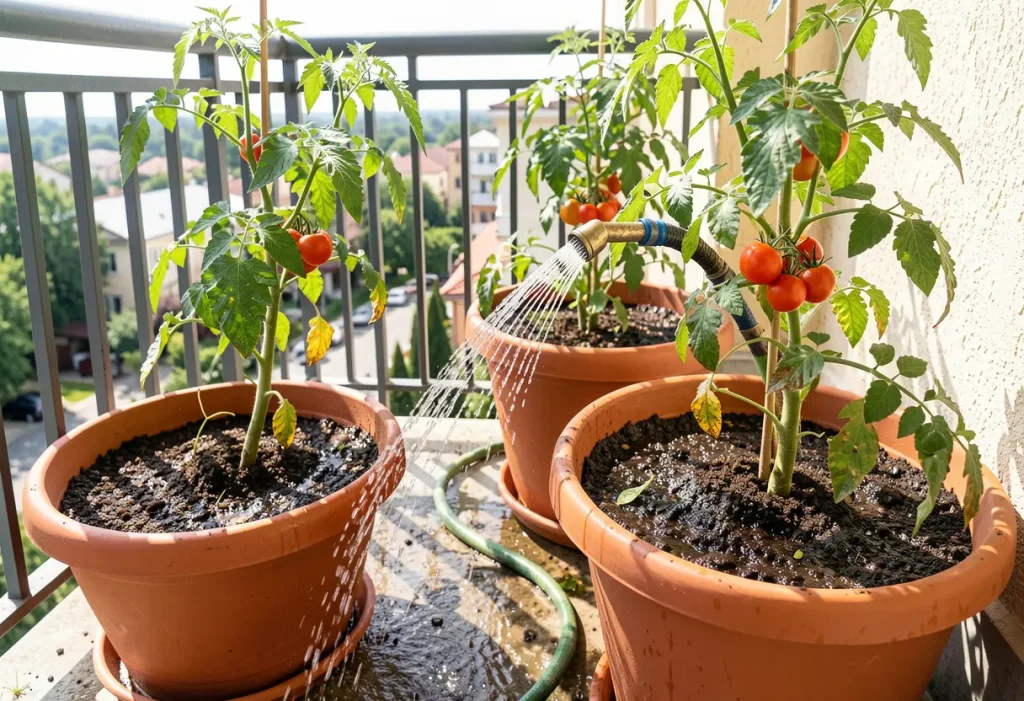
Tomato plants need the right amount of water to grow healthy and produce tasty fruit. Water helps the plant carry nutrients from the soil to its roots and leaves. Too much or too little water can harm the plant.
Finding the right balance is key. Tomato plants usually need deep watering to reach their roots. The soil should stay moist but not soggy. Check the soil regularly to see if the plant needs water.
Several things change how often you water tomato plants. Hot and dry weather makes the soil dry faster. Young plants need less water than mature, fruiting plants. The type of soil also matters. Sandy soil drains quickly and needs more water. Clay soil holds water longer and needs less. The size of the pot or garden bed affects watering needs too.
Too much water can hurt tomato plants. Leaves may turn yellow and look soft. The stem can become weak and rotten. Roots may start to rot if the soil stays wet too long. Overwatered plants can stop growing and produce fewer fruits. Watch for mold or fungus on the soil surface.
When tomato plants get too little water, leaves wilt and curl. The plant looks dry and droopy. Growth slows down, and fruits may crack or taste poor. Soil pulls away from the edges of pots or garden beds. Check the soil; if it feels dry an inch below the surface, the plant needs water.
Creating a proper watering schedule is key to growing healthy tomato plants. Water needs change as the plant grows. Knowing how often to water helps avoid problems like overwatering or drought stress. Follow these simple guidelines for each growth stage to keep your tomatoes thriving.
Seedlings need gentle and consistent moisture. Water them lightly every day or every other day. The soil should stay damp but not soggy. Avoid letting the soil dry out completely. Seedlings have small roots that need regular moisture to grow strong.
During this stage, water deeply twice a week. This encourages roots to grow deeper. Soil should be moist about 6 inches down. Check soil by feeling it with your fingers. Adjust watering depending on weather and soil type. Hot, dry days may need more water.
Fruit-bearing tomatoes need steady water to produce juicy fruit. Water deeply every two to three days. Mulch around plants to keep soil moist longer. Avoid wetting leaves to prevent disease. Consistent watering helps prevent cracked fruit and blossom end rot.
Watering tomato plants properly is key to healthy growth and tasty fruit. The right techniques help the plants absorb water well. They also prevent common problems like root rot or dry soil. Understanding how to water deeply and at the best times can make a big difference.
Deep watering reaches the roots and encourages strong growth. It helps roots grow downward and find moisture in the soil. Shallow watering only wets the surface and can cause weak roots. Water tomato plants slowly and deeply to moisten the soil about 6 to 8 inches deep. This keeps soil moist longer and reduces water waste.
Water tomato plants early in the morning. The soil absorbs water well before the heat of the day. Morning watering reduces evaporation and helps leaves dry quickly. Avoid watering in the evening. Wet leaves overnight can cause diseases and fungus. Early watering gives plants a good start for the day.
Mulch helps keep soil moist and cool. Spread a layer of straw, leaves, or wood chips around the plants. Mulch reduces water loss by blocking sun and wind. It also prevents weeds that compete for water. Mulching saves water and keeps tomato roots happy.
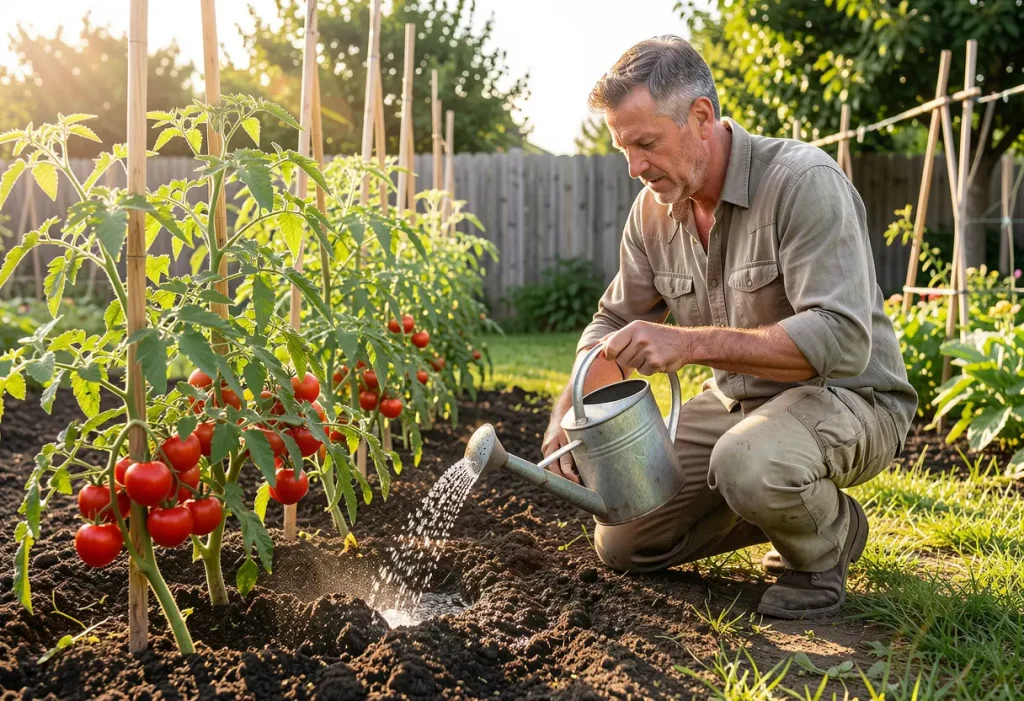
Watering tomato plants depends a lot on the soil and climate where they grow. These factors change how much and how often you should water. Knowing about soil type, weather, and seasons helps keep plants healthy and strong.
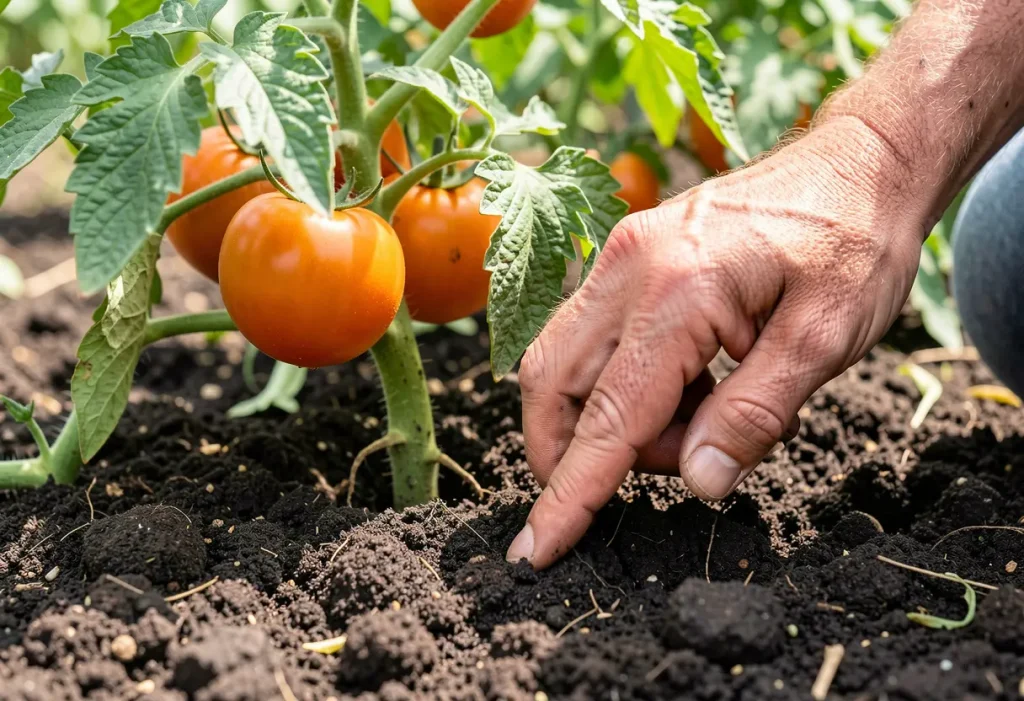
Tomatoes need soil that holds moisture but drains well. Sandy soil dries out fast and needs watering more often. Clay soil holds water longer but can cause roots to rot if too wet. Loamy soil is the best because it keeps a good balance of water and air. Check your soil by feeling it. If it feels dry and crumbly, water more. If it feels wet and sticky, water less.
Hot and dry weather makes soil lose water quickly. Plants need more water to stay hydrated. Cool or cloudy days slow down water loss. Plants need less water then. Windy days also dry out soil fast. Watering in the early morning helps plants absorb water better. Avoid watering late in the day to stop diseases.
Tomato plants need more water in summer when the sun is strong. Water deeply but less often to encourage strong roots. In spring, water less because the weather is cooler. In fall, reduce watering as plants slow down. Stop watering after harvest. Watch plants closely to change watering as seasons change.
Watering tomato plants seems simple, but many gardeners make common mistakes. These errors can harm plant growth and reduce fruit yield. Understanding what not to do helps you care better for your tomatoes.
Giving water every day is not always good. Tomatoes need deep watering less often. Too much water can drown roots and cause disease. Let the soil dry a little before watering again.
Watering at random times confuses the plant. Tomatoes like steady moisture in the soil. Dry spells followed by heavy watering cause fruit to crack. Keep a regular schedule to avoid stress on plants.
Tomato plants show signs when thirsty. Leaves may droop or look dull. Check soil moisture before watering. Don’t water just because you think it is time. Watch your plants closely for their needs.
Tomato plants need watering every 1-2 days in hot summer to stay healthy and produce fruit.
Yes, too much water can cause root rot and weak tomato plants.
Check soil moisture; dry soil means it's time to water your tomato plants.
Yes, young plants need less water; fruiting plants require more frequent watering.
Water tomato plants early morning or late evening to reduce water loss and stress.
Tomato plants need regular watering to stay healthy. Water deeply but not too often. Check the soil; it should be moist, not wet. Hot weather may need more water than cool days. Too much water can harm roots and fruit.
Watch your plants closely for signs of thirst. Consistent care helps grow juicy, tasty tomatoes. Simple habits make a big difference in your garden. Keep watering smartly, and enjoy your fresh harvest.