Gardening Made Simple.
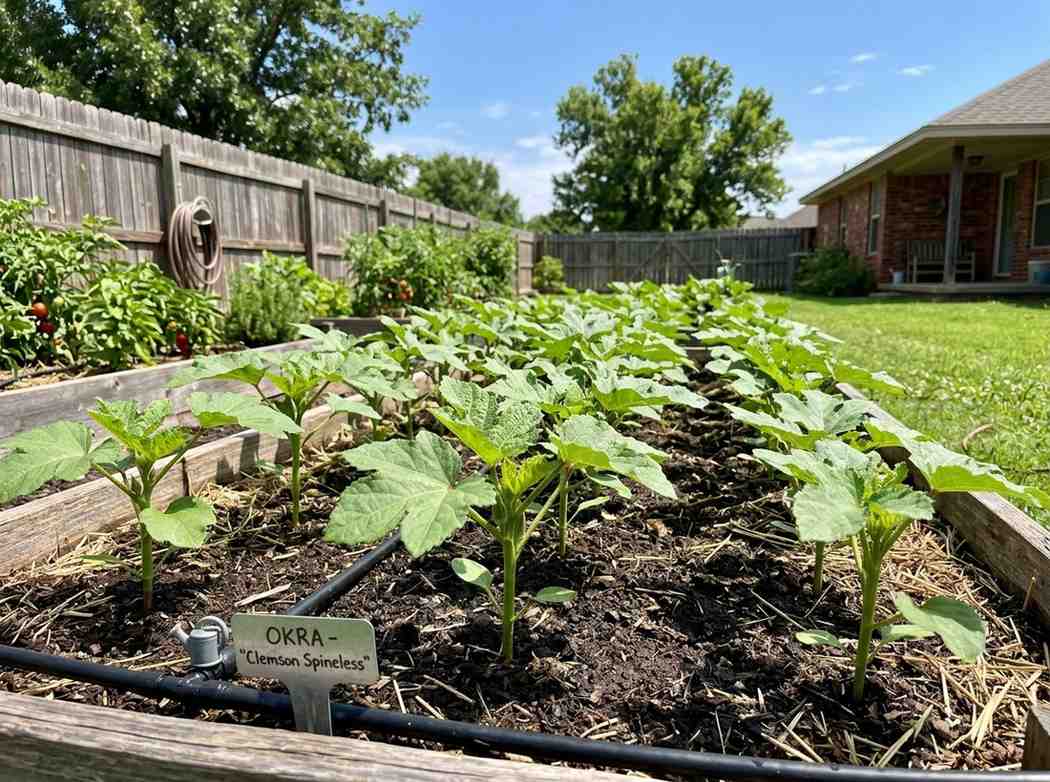
Okra is a warm-season vegetable that thrives in the southern United States, including Oklahoma. If you want healthy, productive okra plants, timing is everything. Planting too early or too late can mean weak plants, poor yields, or even crop failure.
Knowing When to Plant Okra in Oklahoma will help you give your plants the best start and enjoy a more abundant harvest throughout the growing season.
So, when is the best time to plant okra in Oklahoma? Let’s explore the climate, soil conditions, varieties, and practical tips to help you get the most from your okra patch. Whether you’re a first-time gardener or an experienced grower, this guide will help you make confident decisions for a successful harvest.
Growing okra in Oklahoma means working with the state’s unique climate. Okra loves heat, but Oklahoma weather can be tricky. Winters are cold, springs can be unpredictable, and summers are hot and often dry. The average last frost in Oklahoma falls between late March and mid-April, depending on your location.
Okra seeds and seedlings cannot handle frost, so planting before the soil warms up is risky.
Key data:
If you plant okra when the soil is too cold, seeds may rot or fail to sprout. For best results, wait until the soil temperature is reliably above 65°F. A soil thermometer is useful, but you can also check online weather stations.
Timing depends on your local climate and whether you start from seed or transplant. Okra grows fast, but it needs a warm start.
Most Oklahoma gardeners sow okra seeds directly into the ground. This method is simple and works well, but only after the soil is warm.
You can plant okra later, even into June, but early planting means a longer harvest. If you plant late, choose fast-maturing varieties.
If you want an earlier crop, start okra indoors in peat pots or small containers. Transplant seedlings outside when the soil is warm and all danger of frost has passed.
Transplants can help you get a jump on the season, especially in northern parts of Oklahoma.
Choosing the right okra variety is important. Some types are better for Oklahoma’s hot, dry summers, while others handle cooler springs or short seasons. Here is a comparison of popular varieties:
| Variety | Days to Maturity | Heat Tolerance | Yield Potential |
|---|---|---|---|
| Clemson Spineless | 55-60 | High | Excellent |
| Jambalaya | 50-55 | Very High | High |
| Emerald | 60-65 | Moderate | Good |
| Red Burgundy | 55-60 | High | Moderate |
| Annie Oakley II | 52-55 | Very High | Excellent |
Clemson Spineless is the most popular in Oklahoma, thanks to its high yield and ability to handle heat. For short growing seasons, try Jambalaya or Annie Oakley II.
Okra grows best in well-drained, fertile soil. Heavy clay or rocky ground can stunt growth. In Oklahoma, soil types can vary a lot between regions.
Non-obvious tip: In Oklahoma, sandy soils dry out fast, so add extra compost to help retain moisture. For clay soils, mix in sand and organic matter to avoid waterlogging.
| Soil Type | Drainage | Fertility | Best Amendment |
|---|---|---|---|
| Sandy | Fast | Low | Compost, manure |
| Clay | Slow | Moderate | Sand, compost |
| Loam | Good | High | Compost |
Planting okra is simple, but following the right steps helps you avoid common mistakes.
Non-obvious tip: Soak seeds overnight in warm water before planting. This softens the seed coat and improves sprouting.
If you started okra indoors, handle seedlings gently. Plant them at the same depth as they grew in containers. Water well and protect from wind for the first week.
Once okra is up and growing, it’s easy to maintain. Still, you need to watch for pests, drought, and nutrient needs.
Okra tolerates dry spells, but steady moisture means bigger pods. Water deeply every 5–7 days, especially during dry Oklahoma summers.
Before planting, work in balanced fertilizer (10-10-10). Once okra plants start flowering, side-dress with more fertilizer every 4 weeks.
Okra is tough, but not immune to problems. In Oklahoma, watch for:
Non-obvious tip: Planting okra with marigolds or basil can deter aphids and other pests naturally.
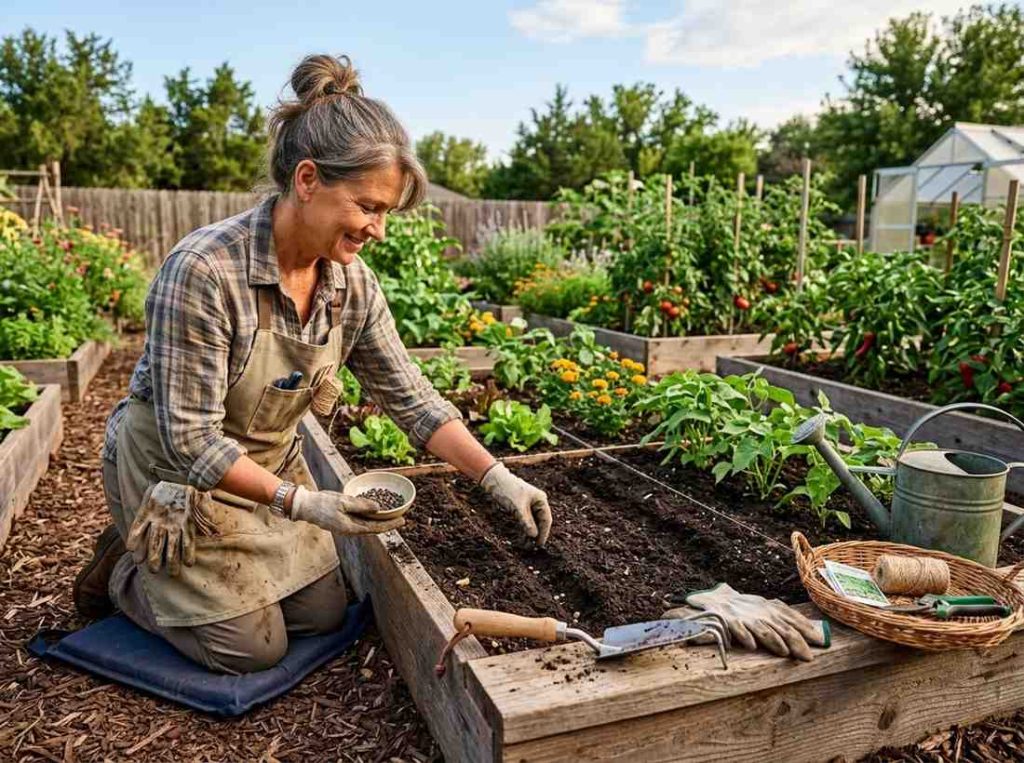
When okra pods reach 2–4 inches long, they’re ready to pick. Waiting too long means tough, fibrous pods. In Oklahoma, the harvest often starts about 50–60 days after planting, depending on variety and weather.
Non-obvious tip: Regular harvesting increases production. If you miss a few pods, remove them anyway—old pods slow down new growth.
Oklahoma’s summer heat suits okra, but you can extend your harvest with a few tricks:
Example: In Tulsa, you can plant okra in late April and again in late May. The first crop peaks in July, the second in August. This keeps fresh okra coming until September.
Many gardeners make simple errors that hurt their okra crop. Here’s what to avoid:
Non-obvious tip: Okra grows tall (up to 6 feet). If you plant in windy spots, stake plants or grow near a fence.
Oklahoma’s climate changes from north to south and east to west. Local conditions affect planting times and okra growth.
| Region | Last Frost | Earliest Planting | Typical Okra Yield |
|---|---|---|---|
| Southern OK | Late March | April 10 | High |
| Central OK | Mid-April | April 15 | Moderate |
| Northern OK | Late April | April 25 | Moderate |
| Western OK | Early April | April 20 | Low (drier) |
| Eastern OK | Mid-April | April 15 | High (wetter) |
Tip: If you live in western Oklahoma, where summers are dry, mulch and drip irrigation can boost okra yields.
Companion planting helps okra grow better and reduces pests naturally. Okra likes to be near certain crops.
Good companions:
Bad companions:
Crop rotation prevents soil-borne diseases. Avoid planting okra in the same spot two years in a row. Rotate with corn, beans, or squash.
Non-obvious tip: Okra roots leave behind nutrients, so follow okra with leafy greens the next year.
If you want to grow okra again, save seeds from your healthiest plants. Let a few pods grow large and dry on the plant. Harvest when pods are brown and brittle.
Tip: Saved seeds grow best if you select pods from vigorous, disease-free plants.
Growing okra in Oklahoma is rewarding, but a few practical steps make a big difference:
If you’re new to okra, start with a small patch and expand each year. Oklahoma’s climate is ideal for okra, but results improve with local experience.
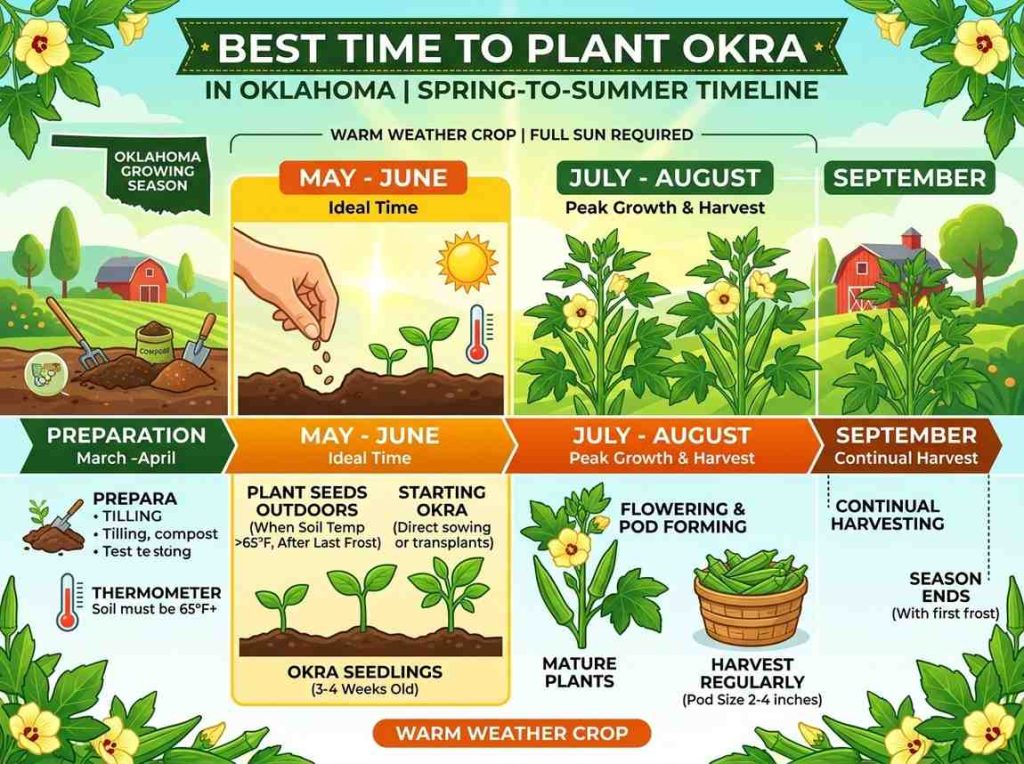
You can plant okra after the last frost and when soil temperature is 65°F or higher. In southern Oklahoma, this is often April 10–15. In northern Oklahoma, wait until late April. Planting earlier risks poor germination and frost damage.
Yes, okra grows well in containers if you use a deep pot (at least 12 inches) and rich, well-drained soil. Place containers in full sun and keep soil moist. Container okra needs more frequent watering, especially in hot Oklahoma summers.
You can plant okra as late as mid-July in Oklahoma, using fast-maturing varieties (like Jambalaya or Annie Oakley II). Late plantings yield fewer pods but can extend your harvest into fall.
Common signs include curled leaves (aphids), yellowing or stunted plants (nematodes), and white powdery spots (powdery mildew). Check plants weekly and act quickly if you see damage.
Most Oklahoma soils need fertilizer for top okra yields. Use a balanced fertilizer before planting and side-dress with more every 4–6 weeks. Compost or manure improves soil, but don’t over-fertilize—too much nitrogen causes leafy plants with few pods.
Growing okra in Oklahoma is both simple and rewarding if you know the right timing and techniques. Plan your planting based on local climate, use the best varieties, and pay attention to soil and care. With these tips, you can enjoy a long season of fresh, tasty okra from your garden. For even more detailed guidance and Oklahoma-specific updates, check out the Oklahoma State University Extension website. Happy gardening!