Gardening Made Simple.

Planting turnips in Missouri can be simple, but timing is everything. These root vegetables are quick growers, tasty, and easy for beginners. However, Missouri’s weather changes fast, so knowing When to Plant Turnips in Missouri can make the difference between a poor harvest and a bumper crop.
By understanding the best planting times, selecting suitable varieties, and avoiding common mistakes, you can enjoy healthy turnips and a productive garden season.
Missouri sits in the Midwest, where weather shifts from cold winters to hot, humid summers. The state has four seasons, but spring and fall are most important for planting turnips. Turnips are cool-season crops, meaning they prefer mild temperatures. If you plant them during the hottest months, the roots become tough and the flavor suffers. In Missouri, average spring temperatures range from 50°F to 70°F, and fall temperatures are similar.
Turnips grow best when soil temperatures are between 45°F and 75°F. Above 75°F, growth slows and quality drops. Below 45°F, seeds may not germinate well. Missouri’s last spring frost is usually between late March and mid-April, while the first fall frost arrives from mid-October to early November, depending on location.
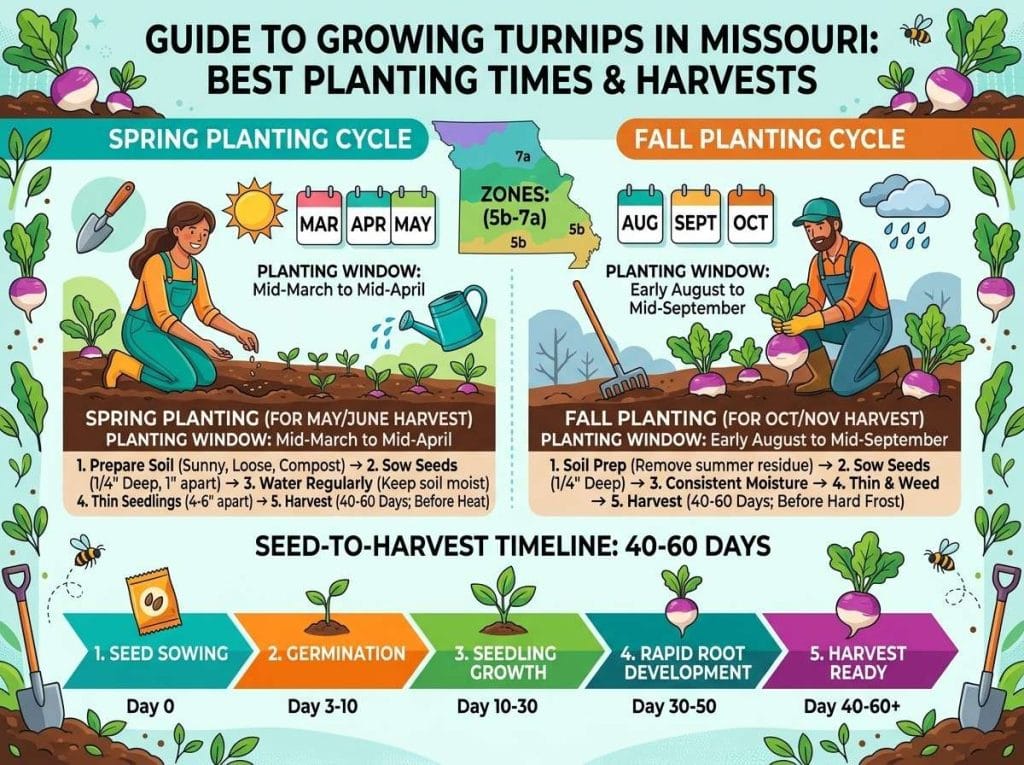
Planting turnips at the right time ensures strong growth and good flavor. Missouri’s climate allows for two main planting windows:
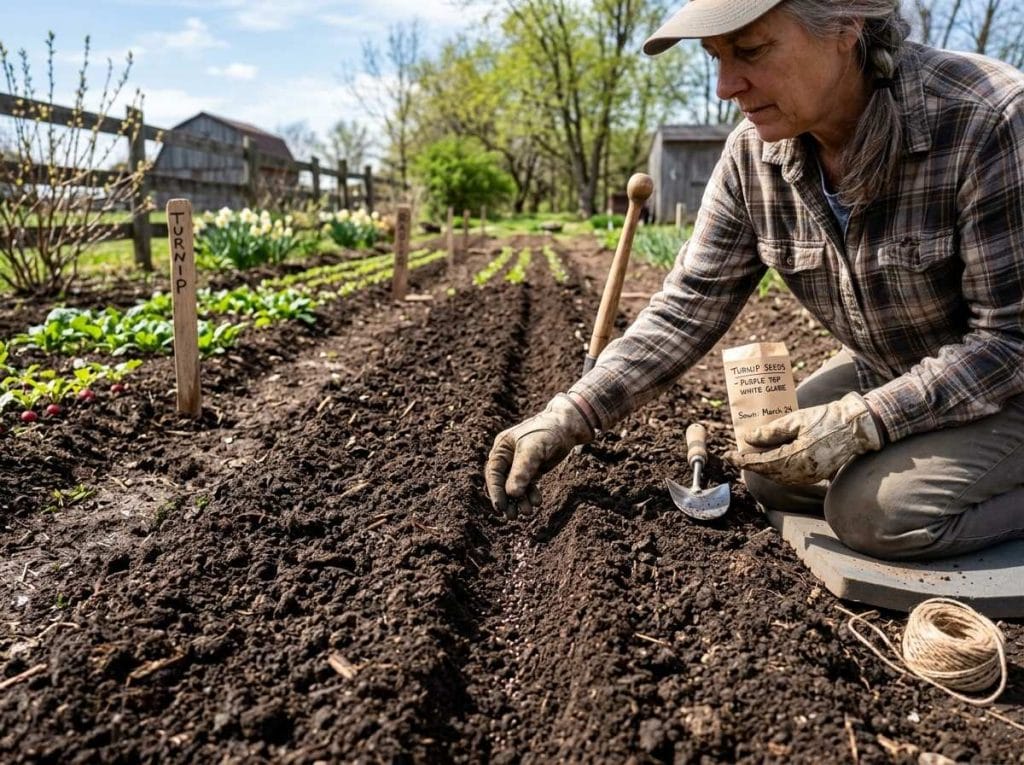
For a spring crop, plant turnip seeds 2-4 weeks before the last expected frost. In most parts of Missouri, this means sowing seeds from late March to early April. The soil should be workable, not frozen or muddy. Spring-planted turnips mature quickly, ready to harvest in about 40-60 days.
Fall planting produces sweeter, more tender turnips. Plant seeds 6-8 weeks before the first expected frost. This usually means sowing from early August to early September.
Fall turnips grow in cooler weather and are less likely to bolt (send up flower stalks). They also avoid summer pests.
Here's a table comparing typical planting windows for Missouri regions:
| Region | Spring Planting | Fall Planting |
|---|---|---|
| Southern Missouri | Mid-March to Early April | Early August to Mid-August |
| Central Missouri | Late March to Early April | Mid-August to Late August |
| Northern Missouri | Early April to Mid-April | Late August to Early September |
Turnips need loose, well-drained soil. Hard or clay soil causes misshapen roots. Before planting, clear weeds and rocks. Loosen the soil to a depth of at least 8 inches. Turnips grow best in soil with a pH between 6.0 and 7.0. If your soil is acidic, add lime. For sandy soils, add compost to retain moisture.
Turnips do not like soggy ground. Raised beds work well in Missouri, where spring rains can flood low areas.
Missouri gardeners can grow many types of turnips. Some are bred for quick harvest, others for large roots. Here are popular varieties:
For fall planting, choose varieties bred to resist cold and stay tender.
| Variety | Root Size | Days to Harvest | Best Season |
|---|---|---|---|
| Purple Top White Globe | Large | 50-60 | Spring/Fall |
| White Egg | Small | 40 | Spring/Fall |
| Tokyo Cross | Medium | 35 | Spring |
| Seven Top | No edible root | 30 | Fall |
| Golden Globe | Medium | 55 | Fall |
Turnips are often direct-seeded. This means you plant seeds right into your garden soil instead of starting indoors. Here’s how:
If you want a steady harvest, plant seeds every 2 weeks during the planting window. This is called succession planting.
After seeds sprout (usually in 5-10 days), turnip plants grow fast. Keep the soil moist, especially during dry spells. Missouri’s spring rain often helps, but in hot fall weeks, water regularly.
Turnips do not need heavy feeding. If soil is rich, skip extra fertilizer. If plants look pale or weak, use a balanced fertilizer (like 10-10-10) once at planting and again after thinning.
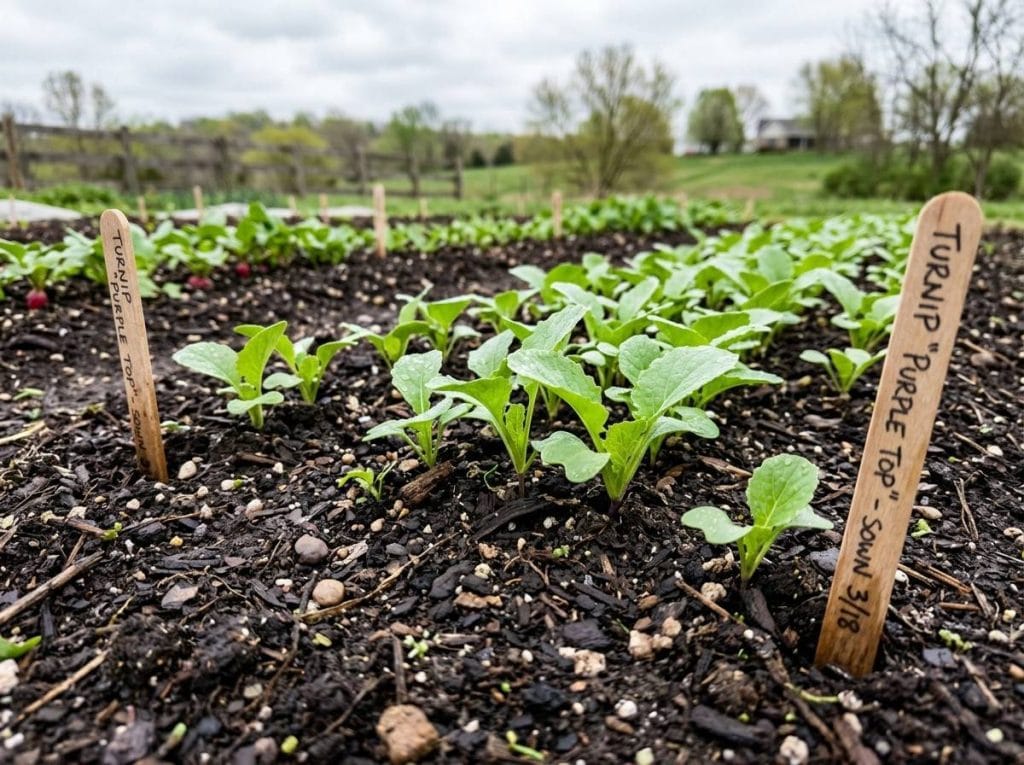
Turnips compete poorly with weeds. Remove weeds by hand or use mulch. Mulching also keeps soil cool and moist.
Flea beetles and aphids are common Missouri pests. Row covers protect young plants. Watch for yellow spots or wilting, signs of disease. Rotate crops—do not plant turnips in the same spot each year—to reduce disease risk.
Turnips are ready to harvest when roots reach 2-3 inches across. This is usually 40-60 days after planting. If you wait too long, roots become woody and bitter. For greens, harvest leaves when they are 6-8 inches tall.
Fall turnips can withstand light frost. In fact, frost makes them sweeter. But heavy freeze can ruin roots, so harvest before hard frosts.
Turnips are easy, but a few expert tips can boost your harvest:
A non-obvious insight: Turnip greens can be harvested several times, even if you plan to harvest the root. Just don't remove all leaves at once.
Another tip many miss: If you notice turnip roots forming above the soil, add a thin layer of compost to keep them moist and prevent cracking.
Missouri has several USDA Hardiness Zones. Most of the state is Zone 5b to 7a. Planting dates depend on your zone:
Check your county's zone for best results. The Missouri Botanical Garden has maps and resources to help you pinpoint your zone.
| Zone | Spring Planting | Fall Planting |
|---|---|---|
| 5b | Late March to Early April | Late August to Early September |
| 6a/6b | Mid March to Late March | Mid August to Late August |
| 7a | Early March to Mid March | Early August to Mid August |
Crop rotation is important for healthy turnips. Avoid planting turnips or other brassicas (like cabbage or radishes) in the same spot every year. This reduces soil-borne diseases and pest buildup.
Turnips grow well next to:
Do not plant near potatoes or tomatoes, as they compete for nutrients.
Turnips are hardy, but a few problems can occur:
If roots split or crack, it’s usually from inconsistent watering. Water regularly, especially during dry weeks.
Turnips are versatile. Their roots can be roasted, mashed, or added to soups. Greens are rich in vitamins and can be sautéed or used in salads. Missouri chefs and home cooks often use turnips in hearty stews.
A quick recipe idea: Roast turnip roots with olive oil and garlic for a sweet, nutty flavor. Sauté turnip greens with onions and bacon for a Southern-style side dish.
For Missouri gardeners, local extension offices offer help and advice. The University of Missouri Extension provides planting calendars and pest guides. For advanced tips, visit their website or attend local gardening workshops.
For more information about turnip cultivation and climate data, visit Missouri Botanical Garden.
The best time depends on your goal. For spring harvest, plant seeds 2-4 weeks before the last frost (late March to early April). For fall harvest, sow seeds 6-8 weeks before the first frost (early August to early September).
Yes, turnips grow well in containers. Use pots at least 8 inches deep with loose soil. Keep them moist and place in full sun. Container turnips mature faster and can be planted at the same time as garden turnips.
Check root size. Harvest when roots are 2-3 inches across, usually 40-60 days after planting. For greens, pick leaves when they reach 6-8 inches tall. Roots left too long become tough and woody.
Flea beetles, aphids, and root maggots are most common. Protect young plants with row covers. Rotate crops and remove weeds to reduce pest risk. If pests appear, use organic controls like neem oil.
Turnips handle light frost well. In fact, fall turnips taste sweeter after a mild frost. But a hard freeze can damage roots. Harvest before temperatures drop below 28°F for best quality.
Planting turnips in Missouri is simple if you plan carefully. Choose the right season, prepare your soil, and pick varieties that suit your taste and climate. With these tips, you can enjoy fresh, tasty turnips for months. Whether you’re new or experienced, turnips fit well in Missouri gardens and offer a rewarding harvest.