Gardening Made Simple.
Have you ever come across wild garlic and wild onion while foraging or shopping and wondered what really sets them apart? If you’re curious about their differences—whether it’s taste, appearance, or how you can use them in your cooking—you’re in the right place. Understanding Wild Garlic Vs Wild Onion will help you easily tell them apart and use each one the right way.
Understanding these two plants can change the way you flavor your meals and even how you identify edible wild herbs safely. Keep reading, and you’ll discover simple tips to tell wild garlic and wild onion apart, plus ideas to make the most of their unique flavors in your kitchen.
Your next delicious meal is just a few paragraphs away!
Wild garlic is a popular herb found in forests and gardens. It grows in many parts of Europe and Asia. People use wild garlic for its taste and health benefits. It looks similar to wild onion but has unique features. Understanding wild garlic basics helps you use it well in cooking and herbal remedies.
Wild garlic is easy to spot and harvest. It grows quickly in spring and early summer. It is a great plant for beginners to identify and use. Let’s explore its appearance, flavor, and common uses.
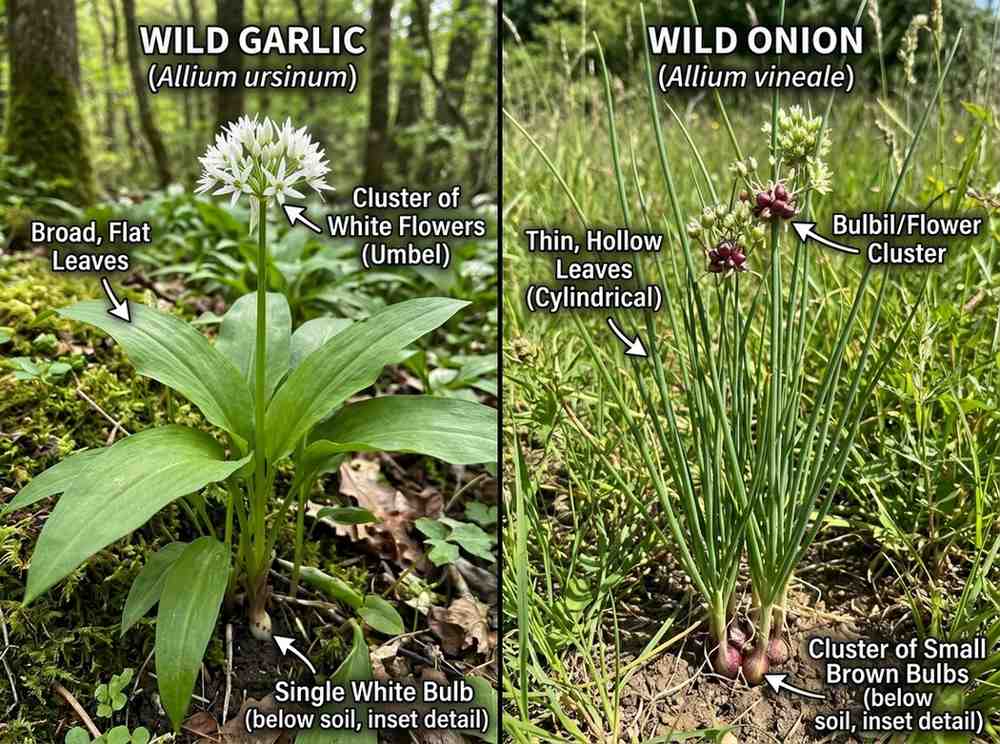
Wild garlic has long, narrow leaves that look like grass. Its leaves are smooth and bright green. The plant grows from bulbs under the ground. It produces small white flowers in clusters. Wild garlic prefers shady places with moist soil. It spreads fast and can cover large areas.
Wild garlic tastes mild and fresh. It has a gentle garlic flavor without the strong bite. The taste is slightly sweet and herbaceous. Both leaves and flowers have this mild garlic flavor. The flavor is less sharp than regular garlic or onion.
People use wild garlic in many dishes. Fresh leaves go well in salads and soups. It can be blended into pesto or sauces. Wild garlic also flavors bread and cheese spreads. Some use it as a natural medicine for digestion. Cooking softens the taste, making it pleasant and mild.
Wild onions are a common wild plant found in many regions. They grow naturally and have distinct features. Understanding wild onion essentials helps in identifying and using them safely. These plants are edible and can add flavor to many dishes.
Wild onions are different from wild garlic in several ways. Knowing their characteristics can help you choose the right plant for cooking. Let’s explore the visual traits, taste, and common uses of wild onions.
Wild onions have long, thin green leaves. The leaves are hollow and round in shape. They grow from a small bulb in the ground. The plant produces a cluster of small flowers. These flowers can be white, pink, or purple. The bulbs look like small onions you find at the market.
Wild onions have a strong onion smell. Their taste is sharp and slightly spicy. The flavor is more intense than cultivated onions. Both leaves and bulbs carry this taste. The smell helps to tell them apart from wild garlic.
Wild onions are used in many recipes. People add the leaves to salads for a fresh bite. The bulbs can be cooked like regular onions. They work well in soups and stews. Wild onions give dishes a strong onion flavor without cooking long.
Wild garlic and wild onion look alike but have clear differences in plant structure. Understanding these can help you spot each plant in nature. They have distinct features in leaves, stems, bulbs, roots, and flowers. This guide compares their plant parts simply and clearly.
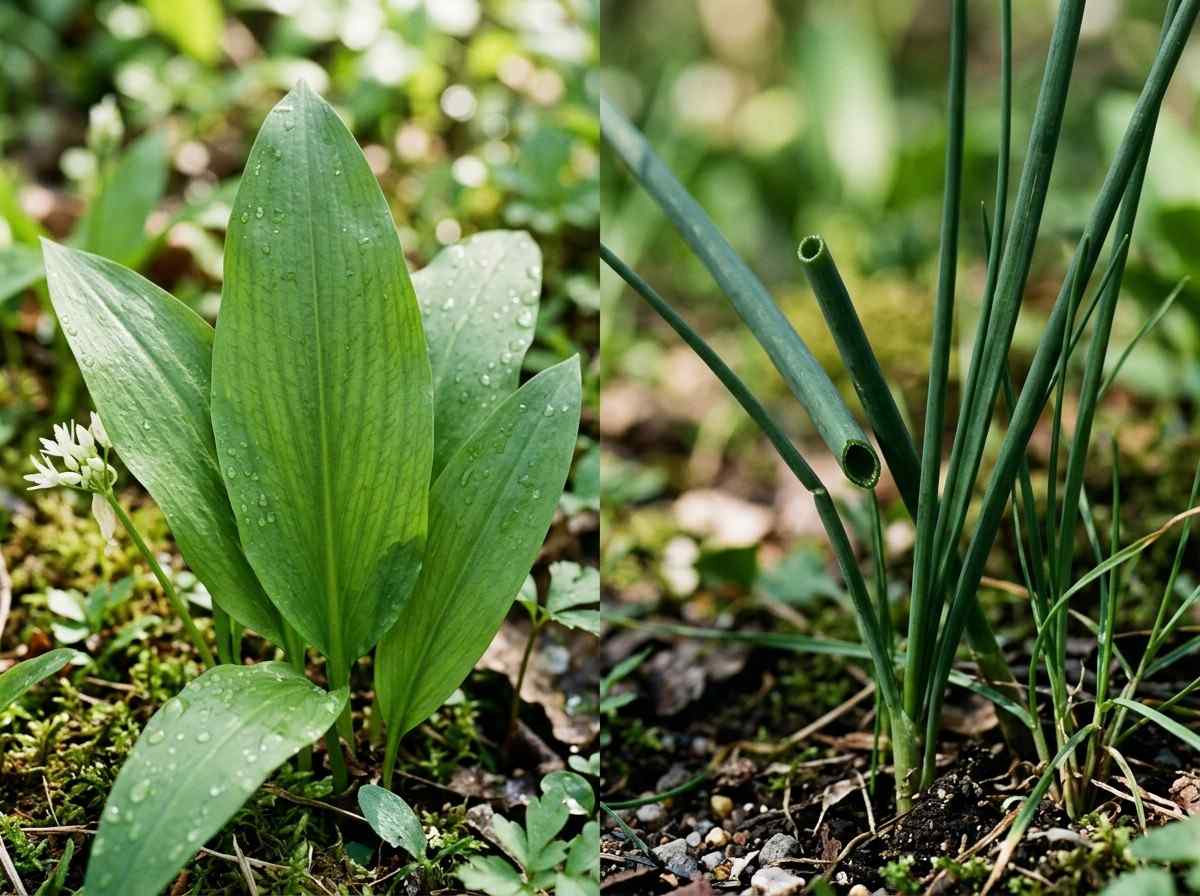
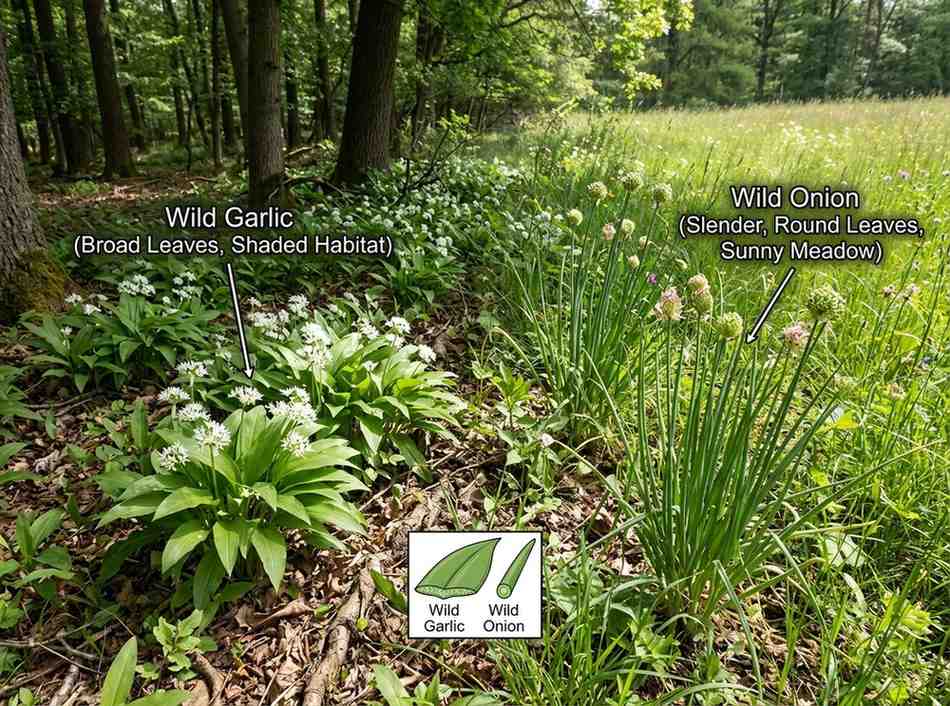
Wild garlic leaves are long, smooth, and broad. They grow flat from the base and look like grass blades. The stems are thin and flexible. Wild onion leaves are narrower and rounder. They often grow hollow and can be tubular. Their stems are usually firmer and may stand taller than wild garlic.
Wild garlic bulbs are small and white with a papery skin. They cluster underground in groups. Their roots spread thin and fibrous. Wild onion bulbs are larger and more rounded. They often have a stronger smell. Their roots are thicker and grow deeper into the soil.
Wild garlic flowers appear in umbrella-shaped clusters. They are white or light pink and bloom in spring. Wild onion flowers form tight, round clusters at the stem top. They can be white, purple, or pink. Wild onion flowers bloom slightly later than wild garlic.
Wild garlic and wild onion grow in different natural settings. Understanding their habitat and growing conditions helps gardeners choose the right plant for their space. Both plants thrive in certain soils, climates, and seasons.
Wild garlic prefers moist, well-drained soil rich in organic matter. It grows best in loamy or sandy soils. Wild onion adapts well to various soils but favors drier, less fertile ground. It tolerates clay and rocky soils better than wild garlic.
Wild garlic thrives in cool, temperate regions. It prefers shaded or semi-shaded areas with moderate temperatures. Wild onion can handle warmer climates and full sun. It grows well in both temperate and subtropical regions.
Wild garlic grows mainly in spring and early summer. Its leaves appear in early spring and die back in summer. Wild onion grows from spring to late summer. It stays green longer and can survive mild winters.
Wild garlic and wild onion are two plants often found in nature. Both have unique health benefits and nutritional values. They add flavor and nutrition to meals. Understanding their nutrients helps you choose the right one for your diet.
Both plants support the immune system and improve digestion. They also contain important vitamins and minerals. Exploring their individual qualities reveals more about their health roles.
Wild garlic is rich in vitamin C. It also contains vitamin A, which helps vision and skin health. Wild garlic has minerals like iron and manganese. These support blood health and bone strength. It contains antioxidants that fight harmful molecules. Wild garlic has allicin, a compound known for its antibacterial effects.
Wild onion contains vitamin C and vitamin B6. It offers minerals such as potassium and calcium. These help heart and muscle function. Wild onion has quercetin, a powerful antioxidant. It also provides small amounts of fiber. This fiber aids in digestion and gut health.
Wild garlic helps lower blood pressure. It may reduce bad cholesterol levels. Wild garlic is used to ease colds and coughs. Wild onion is known to fight inflammation. It supports respiratory health and soothes sore throats. Both plants have been used for centuries as natural remedies. They promote overall wellness and balance in the body.
Wild garlic and wild onion look similar, but safety must come first. Knowing how to identify them correctly helps avoid harmful plants. Careful observation and knowledge reduce risks when foraging.
Some plants look like wild garlic but are poisonous. Lily of the valley and autumn crocus can be deadly. Check for a strong garlic smell by crushing the leaves. No smell means do not eat. Look at the shape and color of leaves and flowers. When unsure, do not pick or eat the plant.
Pick wild garlic and onion early in spring for best taste. Use scissors to cut leaves to protect the plant. Avoid taking the whole plant to allow regrowth. Do not harvest from polluted areas like roadsides or industrial sites. Wash leaves thoroughly before use to remove dirt and bugs.
Store wild garlic and onion in a paper bag in the fridge. Keep them dry to prevent rotting. Use fresh leaves within a few days for best flavor. Freeze chopped leaves in ice cube trays for long storage. Avoid plastic bags as they trap moisture and cause decay.
Wild garlic and wild onion offer unique flavors for cooking. Each requires specific techniques to bring out their best taste. Understanding how to prepare and cook them can enhance your dishes. These tips help you use both ingredients well in your meals.
Wash wild garlic leaves gently in cold water. Pat them dry with a clean towel. Chop the leaves finely for salads or sauces. Use the bulbs sparingly, as they have a strong taste. Avoid cooking wild garlic too long to keep its fresh flavor.
Wild onion bulbs need peeling before cooking. Slice them thinly for stir-fries or soups. They soften well when sautéed or roasted. Use the green shoots like spring onions in salads or garnishes. Cooking wild onion brings out a sweeter, milder flavor.
Wild garlic pairs well with eggs, potatoes, and cheese. Add it to pestos or mix into butter for a fresh taste. Wild onion suits hearty dishes with meat, beans, and root vegetables. Both work well with lemon, herbs, and olive oil. Experiment with small amounts to find your favorite mix.
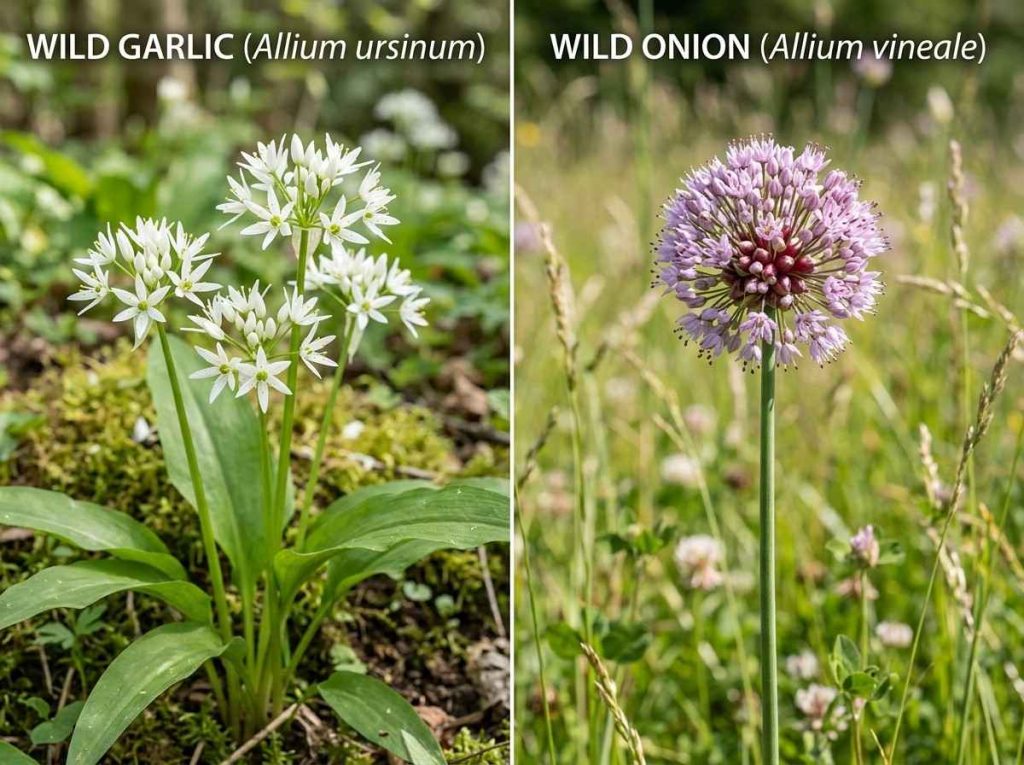
Wild garlic has broad, flat leaves and a strong garlic smell, while wild onion has thin, round leaves and a milder onion scent.
Yes, but wild garlic tastes stronger and more garlicky, so adjust amounts to avoid overpowering dishes.
Look for broad leaves and a garlic smell when crushed; avoid plants with round, hollow leaves.
Both are edible and safe if correctly identified; avoid plants that look like poisonous lilies.
Wild garlic is known for heart health, while wild onion offers antioxidants and supports digestion.
Wild garlic and wild onion share many similarities but also differ in taste and appearance. Both add unique flavors to meals and grow wild in nature. Knowing their differences helps you choose the right one for cooking. Always be sure to identify them correctly before use.
Trying both can bring new tastes to your kitchen. Simple herbs with great benefits. Nature’s small gifts to enjoy.