Gardening Made Simple.
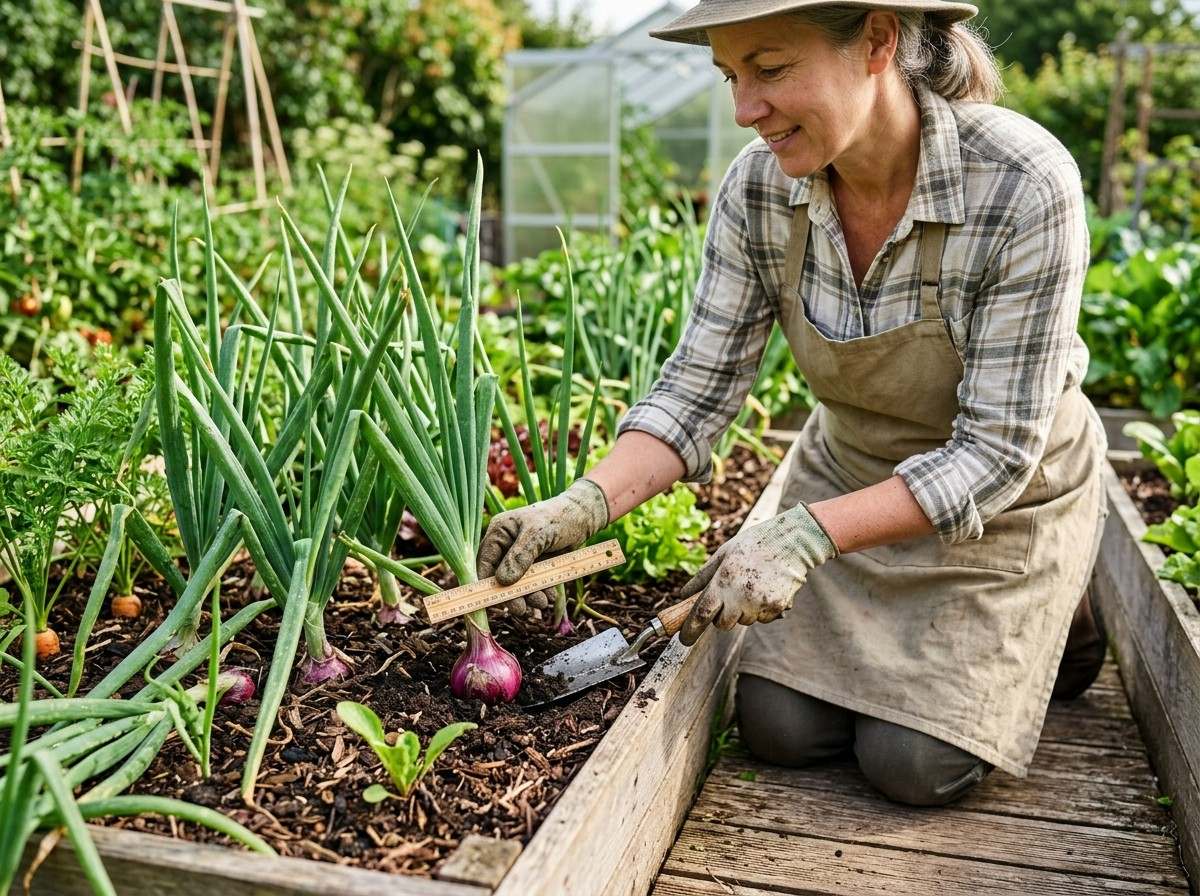
Are you wondering How Long Do Onions Take to Grow in your garden? Growing onions can be a rewarding experience, but understanding the typical growth timeline helps you plan planting, care, and harvest more effectively. In this guide, you’ll learn how long onions usually take to mature, what factors can affect their growth rate, and how to provide the right conditions for a healthy, flavorful harvest.
Whether you want sweet, crunchy onions for your salads or flavorful ones for cooking, understanding their growth cycle is key. You’ll discover exactly how long onions take to grow and what factors can speed up or slow down the process.
Keep reading to get the tips you need for a successful onion harvest!
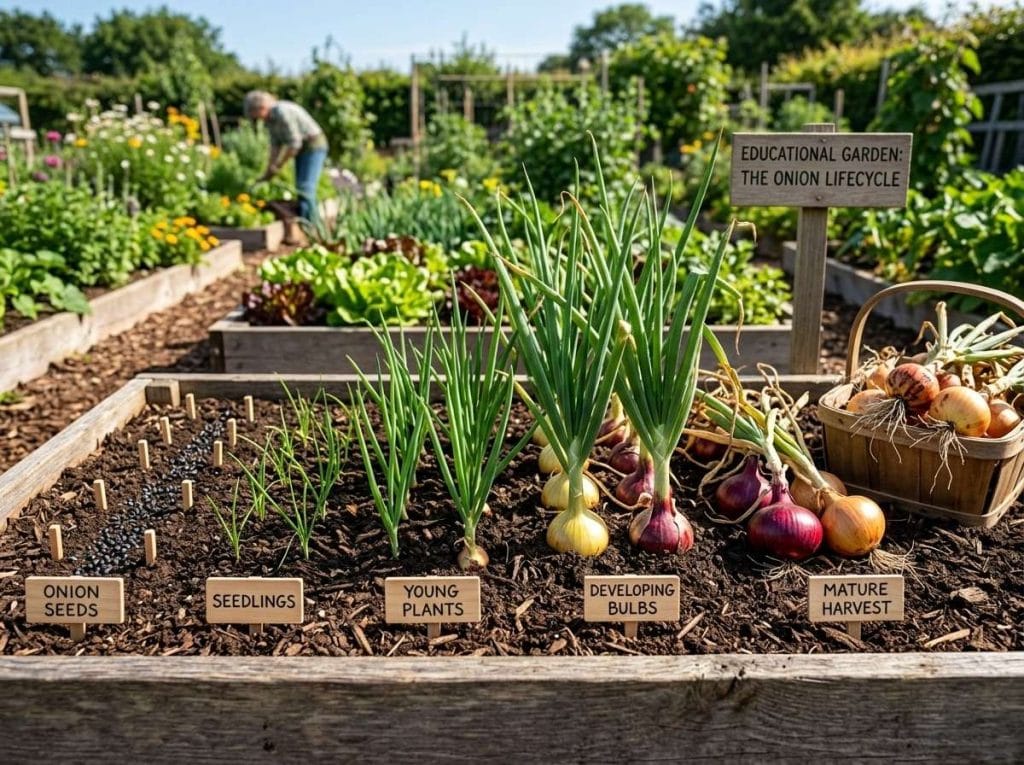
Onions grow through clear stages. Each stage is important for a healthy crop. Knowing these stages helps gardeners care for onions better. Growth time depends on the variety and conditions. Understanding these phases explains why onions take weeks to mature.
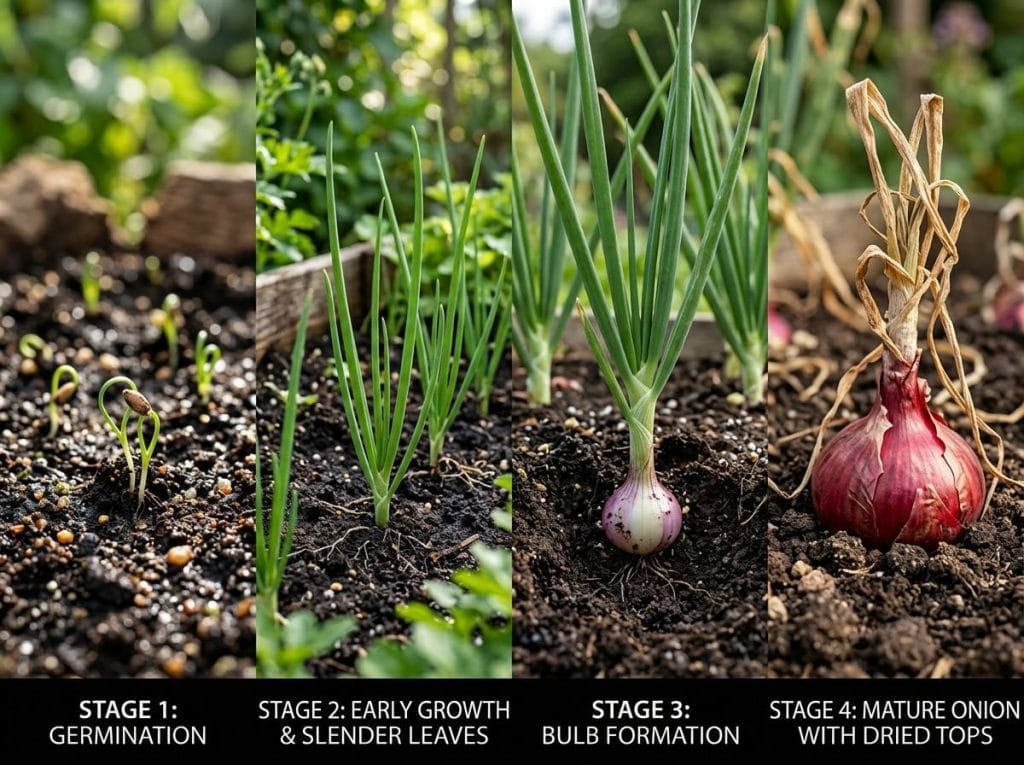
The first stage starts with seed germination. Onion seeds need warmth and moisture to sprout. This process takes about 7 to 14 days. Tiny roots and shoots appear from the seed. Proper soil helps seeds grow strong and healthy.
After germination, seedlings grow leaves and roots. This stage lasts for 4 to 6 weeks. Seedlings need sunlight and water to develop well. Strong seedlings prepare the plant for bulb formation. Thin seedlings may need thinning to avoid crowding.
Bulbs start forming as the plant grows bigger. This stage depends on daylight and temperature. Bulbs swell underground, storing food and water. This phase lasts several weeks, often 6 to 10 weeks. Healthy bulbs become firm and round.
Onions mature when their leaves turn yellow and fall. This signals the bulb is ready to harvest. Maturation can take 90 to 120 days from planting. After harvest, onions dry to improve storage life. Proper timing ensures sweet and firm onions.
The time onions take to grow varies widely. Several factors influence how fast or slow they develop. Understanding these factors helps you plan your garden better. They also help you grow healthier onions.
Different onion types grow at different speeds. Some mature in as little as 60 days. Others need up to 120 days. Short-day onions grow faster in southern areas. Long-day onions take longer and prefer northern regions. Choose a variety that fits your climate and timeline.
Onions need loose, well-drained soil to grow well. Heavy or clay soil slows root growth. Soil rich in organic matter boosts onion development. Check soil pH; onions prefer slightly acidic to neutral soil. Good soil helps onions absorb water and nutrients quickly.
Temperature affects onion growth speed greatly. Onions grow best between 55°F and 75°F. Cold weather slows growth and delays maturity. Hot, dry conditions can stress plants and reduce size. Consistent temperatures help onions grow steady and strong.
Onions need regular watering but not too much. Overwatering can cause rot and slow growth. Fertilize with nitrogen-rich nutrients for healthy leaves. Balanced fertilization supports bulb development. Proper watering and feeding keep onions growing steadily.
Growing onions can be done in two main ways: from seeds or from sets. Each method affects how long it takes for onions to grow. Seeds are tiny and need more time to sprout and mature. Sets are small onion bulbs that grow faster but cost more. Choosing the right method depends on your garden, time, and goals.
Onions from seeds usually take 100 to 175 days to grow. They need more time to sprout and develop strong roots. Sets grow faster, often ready in 90 to 120 days. Sets skip the early growth stage, so they produce onions quicker. Time matters when planning your garden season.
Seeds offer more variety and fresher onions. They grow stronger roots and resist pests better. Seeds need patience and careful care. Sets are easy to plant and save time. They give a quick harvest but fewer onion types. Sets can sometimes have diseases or weaker roots. Each choice has good and bad points.
Plant seeds indoors 8 to 10 weeks before the last frost. Keep soil moist and warm for better germination. Thin seedlings to avoid crowding. For sets, plant them directly in soil after frost danger passes. Space sets 1 to 2 inches apart. Water regularly and remove weeds. Both methods need full sun and well-drained soil for best results.
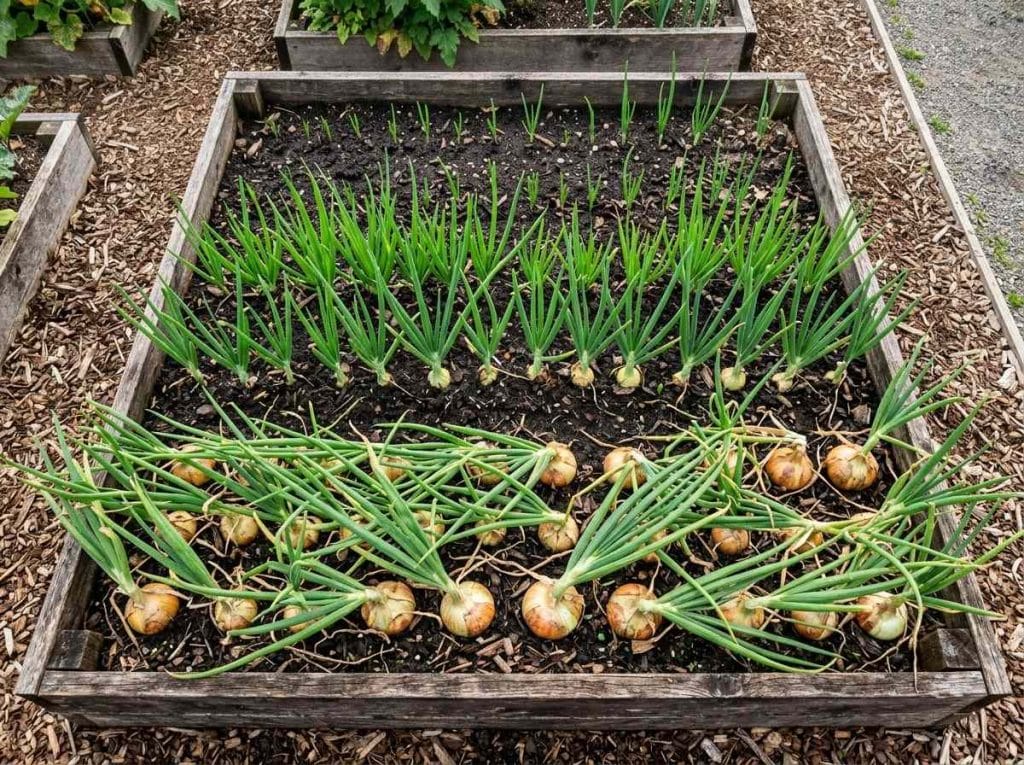
Speeding up onion growth helps harvest sooner and save space. Fast growth means fresher onions for cooking or selling. Focus on key steps to boost growth. Simple care changes lead to quicker, healthier onions.
Pick onion types that grow quickly. Some varieties mature in 90 days or less. Short-day onions grow fast in mild climates. Long-day onions do well in cooler areas. Check seed packages for days to maturity.
Onions grow best in loose, well-drained soil. Add compost to improve soil texture and nutrients. Soil pH should be slightly acidic to neutral. Test soil and adjust pH if needed. Healthy soil helps roots grow strong and fast.
Water onions regularly but avoid waterlogging. Keep soil moist, not soggy. Water deeply to reach roots. Water early in the day to prevent disease. Consistent moisture speeds up growth and bulb size.
Use balanced fertilizer with nitrogen, phosphorus, and potassium. Apply fertilizer before planting and during growth. Avoid too much nitrogen to prevent leafy growth only. Follow package instructions for amounts and timing. Proper feeding supports healthy, fast onion growth.
Knowing when onions are ready to harvest is important for the best taste and storage. Onions do not ripen all at once. Watch for clear signs that show they are mature and ready. These signs help you pick onions at the right time.
Check the bulbs and leaves carefully. Also, try simple tests to be sure your onions are ready to come out of the soil.
The onion bulb should be large and firm. It grows bigger under the soil as the plant matures. A good size is about as wide as a golf ball or larger. The shape is round or slightly flat. If the bulb is still small or soft, it needs more time.
The leaves tell a lot about onion readiness. Green, strong leaves mean the onion is still growing. When the leaves start to yellow and fall over, the onion is nearly done. This yellowing happens at the top and moves down. Dry, brown leaves show the onion is ready to harvest.
Gently dig around one bulb to check. Lift it out without pulling hard. Look at the skin—it should be dry and papery. Press the bulb; it must feel firm, not soft. If the bulb splits or feels soft, wait a bit longer before harvesting.
Growing onions can be rewarding but comes with challenges. These challenges affect the growth time and quality of your crop. Knowing common problems helps you prepare and care better for your onions.
Onions attract pests like onion maggots and thrips. These insects damage leaves and bulbs. Diseases such as downy mildew and onion smut also harm plants. They reduce growth and can kill young onions. Regular checks and good hygiene help keep pests and diseases away.
Onions need steady weather for good growth. Too much rain causes bulbs to rot. Too little rain makes plants dry and weak. Sudden cold or frost can stop onion growth. Warm, dry weather helps onions grow faster and healthier.
Onions need nutrients like nitrogen, phosphorus, and potassium. Lack of these slows growth and makes bulbs small. Yellowing leaves often show nutrient problems. Using balanced fertilizer and good soil helps onions grow strong and healthy.
After harvesting onions, proper care is important to keep them fresh. Good storage helps onions last longer and stay tasty. Follow simple steps to prepare and store onions correctly.
Curing dries onions and helps protect them from rot. Spread onions in a dry, warm place with good air flow. Leave them for 2 to 3 weeks. The skins should feel papery and dry. This step prevents mold and extends shelf life.
Store cured onions in a cool, dark, and dry place. Ideal temperature is between 32°F and 40°F (0°C to 4°C). Avoid places that are too humid or warm. Use mesh bags or baskets for air circulation. Do not store onions near potatoes, as they spoil faster.
Check onions regularly for soft spots or mold. Remove any spoiled onions to protect the rest. Keep storage areas clean and dry. You can also freeze or dehydrate onions for longer storage. Proper care helps onions stay fresh for months.
Onions usually take 90 to 120 days to grow from seed to harvest-ready bulbs.
Yes, warm weather speeds up onion growth and helps bulbs develop quicker.
Plant onions in early spring or late winter for the best growth results.
Green onions grow faster, in about 30 days, while bulb onions take longer.
Soil quality, watering, temperature, and onion variety all affect growth time.
Growing onions takes patience and care. Most onions need about 90 to 120 days to fully grow. Factors like climate, soil, and type of onion can change this time. Watching your onions closely helps you know when they are ready.
Healthy soil and regular watering speed up growth. Enjoy the process and the fresh onions at harvest time. Growing your own onions is simple and rewarding. Keep these tips in mind for a good onion crop. Your garden will thank you with tasty results.