Gardening Made Simple.
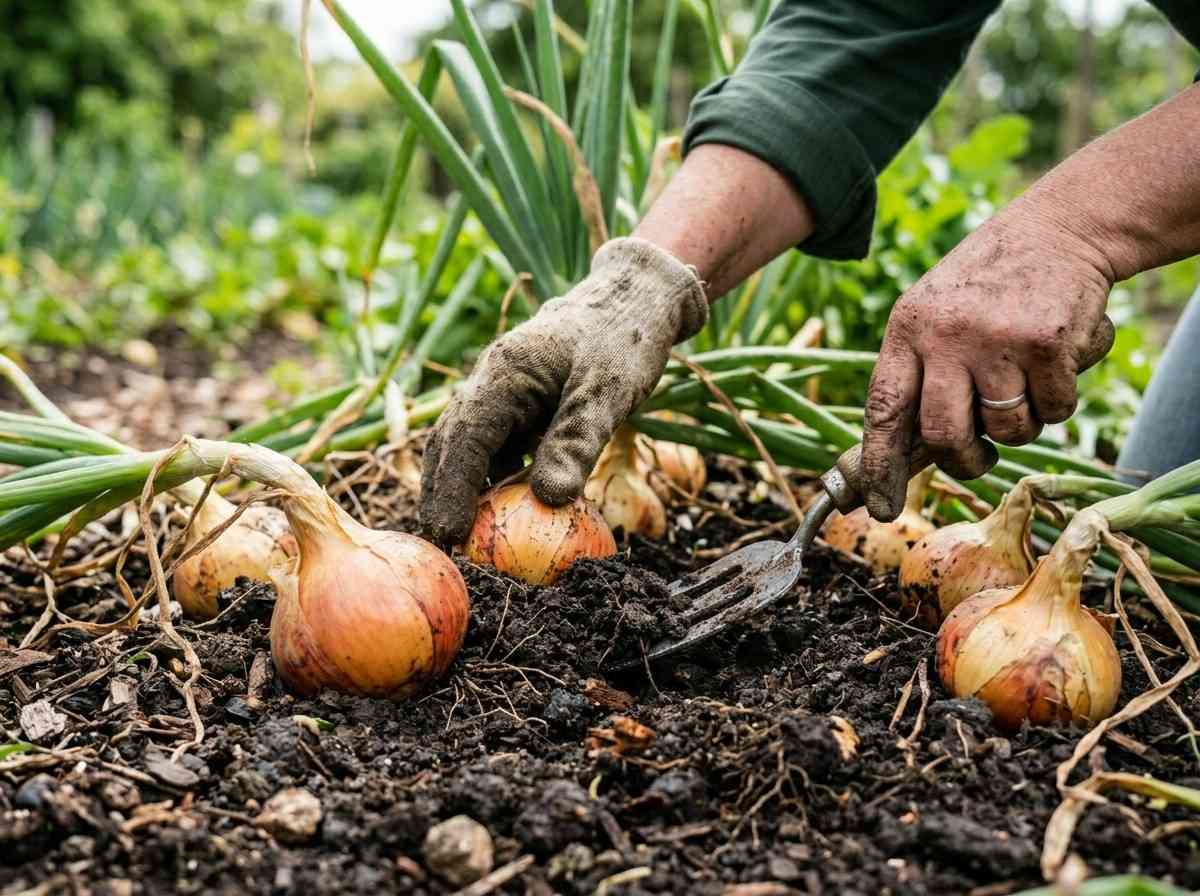
Are you wondering When to Harvest Onions to get the best flavor and storage life? Timing is everything when it comes to picking onions, and harvesting at the right stage helps ensure bigger bulbs, better taste, and longer storage.
If you harvest too early or too late, your hard work might not pay off. You’ll discover clear signs that tell you exactly when your onions are ready. By the end, you’ll feel confident in knowing the perfect moment to gather your onions and enjoy their full potential.
Keep reading to make sure your onion harvest is a success!
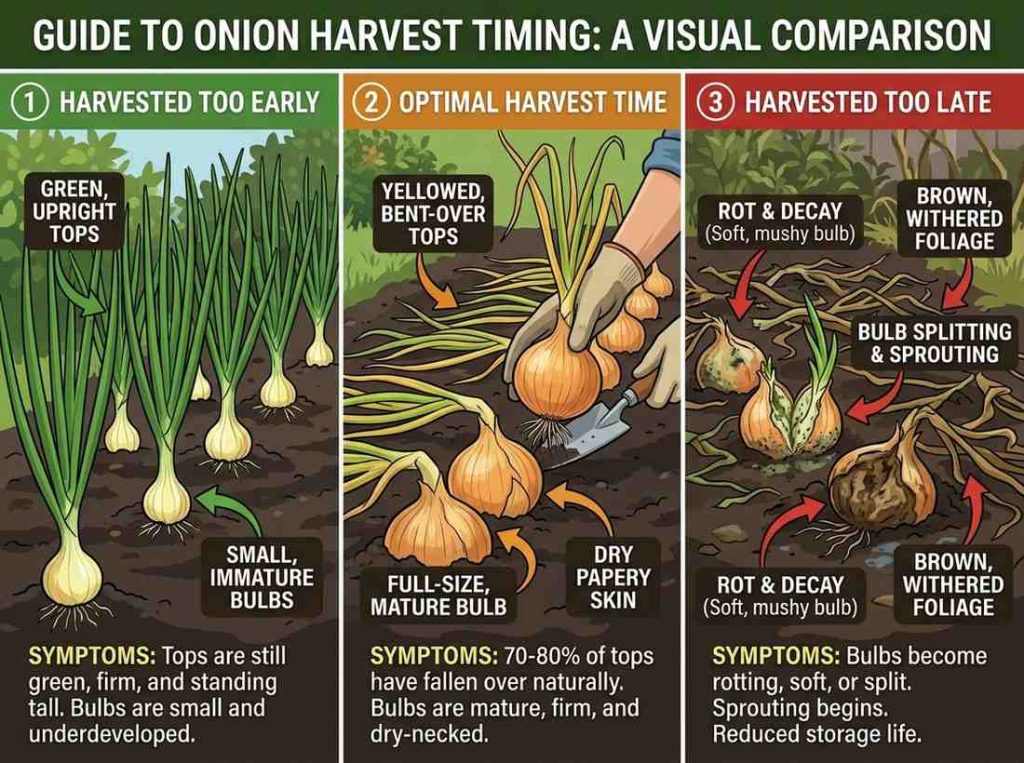
Knowing the right time to harvest onions is key for a good crop. Onions show clear signs when they are ready to dig up. Watch the plants closely. These signs help you pick onions at their best size and flavor.
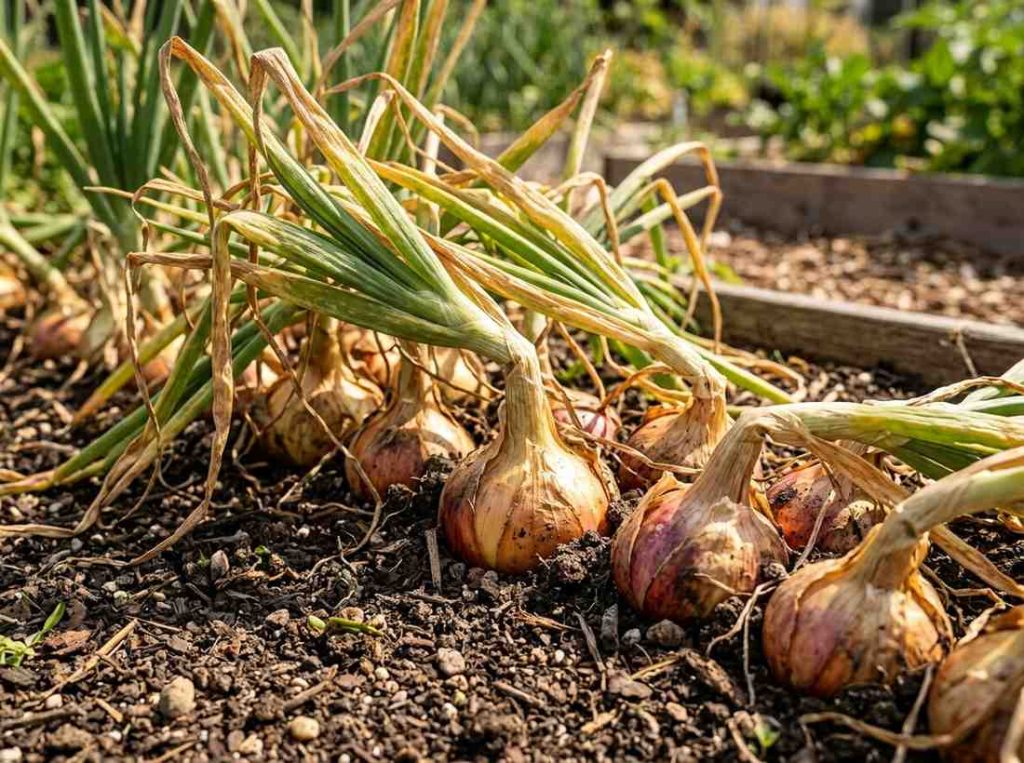
The onion leaves start to turn yellow and dry. This change shows the onion stops growing. The plant sends energy to the bulb, not the leaves. Yellowing leaves are a strong sign the onion is ready.
Check the bulb size by gently brushing away the soil. The bulb should be round and firm. It grows bigger and pushes up through the soil. Small or soft bulbs need more time to mature.
The neck is the part where the leaves meet the bulb. When onions are ready, this neck feels soft and thin. A soft neck means the onion stops growing and starts to dry. This is a clear sign to harvest soon.
Harvesting onions at the right time ensures the best taste and storage life. Knowing the ideal harvest time helps you avoid soft or underdeveloped bulbs. Pay attention to key signs and conditions to pick the perfect moment for harvesting your onions.
Onions usually take 90 to 120 days to mature after planting. Check the seed packet for specific days to maturity. Bulbs grow underground and swell as they mature. When tops start to yellow and fall over, onions are near ready. Do not wait too long after tops fall, or bulbs may split.
Dry weather is best during onion harvest. Wet conditions can cause bulbs to rot or mold. Choose a dry day to dig up onions and let them cure. Avoid harvesting onions during heavy rain or damp soil. Warm daytime temperatures help the curing process after harvest.
The soil should be loose and dry before harvest. Hard or wet soil makes digging difficult and can harm bulbs. Avoid harvesting onions from soggy ground. Light, sandy soil lets you pull onions easily without damage. Ensure soil is not too wet to prevent disease after harvest.
Harvesting onions is a careful process. Proper techniques protect the bulbs and keep them fresh. Using the right tools and methods ensures a good yield. It also helps the onions store better after harvest.
Focus on gentle handling and correct timing. This avoids damage and promotes longer shelf life. Below are key techniques for a smooth harvest.
Use a garden fork or spade to loosen soil around onions. Avoid sharp tools that can cut the bulbs. Gloves protect your hands from dirt and cuts. A basket or crate helps carry onions without bruising them. Keep tools clean to prevent plant diseases.
Loosen soil carefully around each onion. Lift bulbs by their base, not by the tops. Pull gently to avoid breaking the neck. If soil is hard, use a fork to lift bulbs out. Do not yank or twist the onions. Handle each bulb with care to keep its skin intact.
Brush off excess soil gently. Do not wash onions before curing. Washing can cause rot during storage. Remove damaged outer layers but keep most skins on. Leave onion tops attached for better drying. Store onions in a dry, well-ventilated place after cleaning.
Curing and storing onions properly helps keep them fresh longer. After harvesting, onions need time to dry. This process is called curing. It protects onions from rot and sprouting. Good curing and storage save your harvest for months.
Start by laying onions in a warm, dry place. Spread them out in one layer. Avoid direct sunlight to prevent sunburn. Let them dry for two to three weeks. The outer skins should become papery and dry. The necks must be tight and dry before storage. This drying stops moisture from causing rot.
Keep onions in a cool, dark place for storage. Ideal temperature is between 32 and 40 degrees Fahrenheit. Air circulation is very important. Use mesh bags or crates with holes. Avoid storing onions near potatoes. Potatoes release moisture that can spoil onions quickly.
Check onions regularly for soft spots or mold. Remove any damaged onions immediately. This stops rot from spreading. Avoid storing onions in plastic bags. It traps moisture and causes sprouting. Keep onions dry and cool to slow down sprout growth.
Harvesting onions is a careful process. Mistakes can reduce the quality and storage life of your crop. Knowing common mistakes helps you avoid them. It ensures better onions for your kitchen and market.
Many gardeners dig up onions before they fully mature. Onions need time for their bulbs to grow and develop flavor. Harvesting too soon results in small, weak bulbs. These onions also spoil faster and do not store well. Wait until the tops fall over and dry for best results.
Waiting too long can cause other problems. Onions left in the ground too long may start to rot. The bulbs can split or become soft from too much moisture. Pests and diseases also attack onions that stay too long. Pick onions soon after the tops dry and fall down.
Curing is the drying process after harvest. Skipping this step can ruin your onions. Proper curing helps the skin harden and stops moisture loss. Without curing, onions can rot or sprout quickly. Keep onions in a dry, airy place for two to three weeks.
Different onion types need different harvest times. Knowing these helps get the best taste and storage life. Each variety has signs to watch for. This section breaks down tips for sweet onions, storage onions, and green onions.
Sweet onions grow large and have thin skin. Harvest when tops fall over and turn brown. Bulbs should feel firm but not hard. Sweet onions do not store well for long. Use them quickly for the best flavor.
Storage onions have thick skins and keep longer. Wait until leaves dry and fall completely. Bulbs must be fully mature and dry before harvest. Cure them in a dry, airy place for weeks. This improves shelf life and taste.
Green onions are harvested young for tender stems. Pull them once they reach 6 to 8 inches tall. They do not form large bulbs. Harvest by pulling or cutting at soil level. Use fresh for salads and cooking.
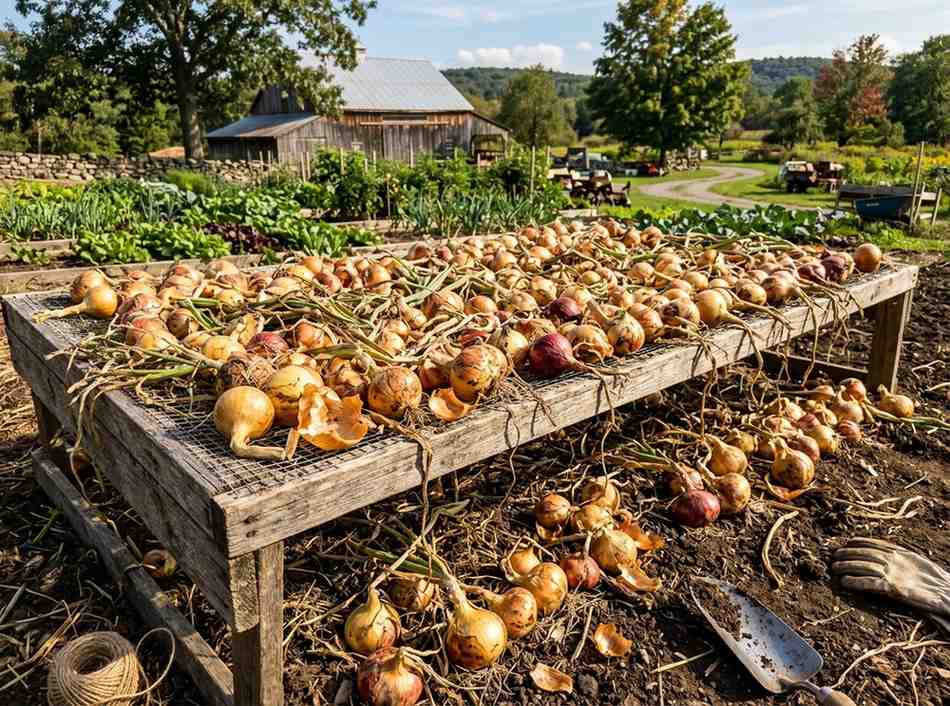
Onion tops fall over and turn brown when bulbs are mature and ready to pick.
Yes, but bulbs will be smaller and may not store well.
Onions usually take 90 to 120 days from planting to harvest.
Yes, stop watering 1-2 weeks before harvest to let skins dry hard.
Cure onions in a dry, ventilated place for 2 weeks, then store cool.
Harvest onions when the tops start to fall over. This shows bulbs have grown fully. Wait a few days after tops dry. Then, pull onions gently from the soil. Let them cure in a dry, airy spot. Proper curing helps onions last longer.
Check them often for soft spots or mold. Store onions in a cool, dark place. Harvesting at the right time gives the best taste. Simple steps make your onion growing success easier. Keep an eye on your garden daily. Soon, you’ll enjoy fresh, homegrown onions.