Gardening Made Simple.
Are you ready to grow your own carrots year after year without buying new seeds? Learning How to Harvest Carrot Seeds is easier than you might think, and it gives you complete control over your garden while helping you save money and preserve your best plants for future harvests.
Imagine saving money, ensuring fresh, organic seeds, and feeling proud every time you plant your homegrown seeds. In this guide, you’ll discover simple steps to collect and store carrot seeds successfully. Keep reading, and you’ll soon master a skill that brings your garden to life season after season.
Choosing the right carrots is key to a good seed harvest. Not all carrots will produce healthy seeds. Picking the right plants helps ensure strong growth and good seed quality. Focus on plants that show good traits and come from seed-ready varieties. This step sets the stage for successful seed collection.
Choose carrots with strong, healthy tops and roots. Avoid plants with yellow leaves or signs of disease. Look for carrots that grew straight and have vibrant green leaves. Healthy plants produce better seeds that germinate well. Pick carrots free from damage or pests.
Not all carrots produce seeds easily. Some varieties are bred for eating, not seed production. Choose biennial or open-pollinated types for seed harvesting. These carrots will flower and produce seeds in their second year. Check seed packets or garden guides to find seed-ready varieties.
Preparing your garden is the first step to harvest healthy carrot seeds. Good preparation creates a strong base for the plants to grow and produce seeds. It helps the seeds develop fully and ensures a better harvest. Follow these tips to get your garden ready for carrot seed harvesting.
Carrots grow best in loose, sandy soil. The soil must drain well to avoid water buildup. Rich soil with organic matter helps carrots grow strong roots. Keep the soil pH between 6.0 and 6.8 for best results. Remove any rocks or hard clumps that can stop root growth. Lightly till the soil to make it soft and easy for roots to expand.
Give carrot plants enough space to grow. Plant seeds about 2 to 3 inches apart. Rows should be 12 to 18 inches apart to allow air flow. Proper spacing reduces disease and helps plants get enough sunlight. Avoid crowding to let each plant develop enough seeds. Use straight rows for easy weeding and care.
Allowing carrots to flower is a key step in harvesting their seeds. Carrots usually grow for eating, but letting them bloom helps gather seeds for next planting. This process takes patience and care. You must wait until the right time to let carrots bolt. Then, encourage strong flower growth for good seed production.
Carrots bolt when they start to grow flower stalks. This often happens in the second year of growth. The first year grows the root; the second year grows the flower. Wait until the carrot leaves begin to yellow and die back. This shows the plant is ready to produce flowers. Avoid letting carrots bolt too early. Early bolting can lead to weak flowers and poor seeds.
Provide carrots with enough sunlight to boost flower growth. Keep the soil moist but not wet. Avoid overwatering, which can hurt flowers. Thin the plants to prevent crowding and allow air flow. Remove weeds to reduce competition for nutrients. Support tall flower stalks with small stakes if they lean. Strong, healthy flowers produce better seeds for future crops.
Collecting carrot seeds is a rewarding step for gardeners. It lets you grow carrots year after year without buying new seeds. The process starts with knowing when and how to gather the seeds properly. Careful seed collection helps keep your carrot plants healthy and strong.
Good seed collection also ensures better germination and growth. This part of gardening can be simple once you understand the signs and techniques. Follow these easy steps to collect your carrot seeds at the right time and in the right way.
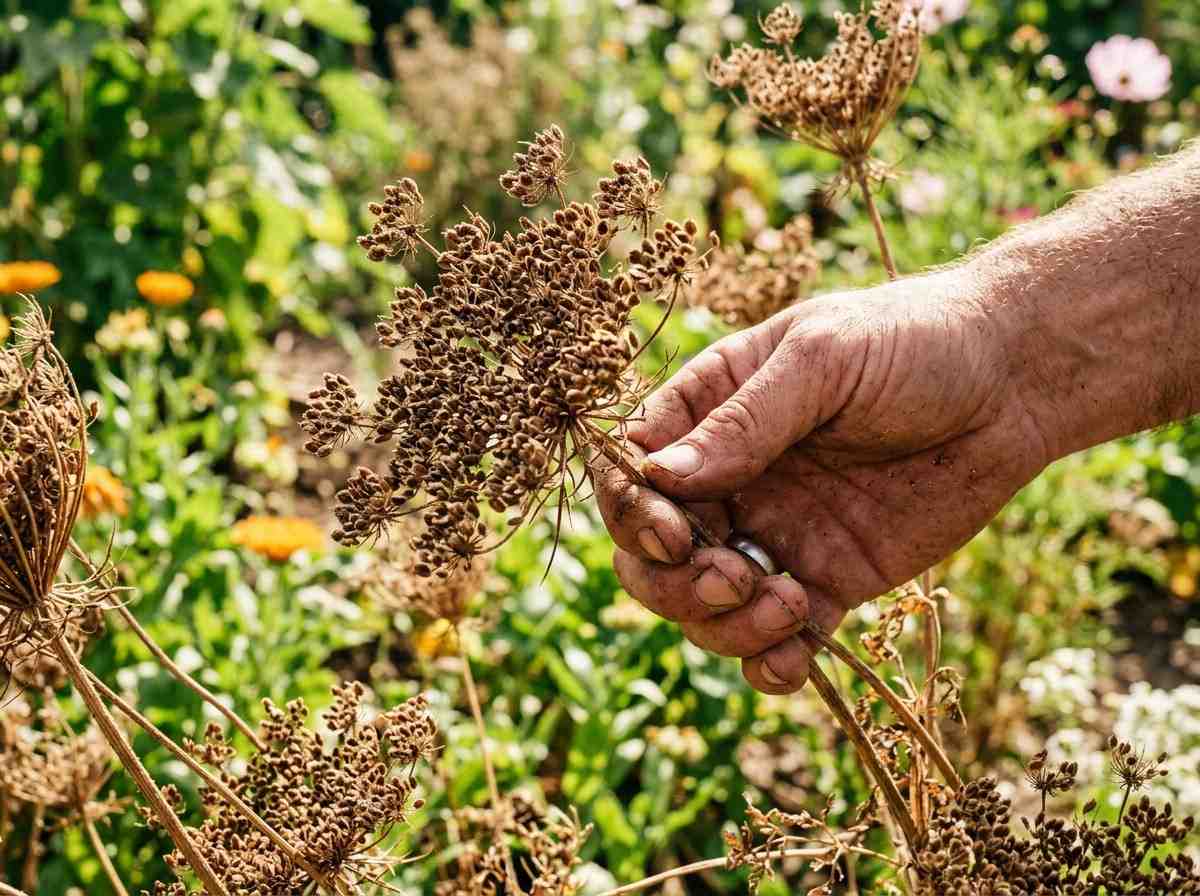
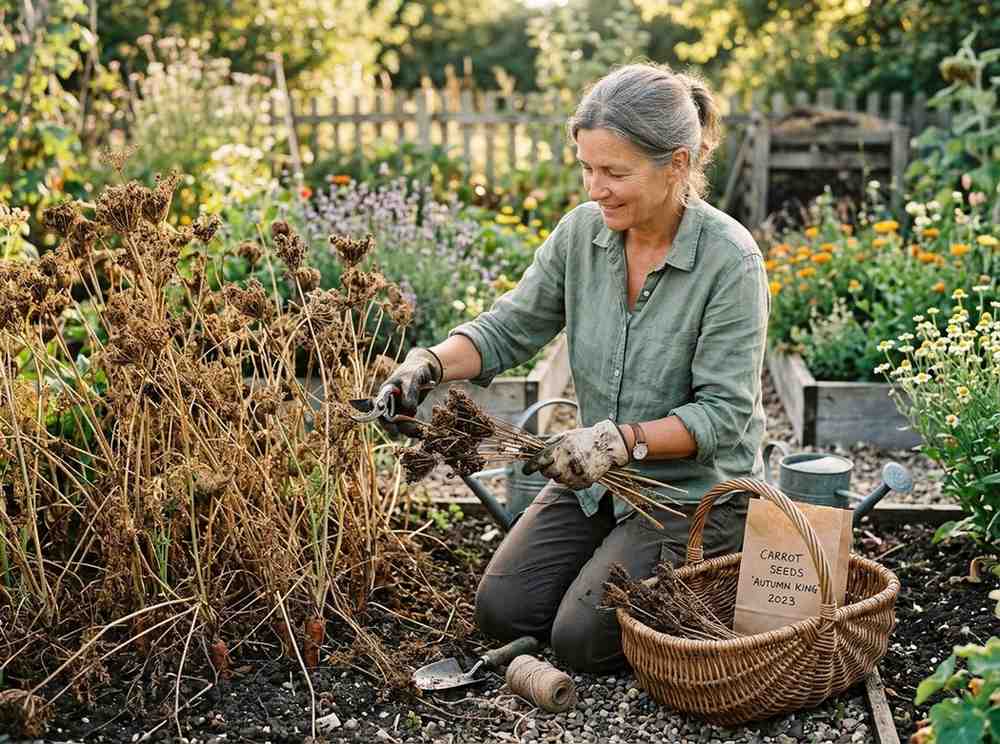
Carrot seed heads look like small umbrellas. They start green and turn brown as they mature. Wait until most of the flowers dry out completely. The seeds inside the heads become hard and dark. This means they are ready for harvest. Avoid collecting seeds too early. Immature seeds will not grow well.
Use scissors or garden shears to cut the seed heads. Hold a paper bag or container under the seed head. This stops seeds from falling to the ground. Cut carefully to avoid damaging the plant. Place the seed heads in a warm, dry place to finish drying. Once dry, gently shake the seeds out. Store seeds in a cool, dry container for later use.
Drying and cleaning carrot seeds is a key step in saving seeds for the next planting season. Seeds must be dry to avoid mold and rot. Cleaning helps remove plant debris and chaff. This makes storing and planting easier.
Spread carrot seed heads on a paper towel or a screen. Choose a dry, warm place with good air flow. Avoid direct sunlight, which can damage seeds. Let seeds dry for about two weeks. Check seeds often to prevent moisture build-up. Seeds are ready when they feel hard and break easily.
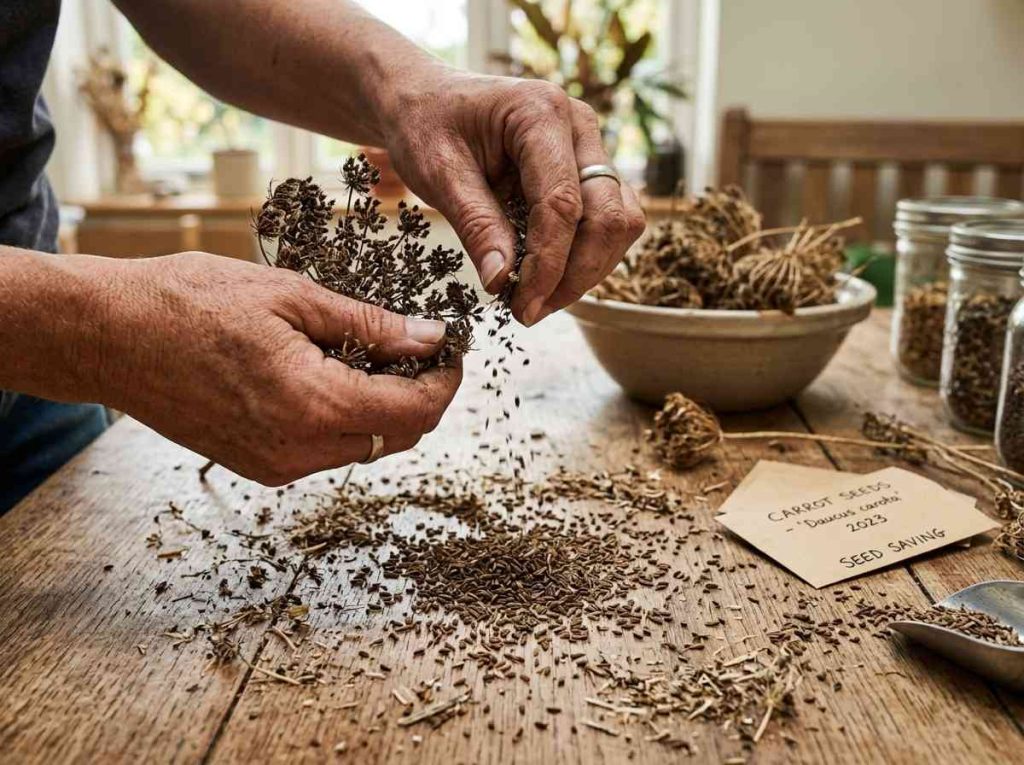
Once dry, gently rub the seed heads to release seeds. Use a fine mesh sieve to separate seeds from plant bits. Blow gently to remove lighter debris. Repeat sifting until only clean seeds remain. Clean seeds store better and grow stronger plants.
Saving carrot seeds properly helps grow healthy plants next season. Good storage keeps seeds fresh and ready to sprout. Seeds last longer when stored in the right way.
Store seeds in a cool, dry place away from sunlight. Heat and moisture can spoil seeds quickly. Use airtight containers to protect seeds from air and humidity. A temperature between 32°F and 41°F (0°C to 5°C) works best. Avoid places with large temperature changes, like near windows or heaters.
Label seed containers with the carrot variety and harvest date. Clear labels help avoid confusion later. Keep seeds in small, separate packets or jars. Organize them by year and type for easy access. A simple system saves time and prevents mistakes.
Growing carrot seeds successfully starts with good germination. Healthy seeds give strong plants and better harvests. Small steps before and during planting make a big difference. Follow these tips to help your carrot seeds sprout well.
Keep soil moist and warm. Avoid planting too deep or too close. These simple habits improve seed growth and plant health.
Soak carrot seeds in warm water for 12 to 24 hours. This softens the seed coat and helps sprouting. Use clean water and change it if it gets cloudy. After soaking, dry seeds lightly before planting.
Scarify seeds gently by rubbing them with sandpaper. This helps water reach inside. Do this only if seeds are very old or hard. Fresh seeds usually do not need scarification.
Sow seeds in loose, well-drained soil. Carrots like soil free of stones and clumps. Plant seeds about ¼ inch deep for best results. Space seeds 1 to 2 inches apart to avoid crowding.
Cover seeds lightly with soil and press gently. Keep soil evenly moist until seeds sprout. Avoid heavy watering that washes seeds away. Thin seedlings carefully to give room for growth.
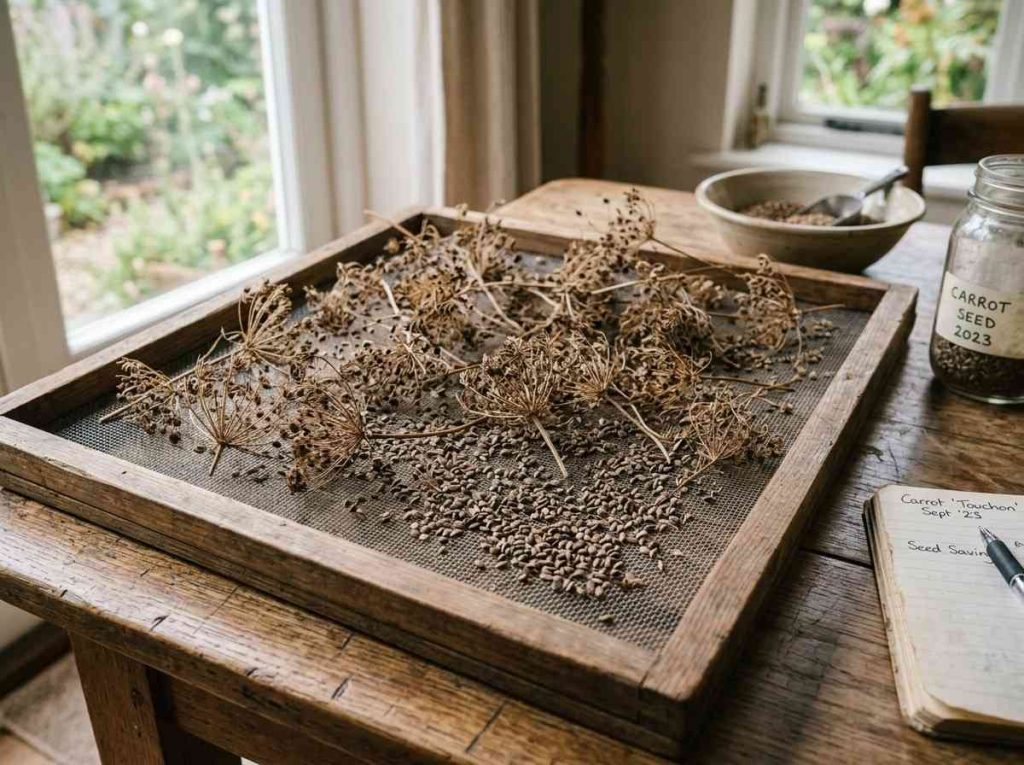
Carrot seeds are ready when the flowers turn brown and dry. Seeds should feel hard and brittle.
Collect seeds in late summer or early fall, after the flowers dry completely on the plant.
Spread seeds on paper in a dry, warm place. Let them dry for 1-2 weeks.
Grocery store carrots often do not produce true seeds. Use seeds from garden-grown carrots instead.
Store seeds in a cool, dry, dark place inside a sealed container for best results.
Harvesting carrot seeds can be simple with the right steps. Wait until the flowers dry and turn brown. Gently collect the seeds without damaging them. Store seeds in a cool, dry place for best results. Plant them next season to grow healthy carrots.
Saving seeds saves money and helps your garden. Try this easy process and enjoy fresh carrots every year. Gardening becomes more rewarding with home-grown seeds. Give it a try and watch your garden thrive!