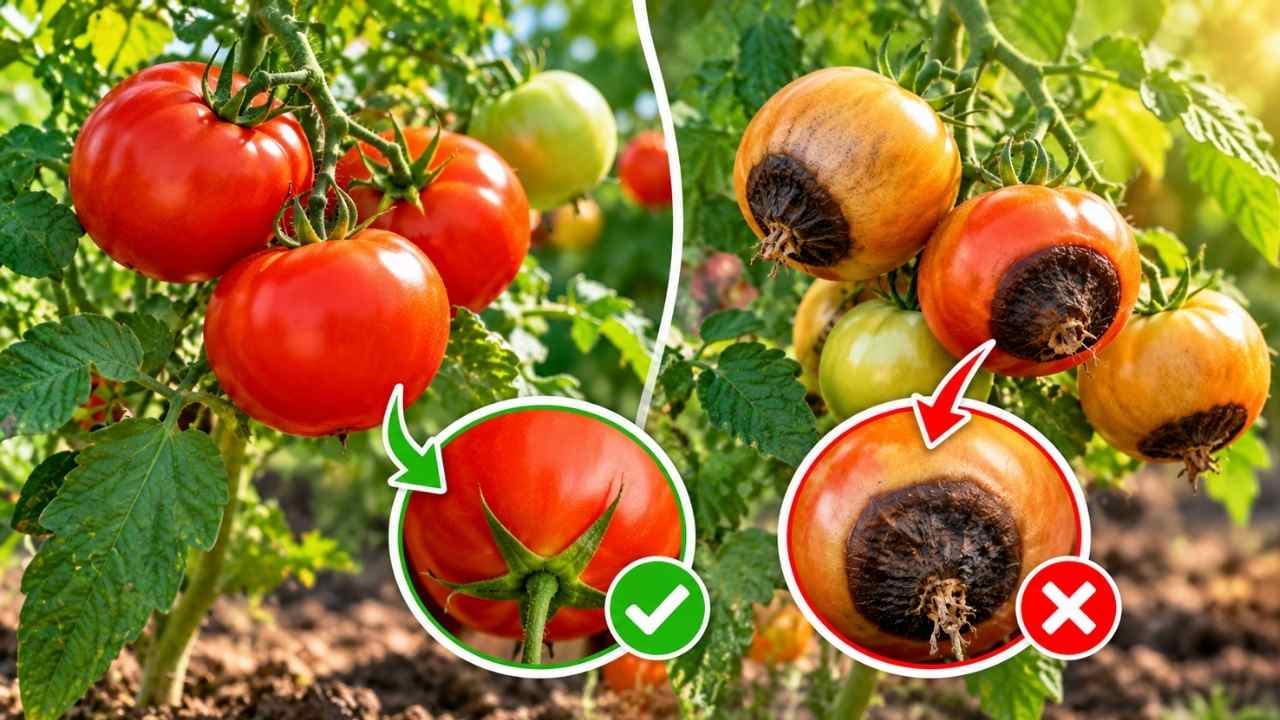
Gardening Made Simple.
Nothing beats the taste of a fresh, homegrown tomato. You plant them with big dreams of salads and sauces. But one wrong move, and pests or diseases can ruin your crop. Unmanaged issues like blight can cut yields by over 50%, according to garden experts.
That’s why Tomato diseases and pest control is so important—spotting problems early helps you act fast and protect your harvest. In this guide, you’ll learn how to identify issues quickly and apply smart solutions to keep your plants strong and productive.
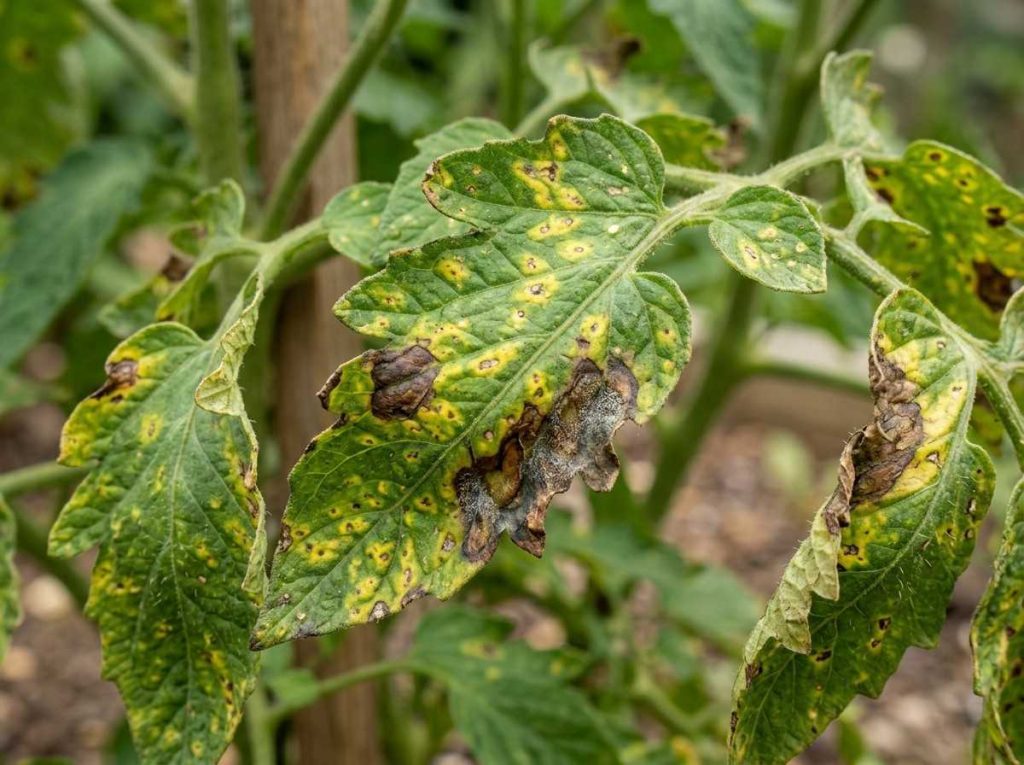
Catching tomato diseases early can save your garden. Look for odd spots, wilts, or colors on leaves and fruit. Quick checks help you act before things spread. Here's what to watch for in the top ones.
Early blight hits lower leaves first. You see dark, target-like spots with yellow edges. It loves warm, wet weather where spores wake up fast. Late blight spreads quicker in cool, damp spots. Leaves get big, water-soaked blotches that turn brown and die. Both need moisture to grow, so rain or dew sets them off.
Spot them soon to stop the damage. For early blight, start fungicides like chlorothalonil before symptoms show. If late blight appears, spray right away with something like mancozeb. You can turn things around with quick action.
Bacterial spot makes dark, sunken spots on leaves and fruit. They ooze in wet times and raise bumps. Speck is smaller, with greasy black dots that don't sink in much. Both thrive in rain or high humidity, spreading from splashes.
In greenhouses, these can wipe out plants fast. One farmer lost half his crop to spot in a steamy setup. Check leaves daily in wet spells. Remove bad parts and use copper sprays to slow it down.
Viruses twist your tomatoes in bad ways. Mosaic shows as yellow and green patches on leaves, like a puzzle gone wrong. Plants stunt and curl up. Leaf roll makes edges fold up, often from bugs or dirty tools.
You can't cure viruses, so focus on stopping spread. Keep tools clean and control insects that carry them. Pick strong varieties that fight back better. Early signs mean pull affected plants to save the rest.
Pests chew through your hard work overnight. They hide on stems or under leaves, so scout often. Knowing what they look like lets you strike back fast. Let's break down the worst ones.
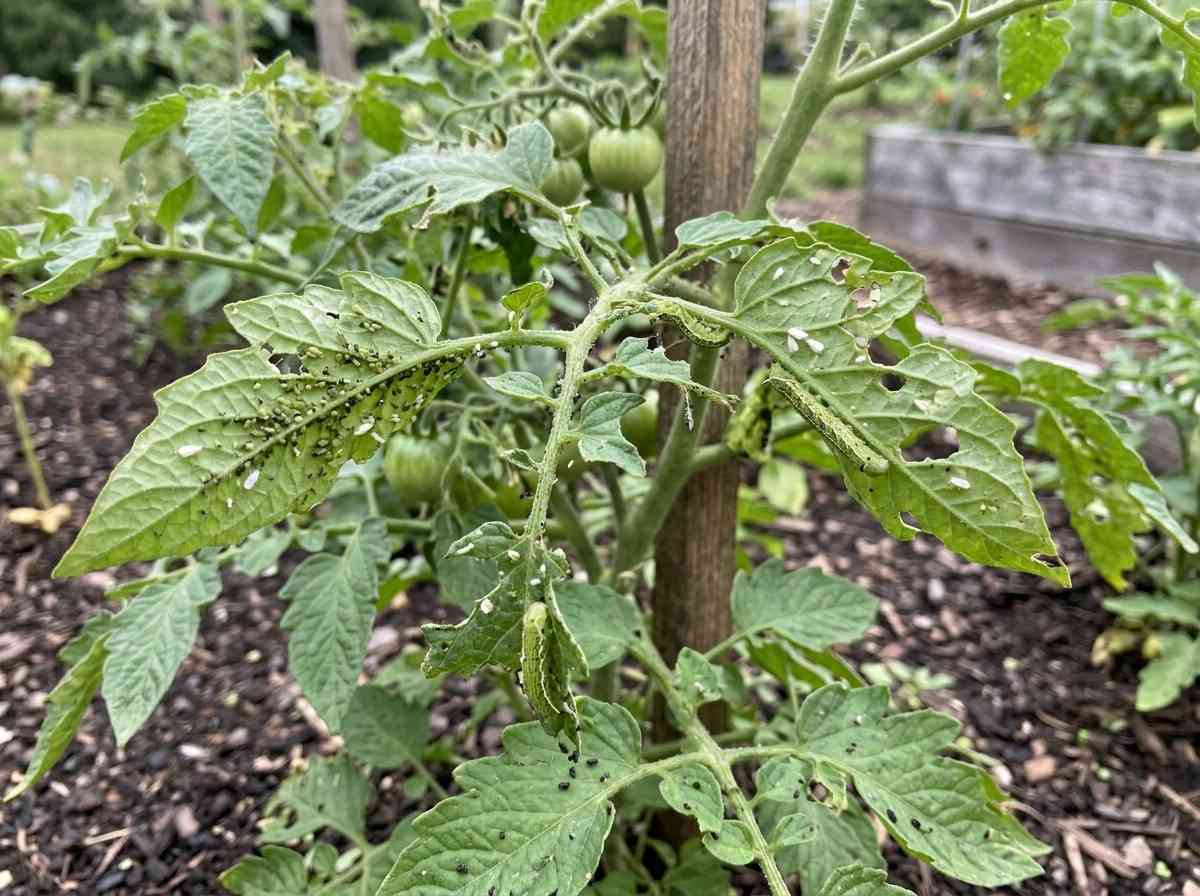
Tomato hornworms are big green caterpillars with white stripes and a horn tail. They munch leaves like machines, stripping plants bare in days. One can eat a lot, and they blend into green foliage.
Handpick them off at dusk when they're active. Drop them in soapy water to kill them. Parasitic wasps also hunt them, so plant flowers to draw those helpers. This keeps your leaves safe without sprays.
Whiteflies are tiny white bugs that fly up when you touch plants. Aphids cluster on new growth, green or black and pear-shaped. Both suck sap, making leaves yellow and weak. They leave sticky honeydew that grows black mold.
Watch for 10 or more per leaf before you treat, as extension services suggest. Blast them with water or use neem oil sprays. Ladybugs eat them, so invite those bugs to your garden. Strong plants bounce back quick.
Spider mites are specks you barely see, but their webs give them away. They speckle leaves with tiny dots and yellow stipples. Hot, dry air brings them out on lower leaves first.
Check undersides with a magnifying glass. Hose them off often to break their hold. If webs spread, hit with miticides like abamectin. Keep air moist to make life hard for them.
Prevention beats cure every time in tomato care. Build good habits from the start. Healthy soil and smart setup keep troubles away. Focus on these steps for long-term wins.
Crowded plants trap moisture and invite fungi. Space tomatoes 2 to 3 feet apart in rows 4 feet wide. This lets wind dry leaves fast after rain.
Good air flow stops spores from sticking around. Prune lower branches to boost breeze. Your plants stay drier and stronger this way.
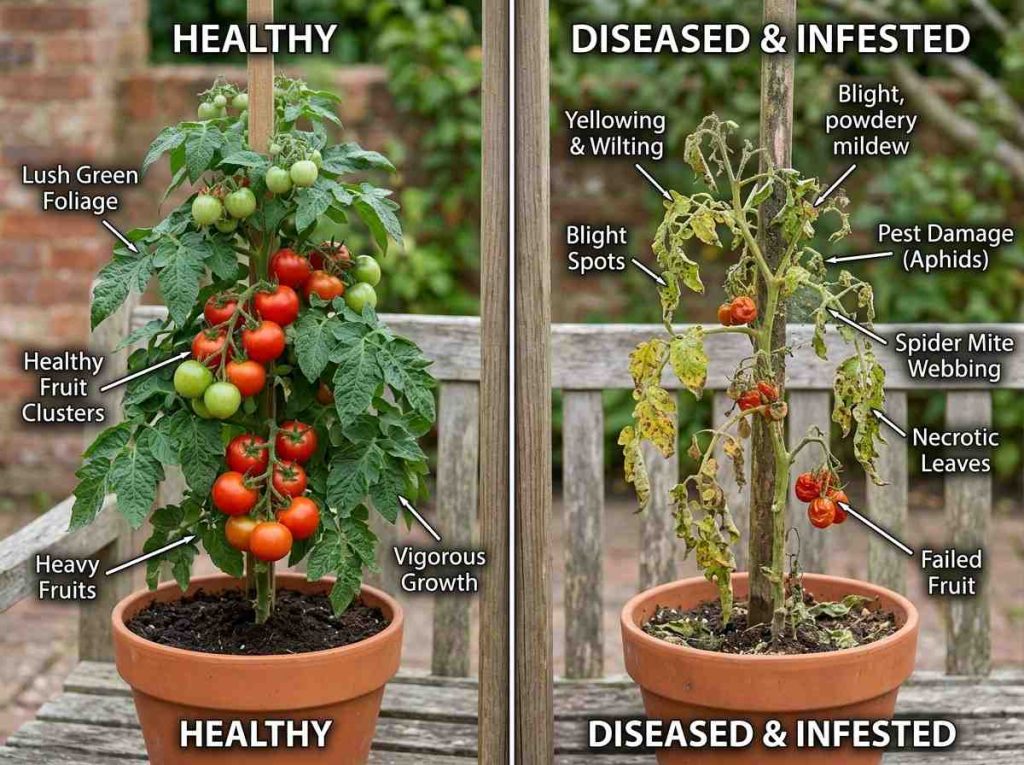
Wet leaves breed bacteria and fungi. Use drip lines or soaker hoses to water roots only. Aim for deep soaks in the morning so soil dries by night.
Overhead sprinklers splash diseases around. Stick to ground-level water, and you'll cut risks big time. Plants drink what they need without extra mess.
Planting tomatoes in the same spot builds up bad bugs in dirt. Fusarium and Verticillium live in soil and attack roots year after year. Rotate with beans or greens for at least three years.
Test soil pH and add compost for health. Clean beds keep pathogens low. Fresh ground means fewer surprises come spring.
Once trouble hits, choose your weapons wisely. Integrated pest management mixes methods for best results. Start gentle, then step up if needed. Always check labels for safe use.
Go natural first for safe fixes. Bacillus thuringiensis, or Bt, targets caterpillars like hornworms without harming bees. Mix and spray on leaves where they eat.
Insecticidal soaps drown aphids and whiteflies on contact. Neem oil smothers mites and soft bugs too. For fungi, copper sprays work on blight without harsh chemicals. These keep your food clean and earth happy.
Save chemicals for bad outbreaks. Contact sprays kill on touch, while systemics soak into plants. Use them on widespread blight or heavy pests.
Take samples to your local extension office for ID first. They guide you on the right stuff. Follow wait times before you harvest. This keeps things safe and effective.
Root problems hide underground but show above. Stunted plants or wilts signal dirt issues. Tackle them before they spread.
Root-knot nematodes make galls, like knots, on roots. Plants yellow, wilt, and grow slow even with water. Dig up a root to see the bumps.
In warm southern spots, solarize soil with plastic in summer heat. It kills nematodes without digs. Plant French marigolds as traps next year. Clean roots lead to better yields.
These wilts clog plant veins, turning leaves yellow from the bottom up. Stems brown inside, and no fix works once it starts. Pull and trash sick plants.
Choose seeds with VFN codes for resistance. They fight Fusarium, Verticillium, and nematodes. Healthy starts mean fewer losses down the line.
You now have the tools to guard your tomatoes. Stay alert with regular checks. Use smart spacing, right watering, and rotation to prevent woes. When pests or diseases hit, blend organic and chemical options through IPM.
Top steps for success:
Follow these, and you'll pick ripe tomatoes all summer. Your garden will thank you with juicy rewards. Start today for a worry-free harvest.
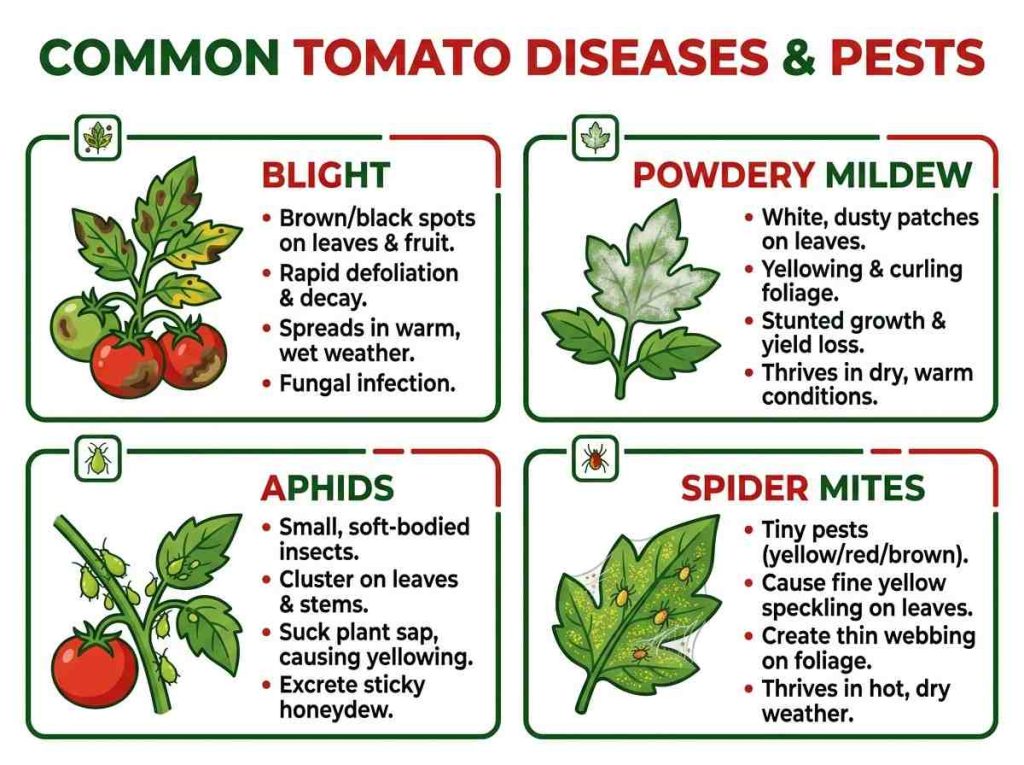
Common tomato diseases include blight, leaf spot, wilt, and powdery mildew, which can damage leaves and reduce yield.
Aphids, whiteflies, hornworms, and spider mites are some of the most common pests affecting tomato plants.
Use proper spacing, ensure good airflow, avoid overhead watering, and rotate crops each season to reduce disease risk.
Hand-picking pests, using neem oil, introducing beneficial insects, and applying organic sprays are effective control methods.
Regularly check leaves and stems for spots, discoloration, holes, or unusual growth to catch issues before they spread.