Gardening Made Simple.
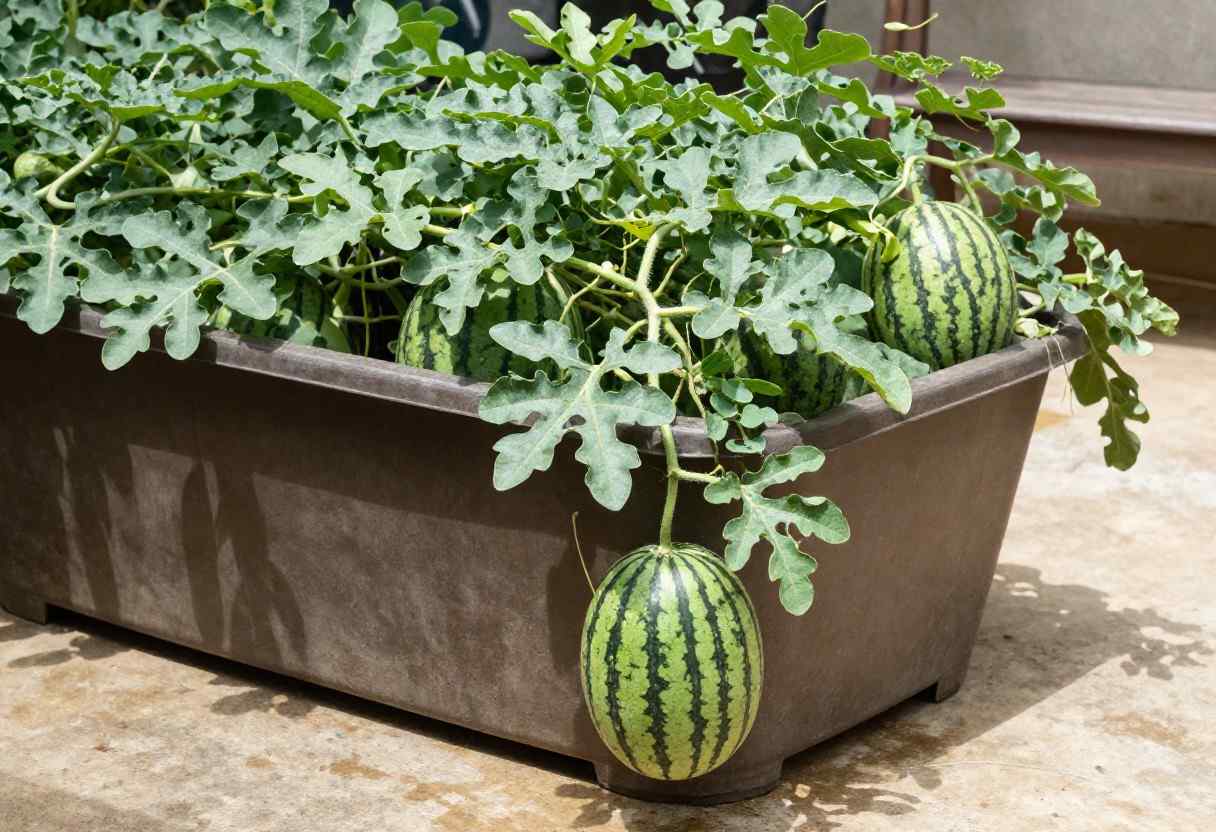
Growing watermelon in containers is a smart way to enjoy juicy fruit even if you have limited space. Many people think watermelons need huge gardens, but with the right approach, you can grow them on balconies, patios, or even rooftops.
This article guides you step-by-step, showing how to choose the best containers, select varieties, care for plants, and harvest sweet watermelons. Whether you're a beginner or have some gardening experience, you'll discover practical advice and useful tips that make container growing easy and rewarding.
Not every watermelon fits well in containers. Full-sized varieties can grow over 20 pounds and need lots of space. Instead, look for small-fruited types or dwarf varieties bred for compact growth. Some popular options are:
These varieties grow well in containers, need less space, and mature faster than larger types. Picking a dwarf watermelon is one of the most important decisions for container success.
Container size makes a big difference. Watermelons have deep roots and need room to spread. For best results, use containers that hold at least 10-15 gallons. Material matters too: plastic, ceramic, or fabric pots all work, but make sure they have drainage holes.
| Container Type | Minimum Size | Pros | Cons |
|---|---|---|---|
| Plastic Pot | 10 gallons | Lightweight, affordable | Can overheat in sun |
| Ceramic Pot | 12 gallons | Stable, decorative | Heavy, can crack |
| Fabric Grow Bag | 15 gallons | Air-pruning roots, good drainage | May dry out faster |
Before planting, wash the container and check the bottom for drainage holes. If holes are too small, drill larger ones or add more. Place the container in a spot that gets at least 8 hours of sunlight daily.
Watermelons need rich, loose soil. Use a quality potting mix rather than garden soil, which can be heavy and compacted. A good mix contains peat, compost, and perlite for drainage.
Watermelons thrive in soil with pH between 6. 0 and 6. 8. If you're unsure, use a soil test kit. Adjust the pH if needed with lime (to raise) or sulfur (to lower).
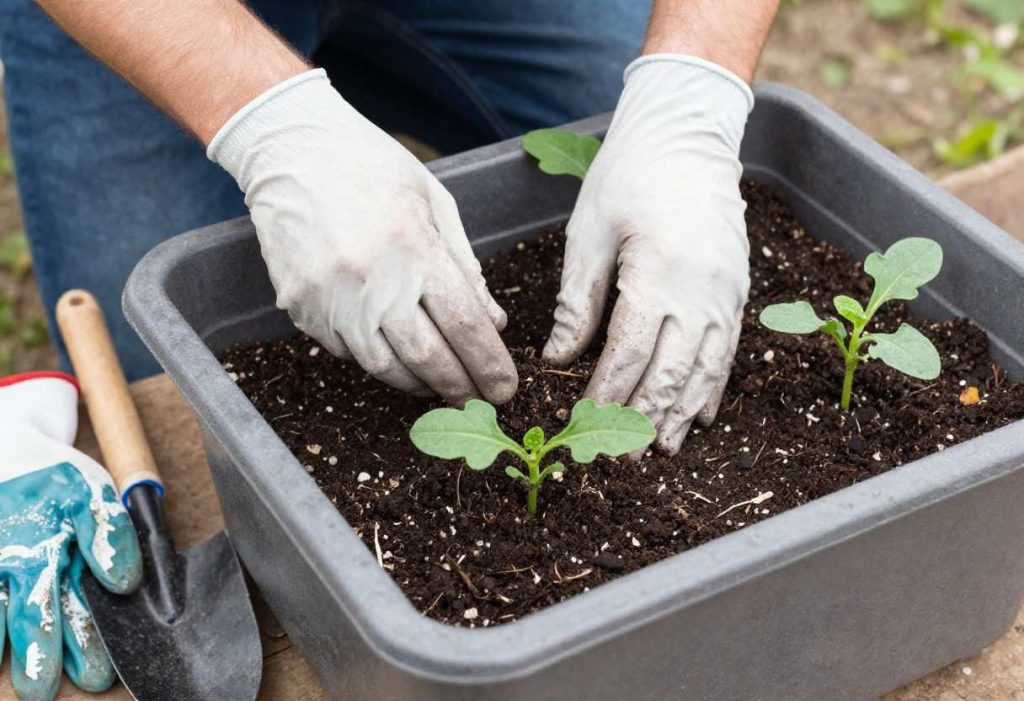
You can start with seeds or young plants. For seeds, sow them 1 inch deep, spaced 2-3 inches apart. Water gently. When seedlings reach 2-3 leaves, thin to the strongest plant. If using nursery seedlings, plant one per container.
Planting early in spring is best, after the risk of frost is gone and temperatures are above 70°F. Water thoroughly after planting.
Watermelons need consistent moisture, but too much water can cause root rot. Check soil daily and water when the top 1 inch feels dry. During hot weather, you may need to water every day.
| Growth Stage | Water Needs | Fertilizer |
|---|---|---|
| Seedling | Light, frequent | Balanced NPK (10-10-10) |
| Vine Growth | Moderate, keep moist | Higher nitrogen |
| Fruit Setting | Consistent moisture | High phosphorus, potassium |
| Ripening | Less, avoid soggy soil | Reduce nitrogen |
Fertilize every 2-3 weeks with liquid fertilizer or compost tea. When the vines start to flower, switch to a formula with more phosphorus and potassium for better fruit development.
One insight many beginners miss: watering from below (using a saucer or drip irrigation) can help prevent fungal diseases by keeping leaves dry.
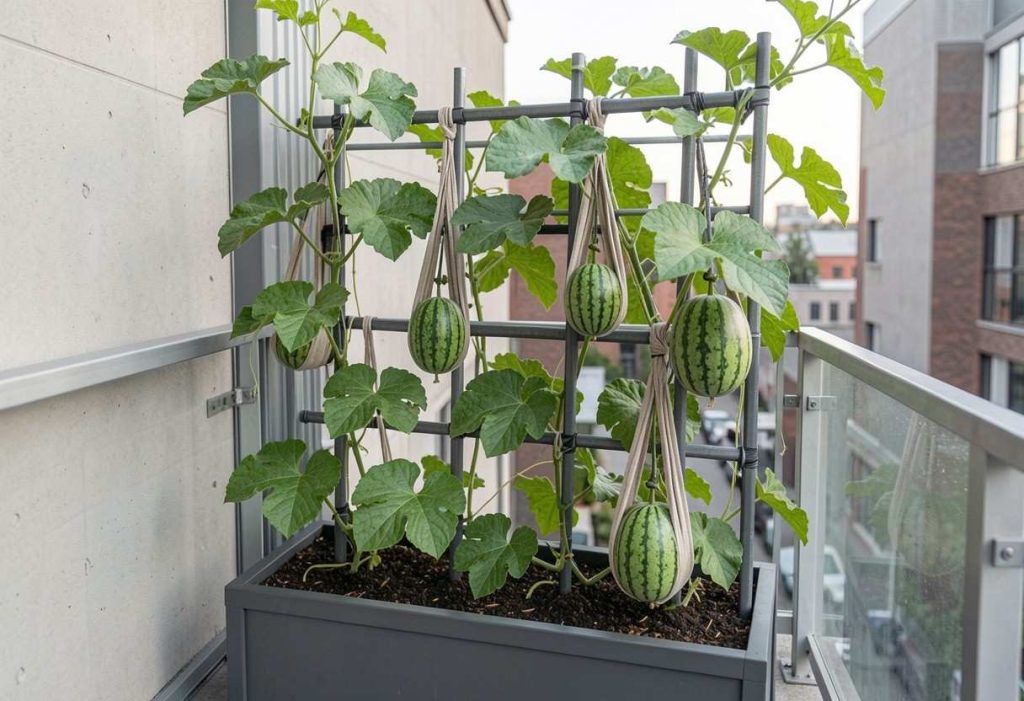
Container-grown watermelons often have limited space to spread. Training vines upward or outward helps maximize space. Use a trellis, tomato cage, or sturdy stakes to support vines.
If vines spill over, let them trail on the ground or patio, but watch for pests and avoid hot surfaces. Supporting fruits prevents stress on vines and reduces the risk of cracking.
Watermelons can suffer from aphids, spider mites, and powdery mildew. Container growing reduces some risks, but regular inspection is key.
Check leaves and stems weekly. Remove dead leaves and weeds from the container. If you spot problems early, plants recover faster.
Many gardeners overlook the importance of airflow. Crowded containers or vines block air, increasing disease risk. Spacing containers and pruning vines helps keep plants healthy.
Watermelons need pollination to set fruit. Outdoors, bees do most of the work, but in small spaces, pollination can be limited. If you notice flowers but no fruit, hand pollination helps.
Hand pollination increases fruit set, especially in urban or balcony gardens where bees are scarce.
Watermelons are ready to harvest 70-100 days after planting, depending on variety. Picking at the right time is crucial for sweetness.
Cut fruit with a sharp knife, leaving a short stem. Handle gently to avoid bruising.
One tip beginners often miss: avoid watering heavily in the last week before harvest. Excess water can dilute the flavor and cause cracking.
Growing watermelons in containers is different from garden planting. Here are practical tips to boost your success:
Most people underestimate how much water containers lose to evaporation. Checking soil moisture often prevents wilting and poor fruit development.
To understand how container growing stacks up against traditional methods, here's a clear comparison:
| Factor | Containers | Ground |
|---|---|---|
| Space Needed | Small, flexible | Large garden |
| Water Use | Frequent, precise | Less frequent |
| Pest Risk | Lower | Higher |
| Yield | Lower per plant | Higher per plant |
| Mobility | Easy to move | Fixed |
| Season Extension | Possible | Weather dependent |
Containers offer flexibility and can extend your growing season, but yields are usually smaller than ground-grown plants.
Even experienced gardeners make mistakes when growing watermelon in containers. Here are some to watch out for:
Careful attention to these points can make the difference between success and disappointment.
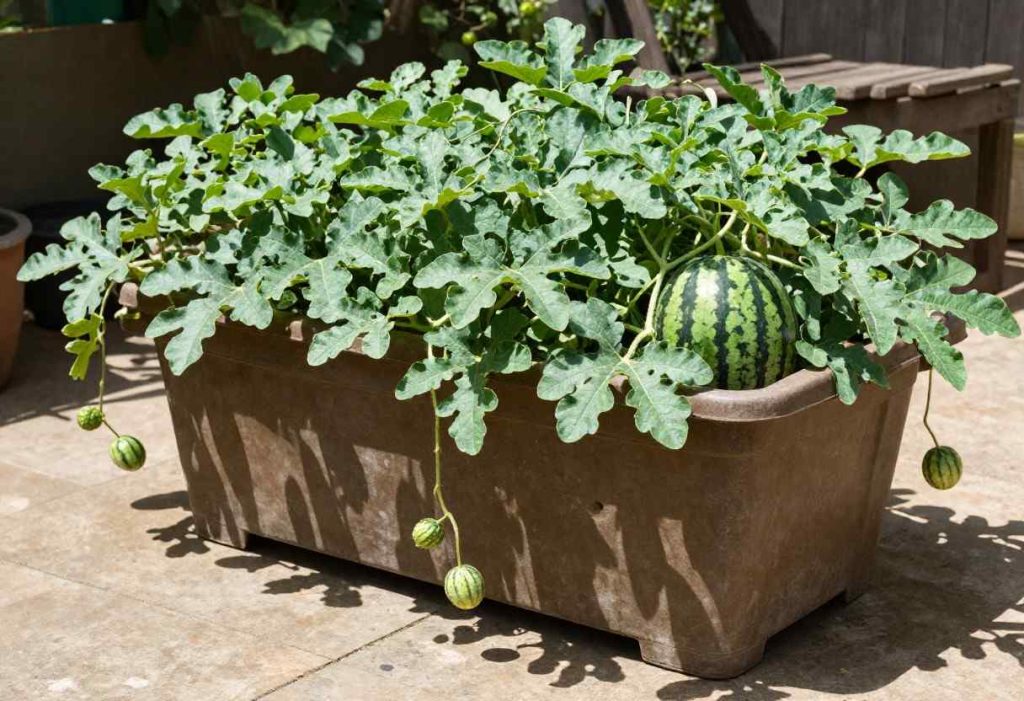
Yes, you can. Choose a dwarf variety and a large container. Make sure the spot gets 8 hours of sunlight and protect the vines from strong wind.
Usually, one plant per container is best. Most dwarf varieties produce 2-3 fruits per plant in containers.
Use a blend of potting mix, compost, and perlite. The soil should be loose and rich, with a pH of 6. 0-6. 8.
Avoid sudden changes in watering, especially near harvest. Reduce watering slightly when fruits are nearly ripe.
Most compact varieties mature in 70-85 days. Check for color change and dry tendril near the fruit for ripeness.
Container watermelon growing is fun, practical, and fits almost any home. With the right variety, soil, and care, you can enjoy delicious fruit even in small spaces. Remember, attention to watering, pollination, and support makes all the difference. If you want to explore more about watermelon cultivation, visit Wikipedia for detailed information. Enjoy your home-grown watermelons—sweet rewards for your effort and care!