Gardening Made Simple.
Growing peppers is one of the most rewarding choices for home gardeners and small farmers. These plants offer a wide range of flavors, colors, shapes, and levels of heat. Peppers can transform a simple meal and add beauty to your garden.
Exploring different Types of Peppers to Grow will help you choose the best varieties for your climate, cooking needs, and gardening goals.
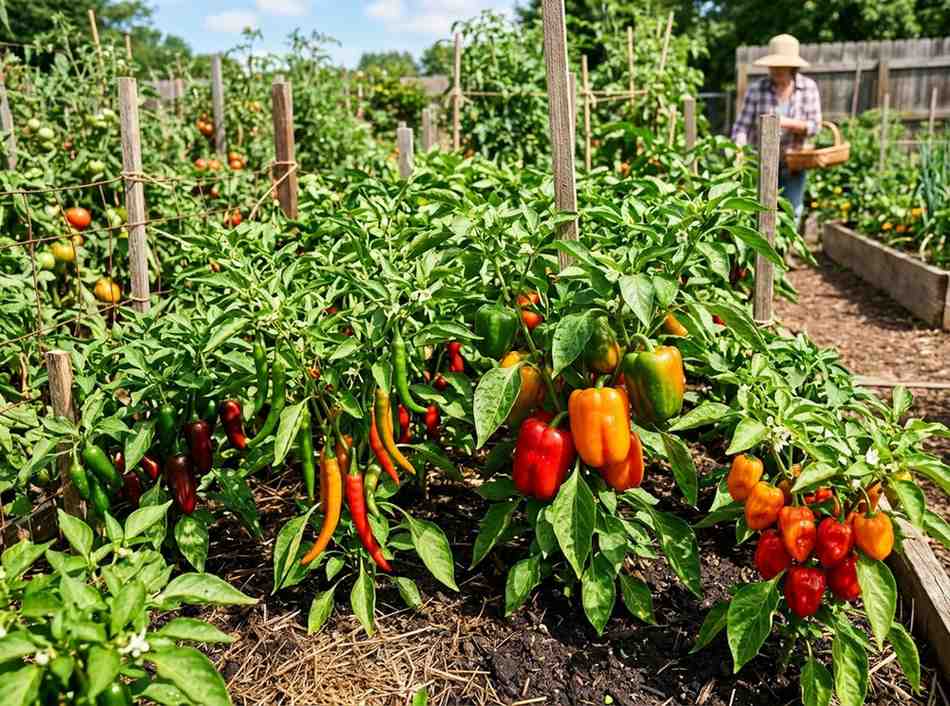
But with hundreds of varieties available, it can be hard to decide which types to grow. Whether you want sweet peppers for salads or hot peppers for spicy dishes, understanding the different types is key. This guide helps you explore popular, practical, and lesser-known peppers, so you can select the best for your needs.
Peppers belong to the genus Capsicum. They are divided into two main groups: sweet peppers and hot peppers. The heat in peppers comes from a compound called capsaicin. Sweet peppers have little or no capsaicin, while hot peppers can range from mild to extremely spicy. Peppers also come in many colors, from green and red to yellow, orange, purple, and even brown.
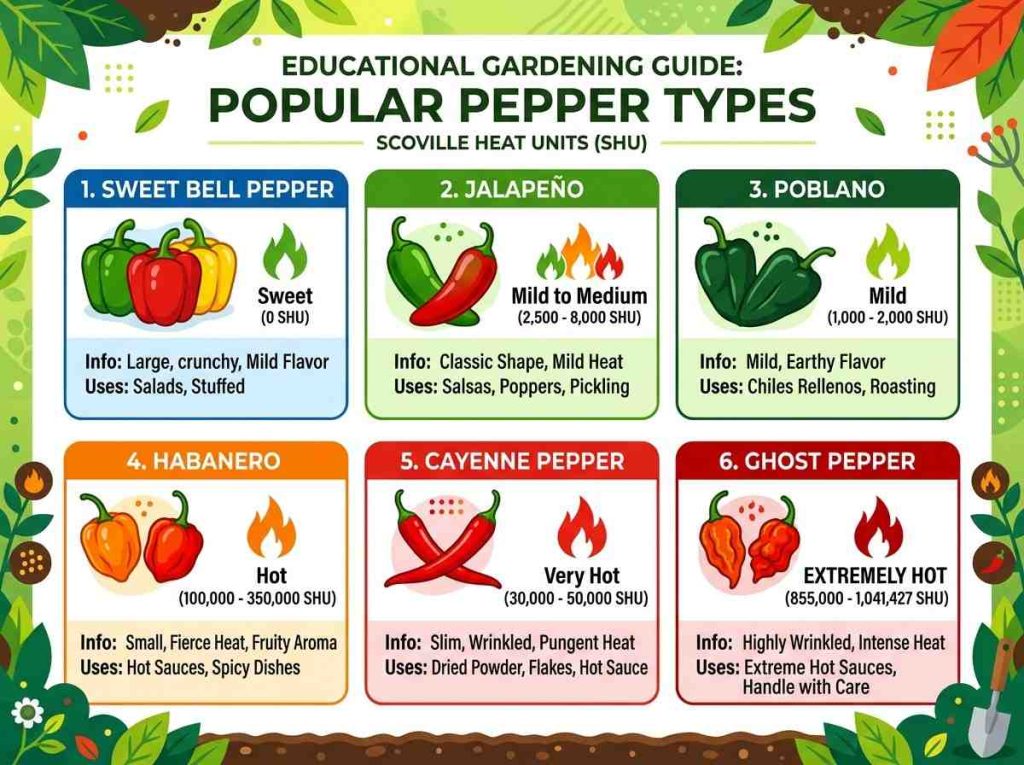
Heat in peppers is measured using the Scoville scale. For example, bell peppers rate at 0, meaning no heat. Jalapeños usually fall between 2,500–8,000 Scoville units, while the Carolina Reaper can reach over 2 million. Understanding the Scoville scale helps you choose peppers that match your tolerance for spice.
| Pepper Variety | Scoville Units | Flavor Profile |
|---|---|---|
| Bell Pepper | 0 | Sweet, mild |
| Jalapeño | 2,500–8,000 | Fresh, grassy, mild heat |
| Habanero | 100,000–350,000 | Fruity, intense heat |
| Carolina Reaper | 1,400,000–2,200,000 | Extreme, sweet, floral |
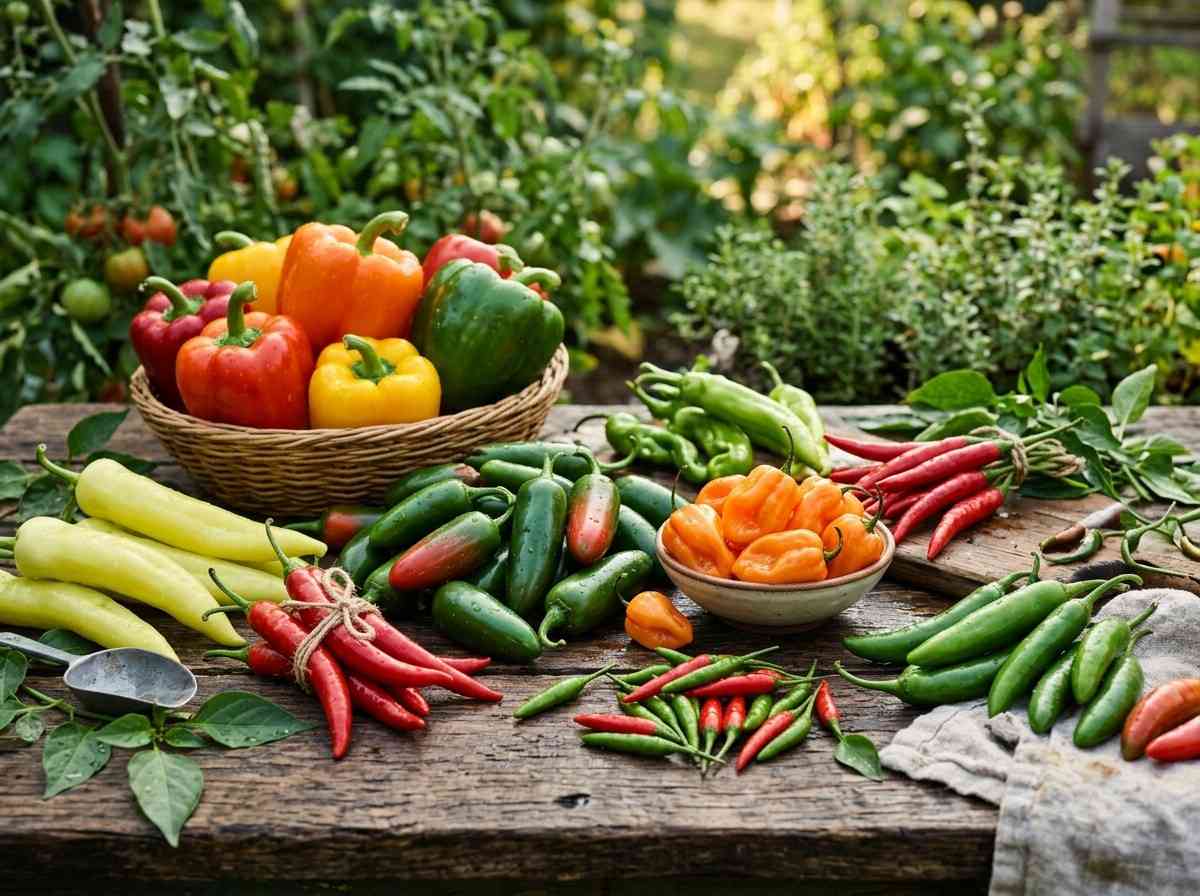
Sweet peppers are perfect for salads, grilling, and stuffing. They have little to no heat and are often used raw or cooked. Here are some common types:
The bell pepper is the most widely grown sweet pepper. It comes in green, red, yellow, orange, and even purple. Green bell peppers are less ripe and have a slightly bitter taste. As they ripen, they turn red or yellow and become sweeter. Bell peppers are low in calories, rich in vitamin C, and easy to grow.
Sweet banana peppers are long and yellow, turning red as they ripen. They are often used in salads, sandwiches, and pickles. Their mild flavor makes them popular for stuffing.
Pimento peppers are heart-shaped and bright red. They are used for making pimento cheese and as stuffing in olives. Their flavor is sweet and aromatic.
Cubanelle peppers are pale green and thin-skinned. They are popular in Italian and Caribbean cooking. Cubanelle peppers are mild, with a slight sweetness, and are excellent for frying.
Mini bell peppers come in various colors and are ideal for snacking. They have the same sweet flavor as larger bell peppers, but their small size makes them great for appetizers.
Hot peppers add spice and depth to dishes. Their heat varies greatly, so choose according to your taste and intended use.
The jalapeño is one of the most popular hot peppers. It is bright green when fresh and turns red as it ripens. Jalapeños are used in salsa, nachos, and poppers. They offer a moderate heat and are suitable for many recipes.
Serrano peppers are hotter than jalapeños, with a crisp flavor. They are used in Mexican cuisine, especially in fresh salsa. Serranos are small and slender, usually green or red.
Cayenne peppers are long, thin, and bright red. They are often dried and ground into powder. Cayenne adds strong heat to dishes and is used in spice blends and hot sauces.
Habanero peppers are among the hottest commonly grown varieties. They are small, lantern-shaped, and come in orange, red, or brown. Habaneros have a fruity flavor and intense heat. They are used in Caribbean and Latin American dishes.
Thai chili peppers are small and very hot. They are used in Asian cuisine, especially Thai food. Their heat is intense, but their flavor is sharp and fresh.
The Carolina Reaper holds the record as the world’s hottest pepper. It is red, wrinkled, and small. The heat is extreme, but it also has a sweet, floral taste. Use with caution, especially if you are not used to very spicy foods.
Anaheim peppers are mild and large. They are used in Southwestern dishes and can be roasted or stuffed. Their heat is gentle, making them suitable for people who prefer less spice.
Some peppers are grown for unique flavors, colors, or cultural significance. These varieties can add interest and diversity to your garden.
Shishito peppers are small, wrinkled, and usually mild. Occasionally, one will be spicy. They are popular in Japanese cuisine and are often served blistered as an appetizer.
Padron peppers are grown in Spain and are mostly mild, but some can be unexpectedly hot. They are often sautéed in olive oil and sprinkled with salt.
Poblano peppers are dark green and large. They are used in Mexican dishes like chile relleno. When dried, poblanos become ancho peppers, which are used in mole sauce.
The ghost pepper is famous for its intense heat. It originated in India and was once the world’s hottest pepper. Ghost peppers are used sparingly in spicy dishes and sauces.
Hungarian wax peppers are yellow and mildly hot. They are often used for pickling, stuffing, or frying.
Picking the right pepper varieties depends on your climate, cooking preferences, and space. Here are some factors to consider:
| Variety | Maturity (Days) | Plant Size | Yield Potential |
|---|---|---|---|
| Bell Pepper | 70–90 | Medium | High |
| Jalapeño | 60–80 | Medium | High |
| Habanero | 90–110 | Large | Medium |
| Shishito | 60–70 | Small | Medium |
To grow healthy peppers, you need to follow some basic steps. These apply to most types, but always check the requirements for your chosen variety.
Even experienced gardeners make mistakes with peppers. Here are some issues to avoid:
For those looking to try something new, here are some standout peppers:
| Variety | Color | Heat Level | Best Use |
|---|---|---|---|
| Purple Beauty | Purple | None | Salads, grilling |
| Aji Amarillo | Yellow | Medium | Peruvian cuisine |
| Trinidad Scorpion | Red | Extreme | Hot sauces |
| Fish Pepper | Striped | Medium | Seafood dishes |
If you are new to pepper growing, start with easy varieties like bell pepper, jalapeño, or banana pepper. These types are forgiving and produce well in most climates. Avoid extreme hot peppers until you are comfortable with growing and handling spicy fruit.
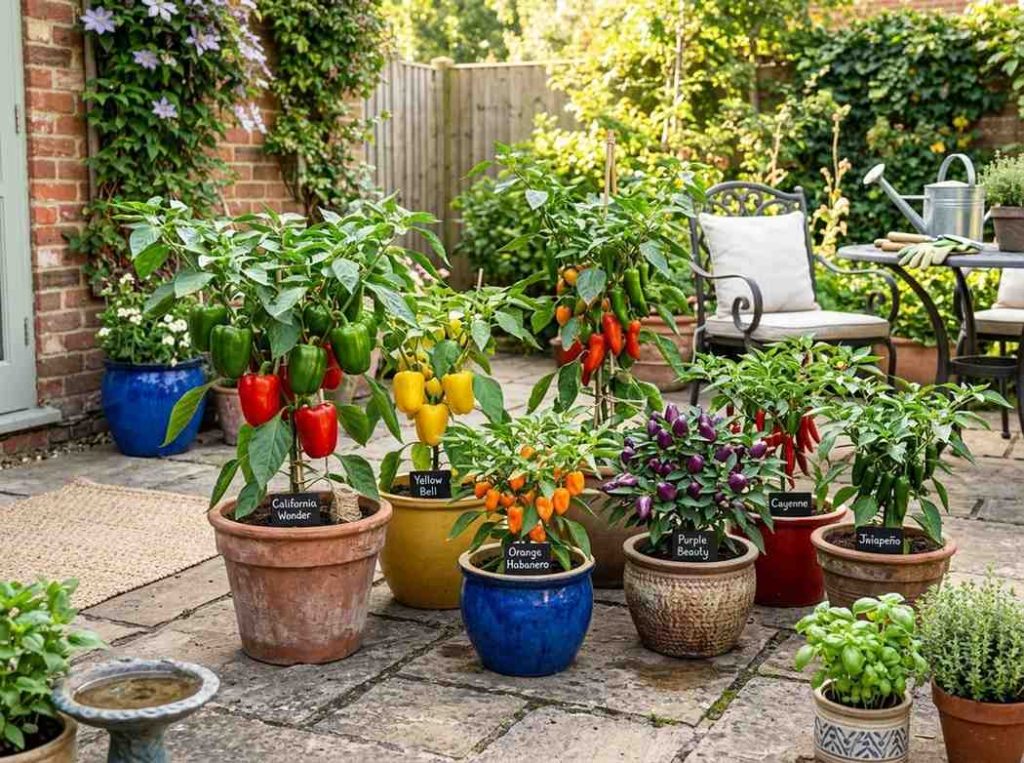
For experienced gardeners, experiment with rare or specialty peppers. Try growing in containers, using drip irrigation, or creating custom soil mixes. Save seeds from your best plants for next year. Consider using shade cloth in extreme heat or row covers to protect from pests.
Pepper seeds are available at garden centers, online stores, and seed exchanges. Look for varieties suited to your region and check reviews for reliability. For rare types, try specialty seed catalogs or local gardening clubs.
For more information on pepper varieties and growing advice, visit the Wikipedia Capsicum page.
Bell pepper and banana pepper are among the easiest. They tolerate a range of conditions, produce well, and are not very sensitive to pests.
Peppers are ready when they reach their full color and size. Bell peppers can be picked green or left to ripen to red or yellow. Hot peppers are usually harvested when fully colored.
Yes, you can grow both types in the same garden. Just keep in mind that cross-pollination may affect seeds for future planting, but not the fruit in the current season.
Peppers need time and warm temperatures to ripen fully. Stress, lack of nutrients, or cool weather can slow color change. Some varieties stay green or yellow.
Peppers can be stored in the fridge for up to two weeks. For longer storage, try drying, freezing, or pickling. Hot peppers are often dried and ground into powder.
Growing peppers opens up a world of flavors and possibilities. With so many types to choose from, you can find varieties that suit your climate, cooking style, and taste preferences. Experiment with both sweet and hot peppers for a diverse harvest.
Remember, the right care and selection will lead to a rewarding pepper-growing experience. Whether you are a beginner or an experienced gardener, peppers are a colorful and useful addition to any garden.