Gardening Made Simple.
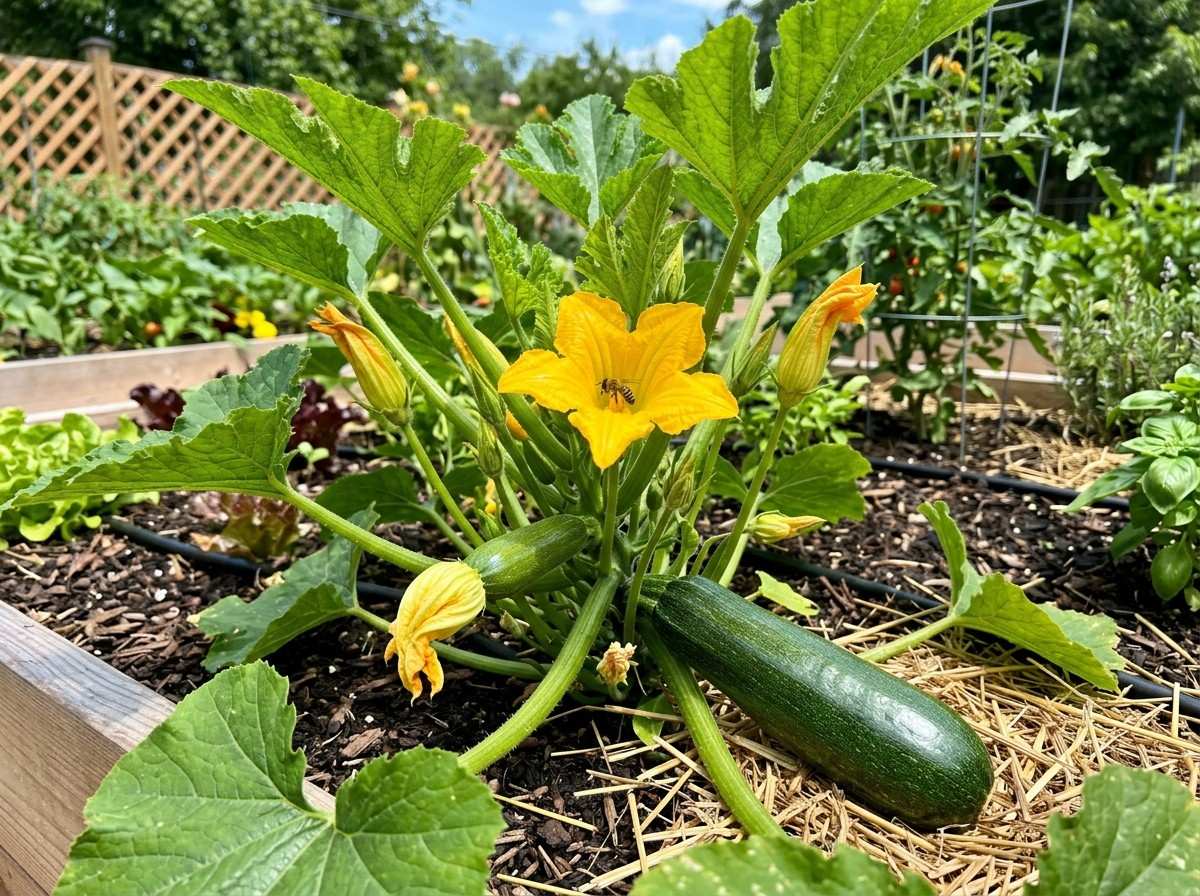
Growing squash in your garden can be an exciting journey, especially if you want to enjoy fresh vegetables at home. One of the most common questions for new and experienced gardeners is: How long does it take for a squash to grow? The answer depends on several factors, such as the type of squash, your local climate, and your gardening methods.
This article will walk you through everything you need to know about squash growth timelines, what affects their development, how to optimize your harvest, and some practical tips to avoid common mistakes. Whether you are planting for the first time or looking to improve your results, you’ll find clear and useful guidance here.
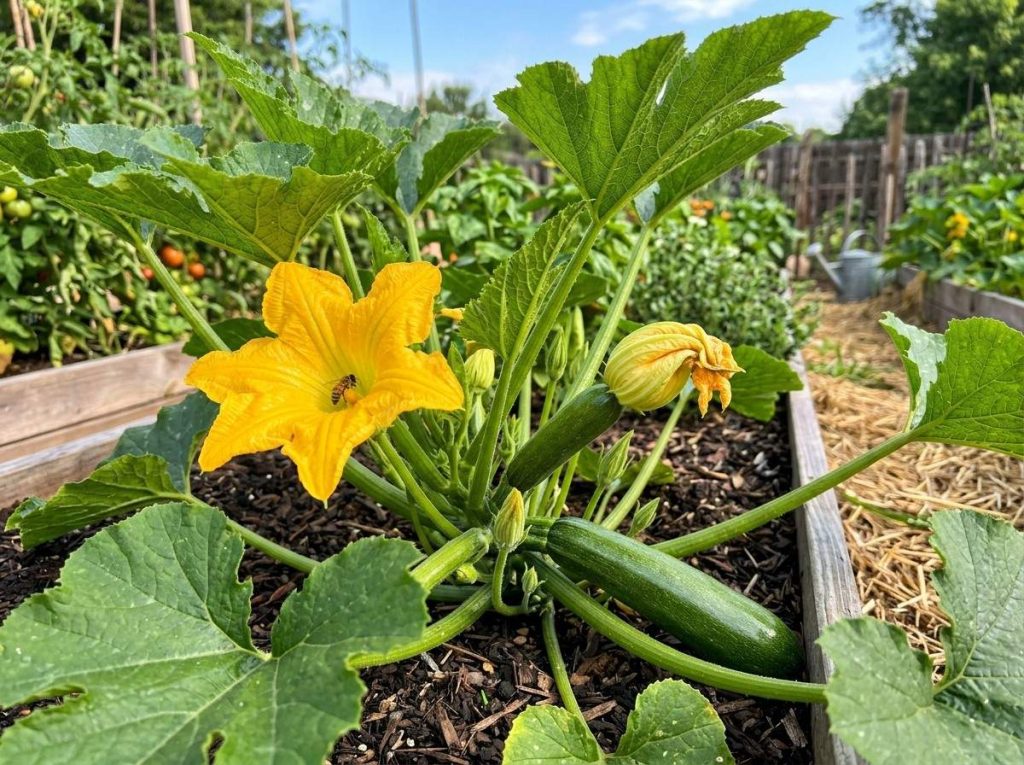
Squash comes in many varieties, and each has its unique growth cycle. The main groups are summer squash and winter squash. Knowing the difference is essential for predicting how long your squash will take to mature.
Summer squash includes types like zucchini, yellow crookneck, and pattypan. These are usually harvested while the skin is still tender. The time from planting seeds to harvest is typically 40 to 60 days. Summer squash grows quickly, making it a popular choice for gardeners wanting a fast reward.
Winter squash varieties include butternut, acorn, spaghetti squash, and pumpkins. They have a longer growth period, ranging from 70 to 120 days. Winter squash needs more time because the fruit is harvested when fully mature and the skin is hard. These types store well and can last for months if kept in a cool, dry place.
Here’s a side-by-side look at how long some common squash types take to reach harvest:
| Squash Variety | Type | Days to Harvest |
|---|---|---|
| Zucchini | Summer | 40-55 |
| Yellow Crookneck | Summer | 50-60 |
| Pattypan | Summer | 45-55 |
| Butternut | Winter | 80-110 |
| Acorn | Winter | 75-90 |
| Spaghetti | Winter | 90-100 |
| Pumpkin (Jack O’Lantern) | Winter | 90-120 |
This data helps you plan your garden and decide which squash suits your needs and local growing season.
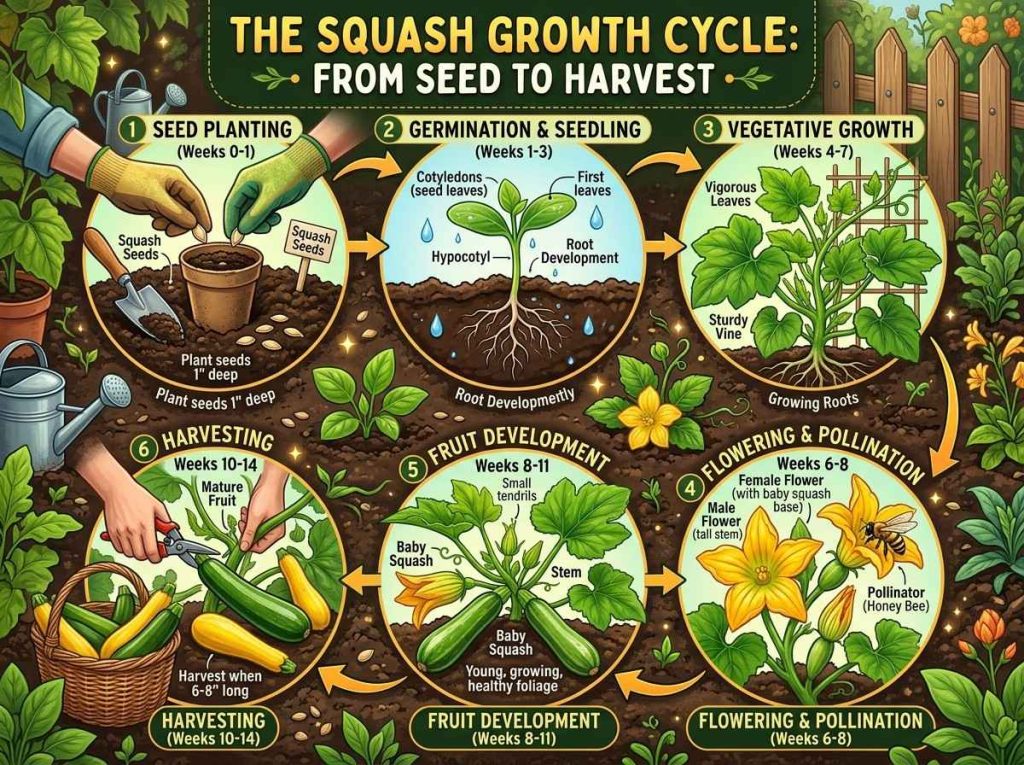
Understanding the main stages of squash growth gives you a clearer idea of how long the process takes and what to expect at each step.
Squash seeds usually germinate within 4 to 10 days after planting, if the soil is warm enough (above 60°F or 16°C). Cooler soil slows germination.
After sprouting, the seedling grows its first true leaves. During this period, the plant focuses on building roots and leaves.
In this stage, the squash plant rapidly produces leaves, stems, and sometimes vines. For bush types, the plant becomes fuller; for vine types, expect quick outward growth.
Squash plants produce both male and female flowers. Male flowers usually come first, followed by female flowers a week or two later. Pollination is crucial—without it, fruits won’t develop.
After successful pollination, tiny squash begin to form and grow quickly. For summer squash, fruits are ready within a week or two after flowering. Winter squash takes longer, with fruits maturing over several weeks.
Here’s a summary of the squash life cycle:
| Stage | Typical Duration | Key Events |
|---|---|---|
| Germination | 4-10 days | Seed sprouts into seedling |
| Seedling Growth | 10-20 days | First true leaves develop |
| Vegetative Growth | 20-40 days | Rapid leaf and stem growth |
| Flowering | From day 30 | Male, then female flowers appear |
| Fruit Development | 10-60+ days | Fruits grow and mature |
Keep in mind, these stages can overlap, and weather can make growth faster or slower.
While variety is a big factor, several other elements can change how long it takes for squash to grow.
Squash plants love warmth. For best results, soil should stay between 65°F and 85°F (18-29°C). Cold soil delays both germination and later growth. Hot weather above 95°F (35°C) can stress plants and slow fruiting.
Rich, loose soil with plenty of organic matter helps roots grow strong and access nutrients. Poor or compacted soil can cause slow, weak plants and delay harvest.
Consistent moisture is crucial. Squash needs about 1-1.5 inches of water per week. Uneven watering, either too dry or too wet, can stress plants and slow growth.
Full sun (at least 6-8 hours daily) is vital for fast, healthy growth. Shade leads to leggy plants and fewer, smaller fruits.
Squash is a heavy feeder. Balanced fertilizer helps plants develop quickly, especially during rapid growth and fruit set. Too much nitrogen, though, can cause lush leaves but fewer fruits.
Crowded plants compete for light, water, and nutrients, slowing them down. Proper spacing (usually 2-4 feet apart) encourages better air flow and faster growth.
Without good pollination, fruit won’t develop. Bees and other pollinators are crucial—if you see lots of flowers but little fruit, poor pollination could be the problem.
Squash bugs, vine borers, powdery mildew, and other problems can stunt growth or kill plants early. Early detection and action keep your timeline on track.
Some squash types have been bred for faster maturity, while others naturally take longer. Always check the seed packet for estimated days to harvest.
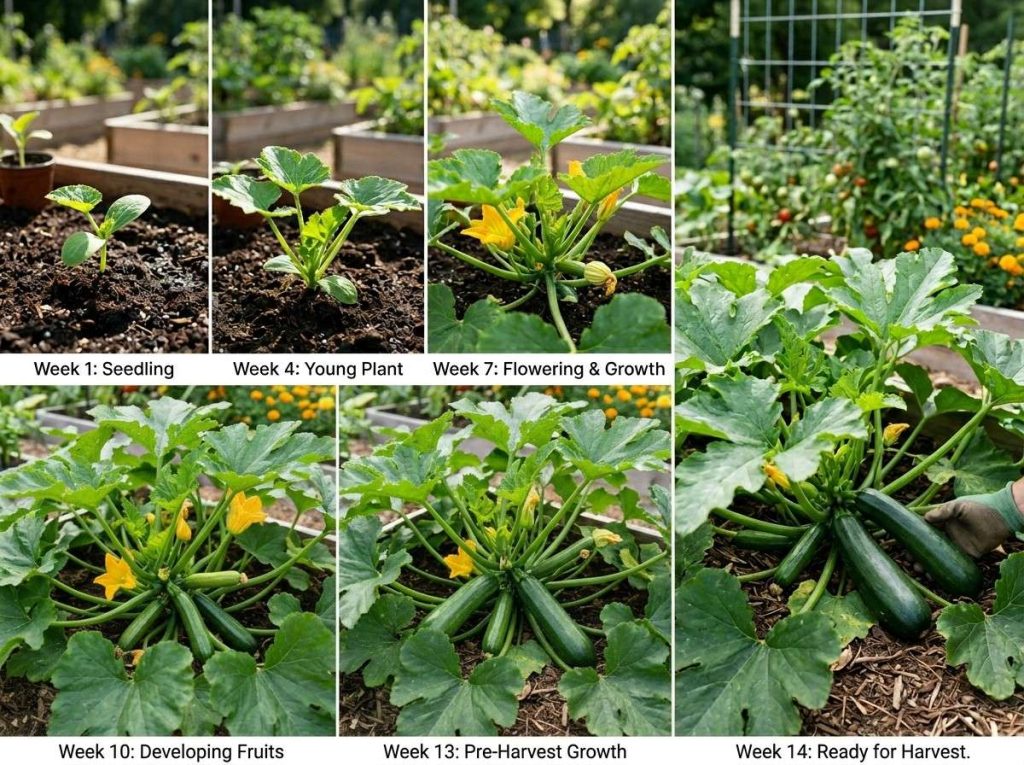
Let’s look at a practical example: zucchini, one of the fastest-growing squash.
This means you could have fresh zucchini about 6-7 weeks after planting. With regular harvesting, new fruits keep coming for weeks.
If you want a faster harvest, there are smart ways to speed up the process.
These steps can shave up to two weeks off your harvest time, especially in cooler climates.
Harvest timing depends on the type of squash:
Pick summer squash when fruits are small and tender. For zucchini, 6-8 inches long is ideal. Larger squash get tough and seedy. Check plants daily—fruits grow fast.
Wait until fruits are fully mature. The rind should be hard and deep in color. Stems often turn dry and corky. If you can’t dent the skin with your fingernail, it’s ready.
Many gardeners face slow or poor squash harvests. Here are some frequent mistakes and how to avoid them:
Paying attention to these details can help you avoid frustrating delays.
Squash is popular partly because it grows faster than many vegetables. Here’s how it compares to other common crops:
| Vegetable | Days to Harvest | Notes |
|---|---|---|
| Zucchini (Summer Squash) | 40-55 | Very fast; multiple harvests |
| Tomato | 60-85 | Longer for large varieties |
| Cucumber | 50-70 | Similar to squash |
| Carrot | 60-80 | Root size varies |
| Butternut (Winter Squash) | 80-110 | Needs full season |
| Pepper | 60-90 | Slow in cool weather |
| Green Bean | 50-60 | Quick harvest |
As you can see, summer squash is among the fastest vegetables you can grow, while winter squash is closer to tomatoes and peppers in timing.
To make the most of your garden, match your squash variety and growing method to your climate and goals.
Check your local last frost date and count backward from the squash’s days to maturity. This ensures you get a full crop before cold weather returns.
If your squash is growing much slower than expected, consider these possibilities:
Addressing the right problem early can save your harvest.
Summer squash is best eaten fresh but will keep in the refrigerator for up to a week. Don’t wash until ready to use. Winter squash stores for months in a cool, dry place. Cure them in the sun for 7-10 days after picking to harden skins.
Try roasting, steaming, or baking squash, or spiralize zucchini into “zoodles.” Winter squash makes great soups and pies. For more recipes and tips, see the Old Farmer’s Almanac.
For summer squash, fruits are usually ready 4 to 8 days after pollination. For winter squash, it takes much longer—30 to 60 days after flowering, depending on the variety.
Yes, you can grow certain squash types in large containers (at least 5 gallons). Bush varieties are best for containers. Use rich soil, keep well-watered, and give them plenty of sun.
This often means poor pollination. Squash plants produce male flowers first, then female flowers. If there are not enough bees, the female flowers may not be pollinated. Hand-pollination or attracting bees can help.
Plant squash after the last frost, when the soil is at least 60°F (16°C). In most places, this means late spring to early summer. Starting too early in cold soil leads to weak growth.
A ripe winter squash has a hard rind, deep color, and a dry, corky stem. You shouldn’t be able to dent the skin with your fingernail. Immature squash won’t store well or taste as good.
Growing squash can be deeply rewarding, offering both quick results with summer varieties and hearty, long-lasting food with winter types. By understanding the growth cycle, choosing the right variety, and caring for your plants wisely, you can enjoy a bountiful harvest and avoid common pitfalls.
With a little attention to detail and some patience, your garden will soon be full of delicious, homegrown squash.