Gardening Made Simple.
Spaghetti squash is a unique vegetable that surprises many gardeners and cooks. When cooked, its flesh turns into long, noodle-like strands. However, knowing When to Pick Spaghetti Squash is essential for the best flavor and texture. Harvest it too early, and the strands may be watery with a bland taste. Wait too long, and the squash can lose its sweetness or begin to deteriorate on the vine.
Understanding the signs of ripeness will help you enjoy a delicious and long-lasting harvest.Knowing the perfect time to pick spaghetti squash can make a big difference in your kitchen and your garden. This article breaks down the signs, tips, and tricks you need for a successful harvest.
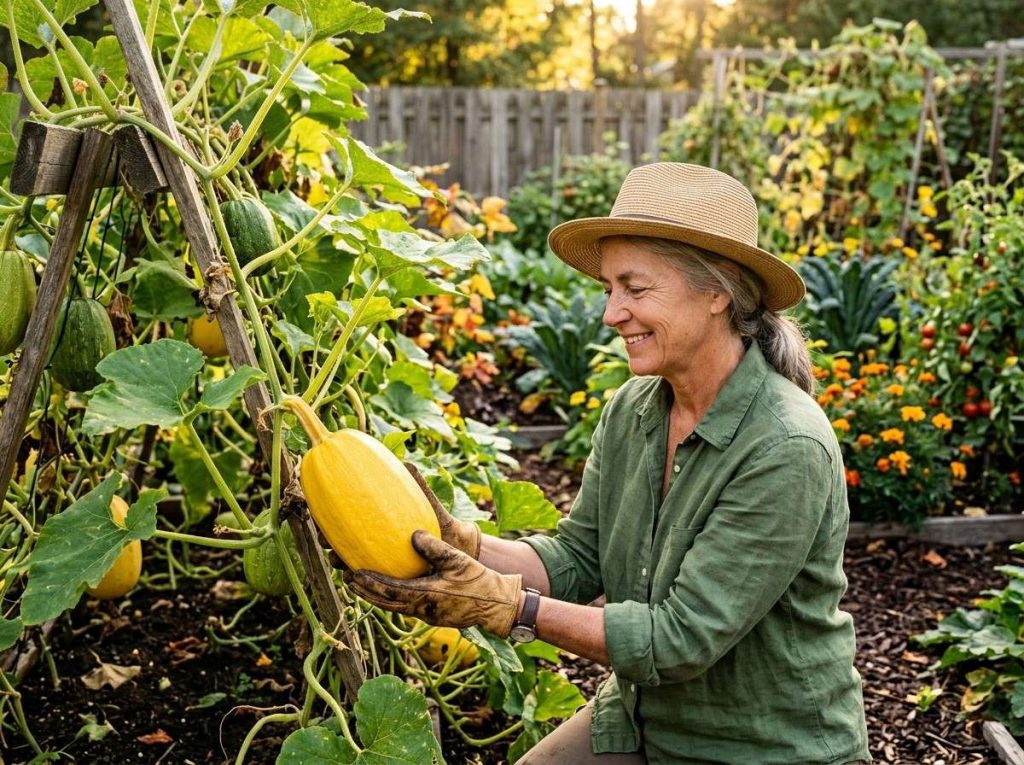
Spaghetti squash belongs to the Cucurbita pepo species, the same family as pumpkins and zucchinis. Its growing season usually stretches from late spring to early fall, depending on your climate. The plant has large leaves and long vines, with yellow flowers that turn into oval, yellow fruits.
The time from planting seeds to harvest is typically 90 to 110 days. But this range can vary with weather, soil, and the specific variety you plant. If you grow spaghetti squash for the first time, it’s easy to get confused about what “ripe” really looks like. The size, color, and feel of the squash are all clues, but not everyone knows how to read them.
Spaghetti squash goes through several stages:
Most mistakes happen during the last two stages. Gardeners may pick too early, thinking size equals ripeness, or wait too long and lose the crop to frost or rot.
Timing is everything when it comes to harvesting spaghetti squash. Look for these signs:
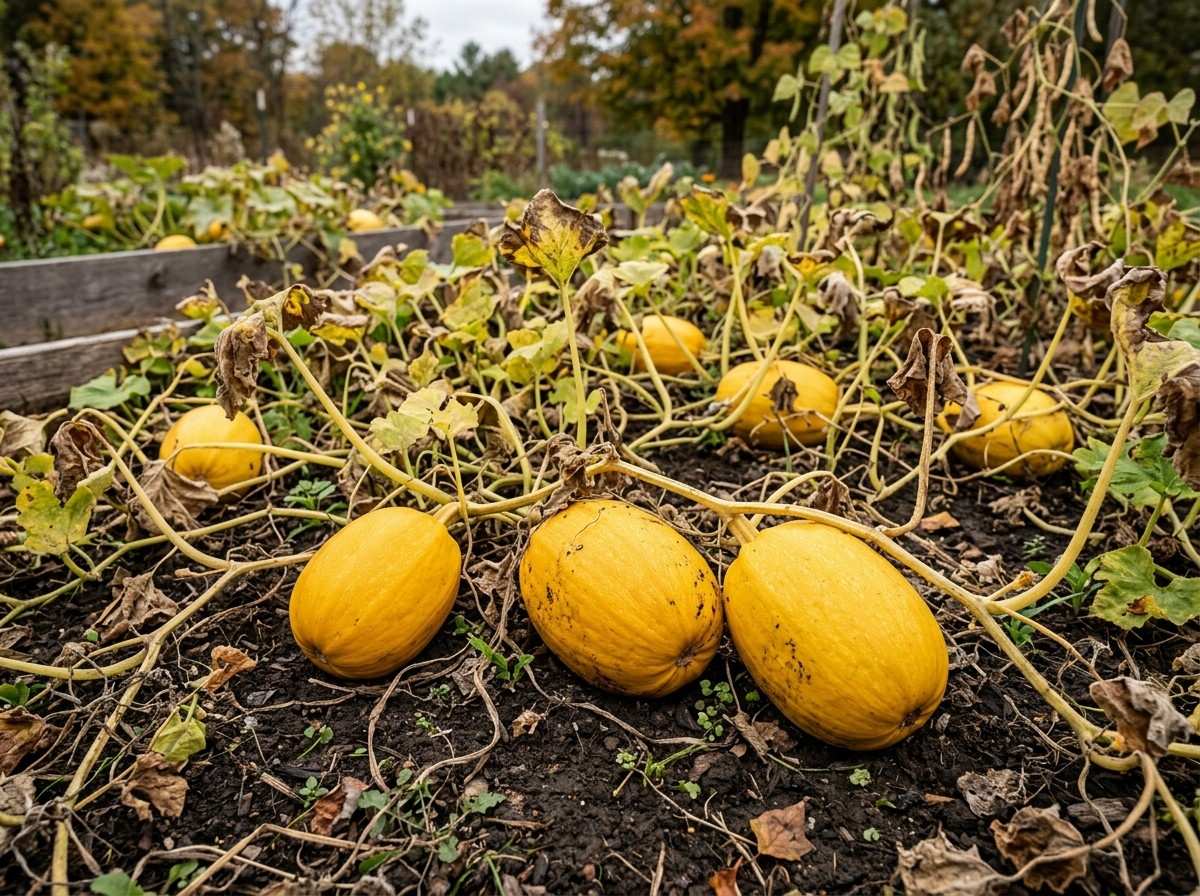
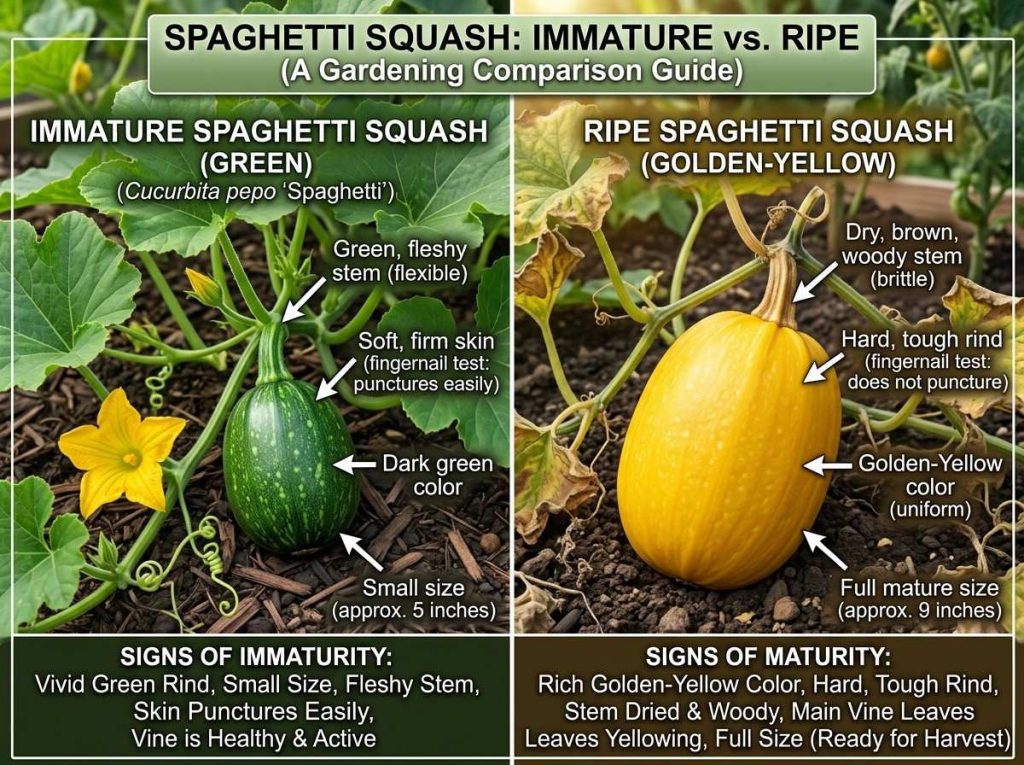
The biggest visual clue is the color. Immature squash are light green. As they ripen, they change to a rich, even golden yellow or pale yellow, depending on the variety.
Avoid picking squash that still has a green tint. The flavor and texture will be underdeveloped.
A ripe spaghetti squash has hard, tough skin. Try pressing your fingernail into the surface. If it resists and doesn’t dent easily, it’s likely ready. If your nail goes in or leaves a mark, give the squash more time.
Most varieties reach 8 to 14 inches in length and 4 to 6 inches wide. While size alone isn’t a guarantee of ripeness, a mature spaghetti squash should feel heavy for its size. Smaller fruits that have turned yellow may still be ready if they meet the other criteria.
The stem connecting the squash to the vine is a key detail. When the fruit ripens, the stem turns brown and dries out. If the stem is still green and flexible, the squash is probably not mature yet.
Look at the plant’s overall health. As the season ends, the leaves and vines often start to wither and die back. This is a natural sign that the squash is nearing maturity.
Check the seed packet for the “days to maturity” number. Count forward from your planting date. If you’re near or past that range and the other signs match, it’s time to harvest.
| Ripeness Indicator | Unripe | Ripe |
|---|---|---|
| Skin Color | Green or streaked | Solid yellow |
| Skin Texture | Soft, dents easily | Hard, resists fingernail |
| Stem | Green, flexible | Brown, dry |
| Vines | Green, vigorous | Withering, dying back |
Weather plays a major role in how your spaghetti squash develops. Some common factors include:
Spaghetti squash grows best in temperatures between 65°F and 85°F (18°C to 29°C). When fall arrives and temperatures drop below 50°F (10°C) at night, ripening slows down. If you expect frost, it’s better to harvest your squash, even if it’s not fully mature.
Too much rain near harvest time can lead to rot, especially if squash sits on wet soil. High humidity also increases the risk of fungal diseases. Use mulch or boards under the fruit to keep it dry.
Shorter days and less sunlight in late summer or fall will slow the ripening process. If your squash are still green as autumn approaches, they may not reach full maturity before the weather changes.
Not all spaghetti squash varieties ripen at the same rate. Some need only 80 days, while others can take up to 110 days. Check the specific variety you planted for the most accurate harvest window.
It’s common for gardeners to feel unsure, especially with their first spaghetti squash harvest. Try these hands-on techniques:
Press your thumbnail firmly into the squash’s skin. If it barely makes a mark or not at all, the squash is likely ripe. If it punctures the skin easily, wait a few more days and test again.
Pick up the squash. Ripe fruit will feel heavy and dense for its size. Immature squash feels lighter because it hasn’t developed all its flesh.
Gently tap the squash with your knuckles. A ripe squash sounds hollow rather than dull or soft.
If you have several plants, check a few squash at once. This helps you learn what ripe fruits look and feel like. It also helps you avoid picking everything too early or too late.
Timing mistakes can affect both taste and storage.
Imagine you’re harvesting in mid-October, but the weather report predicts frost. You see some squash are still a bit green but most are yellow and hard. In this case, it’s safer to pick all the mature ones and try to finish ripening the greener ones indoors.
Leaving them outside risks losing the whole crop.
Once you’re confident your spaghetti squash is ready, follow these steps for a safe harvest.
Proper curing and storage are essential for enjoying your harvest for months.
Curing is the process of drying the squash skin, which helps heal minor cuts and toughen the surface.
Once cured, spaghetti squash can last up to 3 months if stored properly.
| Condition | Expected Shelf Life | Notes |
|---|---|---|
| Uncured, Room Temp | 2-4 weeks | May rot quickly |
| Cured, Cool Storage | 2-3 months | Best for long term |
| Cut or Cooked | 3-5 days (fridge) | Wrap tightly |
Check your stored squash regularly. Discard any with soft spots, mold, or leaking liquid. Even one bad squash can spread rot to others.
Even with good intentions, mistakes happen. Here are some common errors and how to avoid them:
Sometimes you have to pick squash before it’s fully mature—usually because of weather. Here’s how to finish ripening indoors:
Note: Squash picked very green may not ripen well or taste as good. But if it was close to maturity, indoor ripening often works.
If you grow multiple types of squash, it’s easy to mix them up. Here’s what sets spaghetti squash apart:
| Type | Shape | Color When Ripe | Flesh Texture |
|---|---|---|---|
| Spaghetti Squash | Oblong | Pale to deep yellow | Stringy, noodle-like |
| Butternut Squash | Bell-shaped | Tan | Smooth, creamy |
| Acorn Squash | Round, ribbed | Dark green or orange | Firm, not stringy |
Many experienced gardeners use simple tricks to boost spaghetti squash quality:
A non-obvious insight: If you notice cracks in the skin but the squash is otherwise ripe, harvest it right away. Cracks are an entry point for rot, even if the fruit looks fine.
Another tip: If you have a lot of squash, don’t stack them in storage. Stacking increases the risk of bruising and mold.
Properly ripened spaghetti squash has the best texture and flavor. When you cook a ripe squash, the strands separate easily, and the taste is sweet and mild. Underripe squash turns mushy, and overripe squash can dry out or taste bland.
If you’re using the squash for a specific recipe, like a gluten-free pasta alternative, wait until it’s truly ripe for the best results.
Spaghetti squash is not just tasty—it’s nutritious and environmentally friendly. Each cup (155g) of cooked squash has:
Because it stores well, you can eat locally grown squash for months without needing imports. This reduces your carbon footprint and supports seasonal eating.
For more nutrition data, see the USDA’s information on spaghetti squash.
If you cure and store your squash in a cool, dry place, it can last 2 to 3 months. Check for soft spots or mold regularly. Cut or cooked squash should be refrigerated and used within 3 to 5 days.
Green squash are immature and usually don’t have good flavor or texture. However, if you must harvest them (due to frost), try ripening indoors. If the skin never hardens or turns yellow, it’s best to compost them.
Splitting often happens after heavy rain or overwatering. Harvest split squash right away and use them soon. Avoid storing, as splits invite mold and bacteria.
No, you don’t need to peel it. The skin becomes soft when baked, and you can scoop out the cooked flesh easily. Just cut the squash in half, remove seeds, and bake, roast, or microwave.
Signs include soft spots, leaking liquid, a sour smell, or mold. If you see or smell any of these, discard the squash to avoid illness.
Harvesting spaghetti squash at the right time is both art and science. By watching for changes in color, skin texture, and stem condition, you’ll enjoy the best possible taste, texture, and shelf life. With practice, picking at peak ripeness becomes second nature, making every homegrown meal a true pleasure.