Gardening Made Simple.
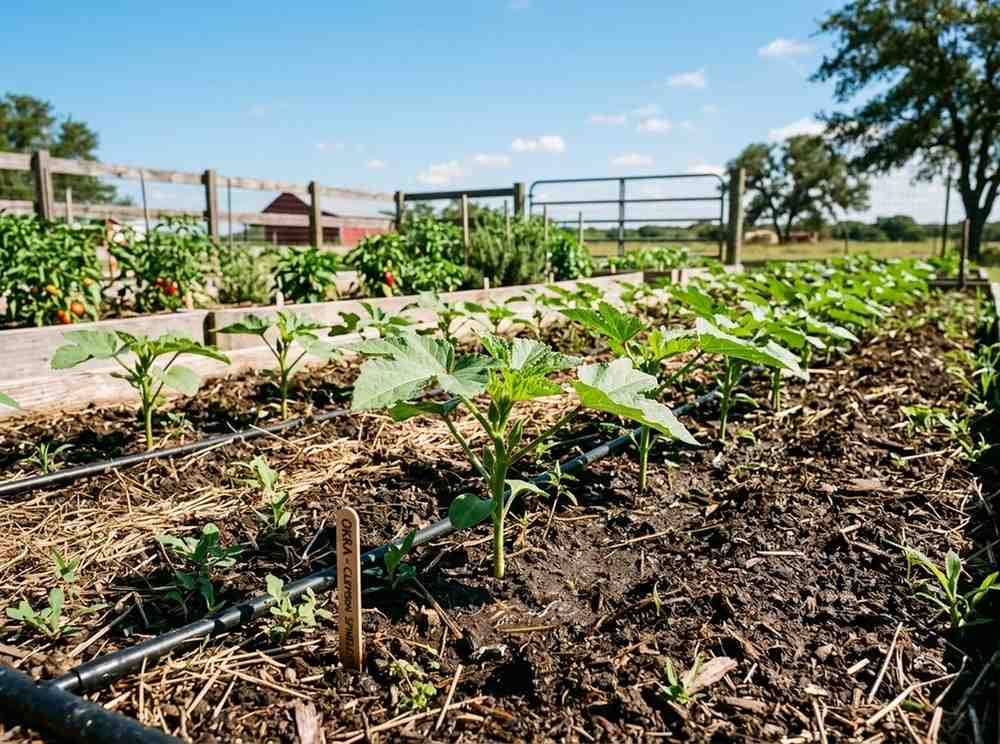
Growing okra in Texas can be both rewarding and simple—if you know when to plant. Okra, sometimes called “lady’s finger,” is a warm-season crop that thrives in hot climates. In Texas, the long, sunny days and high temperatures are perfect for this vegetable.
Knowing When to Plant Okra in Texas is the key to strong growth, healthy plants, and a productive harvest throughout the season.
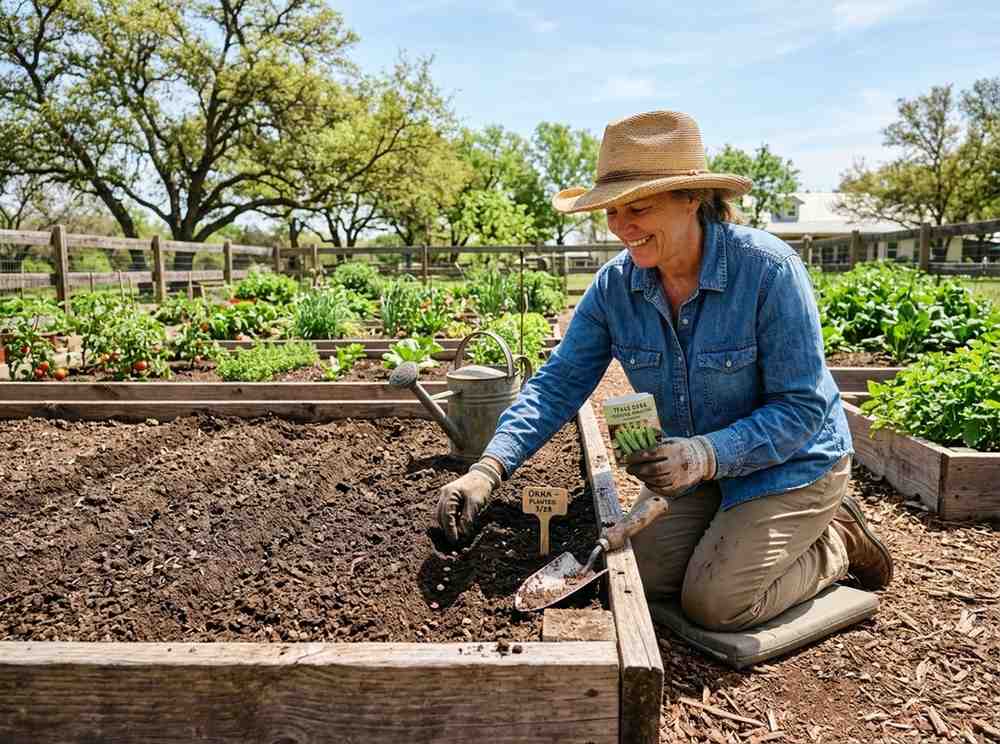
But timing is everything. If you plant too early, cold snaps can damage young seedlings. If you plant too late, the summer heat might stress your plants before they have a chance to produce pods. Knowing the best time to plant okra in Texas helps you get a healthy crop, save time, and avoid disappointment.
Okra is popular in Southern cooking, especially in gumbo and fried dishes. It’s also valued for its health benefits—okra is rich in vitamin C, fiber, and antioxidants. Whether you’re a home gardener or a small-scale farmer, understanding when to plant okra can mean the difference between a bountiful harvest and a poor yield.
This guide covers everything you need to know: climate factors, regional differences, planting methods, common mistakes, and how to get the best results in your Texas garden.
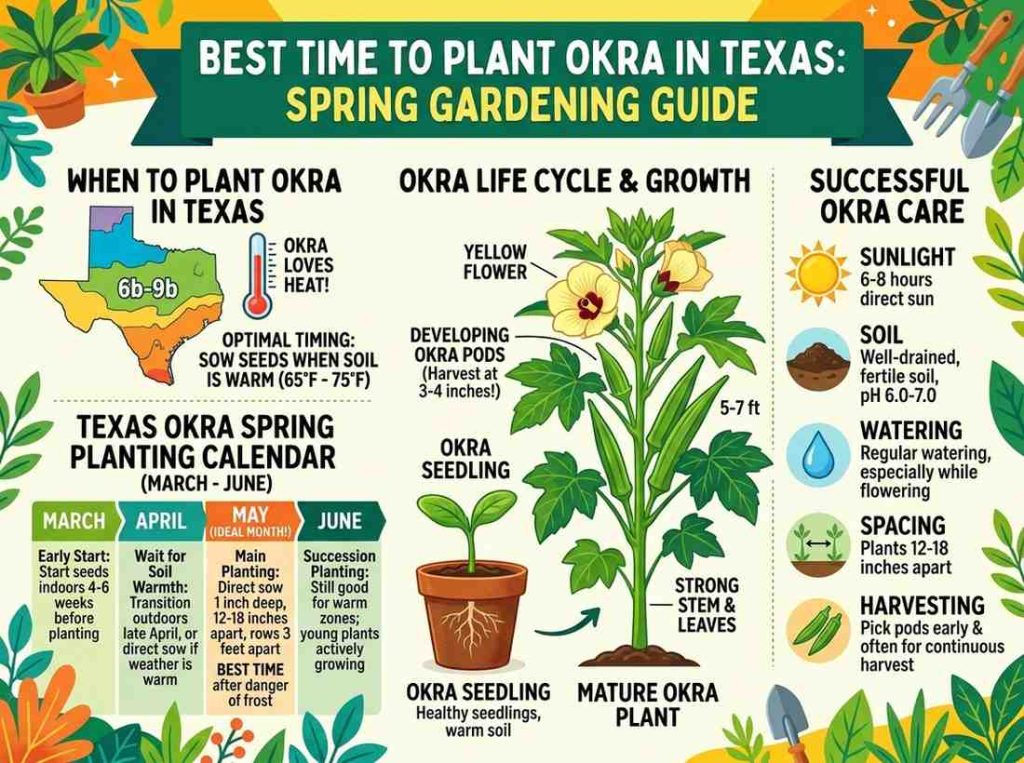
Okra is a heat-loving plant, which means it needs high temperatures to grow well. It does best in full sun and well-drained soil. The seeds germinate best when soil temperatures are between 70°F and 95°F (21°C to 35°C). If the soil is too cold, the seeds may rot or take too long to sprout. Okra plants also need enough space—usually 12 to 18 inches apart—so they don’t compete for nutrients.
A key detail many beginners miss is that okra’s growth slows down if the nights are too cool, even if daytime temperatures are high. This is important because Texas weather can have big temperature swings in spring.
Soil pH should be between 6.0 and 6.8. If your soil is too acidic or alkaline, okra won’t grow well. A simple soil test kit can help you check your garden’s pH. Okra also likes consistent moisture, but it won’t tolerate soggy ground. Overwatering can lead to root rot.
Texas is a large state with varied climates. The Gulf Coast is humid and warm, while the Panhandle can be cooler and drier. Central Texas has a mix of both. Because of this, planting times for okra can be different depending on where you live.
The main thing that affects okra planting time is the last spring frost date. Okra is very sensitive to frost. If a late frost hits your garden after you plant, it can kill young seedlings.
To make things clearer, here’s a look at the average last frost dates and suggested planting windows for major regions of Texas:
| Texas Region | Average Last Frost Date | Suggested Planting Window |
|---|---|---|
| North Texas (Dallas, Fort Worth) | March 20 – April 10 | April 10 – May 10 |
| Central Texas (Austin, Waco) | March 5 – March 25 | March 25 – April 25 |
| South Texas (San Antonio, Corpus Christi) | February 15 – March 10 | March 10 – April 10 |
| East Texas (Tyler, Houston) | March 1 – March 20 | March 20 – April 20 |
| West Texas (Lubbock, El Paso) | April 10 – April 30 | April 30 – May 20 |
As you can see, South Texas can start planting much earlier than North or West Texas. Always check your local frost date before planting.
The general rule for planting okra in Texas is: wait until all danger of frost has passed and soil temperatures are at least 65°F (18°C), preferably closer to 70°F (21°C). In most parts of Texas, this means planting from late March to early May. In South Texas, you may be able to plant as early as mid-March.
If you want a second crop, you can plant again in late June or early July. This is useful in regions with a long growing season, like South and Central Texas.
Most Texas gardeners plant okra directly from seed. Okra does not like having its roots disturbed, so transplants are less common. If you do start seeds indoors, use biodegradable pots so you can plant the whole pot in the ground.
Many people focus on air temperature, but soil temperature is what matters most for okra. A soil thermometer is cheap and gives a more accurate reading. Planting in cold soil slows germination and can lead to weak plants.
Most Texas gardeners plant okra in the spring, after the last frost. This gives a long season for the plants to grow and produce pods. However, in areas with long summers, you can also plant a second crop in early summer (late June or early July).
Planting in summer can help avoid some pests, but heat stress in July and August can make young plants struggle. If you plant in summer, water more often and use mulch to keep roots cool.
Here’s a side-by-side look at spring and summer planting:
| Factor | Spring Planting | Summer Planting |
|---|---|---|
| Yield | Usually higher | Lower if heat is extreme |
| Pest Pressure | More aphids and flea beetles | Fewer early pests, more spider mites |
| Soil Moisture | Better, more spring rain | Needs more irrigation |
| Growth Rate | Slower start, fast after temps rise | Very fast in hot soil |
Spring planting is best for most home gardens, especially for beginners.
Because Texas is so big, your exact location affects your okra planting schedule.
Winters are colder and last longer. Wait until at least mid-April to plant. Cold snaps are common in early spring, so don’t rush. Use row covers if a late freeze is in the forecast.
You can plant earlier, usually by late March or early April. Watch for heavy spring rains—well-drained beds or raised rows help.
Plant as early as mid-March. Okra loves the long, warm season here. Sometimes, you can even plant a fall crop in late August.
Humidity is higher, and spring comes early. Plant from late March to mid-April. Watch for fungal diseases—space plants well and avoid wetting the leaves.
Nights can stay cool into late April or May. Planting after May 1 is safest. Because it’s dry, water deeply and mulch well.
Not all okra varieties are the same. Some handle heat or drought better, while others are bred for disease resistance. Here are top choices for Texas gardens:
When choosing, look for disease resistance and maturity time. Early varieties are better for short seasons or late plantings.
Many gardeners make similar errors with okra. Avoid these pitfalls for a better harvest:
A non-obvious insight: okra seedlings are sensitive to soil crusting—hard, compacted soil after rain. This can trap seedlings below the surface. Use gentle watering and mulch to keep soil loose.
Once your okra is growing, these steps help you get more pods:
A second insight: in Texas, heat waves can slow pod production. If plants stop producing, cut them back to 12-18 inches tall and water well. They often grow new branches and start producing again.
Many Texas gardeners prefer organic methods. Okra grows well with minimal chemicals. Use compost and crop rotation to keep soil healthy. Avoid using the same spot for okra every year—rotate with beans, corn, or squash.
For pest control, attract beneficial insects like ladybugs and lacewings. Neem oil and insecticidal soaps are safe options for organic gardens.
Companion planting helps improve growth and reduce pests. Good companions for okra include:
Avoid planting okra near sweet potatoes, as they can compete for nutrients.
Even with good planning, problems can occur. Here’s a quick guide to common issues:
| Problem | Symptoms | Solution |
|---|---|---|
| Yellow leaves | Lower leaves turn yellow, drop off | Check for overwatering, add mulch, test soil nutrients |
| Stunted growth | Plants stay small, few pods | Check soil temperature, spacing, and sunlight |
| Pods are tough | Pods too large, hard to cut | Harvest at 2-4 inches, pick often |
| Aphids | Sticky leaves, curled new growth | Spray with water, use insecticidal soap |
| Root rot | Wilting, brown roots | Improve drainage, avoid overwatering |
Timing your harvest is as important as planting. Okra pods grow fast in Texas heat—sometimes doubling in size overnight. The best pods are 2 to 4 inches long and tender. If left longer, they become woody and inedible.
Check your plants every other day. Use a sharp knife or scissors to cut pods. Wear gloves if you’re sensitive—okra plants can be prickly.
After the first harvest, okra keeps producing as long as you pick pods regularly. Stop harvesting at the first fall frost.
If you want to grow okra again, you can save your own seeds. Leave a few pods on the plant until they are large, dry, and brown. Harvest and split them open to collect the seeds.
Store seeds in a cool, dry place in an envelope or glass jar. Mark the variety and year. Okra seeds stay good for up to 3 years.
For more detailed information, check with your local Texas A&M AgriLife Extension office. They offer region-specific advice and resources. You can also consult the Texas A&M AgriLife Extension online.
The earliest you can plant okra is after the last frost, when soil temperatures are above 65°F. In South Texas, this may be as early as mid-March. In North and West Texas, late April or early May is safer.
Yes, okra grows well in large containers (at least 5 gallons). Make sure the soil drains well and the container gets at least 6 hours of sun daily. Container soil warms up faster, so you may be able to plant a week earlier than in-ground.
Most okra varieties are ready to harvest 50 to 60 days after planting. Warmer soil and good care can speed up growth. Pick pods daily once they start to appear.
Common pests include aphids, stink bugs, flea beetles, and spider mites. Scout plants regularly and remove pests by hand or use safe sprays. Strong, healthy plants resist pests better.
Okra grows best when sown directly into warm garden soil. Transplants can work, but okra roots don’t like being disturbed. If starting indoors, use peat or paper pots and transplant gently.
Growing okra in Texas is easy when you plant at the right time. With warm soil, good planning, and a bit of care, you’ll enjoy a steady supply of fresh, tender pods all summer long.