Gardening Made Simple.
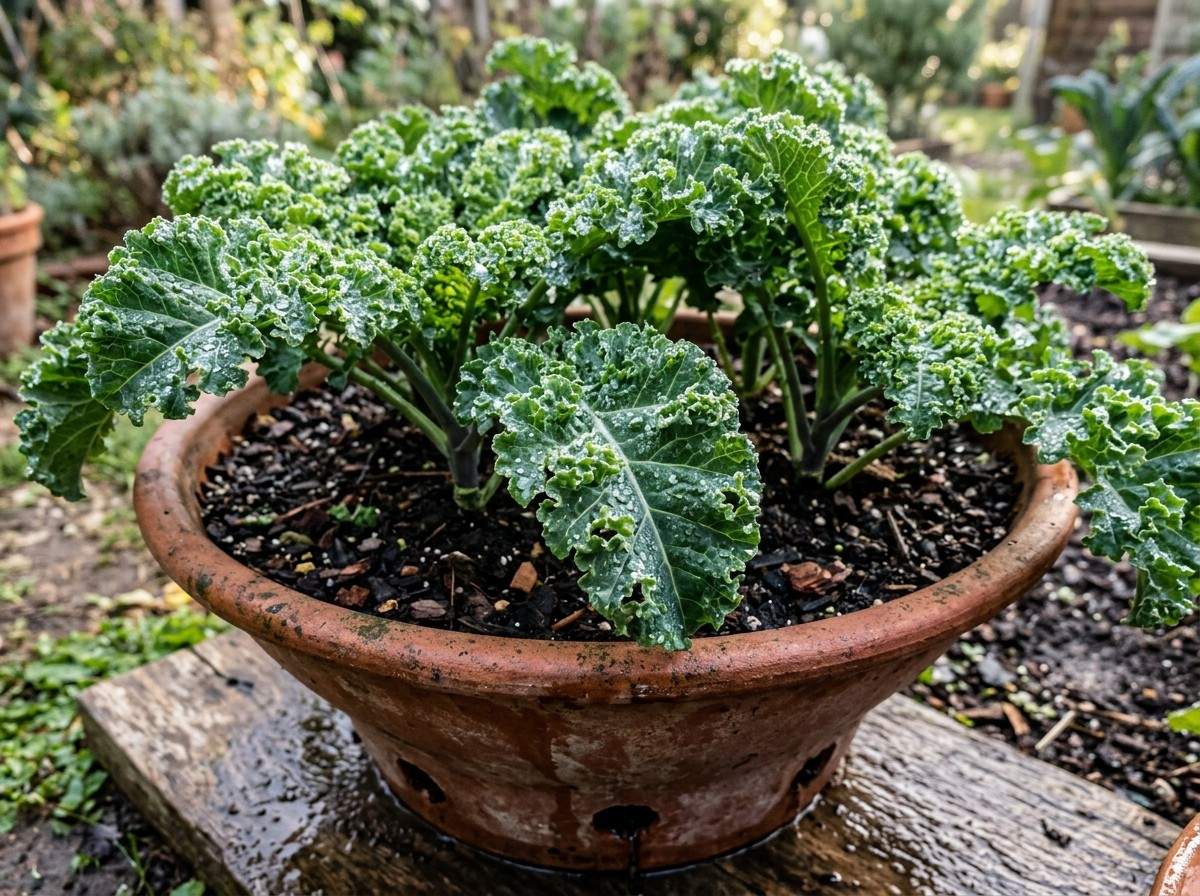
Kale has become a superstar in home gardens and kitchens. This leafy green is packed with vitamins, minerals, and fiber. You don’t need a big garden to grow it. Container gardening makes it possible for anyone—with a balcony, patio, or even a sunny window—to harvest fresh kale. Growing kale in containers is practical, rewarding, and surprisingly easy. This guide gives you everything you need to know to start, grow, and enjoy your own kale crop.
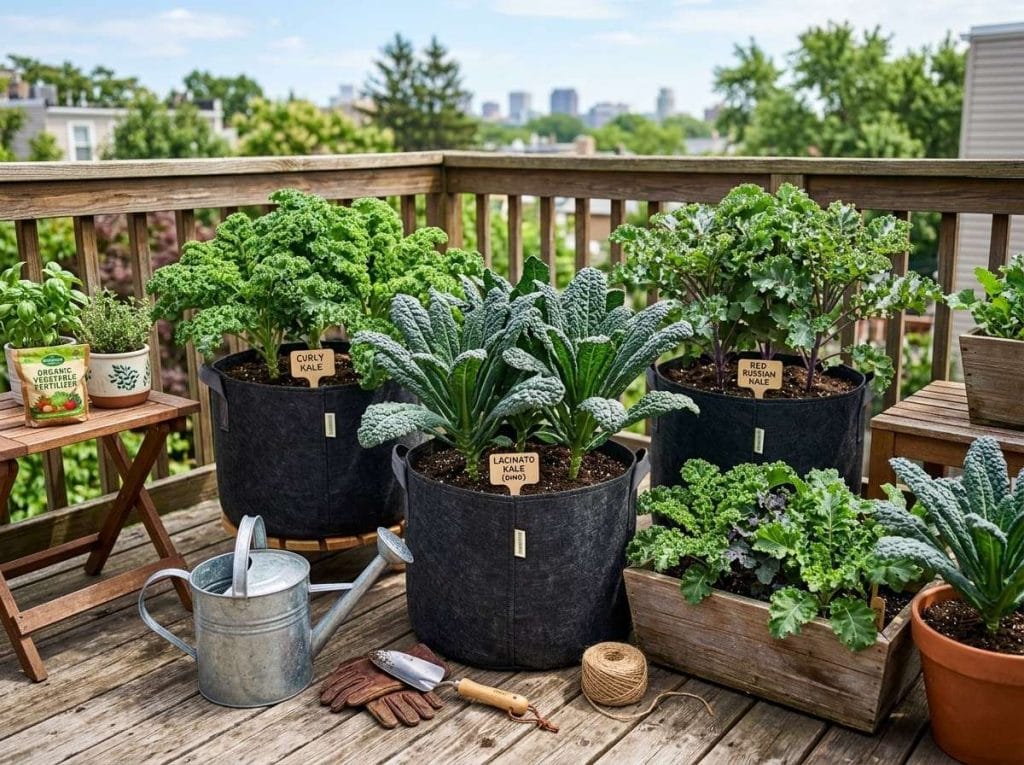
Kale is a tough plant, but it’s also sensitive to certain garden threats. Growing in containers solves many problems:
Container gardening is also less physically demanding. If bending or digging is hard for you, pots raised to table height make gardening more comfortable.
Not all containers are equal when it comes to growing kale. Here’s what matters most:
Kale roots need room to spread. For one plant, use a container that holds at least 3 gallons (12 liters) of soil. For multiple plants, a rectangular planter or larger pot works well.
| Container Size | Number of Kale Plants | Typical Yield (Leaves/Plant) |
|---|---|---|
| 3-5 gallons | 1 | 30-50 |
| 10 gallons | 2-3 | 40-60 |
| 15+ gallons | 3-5 | 50-80 |
You can use plastic, ceramic, wood, or metal containers. Plastic is lightweight and affordable. Ceramic looks good but is heavy. Wood is natural but may rot over time. Metal heats up quickly and can stress roots in hot weather.
Every container must have drainage holes. Kale hates soggy roots. If your pot doesn’t have holes, drill some yourself.
Kale needs a container at least 12 inches deep. Wide pots are better than tall, narrow ones because kale spreads outward.
Some kale types are better suited to containers than others. Here are the most popular choices:
If you want quick harvests, dwarf varieties are best. For flavor, try Lacinato. Mixing types in one container gives a colorful, tasty crop.
Kale thrives in rich, well-draining soil. Container soil dries out faster than garden beds, so it needs special care.
A simple recipe:
Kale likes soil with a pH of 6.0 to 7.5. Most potting mixes fall in this range, but test your soil if possible. Add a slow-release organic fertilizer for steady growth.
Kale can be grown from seeds or young plants (seedlings). Both methods work well in containers.
Starting from seeds is cheaper and gives you more variety. Seedlings are faster and avoid early pest problems.
Kale needs plenty of light. Without enough, it grows thin and weak.
If you live in a hot climate, give your containers morning sun and afternoon shade. Too much direct heat wilts kale.
If you grow kale indoors, place containers near a south-facing window. If sunlight is limited, use grow lights for 12–14 hours daily.
| Light Source | Recommended Hours/Day | Growth Quality |
|---|---|---|
| Direct sunlight | 6-8 | Excellent |
| Partial shade | 4-6 | Good |
| Grow lights | 12-14 | Very good |
Watering is more critical in containers than in the ground. Containers dry out faster, especially in hot weather.
In hot summer, you may need to water every day. In cooler weather, every 2–3 days is enough.
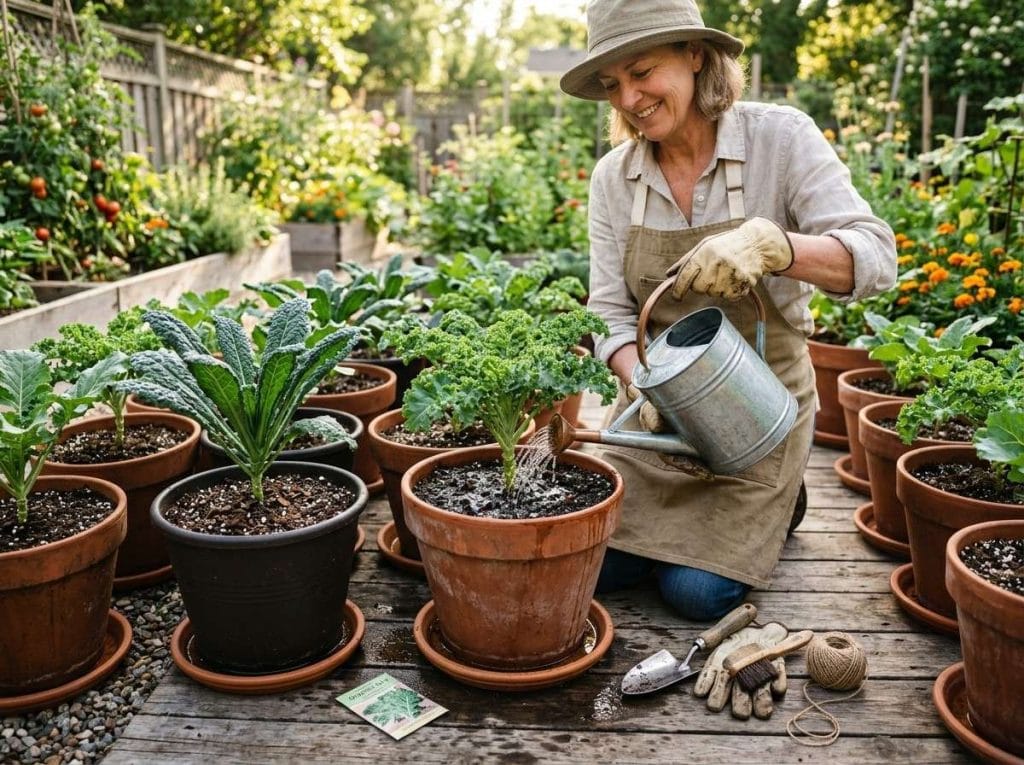
If your container sits in a saucer, empty it after watering. Standing water causes root rot.
Kale is a heavy feeder. Without enough nutrients, leaves turn yellow and growth slows.
Look for fertilizers with nitrogen, potassium, and phosphorus. Nitrogen makes leaves green and lush.
Don’t overdo fertilizer. Too much burns the roots and harms the plant.
Kale is famous for being cold-hardy. It grows best in cool weather (55–75°F/13–24°C). Heat makes leaves bitter.
Kale survives light frosts and tastes sweeter after cold. If a freeze is coming, cover your container with fabric or move it indoors.
In mild climates, you can grow kale almost all year. In hot or freezing places, use containers to start kale earlier or extend the season.
Even in containers, kale can attract pests and diseases. But you have better control than in a garden bed.
Avoid disease by not overcrowding, watering at the base, and using clean soil.
Kale in containers is less likely to get clubroot—a soil disease common in gardens. This is because you use fresh, disease-free potting mix.
You can start harvesting kale when leaves are about 6 inches long. Don’t wait for the plant to mature fully.
A single plant in a 5-gallon pot can produce 30–50 leaves over its lifetime. Dwarf varieties often produce more leaves but smaller in size.
Growing kale in containers is easier than in the ground, but there are some tricks:
Kale is tough, but you might face some challenges:
If your kale grows tall and thin, it’s not getting enough light. Move your container to a sunnier spot or use grow lights.
Usually caused by overwatering or poor nutrition. Let the soil dry out before watering again, and feed with balanced fertilizer.
Heat or drought stresses kale and makes leaves bitter. Harvest early in the morning and keep soil evenly moist.
If your kale isn’t growing well, check for pests, adjust watering, and add more fertilizer.
Growing kale in containers has many advantages. Here’s a quick comparison:
| Factor | Container | In-Ground |
|---|---|---|
| Space needed | Small | Large |
| Mobility | High | None |
| Pest control | Easier | Harder |
| Yield | Moderate | High |
| Season extension | Possible | Limited |
| Soil control | Complete | Partial |
Imagine you live in an apartment with a small balcony. You want to grow healthy kale. Here’s how you can do it:
Over a season, you can harvest fresh kale for salads, smoothies, and stir-fries. Even in limited space, you’ll have a steady supply.
Kale seeds sprout in 7–14 days. You can start harvesting leaves in 6–8 weeks. If you use seedlings, you can harvest sooner—sometimes in just 4 weeks. Kale continues to produce leaves for 3–5 months if cared for properly.
Yes, kale grows well indoors. Use a south-facing window or grow lights to provide enough light. Indoor kale is less likely to face pests, but you must monitor soil moisture and nutrition carefully.
It depends on container size. In a 3–5 gallon pot, grow one plant. In a 10-gallon pot, grow two or three. Overcrowding reduces yield and increases disease risk. Always leave at least 8 inches between plants.
Organic slow-release fertilizer is ideal. Look for products with nitrogen, potassium, and phosphorus. Liquid fertilizers and compost tea are also effective. Avoid high-nitrogen synthetic fertilizers—they can cause leaf burn.
Inspect your plants regularly. Remove pests by hand or spray with neem oil or insecticidal soap. Use row covers for extra protection. Starting with clean, quality potting mix reduces disease risk. Healthy, well-fed plants resist pests better.
Growing kale in containers lets you enjoy fresh, nutritious greens wherever you live. With the right soil, care, and attention, you’ll harvest leaves for months. Container gardening makes it easy for beginners and experts alike. For more details on container gardening, visit National Gardening Association. Now is the perfect time to start your own kale container garden—your health and taste buds will thank you.