Gardening Made Simple.
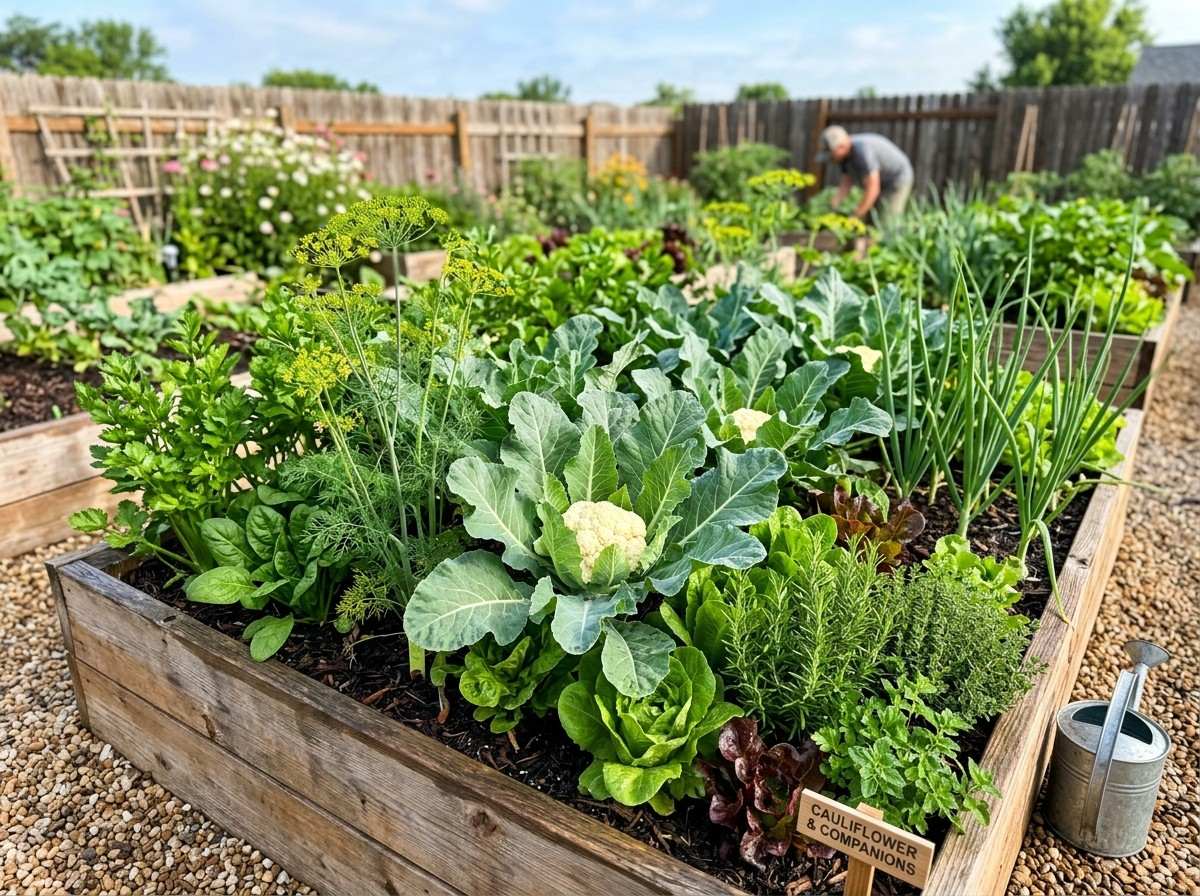
Growing cauliflower can be tricky, but what if you could make it easier and more successful just by planting the right friends nearby? Choosing the best companion plants for cauliflower can protect your crops, improve their growth, and even boost flavor.
If you want your cauliflower to thrive and avoid common problems, this guide is exactly what you need. Keep reading to discover which plants will work best alongside your cauliflower and how they can help you grow a healthier, more bountiful garden.
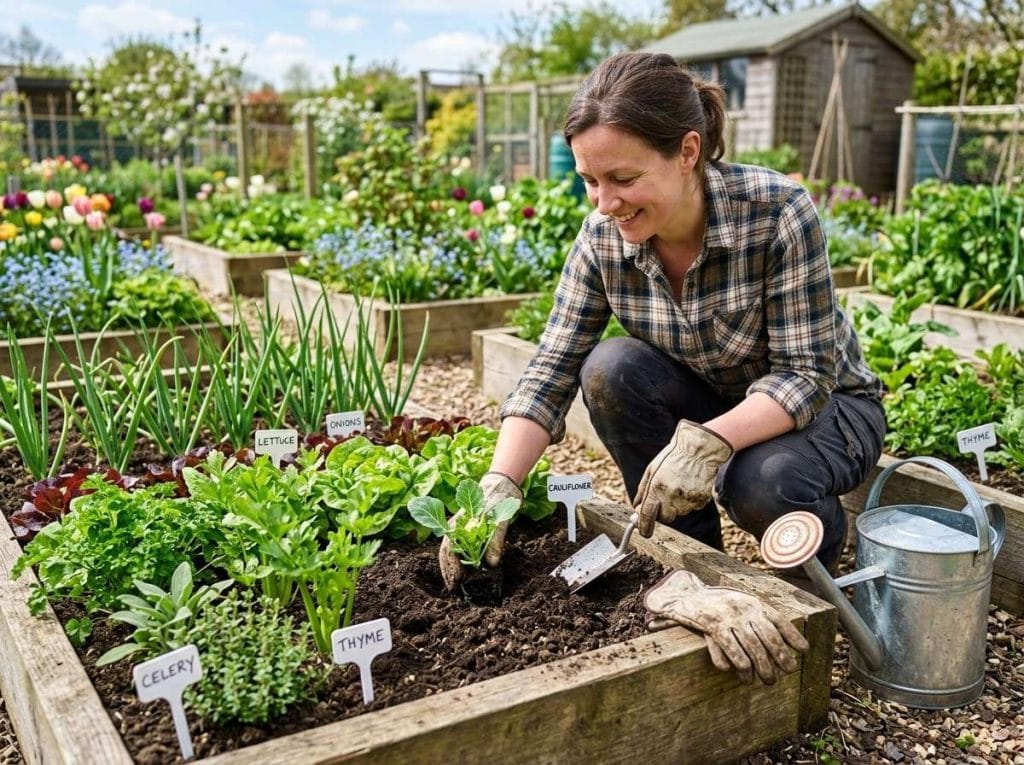
Choosing the right companion plants helps cauliflower grow healthy and strong. Good neighbors can improve soil, keep pests away, and boost flavor. Planting companions near cauliflower creates a balanced garden ecosystem. Each plant plays a special role to support cauliflower’s growth and health.
Herbs like dill, thyme, and sage grow well near cauliflower. They add mild flavors to the soil and air. This can make cauliflower taste better when harvested. Herbs also attract helpful insects that protect the garden from pests. Their strong scents confuse bugs that might harm cauliflower.
Beans and peas are excellent companions for cauliflower. They add nitrogen to the soil, which cauliflower needs to grow. Spinach and celery also grow well nearby without competing for nutrients. These vegetables help keep the soil healthy and loose. This improves water and air flow to cauliflower roots.
Marigolds and nasturtiums are top flowers to plant near cauliflower. They repel harmful insects like aphids and beetles. Bright colors attract beneficial bugs that eat pests. These flowers create a natural shield around cauliflower plants. They reduce the need for chemical sprays and keep the garden safe.
Choosing the right plants to grow near cauliflower is important. Some plants can harm cauliflower growth or attract pests. Avoiding these plants helps keep your cauliflower healthy and strong.
Certain vegetables compete with cauliflower for nutrients and space. Tomatoes, for example, take up a lot of nitrogen. This nutrient is essential for cauliflower development. Also, strawberries can stunt cauliflower growth. Avoid planting these vegetables close to cauliflower.
Beans and peas fix nitrogen in the soil. But they attract diseases that can harm cauliflower. Keep these legumes away from your cauliflower bed. Preventing competition and disease spread is key for a good harvest.
Some plants draw pests that damage cauliflower leaves and heads. Sunflowers attract aphids and caterpillars. These insects can destroy cauliflower crops quickly. Avoid planting sunflowers near your cauliflower.
Fennel is another plant to skip. It attracts carrot flies and other harmful bugs. These pests can weaken cauliflower plants. Keep fennel away to protect your vegetables.
Companion planting helps cauliflower grow better and stay healthy. It means planting certain plants near cauliflower to support each other. This method brings many benefits to your garden. It can protect cauliflower from pests, improve soil, and help plants absorb nutrients. These benefits make your garden more productive and natural.
Some plants keep pests away from cauliflower. For example, herbs like dill and rosemary repel harmful insects. These plants act as natural protectors. They reduce the need for chemical pesticides. This keeps your garden safer for you and the environment.
Certain companion plants add nutrients to the soil. Legumes like peas and beans fix nitrogen in the ground. This nutrient helps cauliflower grow strong and healthy. Other plants improve soil texture and moisture. Healthy soil supports better plant growth and yield.
Some companion plants help cauliflower get nutrients faster. Their roots grow differently and do not compete for the same space. This allows cauliflower roots to absorb more water and minerals. Plants like celery and spinach boost nutrient uptake. This leads to bigger and better cauliflower heads.
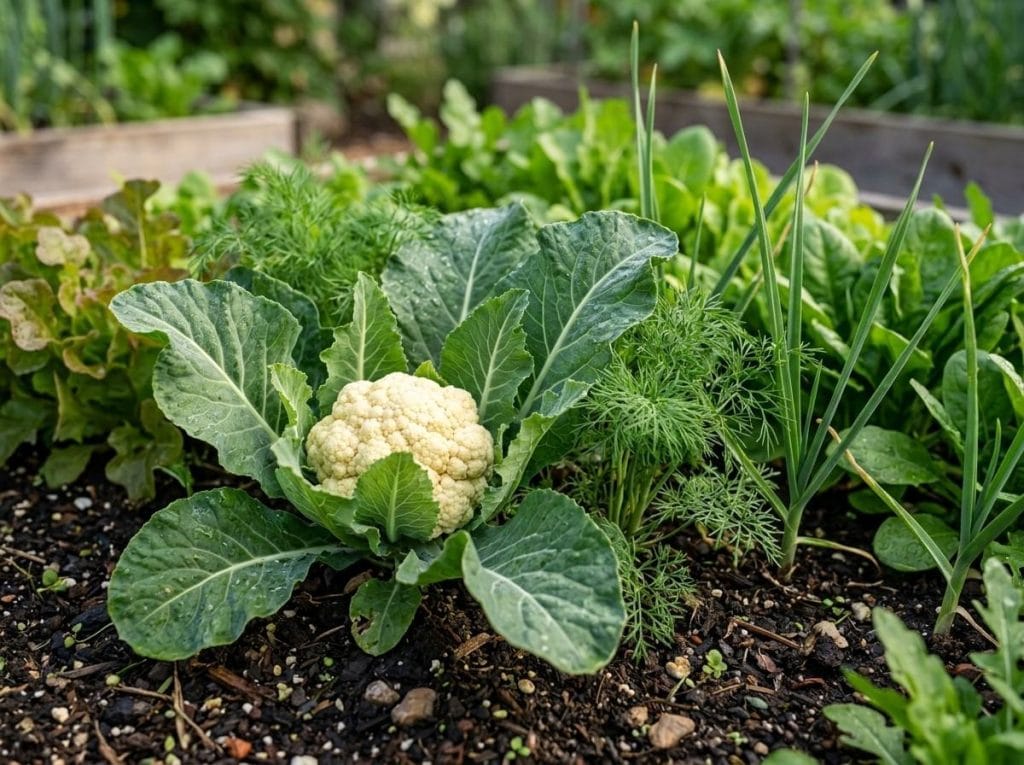
Planting companion plants with cauliflower improves growth and health. Proper tips help plants thrive together. Follow these simple steps for better results in your garden.
Give each plant enough space to grow. Cauliflower needs about 18 to 24 inches between plants. Companion plants like beans or herbs should not crowd cauliflower. Arrange taller plants where they won’t block sunlight. Keep good airflow to prevent disease. Proper spacing helps roots and leaves develop well.
Plant companions that match cauliflower’s growth time. Cauliflower grows slowly and likes cool weather. Choose plants that grow fast and finish early. This avoids competition for nutrients. Start some companions before cauliflower to prepare soil. Stagger planting to keep garden healthy all season.
Cauliflower needs moist, well-drained soil. Water plants evenly and deeply. Avoid wet leaves to stop fungus. Companion plants like herbs usually need less water. Group plants with similar watering needs together. Add compost to enrich soil and keep nutrients balanced.
Growing cauliflower can bring some challenges. Pests, diseases, and nutrient problems affect plant health. Knowing how to handle these issues helps your garden thrive. Companion plants play a key role in prevention and control. Use natural methods to keep cauliflower strong and healthy.
Cauliflower attracts pests like cabbage worms and aphids. Planting herbs like dill and rosemary nearby repels many bugs. Handpick pests when you see them early. Use insecticidal soap for heavy infestations. Keep the garden clean to reduce hiding spots for insects.
Diseases such as clubroot and downy mildew can harm cauliflower. Rotate crops each year to prevent soil diseases. Avoid planting cauliflower near other brassicas to reduce disease spread. Water at the base to keep leaves dry. Companion plants like marigolds can help reduce fungal problems.
Cauliflower needs rich, balanced soil to grow well. Yellow leaves may show nitrogen deficiency. Use compost or well-rotted manure to enrich soil naturally. Companion plants like beans add nitrogen to the soil. Test soil pH and adjust if it is too acidic or alkaline.
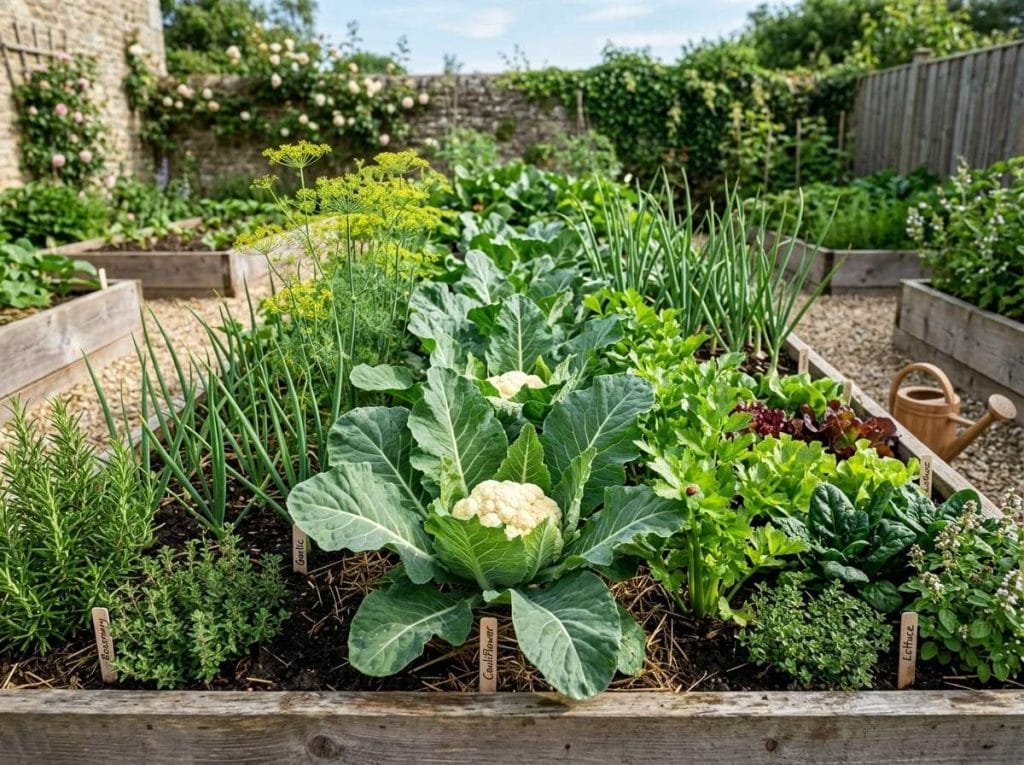
Plants like peas, spinach, and celery grow well near cauliflower and improve its growth.
They protect cauliflower from pests, improve soil health, and boost nutrient uptake.
Yes, plants like nasturtiums and dill repel harmful insects that attack cauliflower.
Herbs like rosemary, thyme, and dill support cauliflower by keeping bugs away.
Avoid planting strawberries and tomatoes nearby as they compete for nutrients with cauliflower.
Choosing the right companion plants helps cauliflower grow strong and healthy. These plants protect cauliflower from pests and improve soil nutrients. Planting herbs like dill or flowers like marigolds nearby can keep bugs away. Beans and peas add nitrogen to the soil, helping cauliflower thrive.
Use companion planting to create a balanced garden. It saves space and reduces the need for chemicals. Try different companions to see what works best in your garden. Healthy cauliflower leads to better harvests and tasty meals. Simple steps make a big difference in your garden’s success.