
Gardening Made Simple.
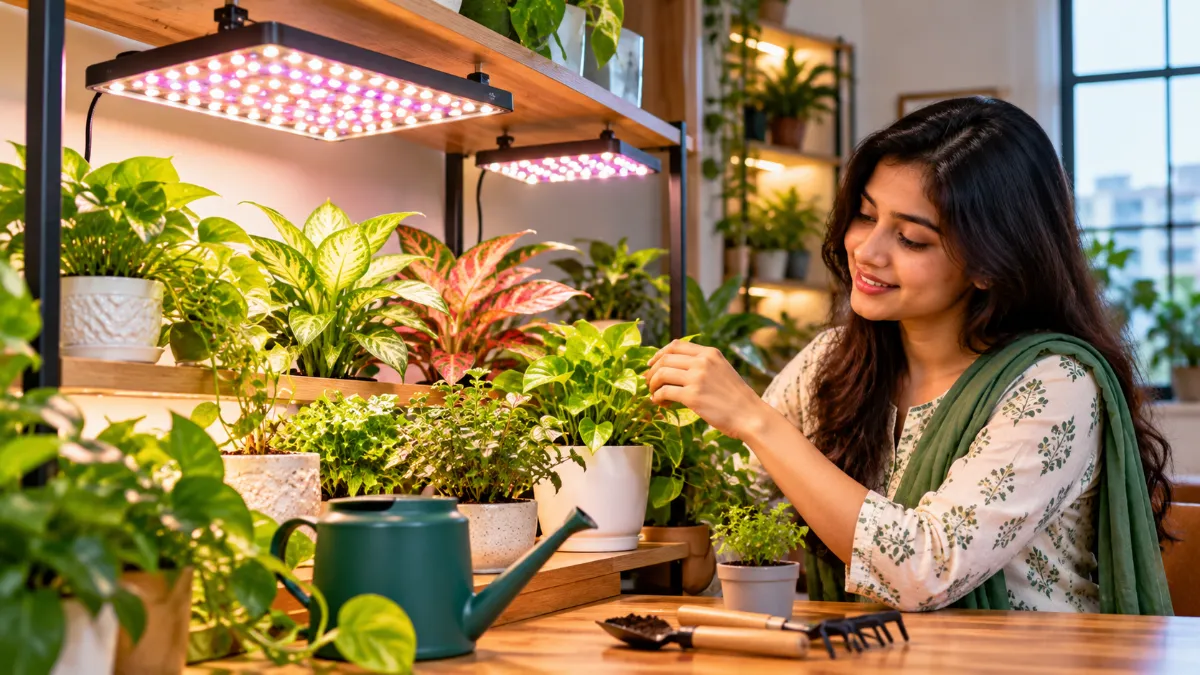
Best Grow Lights for Indoor Plants can make the difference between weak, stretched growth and healthy foliage when natural sunlight is limited. In 2026, the right choice depends less on appearance and more on plant size, mounting position, coverage, energy use and daily scheduling. For a single lamp, a clip-on model may be enough. However, larger collections often need a pendant, light strips or a high-output LED panel.
The six options below cover different indoor gardening needs, from countertop herbs to established plants in a small grow tent. However, prices are estimated ranges supplied for comparison and may change by retailer, availability and region.
For most indoor plant owners, the best grow light is the one that matches the growing area rather than the one with the highest advertised output. Soltech Aspect suits a polished overhead display, Mars Hydro TS1000 handles stronger multi-plant coverage and Leoter offers inexpensive flexibility for one or two small areas.
That distinction matters. For example, a powerful fixture placed too close can waste electricity or stress leaves, while a small bulb positioned over a large shelf may leave outer plants underlit. Therefore, choose by coverage first, then compare design, controls and price.
Read More: Best Vegetable Garden Soil
The table provides a fast starting point. However, the listed prices are approximate estimates, not fixed 2026 retail prices. AeroGarden Trio is included for countertop use even though the supplied comparison table focuses on five primary products.
| Product | Best Suited For | Key Feature | Estimated Price |
|---|---|---|---|
| Soltech Aspect Gen 2 | Overhead displays and large plants | Pendant design with a 10+ year lifespan | $160–$200 |
| Mars Hydro TS1000 | Full growth cycles and small tents | Approximately 150W high output with even spread | $60–$130 |
| Leoter 4-Head | Small spaces and clip-on use | Four gooseneck arms with timer and dimming | $21–$24 |
| Barrina T5 Strips | Shelves and propagation | Linkable LED light bars | Approximately $50 |
| GE LED Grow Light Bulb | Standard household lamps | Screw-in convenience | Approximately $20 |
| AeroGarden Trio Grow Light | Countertop herb and plant gardens | Compact app-controlled lighting setup | Approximately $91 |
Soltech Solutions Aspect Grow Light is the strongest design-led choice for medium-to-large overhead houseplant displays. In addition, its hanging pendant format keeps the fixture above the collection instead of taking space on a shelf or desk.
The standout detail is the advertised 10+ year lifespan. Therefore, the approximate $160–$200 price is easier to assess over a long-term indoor gardening plan, especially when the light is intended to remain part of a living-room display for many years.
Consider Soltech Aspect when appearance matters as much as plant support. For example, a pendant over a grouping of mature foliage can look intentional, whereas a clip-on lamp may feel temporary beside carefully arranged furniture.
Mars Hydro TS1000 LED Grow Light is the most suitable pick for established plants, multiple plants and small grow tents. It is a full-spectrum, high-output fixture that pulls approximately 150W and is designed to support growth from seedlings through full bloom.
Its broad use case is the key advantage. For instance, someone starting with seedlings can continue using the same fixture as plants become larger. As a result, that reduces the need to buy a second light when a small indoor setup becomes more ambitious.
The estimated $60–$130 range places Mars Hydro TS1000 between basic household bulbs and premium pendant fixtures. Therefore, it is a practical long-term option for growers who value plant coverage over decorative styling.
Leoter 4 Head Grow Light is the best clip-on value choice for desks, narrow shelves and small plant corners. Four adjustable gooseneck arms let the user aim light toward separate pots instead of illuminating only one fixed point.
The lamp combines red, blue and warm white full-spectrum LEDs. It also includes a built-in 3, 9 or 12-hour timer and 10 dimmable levels. Consequently, those controls are useful when plants sit at different distances from the fixture.
For example, a narrow kitchen shelf with four small pots can benefit from separate goosenecks. In contrast, a fixed bulb may brighten the center pot while leaving the outer plants noticeably darker.
Barrina T5 Grow Lights are the best light-strip option for multi-tier shelves, racks and seed-starting areas. Their linkable light-bar format is suited to long horizontal surfaces where several plants need similar coverage.
The approximate $50 price makes Barrina T5 a budget-friendly choice for expanding a shelf system. Instead of placing a separate lamp beside every tray, growers can position one strip beneath each level and create a more consistent layout.
That modular design is especially useful for long-term planning. For example, a beginner can start with one shelf, then add linked bars as the collection grows without changing the entire lighting approach.
GE LED Grow Light Bulb is the simplest solution when a standard household lamp is already available. The screw-in flood or spot-style bulb converts a familiar lamp into a dedicated horticultural light without requiring a new stand or hanging system.
At approximately $20, it is the lowest-cost way to test indoor supplemental lighting around one plant. In addition, it works well where a full fixture would look out of place, such as a reading nook, side table or small office shelf.
Choose the GE bulb when convenience is the main requirement. Therefore, a suitable lamp placed close to the plant can be more useful than a stronger fixture that cannot be positioned correctly.
AeroGarden Trio Grow Light is designed for compact countertop herb gardens and smaller indoor plant collections. Its app-controlled lighting setup suits people who want a tidy system with digital control rather than a separate bulb, timer and stand.
The approximate $91 price reflects its specialized countertop format. However, it is not the natural choice for a grow tent or a large plant shelf. Instead, its appeal comes from fitting neatly into a kitchen or small living area.
AeroGarden Trio makes the most sense when the growing space is defined before the purchase. For instance, if the available area is a kitchen counter measuring only a few feet wide, a compact controlled system can be more useful than a large panel.
Beginners should start with the plant area, not the product name. First, measure the shelf, counter or hanging zone, count the plants and decide whether the light must blend into the room. Then select the simplest fixture that can cover that space consistently.
For a single plant, GE LED Grow Light Bulb is usually easier to understand than a high-output panel. Meanwhile, for several plants on a narrow rack, Barrina T5 or Leoter can provide a more practical starting point.
Advanced growers should look beyond initial brightness and consider coverage uniformity, future plant size, energy use and installation flexibility. For example, Mars Hydro TS1000 is useful when the same light must support seedlings, mature plants and flowering stages in a small controlled area.
Long-term planning changes the value calculation. A $20 bulb may be ideal for one plant, but repeated purchases can become less efficient when a collection expands. Conversely, a $160–$200 pendant is unnecessary if the setup will remain limited to a single countertop pot.
Additionally, check the manufacturer’s current specifications before buying. For general background on indoor plant lighting and plant-care conditions, the Royal Horticultural Society’s indoor plant lighting guidance is a useful reference.
The most common mistake is judging a grow light by price alone. A cheap bulb can be excellent for one plant yet unsuitable for a three-tier shelf. Likewise, a powerful panel can create unnecessary heat, glare or installation work in a small room.
Another overlooked issue is cable placement. On a multi-tier shelf, poor routing can make a neat lighting plan difficult to maintain. Although Barrina T5 strips can simplify coverage, the installation still needs a safe and organized power layout.
Use the fixture’s dimming or height adjustment before replacing it. For example, Leoter’s 10 dimmable levels are useful for testing brightness across small plants, while a pendant or panel can often be raised as foliage becomes taller.
Keep a simple weekly note of leaf color, stem length and new growth. This creates a more useful feedback loop than relying on appearance after one day. If plants stretch toward one side, coverage or placement may need adjustment.
Finally, match the light to the room’s visual role. Soltech Aspect suits a visible living-space display, GE suits an existing lamp and AeroGarden Trio suits a controlled countertop arrangement. As a result, the most effective setup is one that remains easy to use every day.
The best choice depends on coverage. Soltech Aspect suits large overhead displays, Mars Hydro TS1000 handles multiple established plants, while GE and Leoter work well for smaller spaces.
GE LED Grow Light Bulb is the simplest option when a standard lamp is available. Alternatively, Leoter is more flexible if the plant needs adjustable positioning or timed operation.
It can be, especially when several plants or a small grow tent are involved. However, beginners should first confirm that the available space can accommodate its higher output.
Barrina T5 strips are well suited to multi-tier shelves because their linkable light bars fit beneath horizontal levels. They are also practical for propagation and seed-starting setups.
Leoter combines four adjustable gooseneck arms with red, blue and warm white LEDs, a 3, 9 or 12-hour timer and 10 dimmable levels.
A pendant is usually better for a broad overhead display. By contrast, a clip-on lamp offers more flexibility in a small area, especially when individual plants need separate aiming.
The supplied estimates range from about $20 for a GE bulb to $160–$200 for Soltech Aspect. Therefore, the right budget depends on coverage, controls and expected years of use.
Mars Hydro TS1000 is the most suitable listed option for that progression because it is described as supporting seedlings through full bloom. Still, coverage matters as plants expand.
The best grow lights for indoor plants are not identical because indoor gardens are not identical. A countertop herb setup needs compact control, a shelf needs even horizontal coverage and a large display needs an attractive overhead source.
Start with the growing area and the plants you expect to have six or twelve months from now. Then compare the estimated price with installation effort, control features and coverage. Before ordering, confirm current specifications, warranty details and retailer pricing because product information can change during 2026.
Subscribe to the blog and newsletter to get new updates in simple, clear words straight to your inbox.
Recent Articles
Related Articles

Keengarden is your simple, friendly guide to growing healthy plants, fixing garden problems, and choosing the right tools.
© 2025 keengarden. All rights reserved. Designed by Affpilot