
Gardening Made Simple.
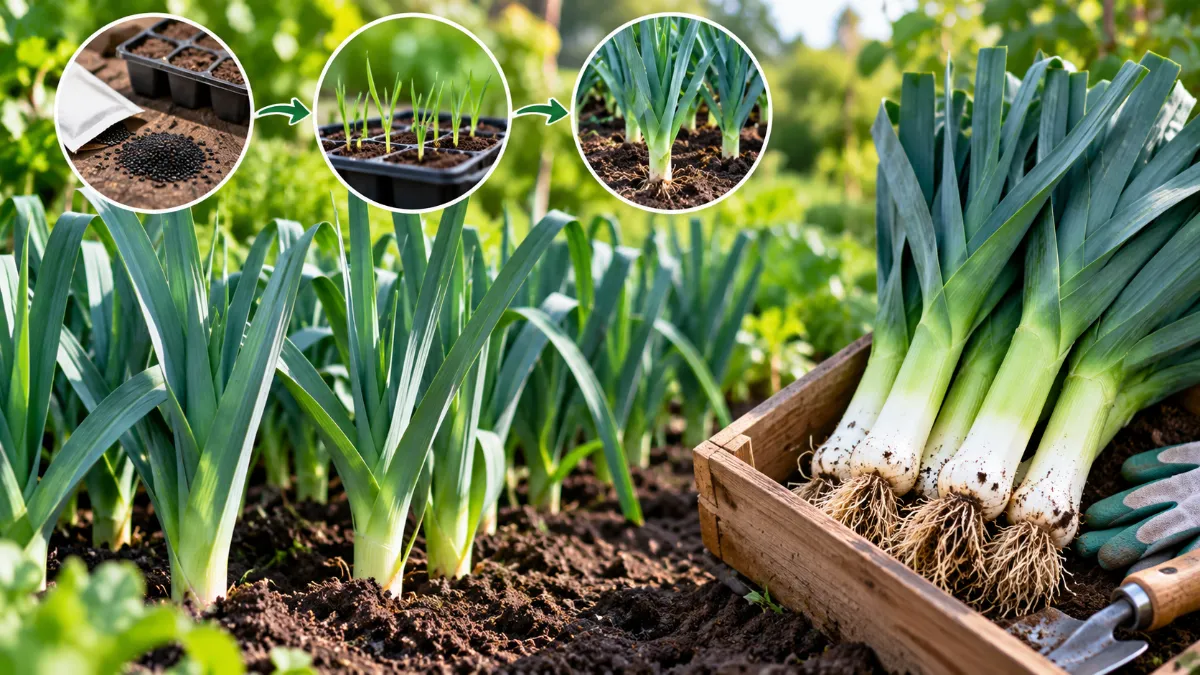
How to Grow Leeks: From Planting to Harvest becomes much easier when you treat leeks as a long-season crop rather than a quick vegetable. They need about 90 to 120 days to mature from transplants. However, their sturdy stems can remain in the soil well into winter. As a result, the reward is a reliable harvest during the cooler months.
Beginners often focus on planting depth but forget moisture, blanching, or careful harvesting. Experienced growers know those details decide whether the stalks are short and green or long, white, and tender. Therefore, the method below covers the full process for the 2026 growing season.
Read More: How to Grow Cantaloupe Vertically
How to Grow Leeks: From Planting to Harvest begins indoors for many gardeners. Sow seeds about 8 to 10 weeks before the expected last spring frost. Consequently, this early start gives seedlings enough time to develop before outdoor conditions become suitable for final planting.
First, fill a seed tray or small container with damp potting mix. Sow each seed about 1/4 inch deep. Then keep the mix evenly moist without leaving it saturated. A bright location helps seedlings grow upright. In addition, gentle air movement can reduce weak, overly soft growth.
Leek seeds should start indoors 8 to 10 weeks before the last spring frost in your area. Instead of using a fixed calendar day, count backward from the local frost date. This approach works across different climates and keeps young plants at a useful size for transplanting.
When seedlings reach around 4 inches tall, lightly trim the green tops. This simple step helps prevent them from falling over and encourages stronger stems. However, avoid heavy cutting. The goal is to maintain a compact plant, not remove most of the growing foliage.
A common beginner mistake is waiting for thick, tall seedlings before moving them outdoors. In fact, leeks do not need to look large at this stage. A sturdy 4-inch seedling is easier to handle and usually adapts more smoothly after hardening off.
Choose a site with at least 6 to 8 hours of direct sun. Rich, well-draining soil mixed with compost supports steady growth. Since leeks have shallow roots, soil quality near the surface matters more than a deep, compacted bed.
Before planting, loosen the soil and remove large stones. Compost improves structure and supplies organic matter. However, avoid turning the bed into a waterlogged pocket. Good drainage protects the roots while consistent moisture supports the long growing period.
Harden off leek seedlings outdoors for one to two weeks before final planting. Begin with a sheltered outdoor position for a short period. After that, gradually increase their exposure to sunlight and wind. This transition reduces stress after plants leave the stable indoor environment.
Move plants outside only when conditions are reasonably settled. During severe weather, bring them back into shelter if needed. The purpose of hardening off is gradual adjustment, not a single dramatic move from a warm room into full sun.
Space leek seedlings 4 to 6 inches apart. This range gives each plant room to expand while allowing enough plants in a limited bed. Meanwhile, rows can be arranged to make watering, weeding, and later harvesting easier.
Gardeners working with a narrow raised bed can use the closer end of the spacing range. By contrast, those with rich soil and ample room may prefer wider spacing. Either way, the distance should allow air circulation and easy access to the soil around each stem.
The hole method is a practical way to plant leeks and begin blanching their stems. Start by using a stick or dibber to make a hole about 6 to 9 inches deep. Drop one seedling into each hole without forcing the roots into a tight coil.
Leave only the green tips visible above the hole. Do not pack the opening tightly with soil. Instead, fill the hole with water. As a result, surrounding soil will gradually collapse around the roots and cover part of the stem as the plant grows.
This method naturally blanches the lower stems. Blanching limits light around the developing stalk, helping it stay white and tender. It also reduces the need to pile soil manually around every plant at the beginning.
Packing soil tightly into a deep planting hole can press against tender roots and restrict air movement. By watering the hole, you allow loose surrounding soil to settle naturally. The roots become covered while the stem receives a gradual blanching effect.
That distinction matters for advanced growers planning a large planting. For example, a bed of 40 plants can require repeated adjustment if every hole is filled by hand. Therefore, watering saves effort and creates a more uniform starting condition.
Leeks need consistent moisture because their roots remain relatively shallow. Aim for about 1 inch of water per week, adjusting for rainfall and local soil conditions. When weather turns hot or unusually dry, check the top layer of soil.
Water slowly at the soil surface so moisture reaches the root zone. Short, light sprinklings may wet the surface without supporting the plant. On the other hand, constantly saturated soil can create poor conditions for roots.
Feed leeks monthly with a balanced, slow-release organic fertilizer or a water-soluble plant food. Leeks are heavy nitrogen feeders, so regular nutrition supports leafy growth and developing stems. Nevertheless, follow the product label for application rates because fertilizer strength varies.
Do not assume that more fertilizer will produce better leeks. Excess feeding can waste nutrients and upset soil balance. Instead, a monthly schedule provides a practical rhythm without turning plant care into a daily task.
Place straw or shredded leaves around the plants to suppress weeds and hold moisture. Mulch also reduces rapid drying near the shallow roots. However, keep the material loose and avoid burying the green growing tips.
Mulch is especially useful in beds that receive strong afternoon sun. For example, a thin layer of shredded leaves can slow moisture loss between weekly watering checks. Refresh the layer if it becomes compacted or breaks down substantially.
Beginners should first master four tasks: correct indoor timing, gradual hardening off, deep hole planting, and steady watering. Those steps solve the most common early problems. Once those basics are reliable, more advanced growers can fine-tune spacing, feeding, and bed preparation.
| Growing stage | Beginner priority | Advanced focus |
|---|---|---|
| Indoor start | Keep the mix damp and seedlings upright | Trim tops near 4 inches for compact growth |
| Transplanting | Use 6- to 9-inch holes | Keep spacing consistent at 4 to 6 inches |
| Growing season | Provide about 1 inch of water weekly | Combine moisture checks with monthly feeding |
| Harvest | Loosen soil before lifting | Harvest selectively across the cool season |
The useful insight is that leek quality depends more on consistency than complexity. In practice, a gardener with average soil can achieve better results through regular moisture and careful planting than through expensive amendments used without a plan.
For broader vegetable-growing principles, consult the Royal Horticultural Society’s leek growing guidance. Even so, local frost dates and soil conditions still deserve priority because gardening advice must fit the growing site.
Small errors can shorten the white portion or make harvest unnecessarily difficult. Most often, the problems involve timing, watering, and handling. Fortunately, correcting them early usually costs less effort than trying to rescue stressed plants later.
Another common mistake is judging maturity by height alone. Instead, the better measure is stalk diameter. Begin checking when the white portion reaches at least 1/2 inch to 1 inch across.
Harvest leeks when the white stalks reach at least 1/2 inch to 1 inch in diameter. Since leeks mature in roughly 90 to 120 days from transplants, planting dates provide a useful estimate. Even so, stalk size remains the more practical harvest signal.
Leeks tolerate cool conditions and can stay in the ground well into winter. Therefore, that long harvest window lets gardeners lift only what they need. It also reduces pressure to harvest the entire crop on one day.
Do not yank leeks from the soil. Instead, push a garden fork or shovel carefully beneath the plant to loosen the soil. Then lift the leek straight upward. This method protects the stalk and makes removal easier when soil has become firm.
Work slowly around the plant rather than forcing the tool directly through the base. A careful lift matters most in compacted ground. In addition, it helps preserve nearby plants that are still growing for later harvest.
Staggering harvest is one of the simplest advantages of growing leeks. Because mature plants can remain in the ground during cool weather, you can lift larger specimens first and leave smaller ones to gain diameter.
Mark the planting area clearly if foliage begins to blend with other vegetables. This small habit prevents accidental digging during winter bed work. It also makes selective harvesting faster when the soil surface is covered with mulch.
Ultimately, the best results come from matching the technique to the plant’s natural strengths. Leeks grow slowly but tolerate cool conditions and reward patience. Their long harvest period is a practical benefit for gardeners who want fresh produce beyond the main summer season.
Leeks usually take about 90 to 120 days to mature from transplants. However, weather, soil quality, moisture, and plant spacing can affect growth speed.
Yes. Leeks are tough plants that can remain in the ground well into winter. As a result, you can harvest them gradually during cooler months.
Make holes about 6 to 9 inches deep. Leave the green tips visible and fill the hole with water rather than tightly packing it with soil.
Choose a location that receives at least 6 to 8 hours of sun each day. In addition, rich, well-draining soil mixed with compost will support steady growth.
Aim for about 1 inch of water per week. Since leeks have shallow roots, check the soil during dry weather and water when the root zone begins to dry.
Harvest when the white stalks reach at least 1/2 inch to 1 inch in diameter. Before lifting them, use a fork or shovel to loosen the soil.
How to Grow Leeks: From Planting to Harvest is mainly a lesson in timing and steady care. First, start seeds indoors 8 to 10 weeks before the last spring frost. Then transplant into deep holes, maintain moisture, and feed monthly.
With the hole method, the soil gradually blanches the stems as plants grow. Once the white stalks reach the desired diameter, loosen the ground and lift them carefully. Before planting in 2026, confirm your local frost date and prepare a sunny bed with compost.
Subscribe to the blog and newsletter to get new updates in simple, clear words straight to your inbox.
Recent Articles
Related Articles
Keengarden is your simple, friendly guide to growing healthy plants, fixing garden problems, and choosing the right tools.
© 2025 keengarden. All rights reserved. Designed by Affpilot