Gardening Made Simple.
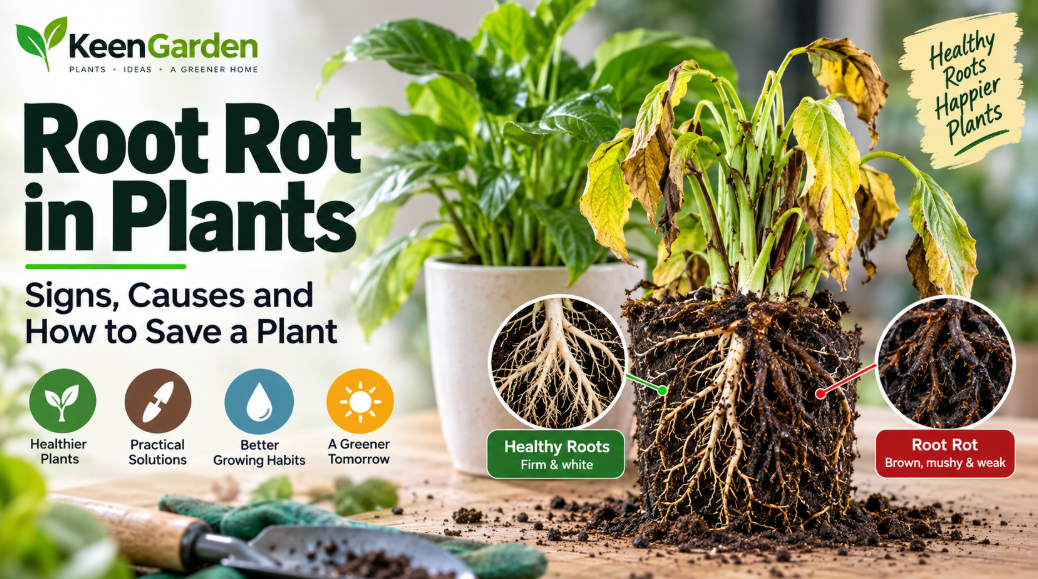
Root rot is one of the most common and potentially serious problems affecting houseplants, garden plants, vegetables, herbs, and container-grown plants. It usually develops when plant roots remain in excessively wet or poorly drained soil for too long. As the roots lose access to oxygen, they become weak and can be attacked by soil-borne fungi and fungus-like pathogens.
The difficult part about root rot is that the problem often starts below the soil surface. A plant may look healthy for a while even though its roots are already deteriorating. By the time symptoms such as yellow leaves, wilting, stunted growth, or leaf drop become obvious, the root system may already be significantly damaged.
The good news is that a plant with root rot can sometimes be saved if the problem is identified early and the damaged roots are removed. Proper watering, good drainage, suitable soil, and clean gardening practices can also greatly reduce the risk of root rot in the future.
In this guide, you will learn what root rot is, how to recognize the signs, what causes it, how to check a plant's roots, how to treat root rot, and how to prevent it from returning.
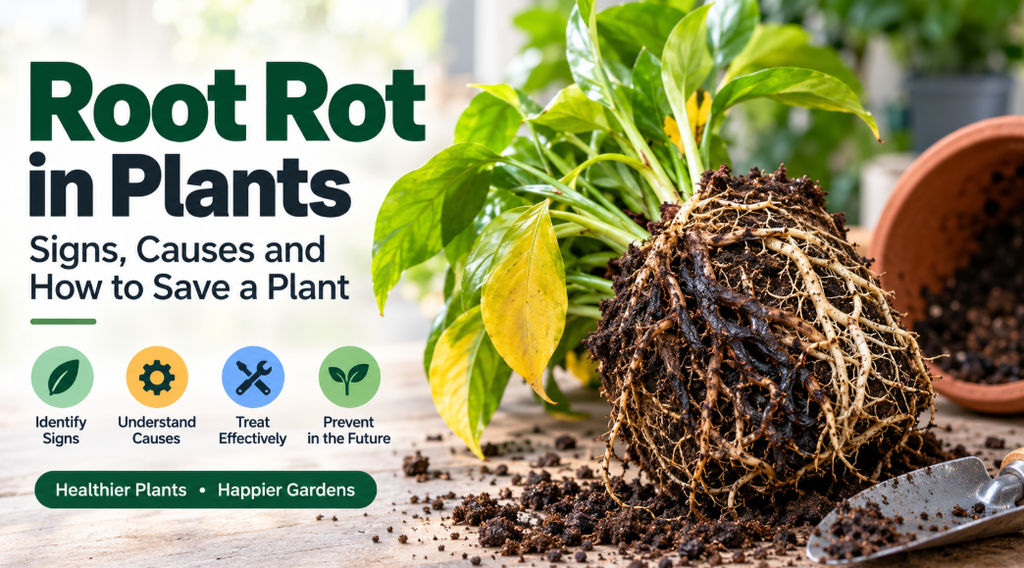
Root rot is a condition in which plant roots become damaged, decayed, and unable to perform their normal functions. Healthy roots absorb water and nutrients while also supporting the plant. When roots remain in waterlogged soil, oxygen becomes limited around the root zone.
Roots need oxygen for respiration. When soil stays saturated for extended periods, the air spaces between soil particles become filled with water. This creates stressful conditions for roots and can encourage the growth and spread of harmful microorganisms.
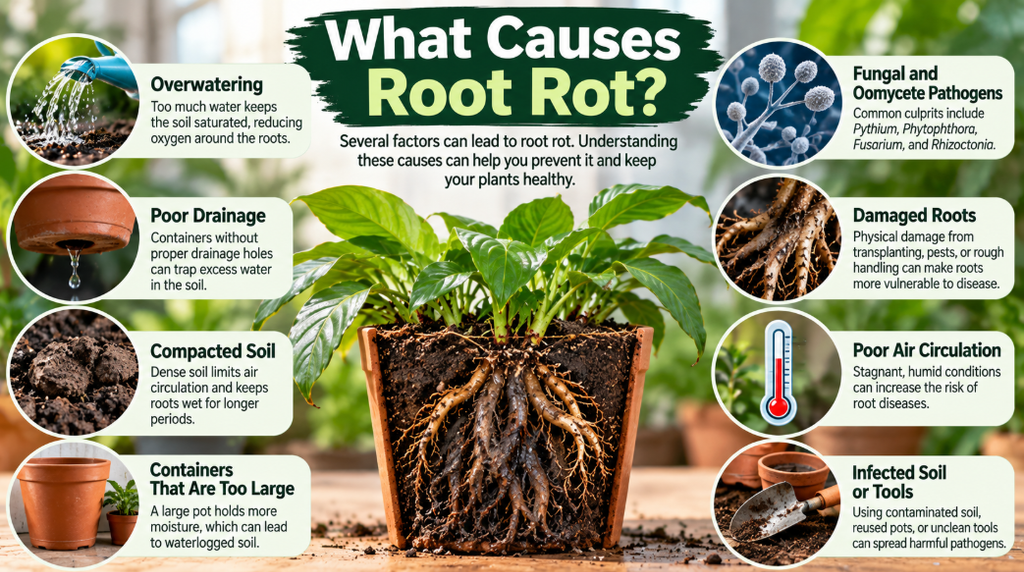
Several pathogens can contribute to root rot. Common groups include Pythium, Phytophthora, Fusarium, and Rhizoctonia. However, root rot is not caused by a single organism in every case. Poor drainage, overwatering, compacted soil, damaged roots, and unsuitable containers can all contribute to the problem.
In simple terms, root rot is often associated with this combination:
Too much moisture + poor drainage + low oxygen around the roots = increased risk of root damage and decay.
Because root rot occurs underground, you cannot always identify it by looking at the leaves alone. The most reliable way to confirm suspected root rot is to carefully remove the plant from its container or expose part of the root system and inspect the roots.
Healthy roots are generally firm and have a normal appearance for the particular plant. Depending on the species, they may be white, cream, tan, brown, or another natural color.
Roots affected by severe rot may become:
However, color alone does not always prove that a root is rotten. Some plants naturally have darker roots, especially older roots. Texture and condition are important when diagnosing the problem.
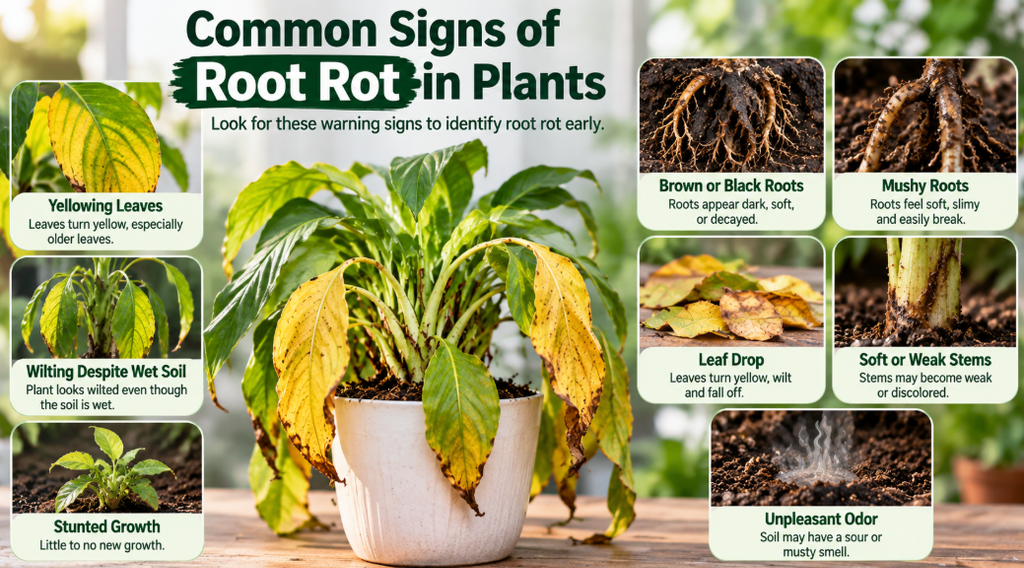
Root rot can produce symptoms that resemble other plant problems, including underwatering, nutrient deficiencies, pest infestations, and environmental stress. Look for several symptoms together rather than relying on one sign.
Yellow leaves are one of the most common symptoms associated with root problems.
When roots are damaged, the plant may struggle to absorb water and nutrients effectively. Older leaves may begin turning yellow before eventually falling from the plant.
However, yellow leaves do not automatically mean root rot. Overwatering, underwatering, nutrient deficiencies, natural aging, insufficient light, and pests can also cause yellowing.
One of the most important warning signs is a plant that appears wilted even though its soil is wet.
A healthy root system should normally be able to absorb available water. When roots are severely damaged, the plant may be unable to move enough water to the stems and leaves.
This can create a confusing situation:
The soil is wet, but the plant looks thirsty.
If this happens repeatedly, inspect the root system.
When you inspect the roots, severely affected roots may appear brown, dark, or black.
The important factor is texture. Rotten roots are often soft, mushy, or fragile rather than firm.
Do not assume every dark root is diseased. Compare the texture and appearance with healthy roots of the same plant species.
Mushy roots are a strong indication that the root system has deteriorated.
Healthy roots generally have some firmness. Rotten tissue may feel soft and break apart easily when touched.
If large portions of the root system are mushy, the plant may have advanced root damage.
A plant with damaged roots may stop producing new leaves, stems, flowers, or fruit at its normal rate.
This happens because the root system is no longer functioning efficiently.
Young plants and seedlings can be particularly vulnerable because they have relatively small root systems and can deteriorate quickly under excessively wet conditions.
Severe root damage can cause leaves to yellow, wilt, and eventually fall.
Some plants may lose a significant number of leaves after prolonged root stress.
In advanced cases, the stem near the soil line may become weak or discolored. This can indicate that decay has extended beyond the roots.
Stem problems can have different causes, so inspect both the roots and lower stem before deciding on treatment.
Severely decaying roots and waterlogged soil can sometimes produce a sour, musty, or unpleasant smell.
Healthy potting soil can have an earthy smell, while strong unpleasant odors may indicate excessive moisture and decomposition.
Understanding the causes of root rot is essential because simply removing damaged roots may not solve the underlying problem.
Overwatering is one of the most common conditions associated with root rot.
Watering too frequently can keep the root zone continuously wet. Plants need water, but they also need oxygen around their roots.
The correct watering frequency depends on:
Instead of watering according to a rigid calendar, check the soil and the plant's actual needs.
Even if you water correctly, poor drainage can keep the root zone saturated.
Containers without adequate drainage holes are especially risky.
Excess water needs a way to leave the growing medium. If it remains trapped around the roots, oxygen availability can decline.
Compacted soil contains fewer air spaces and may drain poorly.
Heavy, dense soil can hold water around the roots for longer periods than a well-structured growing medium.
For container plants, use a growing medium appropriate for the particular plant instead of ordinary dense garden soil when recommended.
An oversized container can contain a large volume of soil that holds moisture around a relatively small root system.
This does not mean large containers always cause root rot, but choosing a container that matches the plant and its root system can make moisture management easier.
Poor air movement can contribute to a persistently humid environment, especially when combined with excessive moisture.
Good ventilation is particularly important for indoor growing spaces and greenhouses.
Physical damage to roots can create opportunities for pathogens and decay.
Root damage may occur during:
Handle roots carefully when moving plants.
Certain soil-borne pathogens can survive in contaminated soil, plant debris, tools, or growing environments.
Using clean containers and tools and avoiding the reuse of contaminated potting media can help reduce disease spread.
If you suspect root rot, inspect the root system rather than relying only on above-ground symptoms.
Choose a clean surface and gather:
Disinfect cutting tools before and after removing diseased plant material.
Gently remove the plant from its container.
Avoid pulling aggressively on the stem because damaged roots may separate from the plant.
Look closely at the roots and surrounding soil.
Check for:
Healthy roots should generally have more firmness and structural integrity.
Rotten roots may be soft and easily fall apart.
Do not remove healthy roots unnecessarily. The goal is to remove clearly damaged tissue while preserving as much healthy root structure as possible.
The treatment depends on how severe the damage is and what type of plant you are dealing with.
If the plant is sitting in saturated soil, stop adding water while you assess the situation.
Do not automatically continue watering simply because the leaves are wilted. A plant with damaged roots can wilt even when the soil contains plenty of moisture.
Take the plant out of its container and gently remove excess soil from around the roots.
Be careful not to damage the remaining healthy roots.
Using clean, sharp scissors or pruning shears, remove roots that are clearly soft, mushy, or severely decayed.
Avoid cutting healthy roots unnecessarily.
If the root system has extensive damage, the amount of healthy tissue remaining will influence whether the plant can recover.
Do not automatically reuse heavily contaminated or severely waterlogged potting soil.
Fresh, appropriate growing medium can help provide better drainage and reduce the chance of continuing problems.
Choose a soil or potting mix suitable for the specific plant.
Use a clean container with adequate drainage holes.
The container should be appropriate for the plant's size and growing requirements.
Avoid leaving the plant in a decorative container where excess water collects around the root zone.
Make sure excess water can escape freely.
If the pot has a drainage hole, check that it is not blocked by compacted soil or debris.
A saucer can be used underneath a container, but standing water should not be allowed to remain around the pot for extended periods.
After treatment, place the plant in the light conditions appropriate for its species.
Avoid exposing a severely stressed plant to extreme environmental changes.
After repotting, follow the watering requirements of the plant rather than maintaining a constantly wet root zone.
Allowing the appropriate portion of the growing medium to dry between waterings can be important for many plants, but the correct moisture level varies considerably between species.
Plants such as many succulents require very different watering practices from moisture-loving plants.
Yes, some plants can recover from root rot, particularly when the problem is detected early and enough healthy roots remain.
Recovery depends on several factors:
A plant with only a small amount of root damage may recover relatively quickly. A plant with most of its root system destroyed has a much lower chance of recovery.
Do not expect immediate improvement after treatment. The plant may need time to produce new roots and resume normal growth.
Prevention is usually easier than treating severe root damage.
Different plants have different moisture requirements.
Before watering, consider the plant species and check the growing medium rather than watering automatically every day.
Adequate drainage is one of the simplest ways to reduce prolonged waterlogging in container plants.
Use a growing medium that matches the plant.
Plants that require excellent drainage should not be grown in dense, poorly draining soil.
Empty excess water from saucers and trays when appropriate.
Do not allow container plants to remain in standing water for long periods unless the plant specifically requires those conditions.
Healthy plants are generally better able to tolerate environmental stress.
Provide suitable:
Clean and disinfect pruning tools between plants when disease transmission is a concern.
This is particularly important when working with plants showing signs of disease.
Check your plants regularly for changes in:
Early detection gives you more opportunities to correct watering and drainage problems before severe damage occurs.
Overwatering and root rot are related but not exactly the same thing.
Overwatering describes giving a plant too much water or keeping its growing medium excessively wet.
Root rot describes damage and decay affecting the roots.
Overwatering can create the environmental conditions that increase the risk of root rot, but a plant can also experience other problems from excessive moisture without having advanced root decay.
Likewise, root disease can occur under conditions where moisture management has been poor, drainage is inadequate, or susceptible pathogens are present.
Root rot can sometimes look surprisingly similar to underwatering.
Both problems can cause:
The soil condition can provide an important clue.
With underwatering, the growing medium may be very dry.
With root rot, the plant may be wilting while the soil remains excessively wet, and the roots may be soft or decayed.
When symptoms are confusing, inspect the roots and evaluate the growing conditions instead of watering automatically.
Saving a plant with almost no healthy roots is difficult, but some plants can produce new roots from suitable remaining tissue or through propagation.
The possibilities depend heavily on the plant species.
Some plants can be propagated from:
If most of the original root system is dead, propagation from healthy plant material may sometimes be more successful than trying to maintain the original root system.
Fungicides are not a universal solution for root rot.
Root problems can involve different organisms, and not every case is caused by a fungus. In addition, correcting the environmental conditions that encouraged the problem—especially excessive moisture and poor drainage—is often essential.
If a specific pathogen is suspected or identified, use a treatment appropriate for that pathogen and plant, following the product label and local regulations.
For home gardeners, improving drainage, removing severely damaged roots, using clean growing media, and correcting watering practices are often important parts of managing the problem.
Some root pathogens can spread between plants through contaminated soil, water, tools, containers, or plant debris.
This is why sanitation is important when managing suspected disease.
Avoid moving contaminated soil between containers, clean reusable pots, and disinfect cutting tools when appropriate.
If several plants in the same growing area develop similar symptoms, investigate the shared growing conditions rather than treating every plant independently.
Common warning signs include persistent wilting despite wet soil, yellowing leaves, slow growth, leaf drop, unpleasant soil odor, and soft or mushy roots. Inspecting the roots is the most direct way to evaluate suspected root rot.
Damaged root tissue cannot simply be restored to its original healthy condition. However, a plant may recover if the problem is caught early, rotten roots are removed, and the growing conditions are corrected.
Do not automatically water a wilted plant with root rot. First check the soil moisture and inspect the roots. Damaged roots may be unable to absorb water even when the soil is wet.
Rotten roots may appear brown, dark brown, or black, but color alone is not enough to diagnose root rot. Soft, mushy, slimy, or deteriorating texture is generally more informative.
Yes, yellow leaves can occur when roots are severely damaged. However, yellowing can have many other causes, so it should be considered together with soil moisture, watering practices, root condition, light, pests, and other symptoms.
Recovery time varies by plant species and the severity of the damage. A mildly affected plant may begin showing improvement after its growing conditions are corrected, while severely damaged plants may require weeks or longer to produce substantial new growth.
Reusing soil from a diseased plant can be risky, particularly if a soil-borne pathogen is involved. When practical, discard heavily affected potting medium and use fresh, appropriate growing media for repotting.
Yes. Root diseases can affect vegetables, flowers, shrubs, trees, herbs, and many other plants. Poor drainage, waterlogged soil, heavy rainfall, irrigation problems, and susceptible pathogens can contribute to root problems in gardens.
No. Excessive moisture is a major risk factor, but root rot can involve multiple conditions, including poor drainage, compacted soil, damaged roots, contaminated growing media, and soil-borne pathogens.
Root rot can be a serious plant problem, but recognizing the warning signs early can significantly improve the chances of recovery. The most important clues are often found below the soil surface: soft or deteriorating roots, persistently wet growing medium, poor drainage, and a plant that wilts despite having plenty of moisture.
If you suspect root rot, carefully inspect the roots, remove severely damaged tissue with clean tools, repot the plant into suitable fresh growing medium when appropriate, and correct the underlying moisture and drainage problem.
Most importantly, avoid treating every wilted or yellowing plant as a case of root rot. These symptoms can have many causes. Consider the entire growing environment and inspect the root system before deciding what action to take.
With appropriate watering, good drainage, suitable soil, clean gardening practices, and regular observation, many of the conditions associated with root rot can be prevented or identified before they become severe.