Gardening Made Simple.
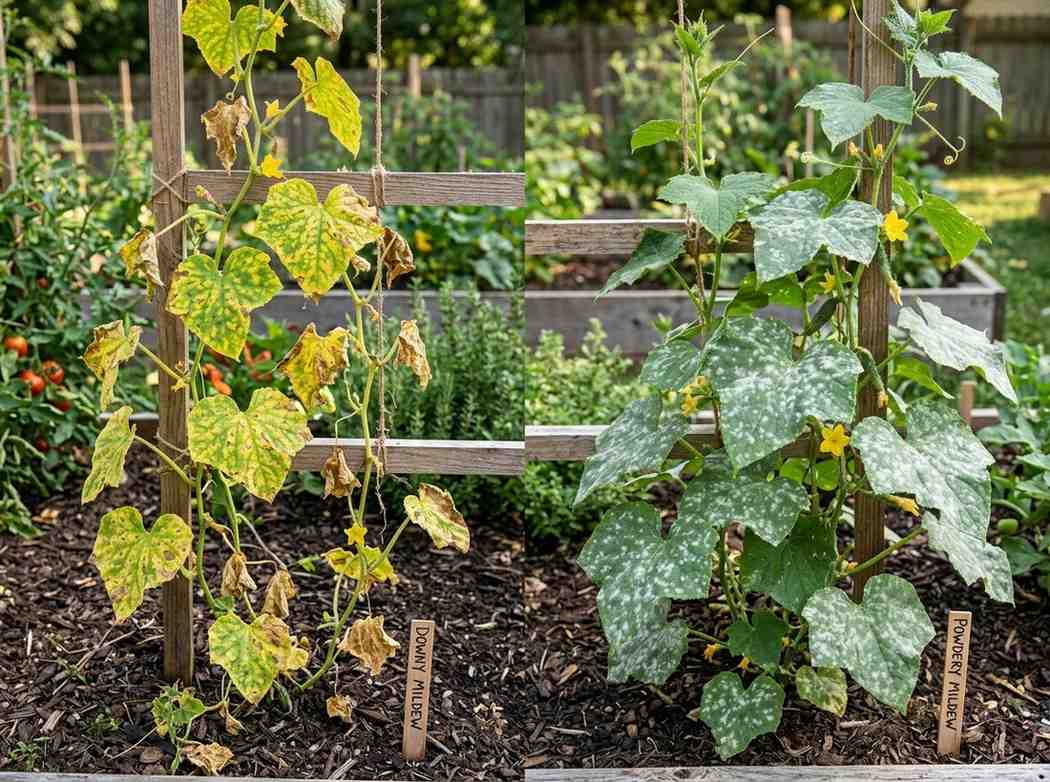
Have you ever spotted strange white or grayish patches on your plants and wondered what they really mean? If so, you’re not alone. Understanding Downy Mildew Vs Powdery Mildew can help you quickly identify the problem and take the right steps to protect your plants before the damage spreads.
Downy mildew and powdery mildew are two common plant diseases that can easily confuse even experienced gardeners. Knowing the difference between these two can save your plants from serious damage. You’ll discover how to identify each type, what causes them, and the best ways to protect your garden.
Keep reading—your plants will thank you for it!
Downy mildew is a common plant disease that affects many crops and garden plants. It is caused by a type of water mold, which thrives in damp conditions. This disease can cause serious damage if not controlled early. Understanding downy mildew helps gardeners and farmers protect their plants better.
Downy mildew grows best in cool, wet weather. It needs moisture on the leaf surface to spread. Poor air circulation and overcrowded plants also help it develop. Spores travel through water or wind, infecting nearby plants. Warm, dry weather slows down the disease.
Many plants suffer from downy mildew. Vegetables like cucumbers, lettuce, and onions are common targets. Grapevines and roses also get infected. Each type of downy mildew prefers certain plants. Knowing which plants are at risk helps prevent outbreaks.
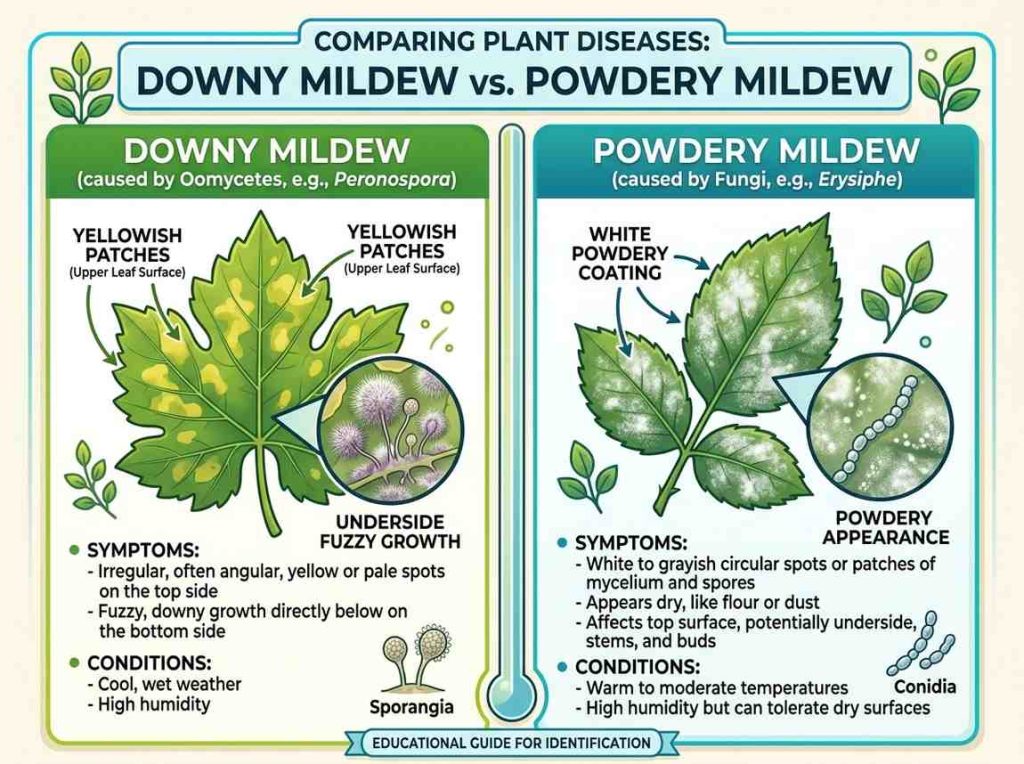
Look for yellow or pale spots on upper leaf surfaces. On the underside, a fuzzy or downy growth appears. Leaves may curl, turn brown, and fall off. Infected plants grow weak and yield less fruit. Early spotting can save plants from severe damage.
Powdery mildew is a common fungal disease affecting many plants. It looks like white or gray powder on leaves and stems. This disease can harm plant growth and reduce yield. Understanding powdery mildew helps gardeners and farmers control it effectively.
Powdery mildew grows in warm and dry places. It spreads through spores carried by wind or insects. Crowded plants with poor air flow increase the risk. High humidity at night also helps the fungus develop.
Many plants can get powdery mildew. Roses, cucumbers, squash, and grapes are common hosts. It also attacks beans, melons, and some trees. Both garden plants and wild plants can be affected.
Look for white or gray powder on leaves and stems. Leaves may curl, turn yellow, and drop early. Infected areas can look dusty or fuzzy. Severe infection weakens the plant and slows growth.
Downy mildew and powdery mildew often confuse gardeners. Both cause damage but look different on plants. Spotting their visual differences helps identify and treat them early. This section explains how to see these differences clearly.
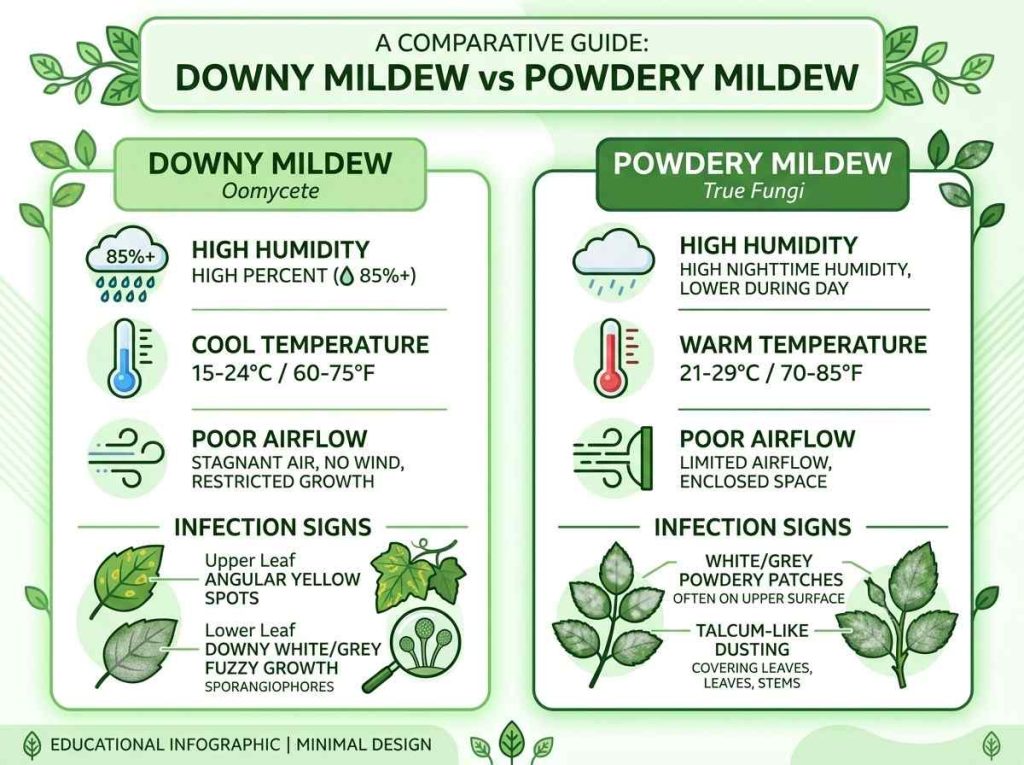
Downy mildew shows as yellow or pale spots on upper leaf surfaces. Underneath, fuzzy gray or purple patches appear. Powdery mildew looks like white or gray powder on leaf surfaces. It covers leaves like dust. Leaves with powdery mildew may curl or turn brown.
Downy mildew grows mostly under leaves in patches. It spreads quickly in wet, cool conditions. Powdery mildew grows on top of leaves and stems. It forms a powdery layer that spreads slowly. It can cover large leaf areas over time.
Downy mildew thrives in cool, moist weather. It appears mostly in spring and fall. Powdery mildew prefers warm, dry days and cool nights. It is common in summer and early fall. Knowing seasons helps predict which mildew may appear.
Downy mildew and powdery mildew thrive in different environments. Knowing their preferences helps control them effectively. Both fungi need specific conditions to grow and spread. Understanding these conditions is key to prevention.
Downy mildew loves wet and humid conditions. It thrives in moist leaves and soil. Water on leaves helps it spread fast. Powdery mildew prefers dry air but high humidity. It does not need free water to grow. Dry leaves still allow powdery mildew to develop.
Downy mildew grows best in cool to mild temperatures. It prefers 50°F to 70°F (10°C to 21°C). Powdery mildew favors warmer temperatures. It grows well between 70°F and 85°F (21°C to 29°C). Temperature affects how fast each mildew spreads.
Downy mildew thrives in shaded, low-light areas. Shade keeps leaves moist longer. Powdery mildew prefers sunny, bright spots. It often appears on plants with good air circulation. Light conditions help fungi choose where to grow.
Downy mildew and powdery mildew both harm plants but in different ways. Their impact can slow plant growth, reduce crop yield, and cause lasting damage. Understanding these effects helps gardeners and farmers protect their plants better.
Downy mildew attacks the underside of leaves, causing yellow or pale spots. This stops the plant from making food through photosynthesis. Powdery mildew looks like white powder on leaves and stems. It blocks sunlight and weakens the plant’s tissues. Both diseases stunt plant growth and make plants look unhealthy.
Downy mildew lowers crop yield by damaging leaves and fruits early. Infected plants produce fewer and smaller fruits. Powdery mildew also reduces the amount and quality of crops. It affects fruit ripening and leaf function. Farmers lose money because of smaller harvests and poor produce quality.
Downy mildew can weaken plants over time, making them more open to other diseases. It may kill young plants if not controlled quickly. Powdery mildew rarely kills plants but causes lasting leaf damage. This damage reduces plant strength and future growth. Both diseases can harm the health of plants for many seasons.
Treating downy mildew and powdery mildew requires different approaches. Both diseases damage plants but respond to distinct treatments. Choosing the right method helps protect your garden and crops. Here are effective treatment methods for both mildews.
Fungicides work well against downy mildew. Use products with active ingredients like chlorothalonil or mancozeb. Spray early for best results. Powdery mildew responds to fungicides containing sulfur or potassium bicarbonate. Apply treatments regularly to stop spread. Always follow label instructions for safe use.
Organic methods suit mild mildew cases. Neem oil and baking soda sprays help control powdery mildew. For downy mildew, copper-based fungicides offer good results. These options protect plants without harsh chemicals. Repeat treatments often for better control. Good for home gardens and small farms.
Preventing mildew is easier than curing it. Plant resistant varieties when possible. Ensure good air flow by spacing plants well. Water plants early in the day to dry leaves fast. Remove infected leaves to stop spread. Keep garden clean and free from debris.
Preventing downy mildew and powdery mildew is key to keeping plants healthy. Both fungi thrive in certain conditions. Changing these conditions stops them from growing. Simple steps can reduce the risk of these diseases. These tips help plants stay strong and vibrant.
Give plants enough space to breathe. Crowded plants trap moisture and air. This creates a perfect place for mildew. Leave room between plants to improve airflow. Good airflow dries leaves and soil fast. It lowers humidity and stops fungus growth.
Water plants at the base, not on leaves. Wet leaves help mildew spread quickly. Water in the morning so plants dry by night. Avoid overwatering to keep soil from staying wet. Dry soil reduces chances for mildew to form.
Choose plants bred to resist mildew diseases. Resistant varieties survive better in tough conditions. They need less treatment and care. Planting these reduces the chance of infection. Check plant labels or ask experts for resistant types.
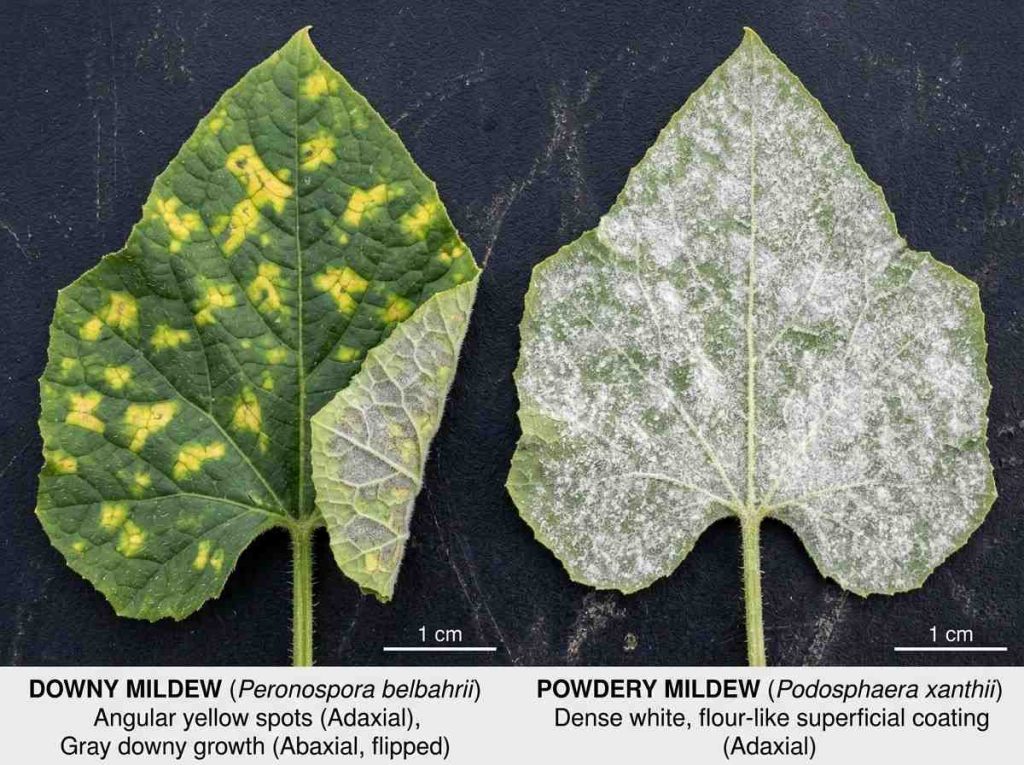
Downy mildew grows on leaf undersides; powdery mildew appears as white powder on top.
Downy mildew mainly attacks grapes, cucumbers, and lettuce plants.
Powdery mildew spreads through dry air and touching infected plants.
Downy mildew needs wet or humid conditions to grow and spread.
Use good air flow, remove infected leaves, and apply sulfur sprays.
Downy mildew and powdery mildew look similar but differ in many ways. Knowing their differences helps protect your plants better. Watch for signs like leaf spots and powdery patches. Treat early to stop damage and keep plants healthy. Use proper air flow and avoid wet leaves.
Both mildews need care but act differently. Stay alert and act fast to save your garden. Simple steps can make a big difference. Understanding these mildews keeps your plants strong and thriving.