Gardening Made Simple.
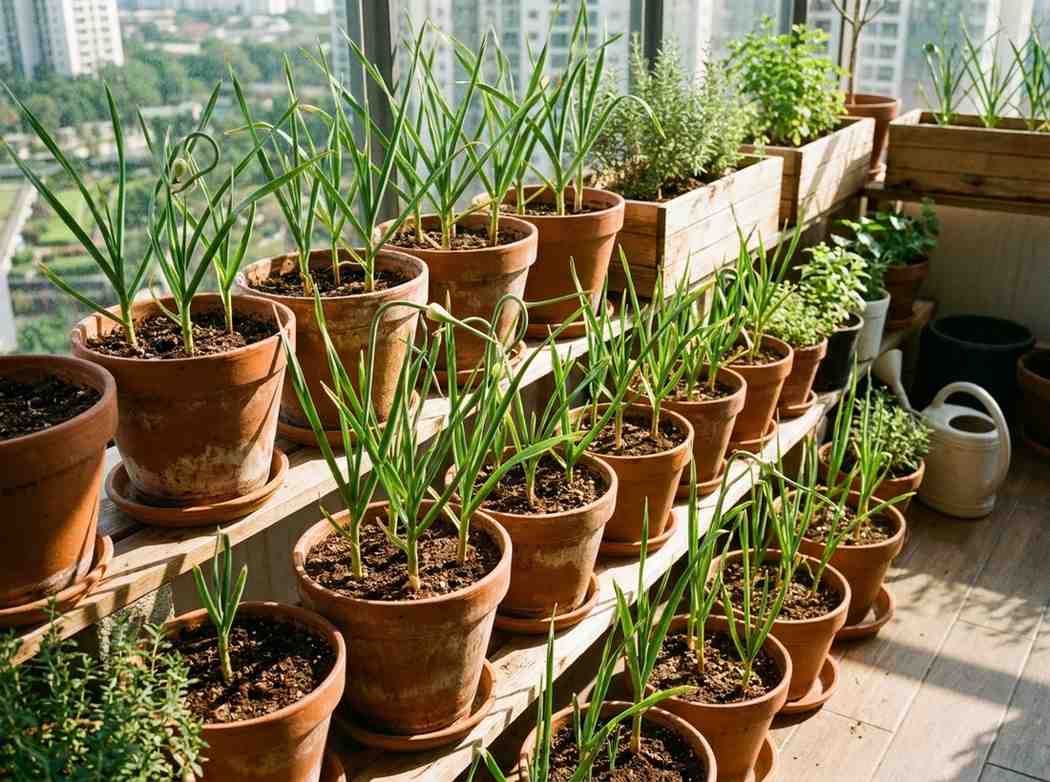
Have you ever thought about growing your own garlic but worried about space? What if you could enjoy fresh, flavorful garlic right from your balcony or kitchen? Learning Growing Garlic in Containers will help you grow healthy, aromatic bulbs even in small spaces.
Growing garlic in containers is easier than you might think, and it’s perfect for anyone with limited garden space. Imagine harvesting your own cloves, packed with aroma and taste, without leaving your home. You’ll discover simple steps to grow garlic successfully in containers, so you can enjoy homegrown garlic all year round.
Keep reading to find out how to make your garlic grow strong and healthy, even in small spaces!
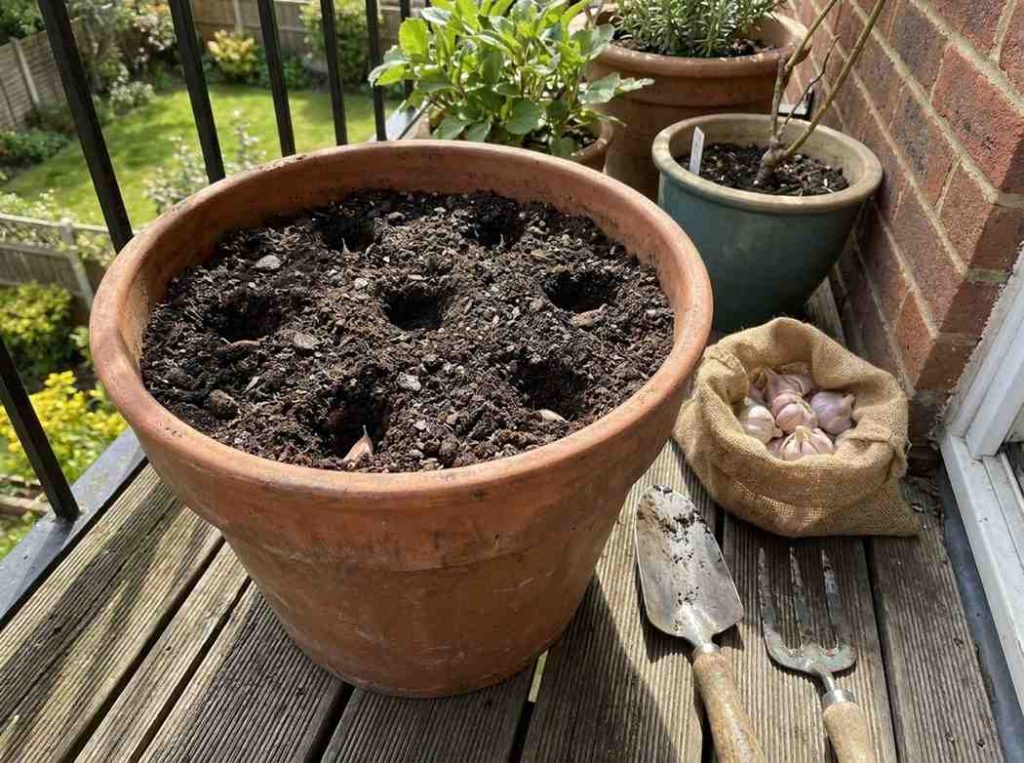
Choosing the right garlic variety is important for growing garlic in containers. Different types of garlic have different needs and flavors. Picking the right one can make your container garden more successful and your harvest tastier. Here is what you need to know about garlic varieties for containers.
Hardneck garlic has a stiff central stalk. It grows well in cooler climates. It produces fewer but larger cloves. The flavor is strong and spicy. Softneck garlic does not have a hard stalk. It grows better in warmer areas. It has more cloves that are smaller. The taste is milder and sweeter. Softneck garlic stores longer than hardneck types.
Softneck varieties like 'Artichoke' and 'Silverskin' suit containers well. They stay compact and produce many cloves. Hardneck types like 'Rocambole' and 'Purple Stripe' also work. They offer rich flavor but need deeper pots. Choose varieties that mature in 90 to 120 days. This fits container growing and keeps garlic healthy.
Buy seed garlic from trusted garden centers or online farms. Choose certified disease-free garlic to avoid problems. Avoid supermarket garlic; it may not grow well. Look for fresh, firm bulbs with tight skins. Buying local varieties helps because they adapt to your climate. Store seed garlic in a cool, dry place until planting.
Choosing the right container is key for growing healthy garlic in pots. The container affects root growth, moisture, and air flow. A good container helps garlic bulbs grow big and strong. Consider size, material, and drainage before planting.
Garlic needs enough room for roots to spread. Use containers at least 8 inches deep. Wider containers let you plant several cloves at once. Avoid small pots. They dry out fast and limit garlic growth.
Clay, plastic, and metal containers all work well. Clay pots breathe better but dry quickly. Plastic holds moisture longer but can heat up. Drainage holes are a must. They stop water from pooling and causing root rot.
Old buckets, wooden boxes, or large tins can be great containers. Clean them well before use. Make holes for drainage if needed. Repurposed containers save money and reduce waste. Just ensure they are deep enough for garlic roots.
Preparing soil for garlic in containers sets the stage for healthy growth. Good soil helps garlic roots spread and absorb water well. It also provides the right nutrients garlic needs to grow strong bulbs. Taking time to prepare the soil properly increases your chances of a good harvest.
Choose a light, well-draining soil mix for garlic containers. Use potting soil blended with sand or perlite. This mix stops water from pooling around roots. Avoid heavy clay soils that hold too much water. Garlic likes soil that stays moist but not soggy.
Add compost to the soil mix to provide nutrients. Compost improves soil structure and helps retain moisture. Mix in balanced organic fertilizer before planting. Nutrients like nitrogen, phosphorus, and potassium support garlic growth. Avoid too much fertilizer as it can burn the roots.
Garlic prefers slightly acidic to neutral soil with pH between 6.0 and 7.0. Test your soil pH using a simple kit. Add lime to raise pH if soil is too acidic. Use sulfur or peat moss to lower pH if soil is too alkaline. Correct pH helps garlic absorb nutrients efficiently.
Planting garlic cloves in containers is simple and rewarding. Proper planting sets the stage for strong growth and a good harvest. Knowing how to select cloves, space them, and plant at the right time helps your garlic thrive in small spaces.
Choose large, firm cloves for planting. Avoid cloves that are soft, shriveled, or have mold. Healthy cloves produce better bulbs and resist disease. Use organic or untreated garlic for best results.
Plant cloves pointy side up, about 2 inches deep. Space each clove 4 to 6 inches apart. This gives roots room to grow and bulbs space to expand. Crowded cloves may produce small garlic heads.
Plant garlic cloves in fall, about 4 to 6 weeks before frost. This timing lets roots develop before winter. In mild climates, plant in late fall or early winter. Spring planting is possible but may reduce bulb size.
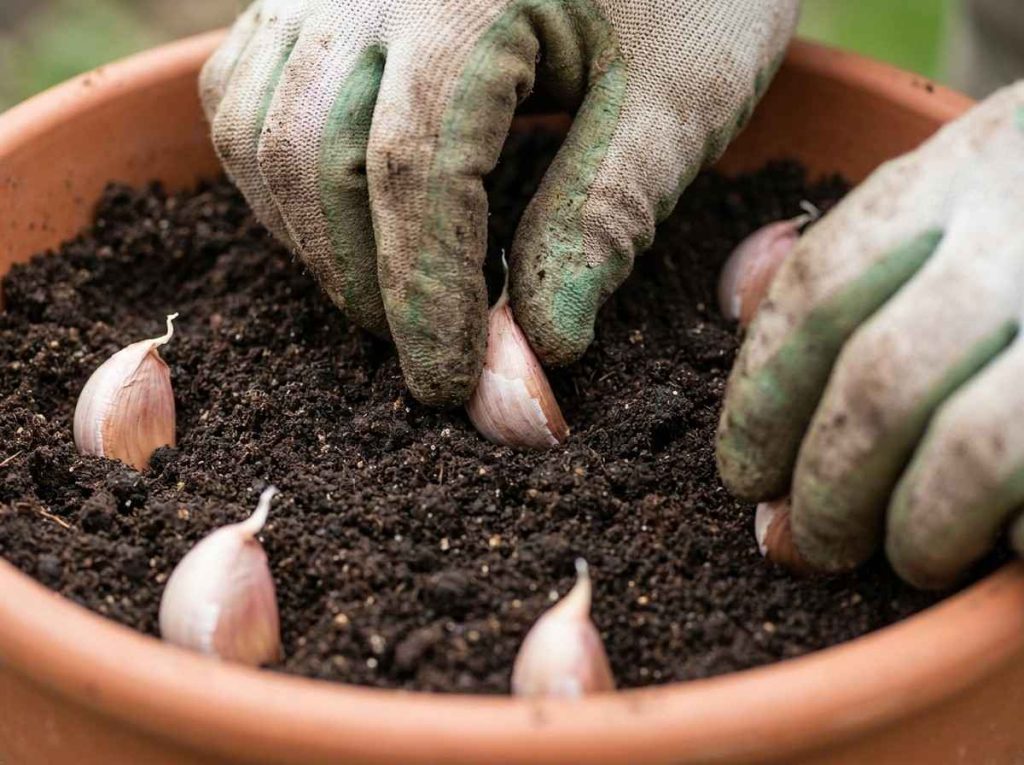
Caring for garlic in containers requires attention to water, light, and nutrients. Proper care helps garlic grow strong and healthy bulbs. Small steps can make a big difference in your container garden.
Follow these simple tips to keep your garlic plants thriving in pots or containers.
Keep the soil moist but not soggy. Overwatering can cause root rot. Water garlic when the top inch of soil feels dry. Use a watering can or gentle spray to avoid disturbing the soil. Drainage holes in containers help prevent water buildup.
Garlic needs at least 6 hours of sunlight daily. Place containers in a sunny spot, like a balcony or windowsill. More sunlight means bigger bulbs. Avoid shaded areas to prevent weak growth. Rotate containers for even light exposure.
Feed garlic every 3 to 4 weeks during the growing season. Use a balanced fertilizer or compost tea. Avoid too much nitrogen; it can cause leafy growth instead of bulbs. Stop fertilizing when garlic starts to mature. Healthy feeding boosts bulb size and flavor.
Growing garlic in containers is fun and rewarding. But pests and diseases can harm your plants. Knowing how to spot and handle these problems helps keep garlic healthy. Healthy garlic grows bigger and tastes better. Here’s how to deal with common pests and diseases.
Garlic faces attacks from pests like onion maggots, aphids, and thrips. Onion maggots eat roots and bulbs, causing weak plants. Aphids suck plant sap, making leaves curl and yellow. Thrips damage leaves and reduce garlic strength. Watch your plants often for these pests. Early spotting stops big damage.
Fungi cause diseases like white rot and rust. These fungi attack garlic bulbs and leaves. Water garlic only at the base to keep leaves dry. Use well-draining soil to prevent water buildup. Avoid planting garlic in the same container yearly. Rotate with other plants to reduce fungus risk. Keep good airflow around containers to lower humidity.
Use natural ways to fight pests without chemicals. Spray garlic plants with a mix of water and mild soap. Introduce ladybugs; they eat aphids and thrips. Plant marigolds nearby to repel pests naturally. Remove damaged leaves and bulbs quickly. Keep the container area clean to stop pests hiding. These simple steps protect garlic safely and gently.
Harvesting and storing garlic properly keeps it fresh and tasty. Knowing the right time to pick and the best way to store garlic helps you enjoy it longer. This section covers key steps to get the best results from your container-grown garlic.
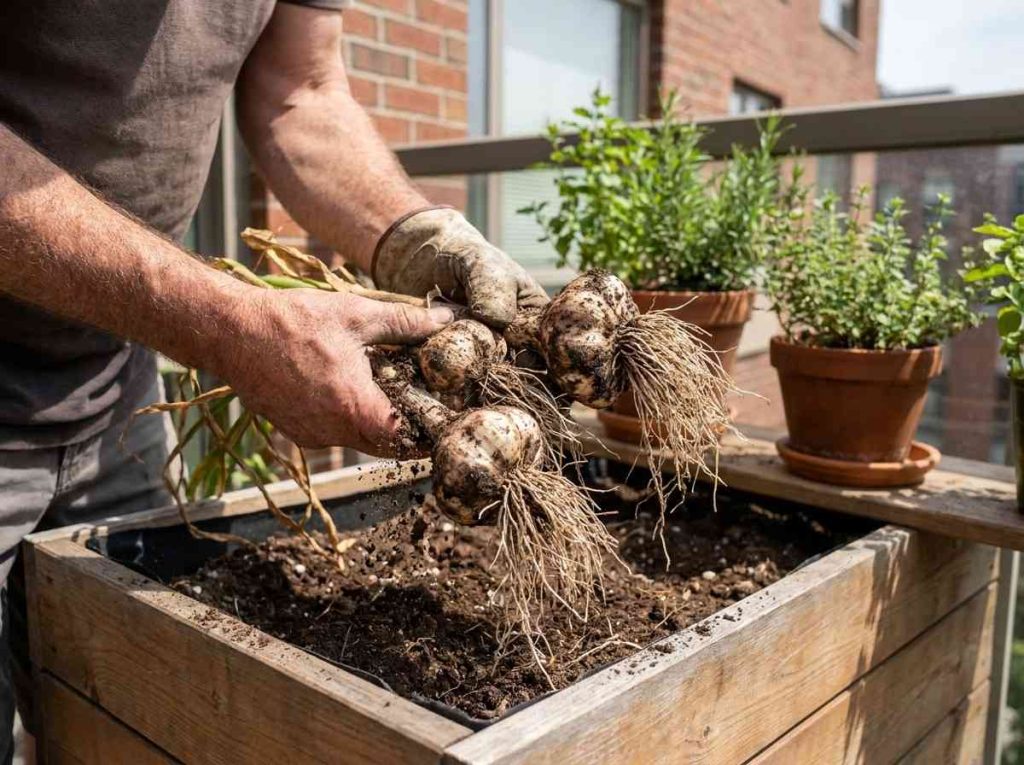
Leaves start turning brown and dry. About half the leaves should be brown. The bulbs swell and feel firm. The garlic skin looks papery and dry. These signs show the garlic is ready to harvest.
Use a garden fork or trowel to loosen soil carefully. Lift bulbs gently to avoid bruising. Do not pull garlic by the leaves. Shake off excess dirt, but do not wash bulbs. Let garlic dry in a shaded, airy spot before curing.
Place garlic in a warm, dry, and well-ventilated area. Spread bulbs out on a rack or hang them in bunches. Cure garlic for 2 to 3 weeks until the outer skin is dry. Trim roots and cut stems after curing. Store garlic in a cool, dark place with good airflow. Avoid plastic bags; use mesh or paper bags instead.
Growing garlic in containers can sometimes bring challenges. Knowing how to spot and fix problems helps your garlic grow healthy and strong. This section covers common issues and easy solutions. Pay close attention to your garlic’s signs.
Yellow leaves often mean your garlic needs attention. It may get too much or too little water. Check the soil moisture regularly. Garlic likes moist soil but not soggy. Too much water causes root problems, leading to yellow leaves.
Another cause is lack of nutrients. Garlic needs nitrogen to keep leaves green. Use a balanced fertilizer to feed your plants. Yellow leaves could also mean not enough sunlight. Ensure your container gets at least 6 hours of sun daily.
Small garlic bulbs are common in containers if space is tight. Use a large container to give roots room to grow. Crowded cloves compete for nutrients and water, making bulbs smaller.
Soil quality affects bulb size too. Use rich, well-draining soil mixed with compost. Poor soil limits growth. Garlic also needs full sun to grow big bulbs. Place containers in a sunny spot.
Mold and rot happen when garlic stays too wet. Overwatering or poor drainage causes these problems. Use containers with drainage holes. Avoid letting water sit in the saucer below the pot.
Good airflow helps prevent mold. Keep plants spaced apart. Remove any infected leaves or bulbs quickly. Use a fungicide made for edible plants if mold appears. Healthy soil and proper watering keep mold and rot away.
Choose a container at least 8-12 inches deep with good drainage holes.
Garlic needs 6-8 hours of direct sunlight daily for healthy growth.
Water garlic when the top inch of soil feels dry, about once a week.
Yes, garlic grows well indoors if it gets enough light and cool temperatures.
Plant garlic in fall, about 4-6 weeks before the first frost date.
Growing garlic in containers suits small spaces well. It needs good soil and enough sunlight. Water regularly but avoid too much moisture. Containers make it easy to move plants as needed. Harvest garlic when the leaves turn yellow and dry.
Enjoy fresh garlic right from your own container garden. This simple method helps anyone add garlic to their home cooking. Start with a few containers and watch your garlic grow. Gardening made easy, even on a balcony or patio.