Gardening Made Simple.
Growing radishes is a satisfying experience for many home gardeners. These root vegetables are fast-growing, easy to care for, and add a crisp, peppery flavor to meals. But one question often comes up: how much sun do radishes need? Understanding their sunlight requirements is essential for strong growth, healthy roots, and a good harvest. Whether you are a beginner or have tried radishes before, learning about their light needs can make the difference between a weak crop and a vibrant patch of radishes.
Radishes are unique compared to other vegetables. They grow quickly, sometimes in just three weeks, and their needs are simple—but specific. Sunlight is a major factor that influences everything from leaf growth to root size and taste. If you get the sunlight right, you will be rewarded with crisp, flavorful radishes.
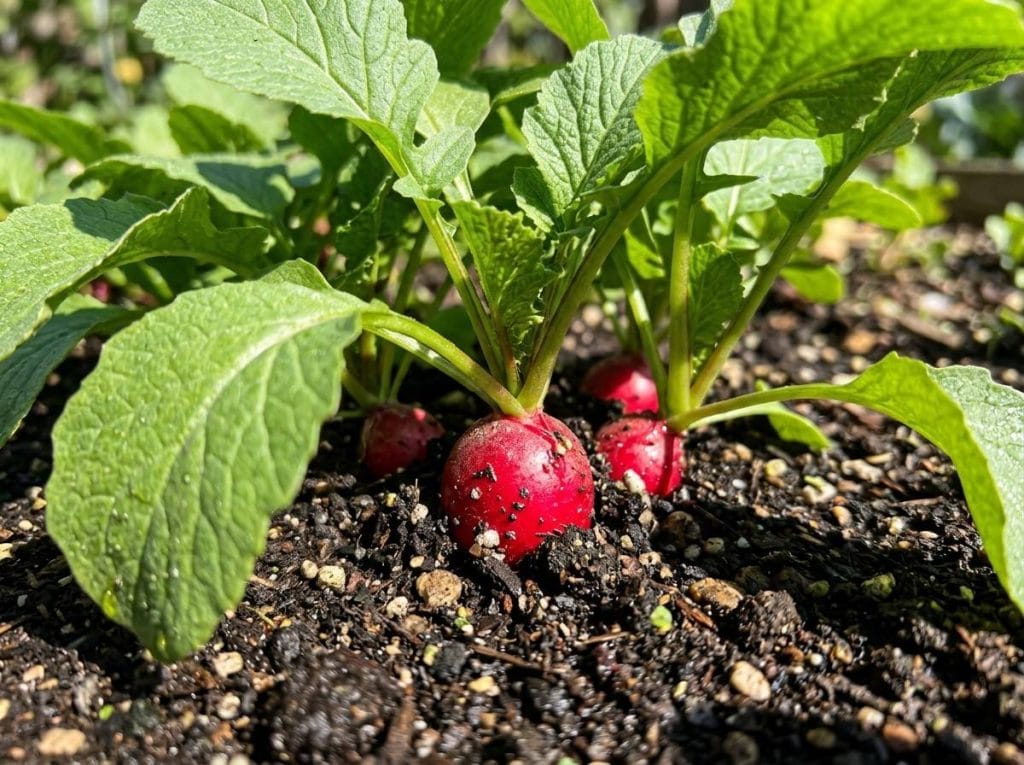
If you get it wrong, your radishes may turn out small, bitter, or misshapen.
In this article, you will discover exactly how much sun radishes need, why sunlight matters, how to manage shade, and practical tips for every stage of radish growth. You will also find real-world examples, helpful comparisons, and answers to common questions.
By the end, you’ll have the confidence to grow your best radishes yet.
Radishes are cool-season vegetables, but that does not mean they like shade. To grow well, radishes need full sun most of the time. Full sun means at least 6 hours of direct sunlight each day. However, there are cases where radishes can tolerate less, especially in hot climates or during summer.
Sunlight drives photosynthesis, the process that turns light into energy. This energy helps radishes:
If radishes do not get enough sun, their leaves may become pale and thin. The roots will often stay small or become woody and bitter. Too much shade slows growth and can encourage pests and diseases.
Most radishes thrive with 6-8 hours of direct sun daily. This is considered full sun in gardening. Here’s a comparison of how sunlight affects radish growth:
| Sunlight (Hours/Day) | Radish Growth | Root Size | Taste |
|---|---|---|---|
| 0–3 | Weak, leggy | Small, misshapen | Bitter |
| 4–5 | Moderate | Medium | Less crisp |
| 6–8 | Strong, healthy | Large, round | Crisp, sweet |
| 9+ | Very strong | Can dry out | Can get spicy |
Notice how radishes grown in full sun (6–8 hours) produce the best results. Less than 6 hours can work, but yields and taste often suffer.
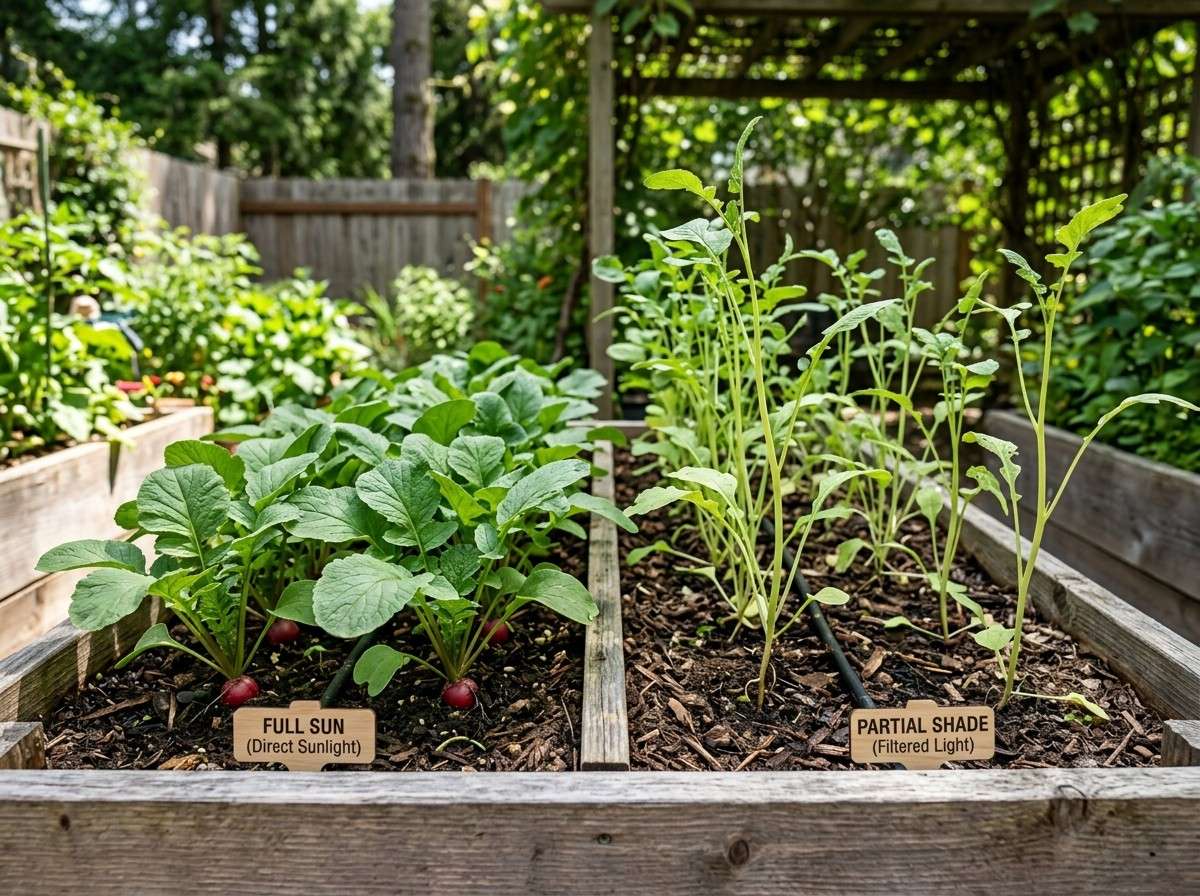
Not every garden gets full sun. Trees, buildings, and fences can block light. So, can radishes grow in partial shade? The answer is yes, but with some limits.
Partial shade means 3–5 hours of direct sunlight, or filtered light through leaves or structures. Radishes will grow in these conditions, but you may notice:
In hot climates, partial shade can prevent radishes from bolting (flowering too early) and getting too spicy. Afternoon shade is especially useful if temperatures rise above 75°F (24°C). This helps keep roots tender.
Here’s a table comparing radish results in full sun and partial shade:
| Condition | Growth Speed | Root Quality | Flavor |
|---|---|---|---|
| Full Sun | Fast (3–4 weeks) | Large, crisp | Mild, sweet |
| Partial Shade | Medium (4–6 weeks) | Small, less crisp | More spicy |
If you only have partial shade, choose radish varieties bred for shade or cooler weather. Still, expect smaller roots and stronger flavors.
Not all radishes are the same. Some types need more sun than others. Picking the right variety for your sunlight conditions can boost your harvest.
Choosing the right variety for your garden’s sun level can help avoid disappointment.
Before planting, it’s smart to map sunlight in your garden. This means observing how much sun different areas get through the day.
This step prevents planting in shaded spots by mistake. Even a small change in sunlight can affect your radish crop.
Many beginners skip mapping sunlight, but it’s one of the easiest ways to improve your harvest.
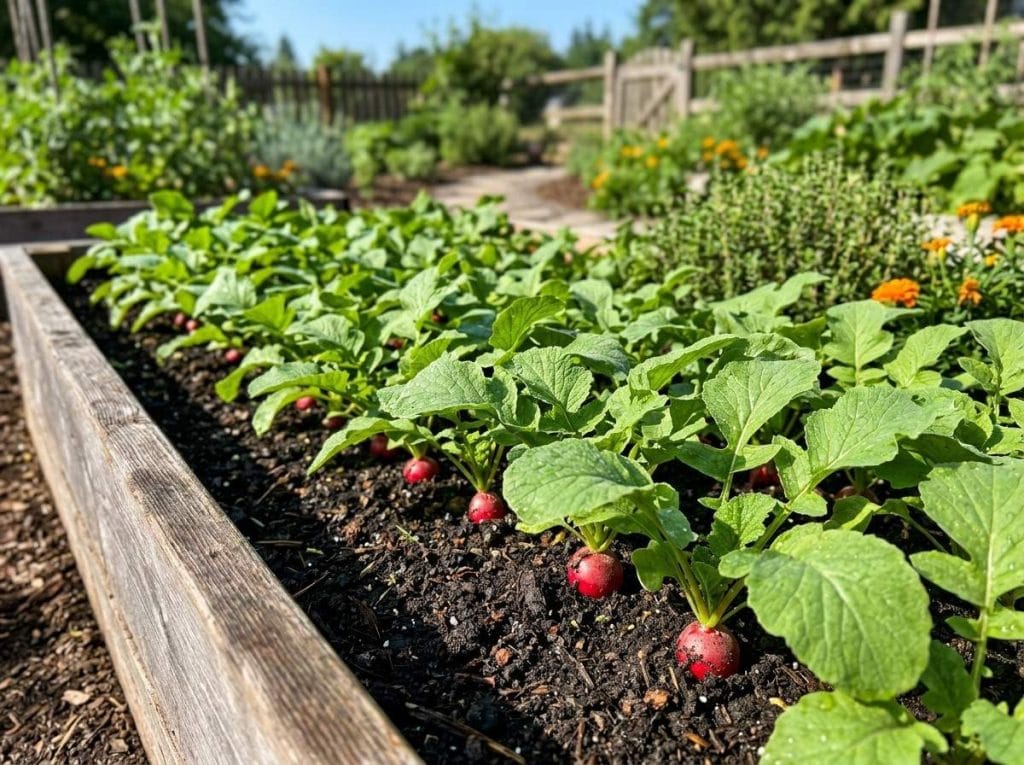
Radishes need sun throughout their life, but some stages matter more than others.
Radish seeds need warm soil (50–70°F) and light for fast sprouting. Too much shade can slow germination or cause uneven growth.
The first leaves, called cotyledons, appear within days. At this stage, strong sun encourages thick, healthy leaves.
Between weeks 2–4, radishes focus on growing their root. This stage requires maximum sunlight. Any reduction in sun can lead to small or deformed roots.
Radishes mature quickly. Sun at this stage helps roots fill out and develop full flavor. If you miss sunlight now, roots may stay thin and lack taste.
While radishes love sun, excessive heat and sunlight can cause problems.
If you live in a hot area, consider planting radishes in spring or fall when sun is less intense.
Radishes do not need protection from sun in most climates, but in southern US regions, a bit of shade can improve quality.
Sunlight and temperature are linked. Too much sun raises soil temperature, which can affect radish growth.
Radishes grow best between 50–75°F (10–24°C). Above 80°F, roots may become woody and bitter. If your garden gets hot, morning sun and afternoon shade is ideal.
In a study from Oregon State University, radishes grown with 6 hours of morning sun and afternoon shade produced larger roots than those with all-day sun in midsummer. The roots stayed crisp and mild, while those with full sun became spicy and hollow.
Growing radishes is not just about planting and watering. Getting sunlight right means planning and adjusting as you go.
Many radish issues trace back to light problems. Here are the most frequent:
This usually means too little sun. Radishes stretch toward light, making leaves long and weak.
Insufficient sunlight during root development leads to poor root growth and tough texture.
Too much sun and heat force radishes to flower. The roots stop growing and taste worse.
If some radishes get more sun than others, you’ll see mixed sizes and shapes at harvest.
Radishes are often grown alongside lettuce, carrots, or beets. How do their sun needs compare?
| Vegetable | Sunlight Needed (Hours) | Shade Tolerance |
|---|---|---|
| Radishes | 6–8 | Medium |
| Lettuce | 4–6 | High |
| Carrots | 6–8 | Low |
| Beets | 6–8 | Medium |
| Spinach | 4–6 | High |
Radishes need similar sunlight to carrots and beets but can handle a bit more shade than carrots.
Sometimes, your radishes are already planted and you notice problems. Here’s what you can do:
If some plants are in shade, transplant them to a sunnier area. Radishes handle moving well if done early.
Placing aluminum foil or white boards near shaded radishes can increase light.
Cut back tall plants or branches that block sun.
If summer is too hot, plant radishes in early spring or late fall for better sun-to-temperature balance.
If you do not have outdoor sun, you can grow radishes indoors with grow lights.
Radishes need 12–14 hours of artificial light daily to mimic full sun.
Growing radishes indoors is possible but needs planning and the right equipment.
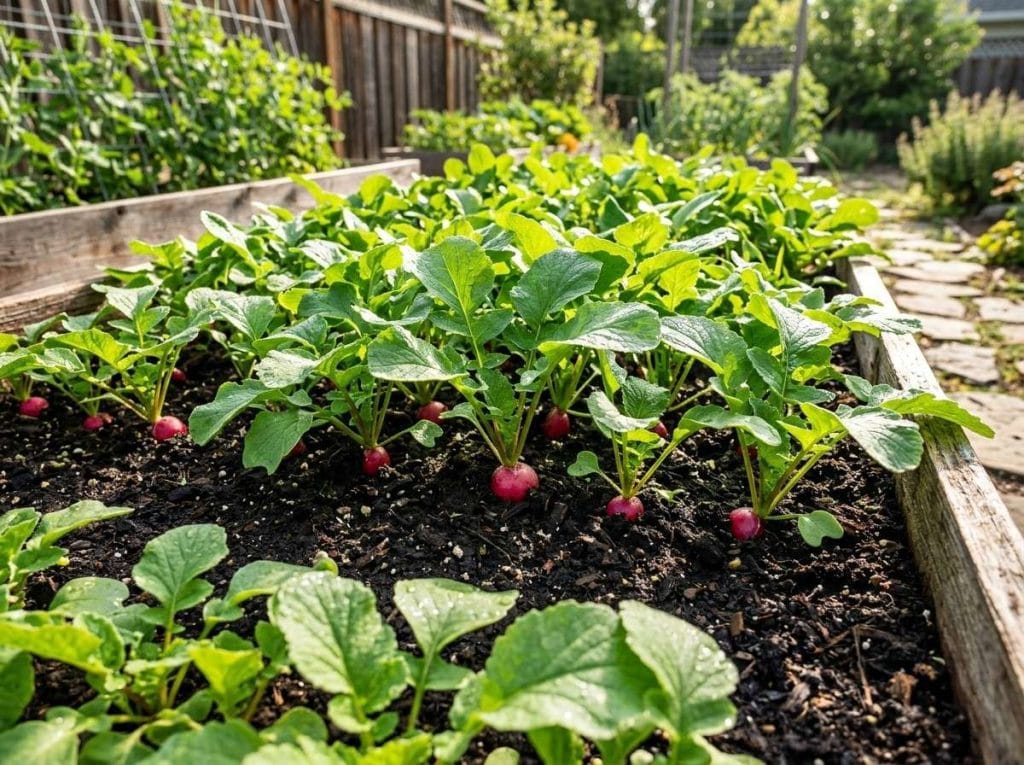
Radishes need at least 6 hours of direct sunlight each day for best growth. If you can provide 8 hours, the roots will be larger and sweeter. Less than 6 hours can work, but roots may stay small and leaves thin.
Radishes can grow in partial shade (3–5 hours of sun), but they will be slower and the roots may not fully develop. Full shade is not recommended for radishes, as it leads to poor taste and weak plants.
Yes, radishes can survive in hot climates, but too much sun and heat can cause them to bolt or get spicy. In these areas, give them morning sun and afternoon shade, or plant in spring and fall when temperatures are cooler.
Too much sun, especially in high heat, can cause radishes to wilt, become spicy, or bolt (flower early). Protect with shade cloth or water often to keep roots cool.
Yes, you can grow radishes indoors using LED or fluorescent grow lights. Provide 12–14 hours of light daily, keep lights close to plants, and use containers with good drainage for best results.
Radishes are easy to grow, but their sunlight needs are specific. Aim for 6–8 hours of direct sun for best results. Partial shade works in hot climates, but expect smaller roots. Mapping sunlight, choosing the right varieties, and using creative solutions can help you grow healthy, tasty radishes even in less-than-perfect conditions.
Most gardeners overlook the importance of sunlight mapping and microclimates. These steps only take a few minutes but can double your yield and quality. If you pay attention to sun at each growth stage, you will enjoy crisp, flavorful radishes every time.
For more detailed research on radish sunlight requirements, you can check this Gardener's Supply Company guide.