Gardening Made Simple.
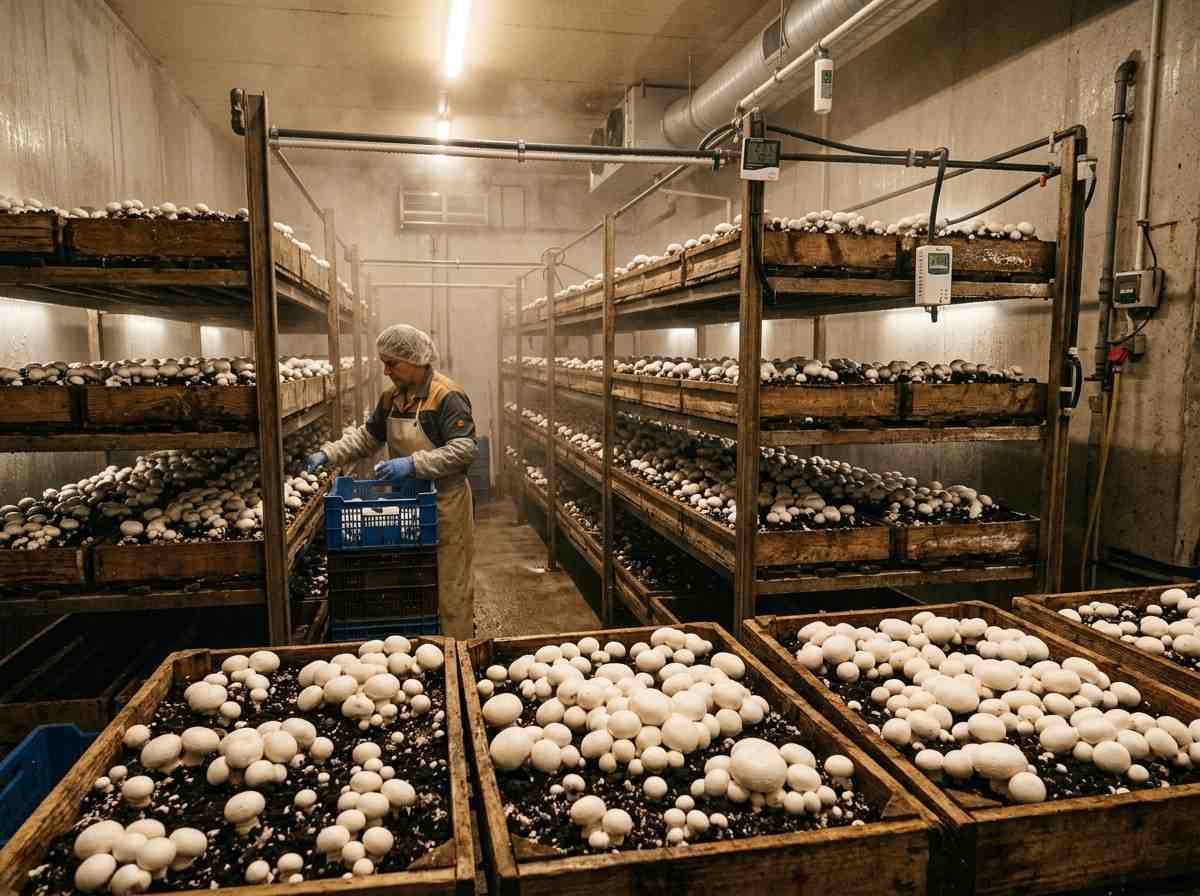
Are you curious about growing your own fresh button mushrooms at home? Imagine having a steady supply of these tasty, nutritious mushrooms right in your kitchen. Learning How to Grow Button Mushrooms can help you enjoy fresh harvests at home with simple steps and minimal space.
It’s easier than you might think, and you don’t need a big garden or special tools. In this guide, you’ll discover simple steps that anyone can follow to grow button mushrooms successfully. By the end, you’ll feel confident turning a small space into your personal mushroom farm.
Ready to unlock the secrets of mushroom growing and enjoy fresh harvests? Let’s dive in!
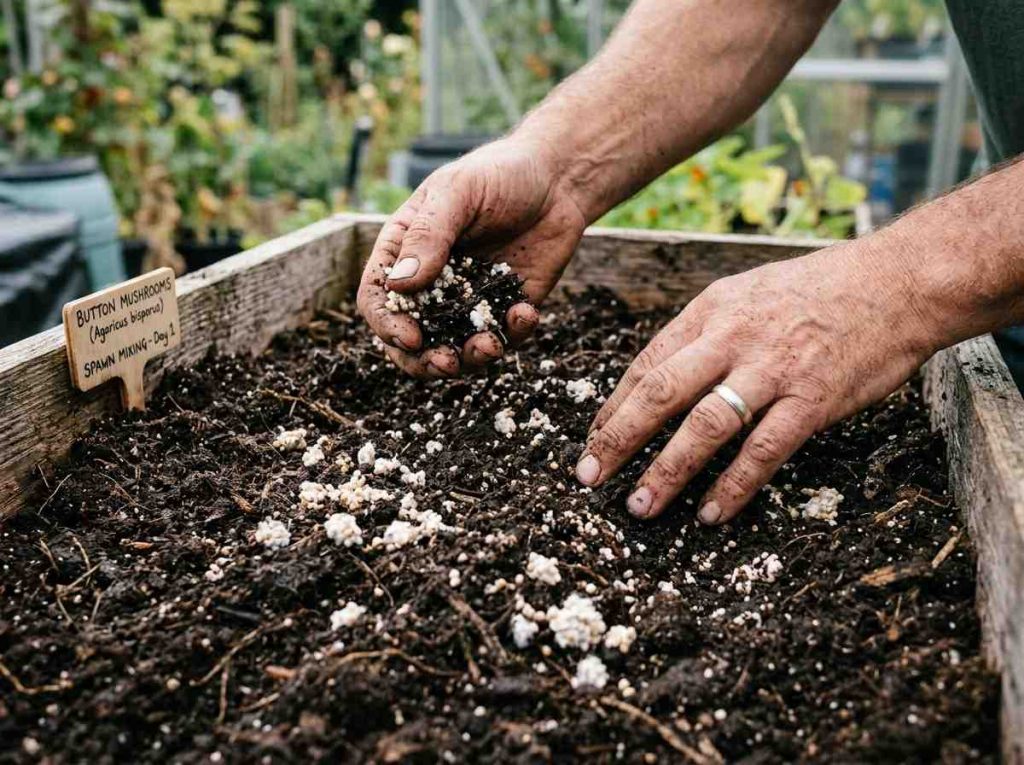
Choosing the right mushroom spawn is the first step to a successful button mushroom harvest. Spawn is the mushroom seed that starts the growing process. Picking the best spawn affects the size, yield, and health of your mushrooms. Quality spawn grows faster and resists diseases better. Knowing what type of spawn to use helps you plan your mushroom farm well.
There are several types of button mushroom spawn. The most common are grain spawn, sawdust spawn, and plug spawn. Grain spawn is made from grains like wheat or rye. It spreads mycelium quickly. Sawdust spawn is made from sterilized sawdust mixed with mycelium. It is often used in large mushroom farms. Plug spawn looks like wooden dowels infused with mycelium. It works well in logs or wood-based beds.
Each type suits different growing methods. Grain spawn is best for compost beds. Sawdust spawn fits well with pasteurized substrates. Plug spawn is good for outdoor mushroom growing. Choose the spawn type that matches your growing setup.
Buying quality mushroom spawn ensures good growth. Purchase spawn from trusted suppliers with good reviews. Look for spawn that is fresh and free from contamination. Some suppliers offer organic spawn if you want chemical-free mushrooms. Check if the supplier provides growing advice and support.
Local suppliers may offer spawn adapted to your climate. Online stores give access to a wide range of spawn types. Compare prices and delivery times before buying. Properly packed spawn arrives healthy and ready to use.
Preparing the growing medium is a key step in growing button mushrooms. The right medium helps mushrooms grow strong and healthy. It must have the right nutrients and texture. Proper preparation also protects against diseases and pests. This section explains how to select and prepare the best growing medium.
Choose compost made for mushroom growing. It should be rich in organic material like straw, manure, or hay. Good compost has the right moisture level and texture. Avoid compost with chemicals or weed seeds. Fresh compost works best. It provides the food mushrooms need to grow well.
Sterilize the compost to kill unwanted fungi and bacteria. Use heat to make the medium safe. This step stops harmful organisms from competing with mushrooms. After sterilizing, condition the compost. Keep it moist and at the right temperature. This helps good bacteria grow and prepares the medium for mushroom spores.
Setting up the right environment is key to growing healthy button mushrooms. Mushrooms need specific conditions to grow well. Creating the perfect space helps mushrooms develop strong and tasty fruit bodies. This section explains the key factors to focus on for a good growing environment.
Button mushrooms grow best between 55°F and 60°F (13°C to 16°C). Temperatures outside this range can slow growth or cause damage. Keep the humidity high, around 85% to 90%. High humidity prevents the mushrooms from drying out. Use a humidifier or mist the area regularly to keep moisture levels steady.
Button mushrooms do not need much light. Low or indirect light is best. Bright light can dry the mushrooms and stop growth. Good air circulation is important to prevent mold and keep the air fresh. Use a small fan or open vents to allow fresh air. Avoid strong drafts that can dry the mushrooms too fast.
Inoculating the compost is a crucial step in growing button mushrooms. This process introduces mushroom spawn into the compost, allowing the fungi to grow and produce mushrooms. Proper inoculation ensures a healthy crop and good yield.
Timing and cleanliness are vital during inoculation. The compost must be at the right temperature and moisture level. The spawn spreads through the compost, feeding on organic matter.
Start by preparing clean tools and a suitable workspace. Break the mushroom spawn into small pieces. Spread the spawn evenly over the compost surface.
Mix the spawn gently into the top layer of compost. Avoid deep mixing, which can damage the spawn. Cover the compost with a thin layer of casing soil.
Keep the compost moist but not wet. Maintain a temperature around 24°C (75°F). This helps the spawn to colonize quickly.
Work in a clean, dust-free environment. Wash hands and tools before starting. Use fresh, high-quality spawn from a trusted source.
Avoid touching the spawn directly with bare hands. Wear gloves if possible. Keep pets and insects away from the inoculation area.
Control humidity and temperature to prevent unwanted mold. Remove any contaminated compost immediately to protect the rest.
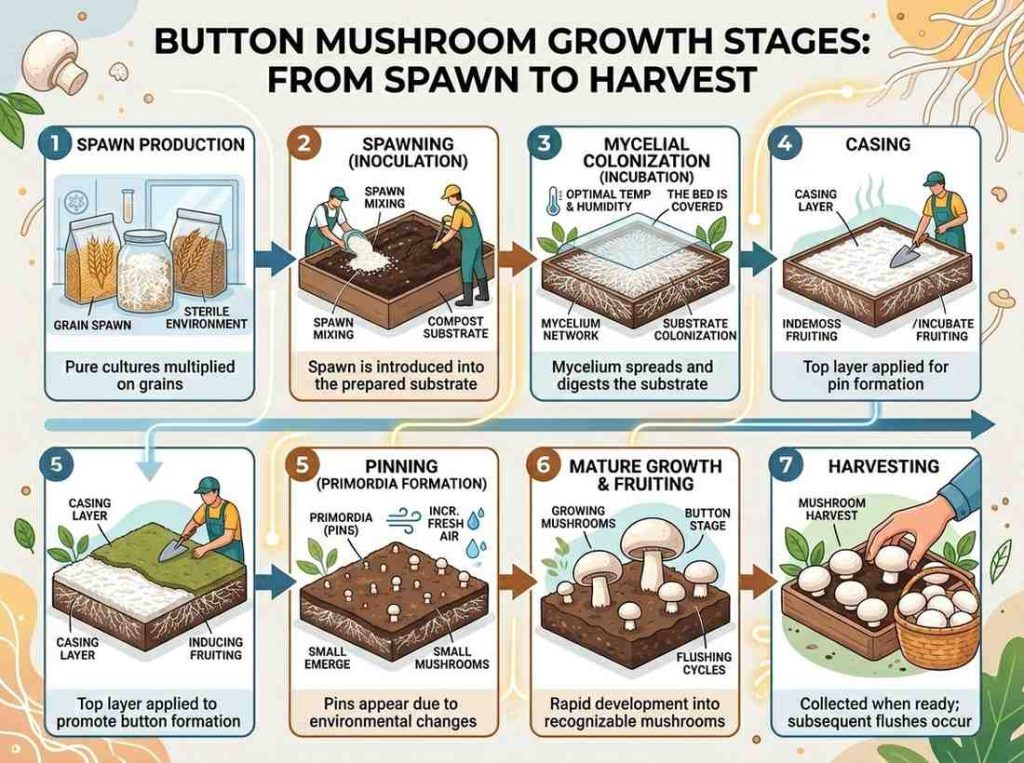
Caring for mushroom beds is key to growing healthy button mushrooms. The right care helps mushrooms grow strong and tasty. Focus on keeping the beds moist and at the right temperature. Cleanliness also plays an important role to prevent mold and pests.
Good care means watching the beds every day. Small changes can affect mushroom growth. Pay close attention to water and environment. These steps ensure a good harvest and happy mushrooms.
Water the beds gently to keep them moist. Too much water can cause rot and mold. Too little water stops mushroom growth. Water once or twice a day, depending on the weather. Use a spray bottle or fine watering can. Avoid wetting the mushrooms directly.
Keep the mushroom beds cool and dark. Ideal temperature is between 55 and 60 degrees Fahrenheit. Humidity should stay high, around 85 to 90 percent. Use a humidifier or mist the air if needed. Make sure fresh air flows to prevent stale conditions. Avoid direct sunlight and strong winds.
Harvesting button mushrooms is an exciting step in mushroom growing. It shows your hard work has paid off. Picking mushrooms at the right time is key to good taste and texture. Knowing how to pick them gently keeps the growing bed healthy for more mushrooms.
Button mushrooms are ready when their caps are firm and white. The cap edges start to open slightly but do not flatten. The mushrooms should be about 1 to 2 inches wide. Avoid picking mushrooms that are too small or have dark spots. These signs show the mushrooms are fresh and at their best.
Hold the mushroom gently at the base of the stem. Twist it carefully while pulling upward. Avoid pulling too hard to prevent damage to the mycelium. Do not cut the mushrooms with a knife; twisting keeps the bed intact. Place harvested mushrooms in a shallow basket to avoid bruising.
Growing button mushrooms can be simple, but some problems may arise. Knowing common issues helps keep your mushrooms healthy. Early detection and quick action save your crop. This section explains how to spot and fix typical problems.
Pests like flies and mites often attack mushroom beds. They damage the mycelium and reduce yield. Use fine netting to block insects from entering. Keep the growing area clean and dry to prevent pests.
Diseases such as green mold and bacterial blotch can spoil your mushrooms. Green mold appears as green patches on the surface. Bacterial blotch causes brown spots and a slimy feel. Remove infected parts immediately to stop spread. Proper ventilation lowers disease risk.
Slow or no mushroom growth is a common challenge. Poor compost quality or wrong temperature often causes this. Ensure the compost is fresh and well-prepared. Maintain the temperature between 55-60°F for best growth.
Another issue is small or misshapen mushrooms. This happens if humidity is too low or air circulation is poor. Keep humidity around 85% and provide gentle airflow. Avoid overwatering, which can drown the mycelium.
After harvesting your button mushrooms, proper storage is key. Fresh mushrooms can spoil quickly. Storing them right keeps them tasty and firm. Using your harvest soon ensures the best flavor and texture.
Keep mushrooms dry and cool. Store them in a paper bag, not plastic. Paper lets air circulate and absorbs moisture. Place the bag in the fridge’s main compartment. Avoid washing mushrooms before storing. Clean them just before use.
Use mushrooms within a week. Check for sliminess or dark spots. These signs mean they are past their prime. Freeze mushrooms if you want to keep them longer. Slice and freeze on a tray first. Then store in a sealed container.
Button mushrooms are very versatile. They taste great raw in salads. Sauté them with garlic and butter for a simple side. Add mushrooms to soups or stews for richness. Mix chopped mushrooms into pasta sauces.
Grill or roast mushrooms with herbs for a smoky flavor. Use them as a pizza topping or in omelets. Mushrooms pair well with chicken, beef, or vegetables. Try stuffing large button mushrooms for a tasty snack.
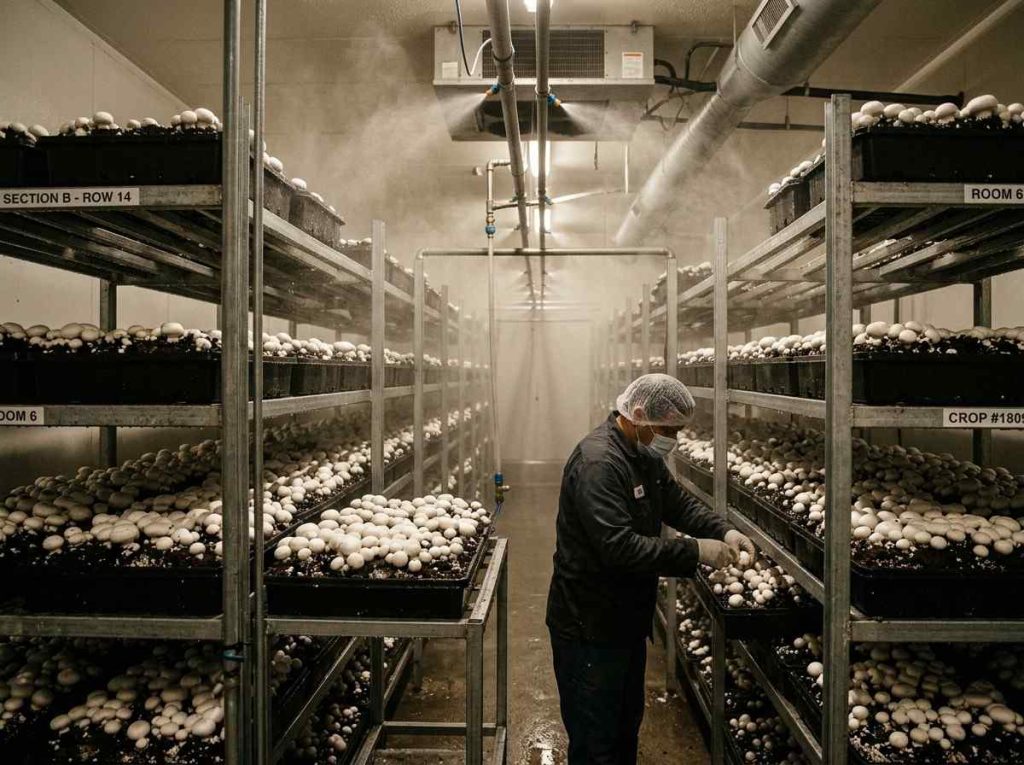
Button mushrooms usually take about 3 to 4 weeks to fully grow and be ready for harvest.
The ideal temperature for growing button mushrooms is between 55°F and 60°F (13°C to 16°C).
Yes, button mushrooms grow well indoors with proper light, humidity, and temperature control.
Keep the soil moist but not wet; water lightly every day or when the soil feels dry.
Button mushrooms grow best in rich, composted soil with good drainage and a pH of 6 to 7.
Growing button mushrooms can be simple and rewarding. Start with good quality spawn and fresh compost. Keep the environment moist and cool for best results. Watch the mushrooms closely as they grow. Harvest them when they are firm and white.
With patience and care, you can enjoy fresh mushrooms at home. Try it step by step, and see how fun growing mushrooms can be. Small efforts bring tasty rewards. Give your garden a healthy touch with homegrown button mushrooms.