Gardening Made Simple.
Planting beet seeds is a rewarding activity for both new and experienced gardeners. Beets are a root vegetable known for their deep red color and sweet, earthy taste. They grow well in many climates, and you can use them in salads, soups, or as a side dish. If you have never grown vegetables before, beets are a good place to start. Their seeds are easy to handle, and the plants are not very demanding.
This guide will show you, step by step, how to plant beet seeds, care for them, and harvest fresh beets from your garden. You will also learn practical tips, common mistakes to avoid, and answers to the most frequent questions. By the end, you will feel confident about growing your own beets, even if you have limited gardening experience.
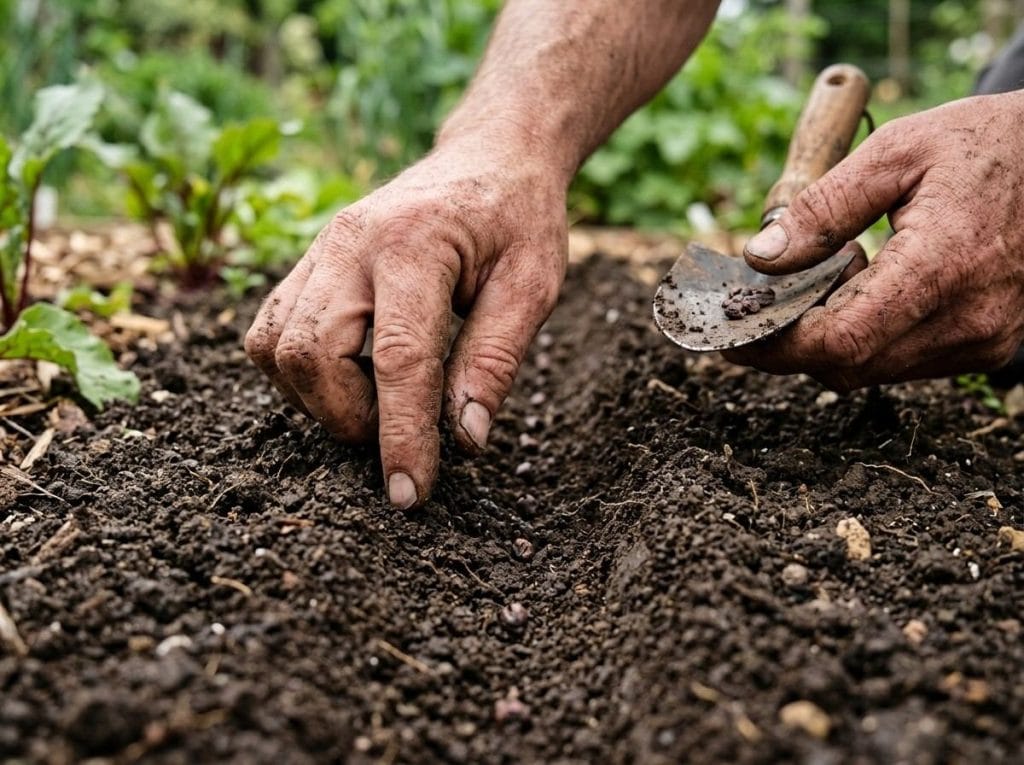
Beet seeds are unique. Each seed is actually a cluster, called a seed ball, which often contains 2-5 embryos. This means you may get several seedlings from each seed ball. When you plant beets, you should be ready to thin the seedlings later.
There are several beet varieties available. Here are some popular types:
Choosing the right variety depends on your taste and climate. For example, Detroit Dark Red is reliable and grows well in most conditions, while Golden Beet is better for those who dislike red beet stains.
| Variety | Root Color | Days to Harvest | Flavor |
|---|---|---|---|
| Detroit Dark Red | Red | 60-65 | Earthy, sweet |
| Golden Beet | Yellow | 55-60 | Mild, less earthy |
| Chioggia | Red/White | 55-60 | Sweet, mild |
| Cylindra | Red | 60-70 | Sweet, easy to slice |
| Early Wonder | Red | 50-55 | Sweet, tender greens |
Non-obvious insight: The color and shape of beet roots do not affect their growth needs, but some varieties (like Cylindra) are easier to process in the kitchen due to their shape.
Beets grow best in loose, well-drained soil. They do not like rocky or compacted ground because their roots need space to expand. Before planting, you should prepare your garden carefully.
Beets need full sun for best growth—at least 6 hours per day. If you plant in partial shade, the roots may stay small.
You should also plan your beet rows. Leave 12-18 inches between rows so you can weed and harvest easily.
Beets require consistent moisture but do not like soggy soil. If your garden floods easily, consider raised beds.
| Factor | Optimal Range | Why It Matters |
|---|---|---|
| Soil pH | 6.0–7.0 | Beets absorb nutrients best in this range |
| Sunlight | 6+ hours/day | Promotes root development |
| Spacing between rows | 12–18 inches | Easy access for weeding and harvesting |
| Soil depth | 8+ inches | Allows roots to grow freely |
Practical tip: If your soil is heavy clay, mix in sand and compost to improve drainage before planting.
Beets are cool-season vegetables. You can plant them in early spring or late summer for a fall crop.
Beet seeds germinate best when soil temperatures are between 50°F and 85°F (10°C–29°C). If soil is colder, seeds may sprout slowly or not at all.
For a steady harvest, plant beets every 2-3 weeks until midsummer. This method, called succession planting, gives you fresh beets over several months.
Beginner insight: Many new gardeners plant all seeds at once, but succession planting helps avoid a glut and keeps your kitchen supplied longer.
Follow these steps for best results:
Rake the soil smooth. Remove any large clumps or stones. If you have dry soil, water lightly before planting.
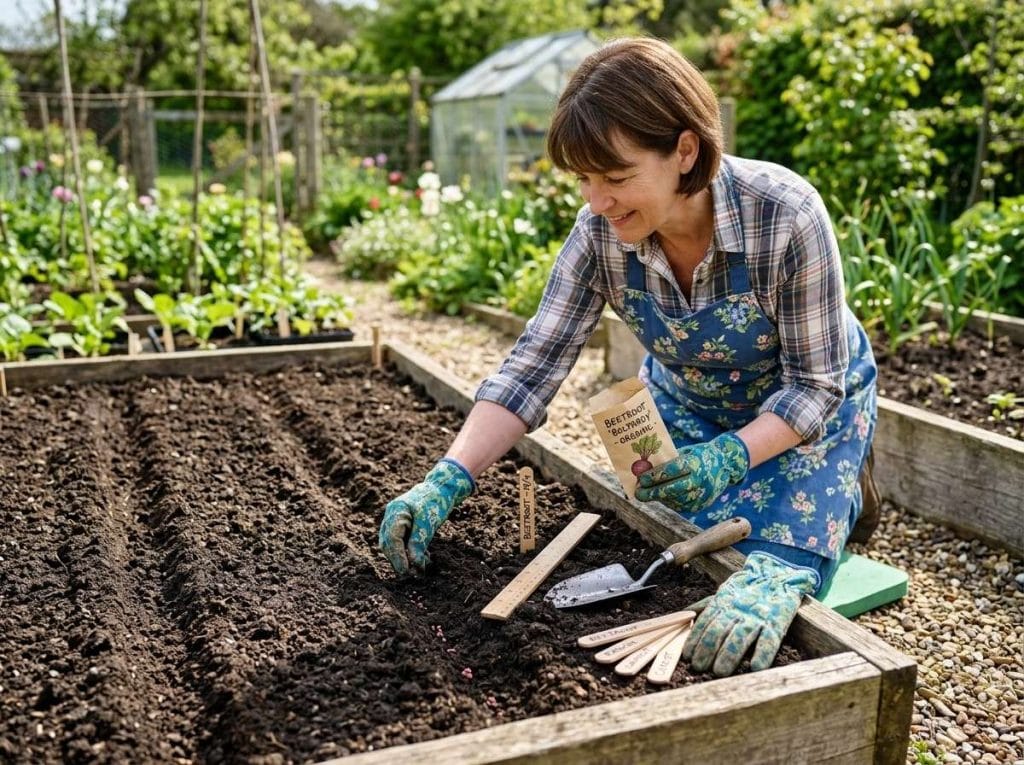
Use a stick or your finger to make shallow grooves (called furrows) in the soil. Furrows should be ½ inch deep and spaced 12-18 inches apart.
Place beet seed balls in the furrow, leaving 1 inch between each seed. If you want larger roots, space seeds 2 inches apart.
Cover the seeds lightly with soil. Press gently to ensure good contact.
Water the area gently using a watering can or hose with a soft spray. The soil should be moist but not muddy.
Add a thin layer of straw or compost on top. This keeps soil moist and prevents weeds.
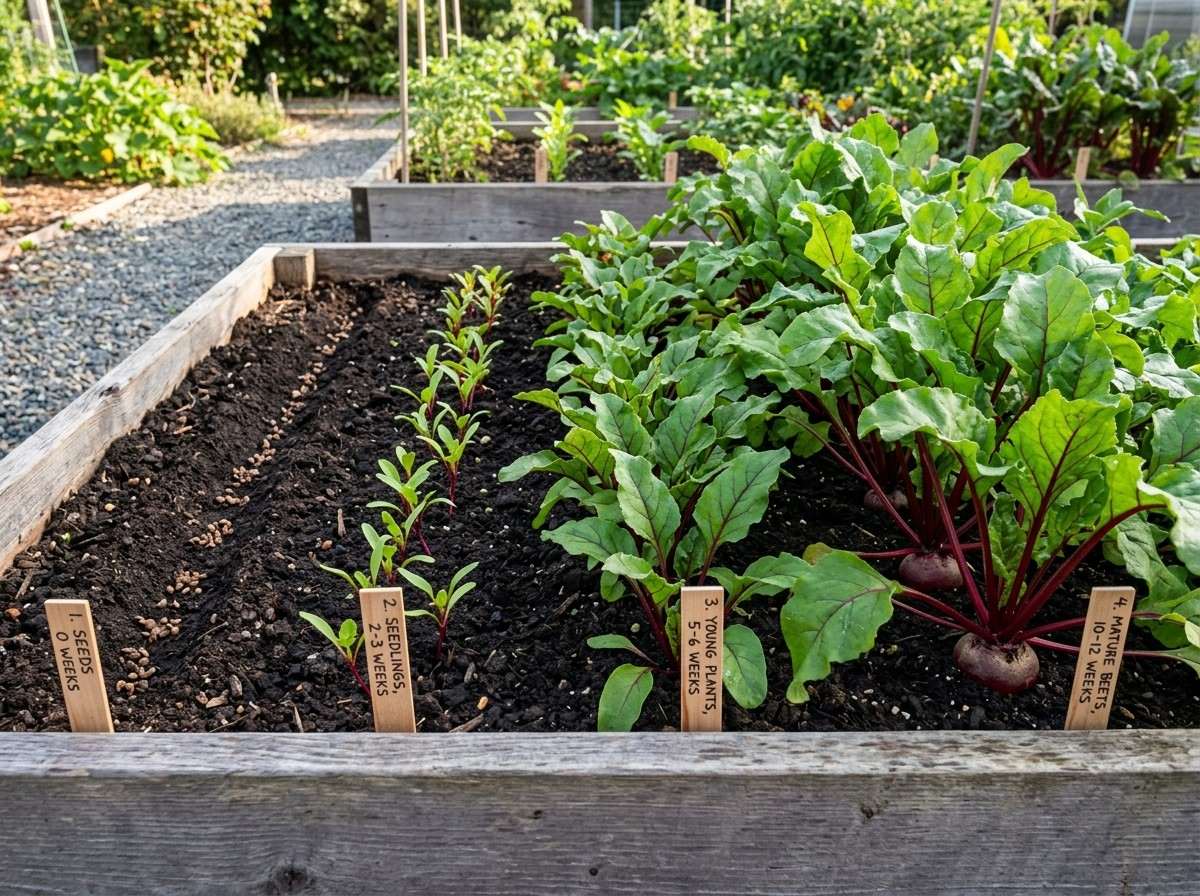
If you plant different varieties, use garden markers to label each row. This helps you remember which beets are where.
Non-obvious insight: Because beet seed balls contain several embryos, you may see multiple seedlings pop up at each spot. You must thin them later for proper growth.
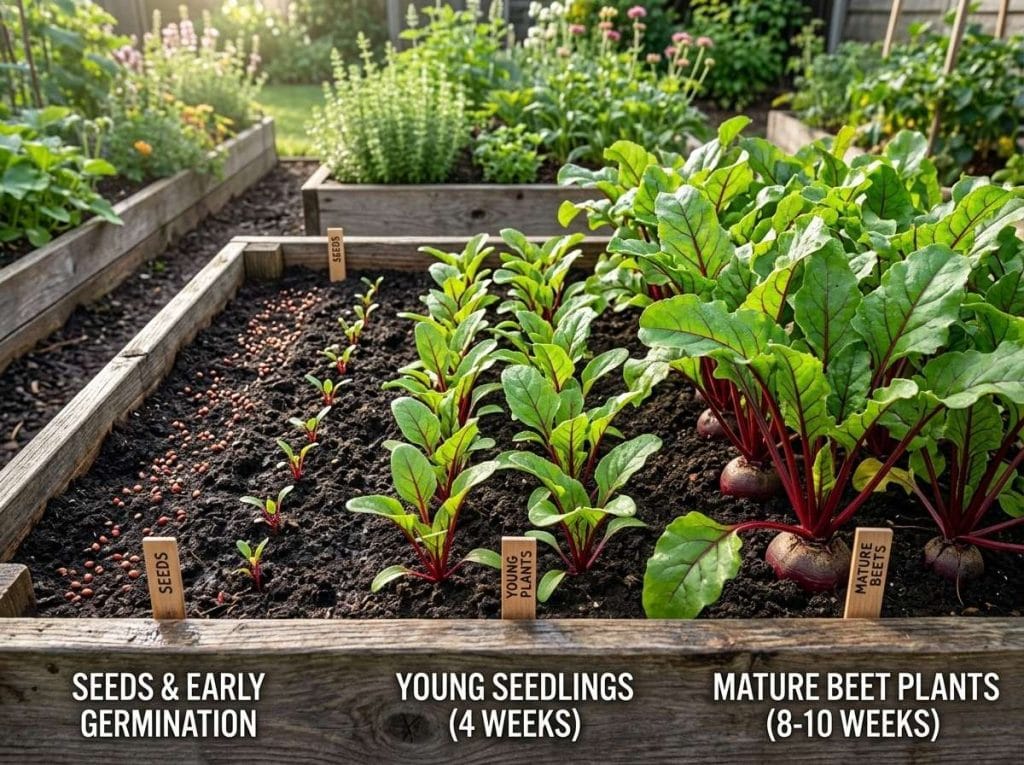
Keep soil evenly moist during germination. Beets take 5-14 days to sprout, depending on soil temperature.
Once beet seedlings appear, care is important for healthy roots and leaves.
When seedlings reach 2-3 inches tall, thin them to allow space for roots. Remove extra seedlings so there is 3-4 inches between each plant.
Do not pull seedlings, as this may disturb roots. Instead, snip extra plants at soil level with scissors.
Common mistake: Beginners often skip thinning, leading to crowded beets with small, misshapen roots.
Beets need 1 inch of water per week. Water deeply rather than frequently, so roots grow downwards.
Avoid overhead watering late in the day. Wet leaves overnight can invite disease.
If your soil is rich, you may not need extra fertilizer. For poor soil, use a balanced vegetable fertilizer (such as 10-10-10 NPK) after thinning.
Too much nitrogen causes lush leaves but small roots. Focus on balanced nutrients.
Keep the beet bed weed-free. Weeds compete for water and nutrients.
Hand-pull weeds or use a hoe gently. Be careful near roots.
Mulch with straw or shredded leaves to keep soil cool and moist. It also suppresses weeds.
Beginner insight: Beets with mulch grow more evenly and resist drought better.
Beets are hardy, but some problems can occur. Here are typical issues and how to solve them:
| Problem | Symptoms | Quick Fix |
|---|---|---|
| Poor germination | Few seedlings | Check soil temp, use fresh seeds |
| Yellow leaves | Leaves lose color | Feed with balanced fertilizer |
| Misshapen roots | Odd shapes, small size | Thin seedlings, prepare soil |
| Leaf miners | White tunnels in leaves | Remove affected leaves |
| Bolting | Flower stalks appear | Water well, plant early/late |
Practical tip: If you see white tunnels in beet leaves, it’s likely leaf miners. Remove affected leaves quickly to prevent spread.
Beets are ready to harvest 50-70 days after planting, depending on variety and weather.
Check the size by gently brushing soil away from the top of the root. Most beets are best at 1.5–3 inches diameter. Larger beets can be woody or tough.
You can also harvest beet greens when they are 4-6 inches tall. They are tasty in salads and stir-fries.
Beginner insight: Do not wash beets until you are ready to eat them. Washing before storage can cause rot.
Non-obvious insight: Beets do not need pollination to produce roots, so you can grow them even if you have no bees or pollinators in your area.
If you don’t have a garden, you can plant beet seeds in containers.
Use a container at least 8-10 inches deep. Wider is better, so roots have room.
Fill with a mix of compost, garden soil, and sand. Beets need loose, fertile soil.
Practical tip: Use a large pot to grow beets and greens together. Pick greens as needed and let roots mature.
Beets are different from carrots, radishes, and turnips in several ways.
| Vegetable | Seed Type | Days to Harvest | Best Planting Season |
|---|---|---|---|
| Beet | Seed ball (cluster) | 50–70 | Spring/Fall |
| Carrot | Single seed | 60–80 | Spring/Fall |
| Radish | Single seed | 20–30 | Spring/Fall |
| Turnip | Single seed | 45–60 | Spring/Fall |
Non-obvious insight: Beet seed balls often produce more seedlings per spot, so thinning is more important for beets than for carrots or radishes.
Beets are versatile. You can eat the roots raw, cooked, or pickled. Beet greens are rich in vitamins A and C. Try roasting beets for a sweet, caramelized flavor, or boiling them for salads.
Statistics show that beets are a healthy addition to your diet. One cup of cooked beets has:
For more nutrition data, see NutritionData.
Beets prefer cool conditions. If you plant in summer, choose heat-tolerant varieties and mulch well to keep roots cool. Some beets may bolt or grow poorly in hot climates.
Beet seeds should be planted ½ inch deep. If you plant deeper, seeds may not sprout well. Light covering is best.
No, beet seeds are not edible. Only the roots and leaves are safe to eat.
Beet seeds can be stored for 2-3 years in a cool, dry place. Older seeds may have lower germination rates.
Yes. You can pick a few leaves from each plant once they reach 4-6 inches tall. Do not remove all leaves, as this can slow root growth.
Growing beets from seed is simple when you follow these steps. With careful preparation, regular care, and a little patience, you will enjoy fresh, healthy beets from your own garden. Try different varieties, experiment with succession planting, and use practical tips to improve your harvest each year.
Remember, even small spaces or containers can produce tasty beets. Happy gardening!