Gardening Made Simple.

Cucumbers grow best with 6 to 8 hours of direct sun each day, and 8 or more hours often brings the fastest growth and the heaviest harvest. Understanding the Sunlight Requirements for Cucumber Plants helps ensure strong vines, reliable flowering, and better-shaped, more flavorful fruits.
Still, sunlight is not always the same in every yard. In hot climates, small gardens, and container setups, the best light pattern can shift a bit. That balance matters, so it helps to know what full sun looks like in real life.
Cucumbers are warm-season plants, and they usually do best in full sun. In plain terms, that means at least 6 hours of direct sunlight a day. For most gardens, though, cucumbers are happier closer to 8 hours when space and weather allow it.
Morning to mid-afternoon sun is especially helpful. It fuels growth early in the day and also dries dew from the leaves. That can lower disease pressure, which matters because cucumber foliage stays dense once vines take off.
Partial sun usually means 4 to 6 hours of direct light. Bright shade means the area looks bright, but the plant does not get steady sun on its leaves. Cucumbers can survive in partial sun, yet they rarely hit their full potential there.
For most home gardens, the safest rule is simple: give cucumbers the sunniest spot you have, unless your afternoons are brutally hot.
In a backyard garden, full sun means the plant gets direct light, not dappled light, for at least 6 hours. If a tree limb or fence throws shade across the bed for half the day, that spot may look bright but still fall short.
Try to picture the light from breakfast through mid-afternoon. If the bed stays sunny during that stretch, cucumbers will usually perform well. If it gets strong light only for a short window, expect slower growth.
Low light shows up fast on cucumber plants. Vines may stay thin and stretched, leaves can look pale, and flowering often slows down. When flowers are scarce, fruit set drops too.
You may also notice smaller cucumbers, fewer side shoots, and a harvest that comes in late. In other words, the plant spends more time surviving than producing. A healthy cucumber vine wants to run, climb, and flower. Without enough sun, it never hits that stride.
Cucumbers love sunshine, but extreme heat can push them past their comfort zone. In places with long, fierce summer afternoons, full sun all day may stress the plant, especially during dry spells.
That does not mean cucumbers suddenly prefer deep shade. They still need strong light to grow well. The goal is to keep the plants in good sun for most of the day, while softening the harshest late-day heat if your climate demands it.
A little afternoon shade can help in desert heat, hot inland valleys, or exposed gardens where surfaces reflect extra heat. In those areas, morning sun is gold. It drives growth without pounding the leaves for every hour of the day.
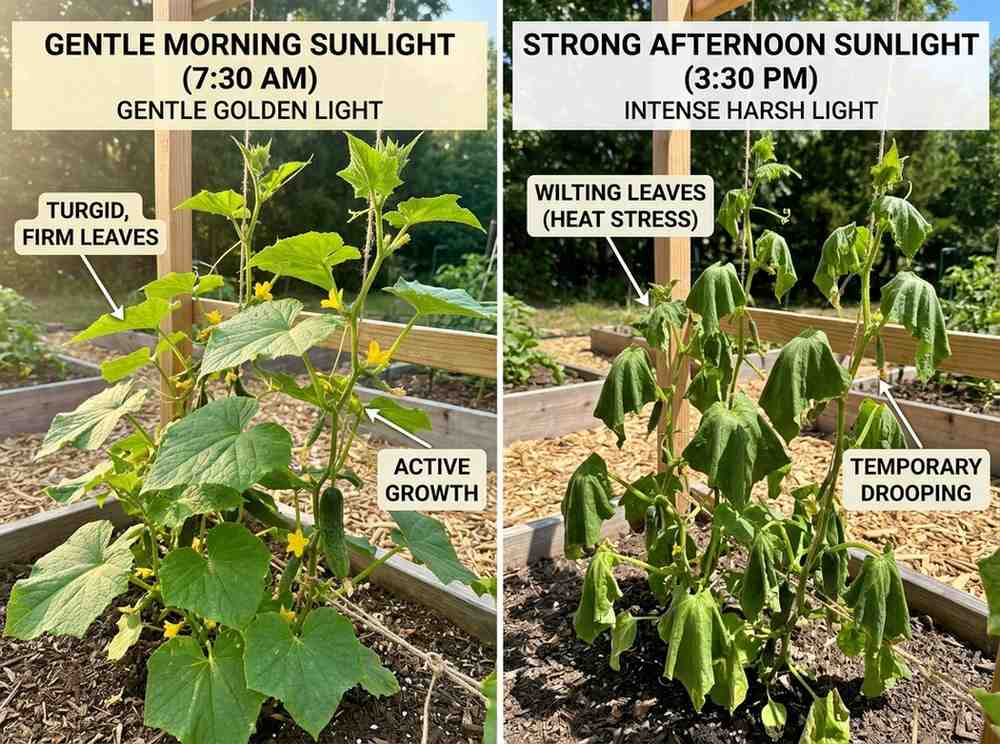
Some wilting at midday can happen even when the plant is healthy. Leaves lose water fast in high heat, then recover by evening. That short wilt is common.
Repeated stress looks different. Watch for leaf scorch, brown or yellow leaf edges, dry soil that pulls away from the bed, flower drop, and fruit that turns bitter. If the plant wilts hard day after day, growth often slows and yields shrink.
Start with site choice. A spot with strong morning sun and light late-day shade often works well in hot regions. If you cannot change the site, a light shade cloth in the afternoon can help.
Mulch also makes a big difference because it keeps roots cooler and slows water loss. Deep watering supports the plant during hot spells, and good spacing helps leaves stay healthier. The trick is to reduce heat stress without turning the bed into shade.
The best planting site is usually the one that stays sunny for most of the day and has room for vines to spread or climb. In-ground beds, raised beds, and containers can all work, but each setup changes how sunlight hits the plant.
Walls, fences, sheds, and trees cut light more than most people expect. Even tall tomatoes or corn can cast enough shade to reduce cucumber yields. Before you plant, look at the area from morning through late afternoon.
This quick comparison can help you choose a spot:
| Growing setup | Best sun pattern | Common problem |
|---|---|---|
| In-ground bed | Open southern or western exposure | Tree shade creeping in |
| Raised bed | Full sun with good airflow | Nearby crops crowding light |
| Container | Movable spot with 6 to 8 hours | Shaded patio corners or overhangs |
The main takeaway is simple: the brightest spot usually wins, as long as heat is still manageable.
Pick the spot you want to use, then check it every couple of hours on a clear day. Write down when the area is in direct sun and when shade moves across it. If you can repeat that over two or three days, even better.
Direct sun means the plant would cast a clear shadow. Bright light without a strong shadow usually does not count. This simple check saves a lot of guesswork later.
A trellis helps cucumber leaves catch more light because the plant grows upward instead of piling onto itself. That extra exposure can improve flowering and make fruit easier to see and pick.
It also boosts airflow, which helps leaves dry faster after rain or watering. In small gardens, vertical growing often turns an average sunny spot into a better one.
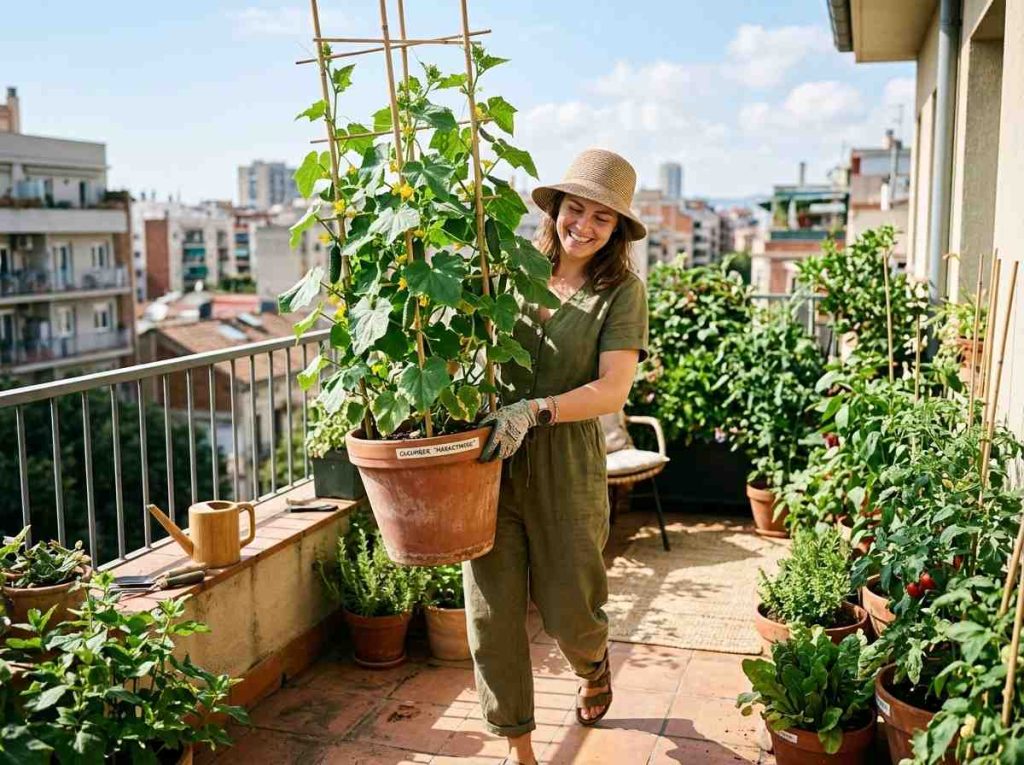
Containers give you one big advantage: you can move them. If one corner gets shaded by noon, shift the pot to follow the sun. That flexibility matters on balconies and patios where railings, overhangs, and nearby buildings change the light hour by hour.
Watch the light again as the season changes. A spot that was sunny in spring may lose hours of direct sun by midsummer. Also, avoid tucking pots against shaded walls, because reflected heat there often rises while usable light drops.
Most cucumber plants need full sun, and they do best with 6 to 8 hours of direct light. In many gardens, 8 or more hours leads to the best crop, as long as the plants do not bake in extreme afternoon heat.
Keep an eye on both light and temperature, especially in midsummer. The right sunny spot often matters as much as watering and feeding, because cucumbers grow best when sunlight gives them room to run.

Cucumber plants need at least 6–8 hours of direct sunlight, with 8+ hours ideal for maximum growth and yield.
Yes, but with less sunlight, plants may produce fewer fruits and grow more slowly.
Lack of sunlight can lead to weak vines, fewer flowers, and smaller or misshapen fruits.
In extreme heat, too much intense sun can stress plants, so light afternoon shade may help in hot climates.
Plant them in an open area, use trellises for vertical growth, and avoid shading from nearby plants or structures.