Gardening Made Simple.
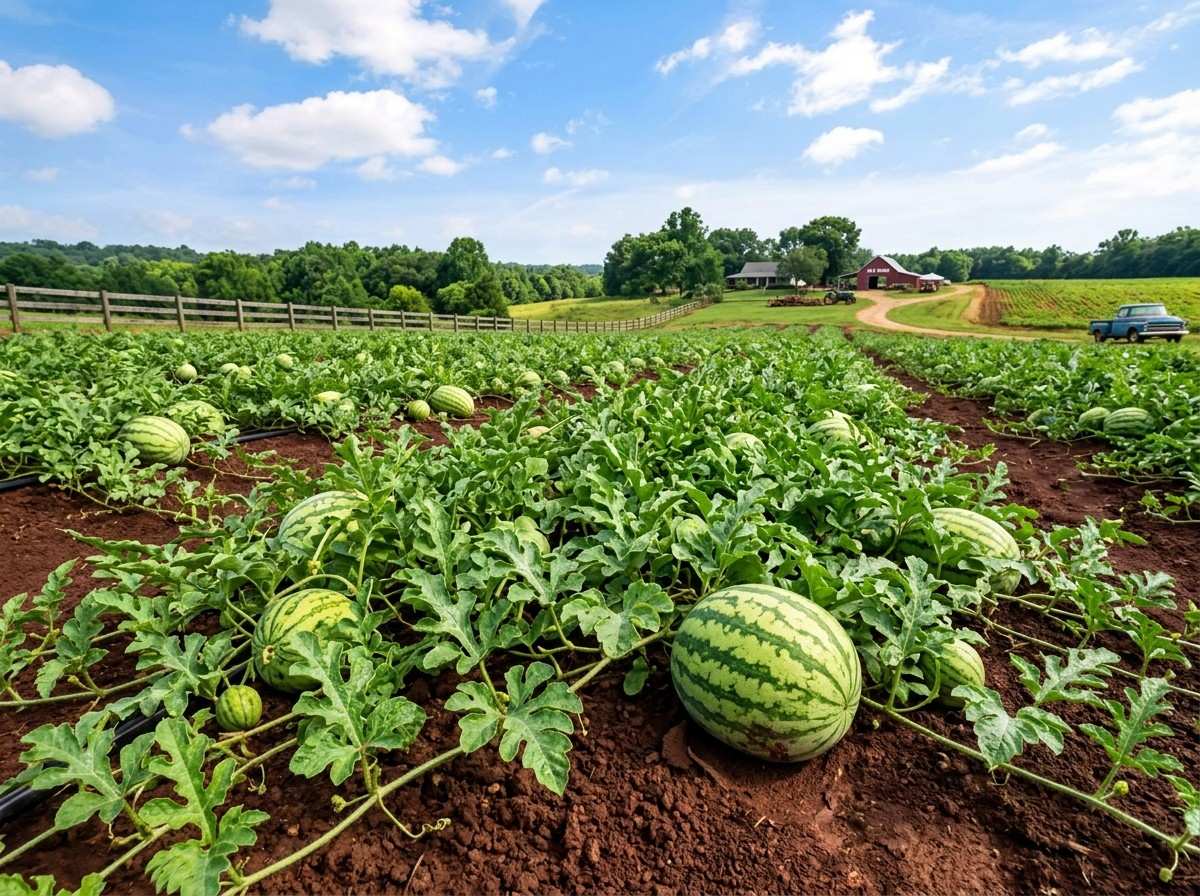
Planting watermelon in Georgia is more than a simple gardening task. It’s a careful balance of timing, soil, and climate. If you get it right, you could enjoy large, juicy watermelons by midsummer. Get it wrong, and your plants may struggle, produce small fruit, or fail to thrive.
Understanding When to Plant Watermelon in Georgia is essential because Georgia’s hot summers, mild winters, and occasional spring frosts can greatly affect plant growth. Whether you’re a backyard gardener or a small-scale farmer, knowing the right planting time will help you achieve a healthier crop and a more abundant harvest.
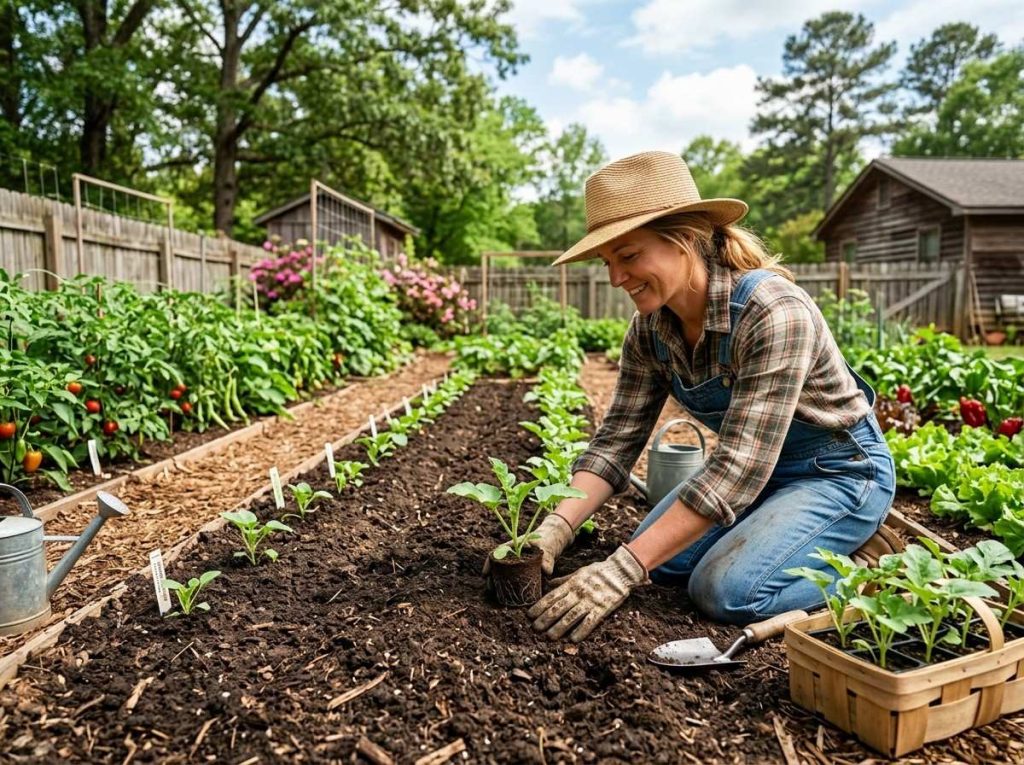
Georgia sits in the southeastern United States, with a climate that’s ideal for many crops, including watermelon. The state’s average last frost date ranges from late March to mid-April, depending on location. Northern areas might see frost as late as April 15, while southern Georgia may be frost-free by March 25.
Watermelon is a warm-season crop. It needs daytime temperatures of 70°F to 95°F and nighttime temperatures above 50°F. Planting too early can expose young plants to cold stress, which slows growth or kills them. Planting too late means the fruit matures during the hottest part of summer, which can affect quality.
These dates are based on frost risk and average soil temperatures. For best results, always check your local frost date and soil thermometer.
Watermelon seeds need warm soil—at least 70°F—to germinate well. If you plant when the soil is too cold, seeds may rot or take weeks to sprout. Early planting also exposes seedlings to spring frost, which can kill young plants. Waiting for the right soil temperature and frost-free nights means stronger plants and bigger fruit.
Another reason to plant at the right time: watermelon takes 80–100 days to mature. You want your fruit to ripen before Georgia’s hottest summer days arrive, when heat and drought can stress plants.
Soil temperature is the most important factor. You can use a simple soil thermometer. Push it into the ground where you plan to plant, about 2 inches deep. Check the temperature in the morning, when soil is coolest.
If you don’t have a thermometer, look for signs of warming: grass starts growing fast, trees leaf out, and nights are mild. These clues often mean soil is warm enough for watermelon.
Georgia’s climate supports many watermelon types. Some mature faster, which is helpful if you miss the ideal planting window.
| Variety | Days to Maturity | Features |
|---|---|---|
| Crimson Sweet | 80–85 | Good disease resistance, classic flavor |
| Sugar Baby | 75–80 | Small size, early harvest |
| Charleston Gray | 85–90 | Large fruit, heat tolerant |
| Georgia Rattlesnake | 90–100 | Long shape, traditional southern variety |
| Jubilee | 95–100 | Big size, sweet flesh |
Choosing a variety that matches your growing window can make a big difference. For example, Sugar Baby is great for northern Georgia, where summers are shorter. Charleston Gray and Georgia Rattlesnake are better for southern Georgia’s longer, hotter season.
Good soil preparation is as important as timing. Watermelon needs loose, sandy soil that drains well. Heavy clay holds too much water and can stunt growth. Aim for soil pH between 6. 0 and 6. 8.
If your soil is heavy clay, mix in sand and organic material. Raised beds can help drain excess water. If you have sandy soil, add compost to hold nutrients and moisture.
Once the soil is ready and temperatures are right, it’s time to plant. Watermelon can be grown from seed or transplants.
Starting seeds indoors can give you a head start, especially in cooler areas. Use peat pots or small containers. Transplant seedlings when they have two true leaves and soil is warm.
Keep soil moist but not soggy. Watermelons don’t like standing water. Once plants are established, water deeply every week.
Many beginners make simple errors that reduce their harvest. Here are some to avoid:
Pro tip: Mark your planting date on a calendar and track soil temperature to avoid mistakes.
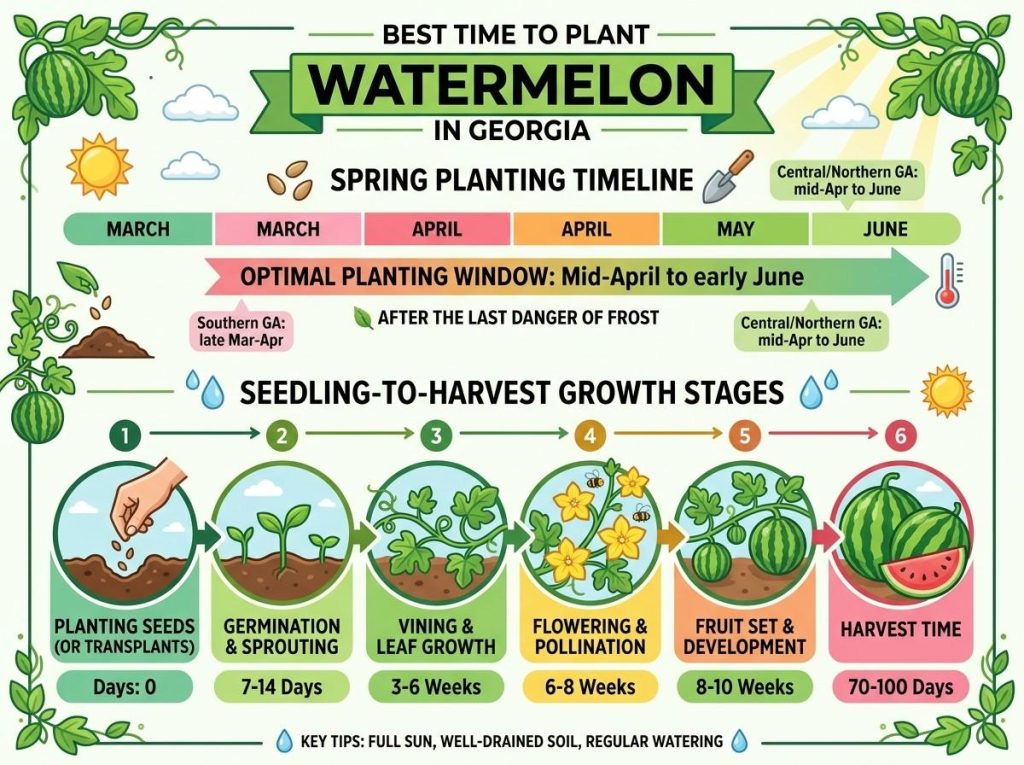
Understanding the life cycle helps you plan your planting and harvest.
| Stage | Time After Planting | Key Activities |
|---|---|---|
| Germination | 5–10 days | Seeds sprout, small leaves appear |
| Seedling | 2–3 weeks | Plants grow true leaves, roots expand |
| Vining | 3–6 weeks | Vines spread, leaves grow large |
| Flowering | 6–8 weeks | Yellow flowers appear, pollination starts |
| Fruit development | 8–12 weeks | Small fruit forms and grows |
| Ripening | 12–15 weeks | Fruit matures, color and flavor develop |
A healthy watermelon plant will move through these stages smoothly. If you notice stunted growth or yellow leaves, check for pests, poor soil, or watering problems.
Georgia’s weather can change quickly. Late spring frosts, heavy rain, and heat waves all affect watermelon growth.
Even after the last average frost date, a cold snap can happen. Cover seedlings with row covers or plastic sheets if frost is predicted.
Too much rain can flood roots, cause disease, or wash away seeds. Raised beds and well-draining soil help prevent problems.
Watermelon loves heat, but extreme temperatures over 95°F can stress plants. Mulch around vines to keep soil cool and conserve moisture.
Watermelon flowers need pollination to produce fruit. Bees and other insects carry pollen from male to female flowers. Without pollinators, fruit won’t develop.
If you notice flowers but no fruit, lack of pollinators may be the cause. Attract bees by planting flowers nearby, or gently transfer pollen using a small brush.
Knowing when to pick watermelon is almost as important as planting. Harvest too early and fruit lacks sweetness; too late and flesh can become mushy.
Most Georgia watermelons are ready for harvest 80–100 days after planting, depending on variety and weather.
Planting is only the start. Proper care ensures healthy vines and big fruit.
Apply a balanced fertilizer at planting. When vines start running, switch to a low-nitrogen, high-phosphorus fertilizer. Too much nitrogen makes lots of leaves but fewer fruit.
Water deeply once per week. During fruit development, increase watering to keep soil moist. Avoid wetting leaves, as this promotes disease.
Use straw or grass clippings around plants to keep soil cool and prevent weeds. Mulch also keeps fruit off the ground, reducing rot.
Common pests include aphids, cucumber beetles, and squash bugs. Diseases like powdery mildew and fusarium wilt can affect plants. Inspect vines regularly, remove affected leaves, and use insecticidal soap if needed.
Georgia’s size means planting dates and challenges vary.
| Region | Last Frost Date | Planting Window | Common Challenges |
|---|---|---|---|
| North Georgia | April 10–20 | April 20–May 10 | Late frost, cooler soil |
| Central Georgia | April 1–10 | April 10–30 | Moderate risk, variable rainfall |
| South Georgia | March 25–April 5 | April 1–20 | Early heat, heavy rain |
Knowing your region helps you plan the best planting time and prepare for local weather.
Beyond basic timing, a few expert tips can boost your harvest:
Many beginners forget crop rotation. Watermelon is sensitive to soil-borne diseases, so changing location each year is vital. Another mistake: not thinning fruit. Letting too many watermelons grow at once leads to smaller, less sweet results.
Georgia is one of the top watermelon-producing states in the US. In 2022, Georgia produced over 350 million pounds of watermelon, mostly from southern counties like Crisp, Tift, and Worth. The state’s watermelon is known for its sweetness and quality.
Watermelon farms in Georgia often plant from early April and harvest by mid-July. The crop is a major part of local agriculture, with festivals and community events celebrating the fruit.
You can learn more about Georgia agriculture and watermelon production from the Georgia Watermelon Association, which offers resources, news, and tips.
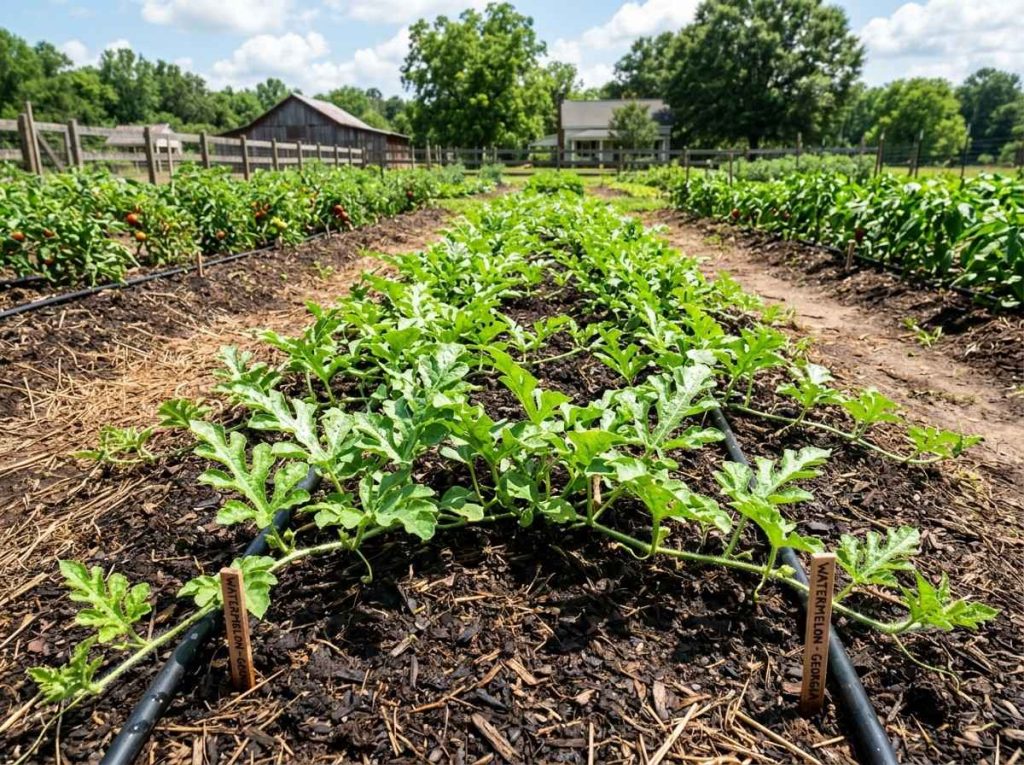
The best month depends on your region. In south Georgia, April is ideal, while central and north Georgia gardeners should plant in mid to late April. Always check soil temperature and frost dates for your area.
Yes, direct seeding works well if soil is warm (above 70°F) and there is no risk of frost. Plant seeds 1 inch deep, spaced 2–3 feet apart. In cooler areas, start seeds indoors and transplant later.
Most watermelon plants produce 2–4 fruit under good conditions. If you limit fruit per plant, you can grow larger watermelons. Factors like variety, care, and weather affect yield.
It’s possible but challenging. Watermelon vines are large and need space. Use a container at least 24 inches wide, fill with rich soil, and choose small varieties like Sugar Baby. Provide lots of sun and water.
Cover young watermelon plants with row covers or plastic sheets at night. Remove covers in the morning. If severe frost is expected, hold off planting until nights are consistently warm.
Growing watermelon in Georgia is rewarding when you pay attention to timing, soil, and care. From checking the last frost date to picking the right variety, each step brings you closer to a summer harvest of sweet, juicy fruit. With careful planning and a bit of patience, you’ll enjoy homegrown watermelons and the satisfaction of a successful garden.