Gardening Made Simple.
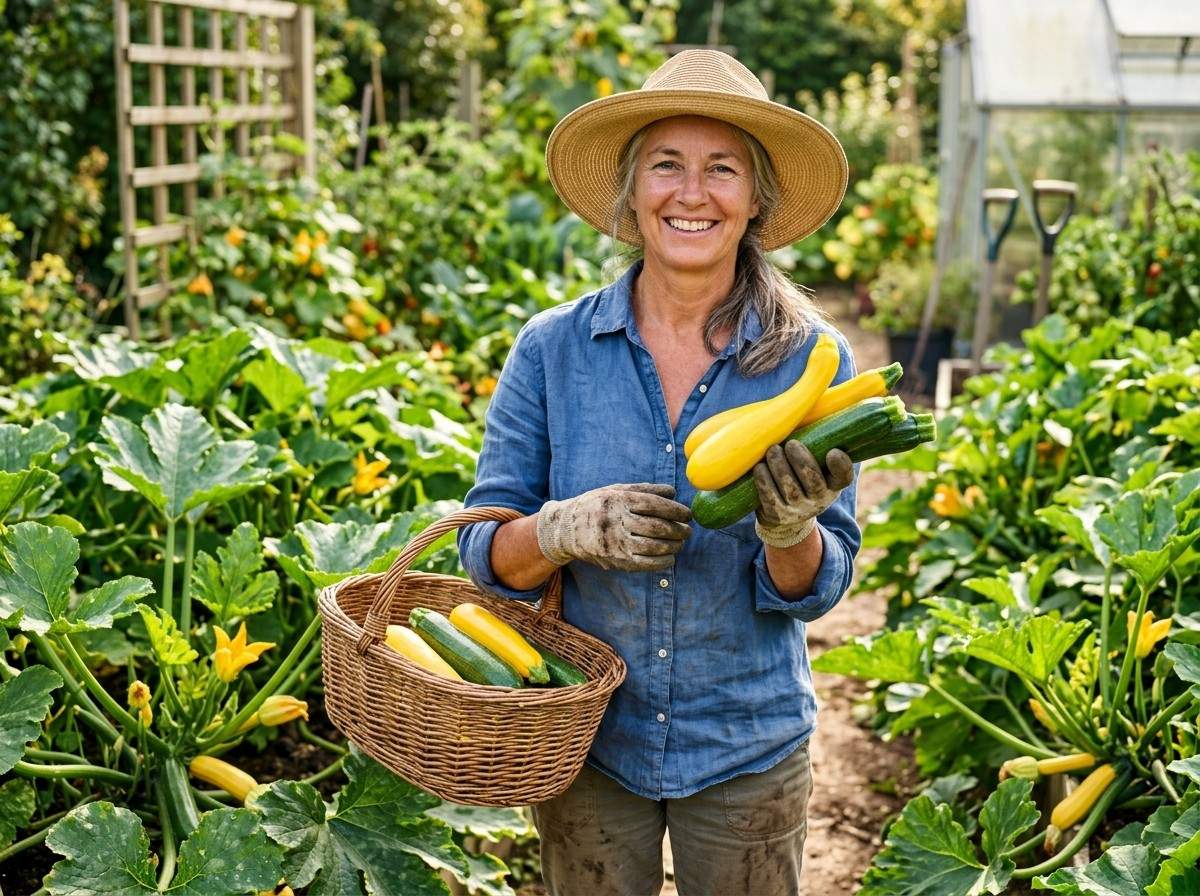
Summer squash is one of the joys of the warm season. Its crisp texture, mild flavor, and fast growth make it a favorite in gardens across the United States and beyond. But a common question for both new and experienced gardeners is: When is summer squash ready to pick?
Picking at the right time can turn ordinary squash into a delicious treat, while harvesting too early or late can lead to disappointment. This article explains everything you need to know about harvest timing, how to spot the signs, mistakes to avoid, and how to get the most from your summer squash plants.
Summer squash includes several varieties. The most popular are zucchini, yellow squash, and pattypan squash. Unlike winter squash, summer squash is harvested young, when the skin is still tender and edible. These plants grow quickly in warm weather and can produce fruit in as little as 45–60 days after planting.
Summer squash is prized for its versatility. You can eat it raw, cooked, grilled, or baked. It’s low in calories—one cup (130 grams) of sliced zucchini has only about 20 calories—and rich in vitamin C, potassium, and fiber.
Each type is slightly different in appearance and flavor, but all share similar harvest guidelines.
Summer squash plants are fast-growing and productive. Seeds germinate in about 7–10 days. After sprouting, plants produce leaves, then flowers (mostly yellow), and finally fruit. The fruit grows rapidly—sometimes doubling in size within 2–3 days.
The harvest window is short, but the plant keeps producing new fruit as long as you pick regularly. If you let squash mature too long, it can become tough and seedy, and the plant may slow down production.
| Stage | Days After Planting | What Happens |
|---|---|---|
| Seedling | 0–10 | Seeds sprout; first leaves appear |
| Vegetative | 10–30 | Leaves and stems grow rapidly |
| Flowering | 30–40 | Flowers develop, pollination starts |
| Fruit Set | 40–50 | Small squash form after flowers |
| Harvest | 45–60+ | Squash ready to pick |
Picking at the right stage is essential for flavor and texture. Here are the clear signs:
Squash can double in size quickly. Check every day once fruit starts forming.
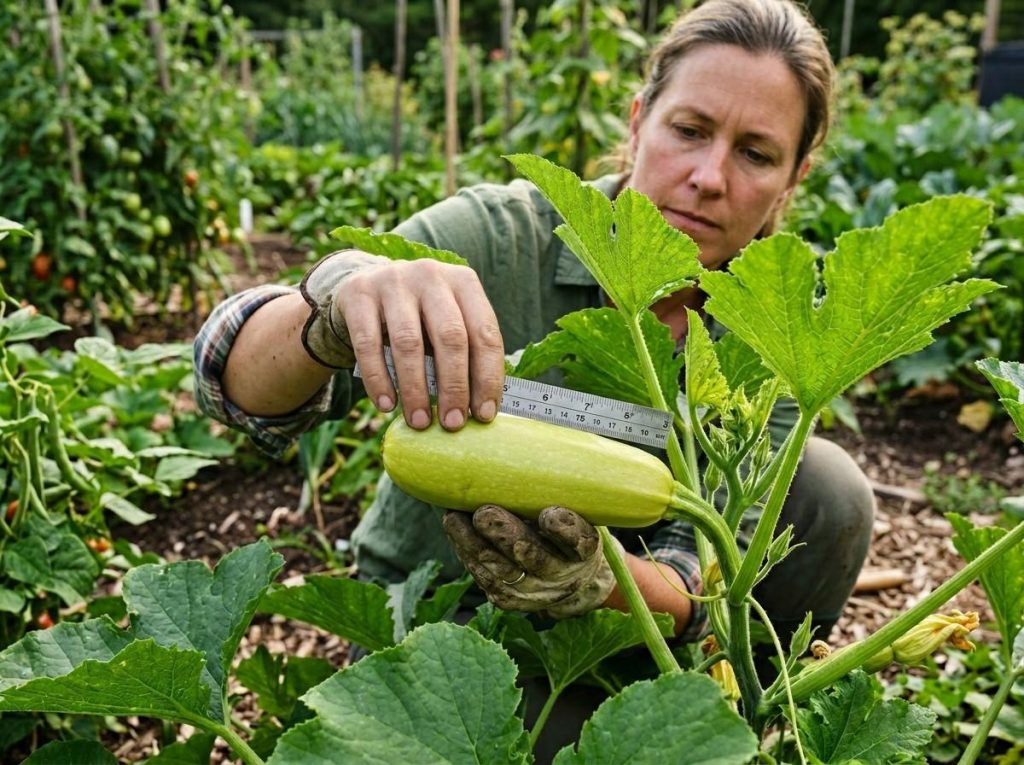
The skin should be glossy and tender. Dull or rough skin means the fruit is too mature. The color varies by variety but should be consistent and bright.
Gently squeeze the squash. It should feel firm, not soft or mushy. Overripe squash becomes spongy and may develop hard seeds.
Summer squash often has the flower still attached at the blossom end when young. This is a good sign the squash is at the right stage. Flowers shrivel as the fruit matures.
Most summer squash is ready 4–8 days after the flower closes. If you track flowering, this helps identify the ideal harvest window.
Correct harvesting technique protects the plant and ensures more fruit.
If you twist or pull by hand, be careful not to damage the plant. Broken stems can let in disease.
Timing affects both taste and plant health.
| Harvest Time | Texture | Flavor | Plant Health |
|---|---|---|---|
| Too Early | Soft, watery | Mild, sometimes bland | No effect or slight stress |
| Just Right | Firm, tender | Sweet, mild | Encourages more fruit |
| Too Late | Hard, tough | Bitter, bland | Production slows |
Summer squash doesn’t always grow at the same speed. Several things affect when it’s ready.
Squash loves warm weather. Growth slows below 60°F (16°C) and speeds up between 75–85°F (24–29°C). Cooler nights can delay ripening.
Consistent watering helps squash grow fast and evenly. Too little water causes stunted fruit; too much leads to rot or poor flavor.
Healthy soil with enough nutrients (especially nitrogen and potassium) produces tender, flavorful squash. Fertilize every 3–4 weeks.
Crowded plants compete for light and nutrients. Proper spacing—about 3 feet (1 meter) between plants—gives squash room to develop.
Some varieties mature faster than others. Always check the seed packet for days to maturity.
Experienced gardeners know a few tricks to get the most from their squash.
The more you pick, the more the plant produces. Squash is indeterminate, so it keeps making fruit as long as you harvest.
Mulch keeps soil moist and suppresses weeds, helping fruit grow faster and cleaner.
Squash bugs and vine borers can damage fruit and plants. Inspect leaves and stems daily. Remove pests by hand or use safe organic sprays.
Thin plants early if needed. This prevents disease and improves air flow.
A gardener in Georgia planted zucchini in mid-April. By mid-June, fruit appeared. She picked squash every other day, always at 6–8 inches. By August, she had more than 50 squash from just three plants—a great yield!
Fresh summer squash doesn’t last long off the plant. Proper storage keeps it crisp and tasty.
| Storage Method | Duration | Best Use |
|---|---|---|
| Refrigerator | 3–5 days | Fresh eating, salads |
| Freezer | 6–12 months | Cooking, baking |
| Canning | Not recommended | Texture suffers |
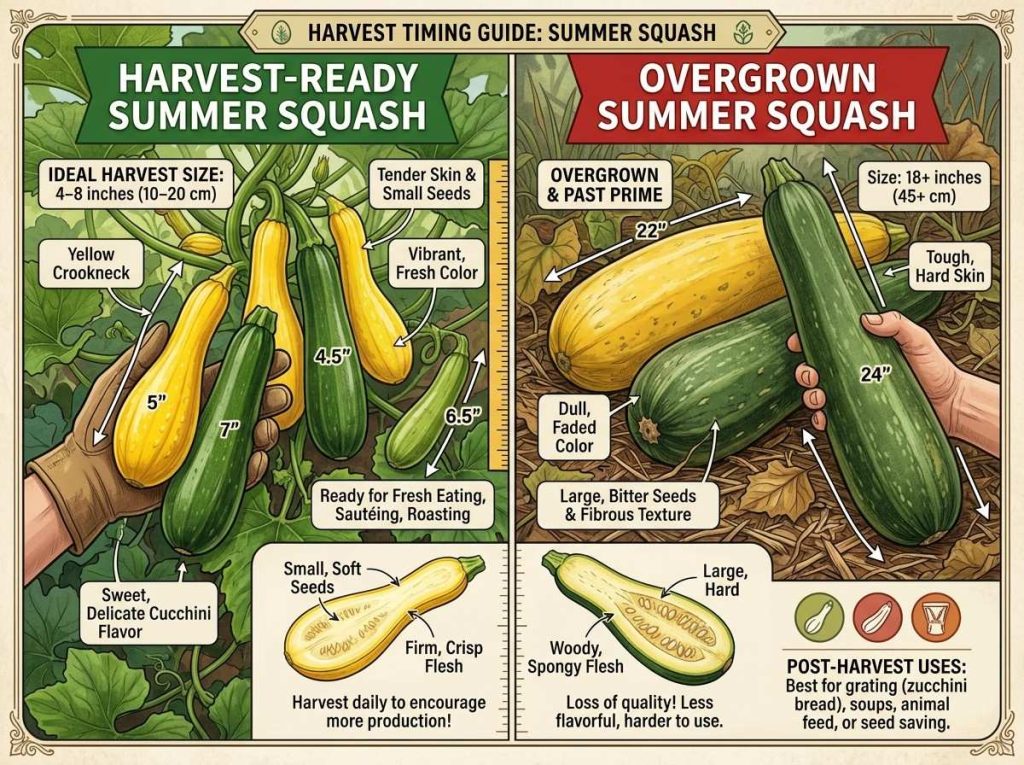
Many gardeners make mistakes with summer squash, often because the fruit grows so fast.
It’s tempting to let squash reach full size, but bigger isn’t better. Oversized squash is tough and seedy. Pick often and stay alert.
Squash can be ready overnight. If you skip checking for a few days, you’ll miss the best harvest window.
Dirty scissors or knives can spread disease. Clean tools before each harvest.
Leaving squash on the counter for days will cause it to wilt. Refrigerate promptly.
If you watch for flower closure, you can predict harvest time and avoid picking too early or late.
Unpredictable weather can change the timing and quality of your squash.
Fruit can mature very quickly, sometimes in just 3–5 days after flowering. Water deeply to prevent bitterness.
Growth slows. Squash may take longer to mature, and flavor can be weaker. Watch for rot or fungal disease.
Heavy rain or wind can damage plants and cause fruit to rot. Harvest before storms if possible.
Recognizing overripe squash is important. Here are clear signs:
If you find overripe squash, remove it from the plant. This encourages new growth.
If you miss the harvest window, don’t throw the squash away. There are still uses:
If you want to save seeds, let squash mature fully on the plant. The skin will harden, and seeds develop inside. Wait until the fruit is large and the skin is tough. Cut open, scoop out seeds, wash, and dry before storing.
Seed-saving works best with open-pollinated varieties, not hybrids.
Summer squash blossoms are edible and tasty. Harvest flowers early in the morning, before they wilt. Use them in salads, soups, or stuffed.
Pick mostly male flowers to avoid reducing squash harvest.
If you grow summer squash in containers, timing and technique are similar. But containers dry out faster, so check soil and fruit daily.
Container squash often matures slightly faster due to warmer soil.
If you want squash all summer, stagger planting every 2–3 weeks. This extends harvest and avoids gaps. Mix varieties to enjoy different shapes and flavors.
Experienced gardeners recommend planting three or more plants, picking regularly, and watching weather closely. With care, you can harvest dozens of squash from a small garden.
Summer squash is not just tasty—it’s healthy.
Eating squash regularly can help with weight management, heart health, and overall wellness.
For more detailed nutrition info, visit the USDA’s page: Nutrition.gov.
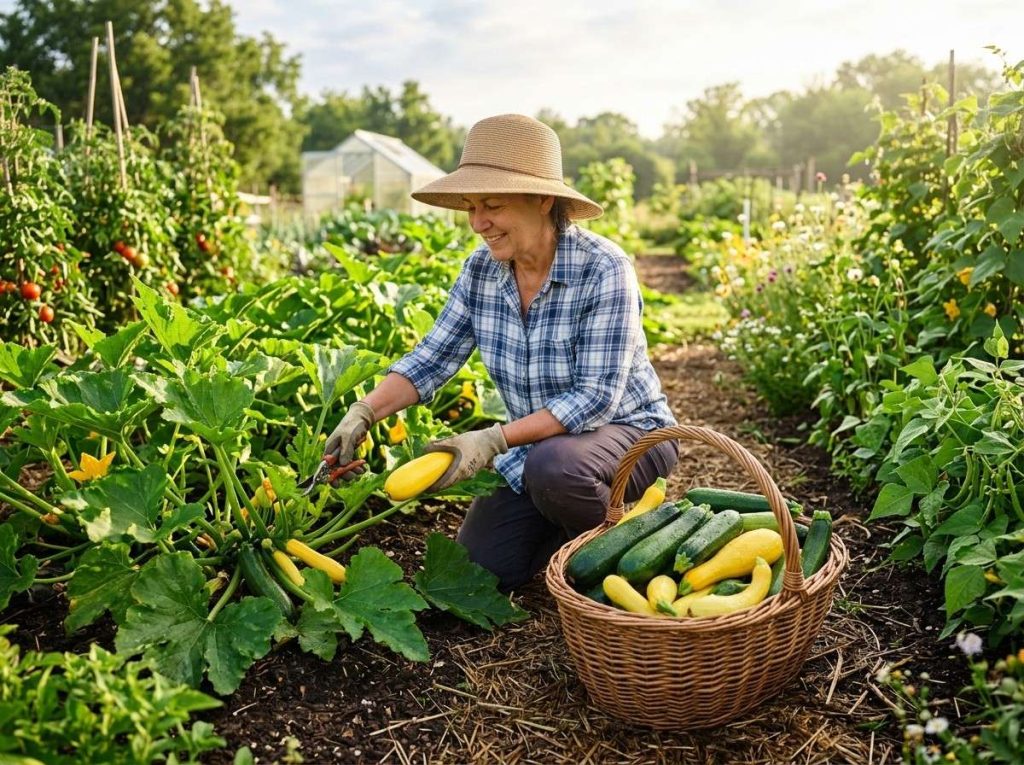
Pick every 1–2 days during peak growth. Squash can mature quickly, so frequent harvesting keeps plants productive and improves flavor.
Yes. Small squash is tender and mild. Some gardeners prefer squash at just 4–6 inches (10–15 cm). The flavor is excellent and the skin is soft.
Check the skin. Overripe squash has hard, dull skin and large seeds inside. The fruit may feel heavy, but the flesh is tough and flavor is bland or bitter.
Oversized squash slows down new fruit production. The plant puts energy into mature fruit and may stop making new squash. Remove old squash to keep the plant healthy.
Yes. Slice and blanch squash for 2–3 minutes, cool, and pack in freezer bags. Use frozen squash in cooked dishes like soups and casseroles.
Harvesting summer squash at the right time brings out its best flavor and texture. Watch for glossy, tender skin, proper size, and firmness. Check your plants daily during peak season, and pick often for continuous harvest. Don’t let fruit grow too large or stay on the plant too long.
With these tips and a little attention, you’ll enjoy a steady supply of delicious, healthy squash all summer long. Whether you’re growing in a garden bed, container, or backyard plot, the right harvest timing makes all the difference. Happy gardening!