Gardening Made Simple.
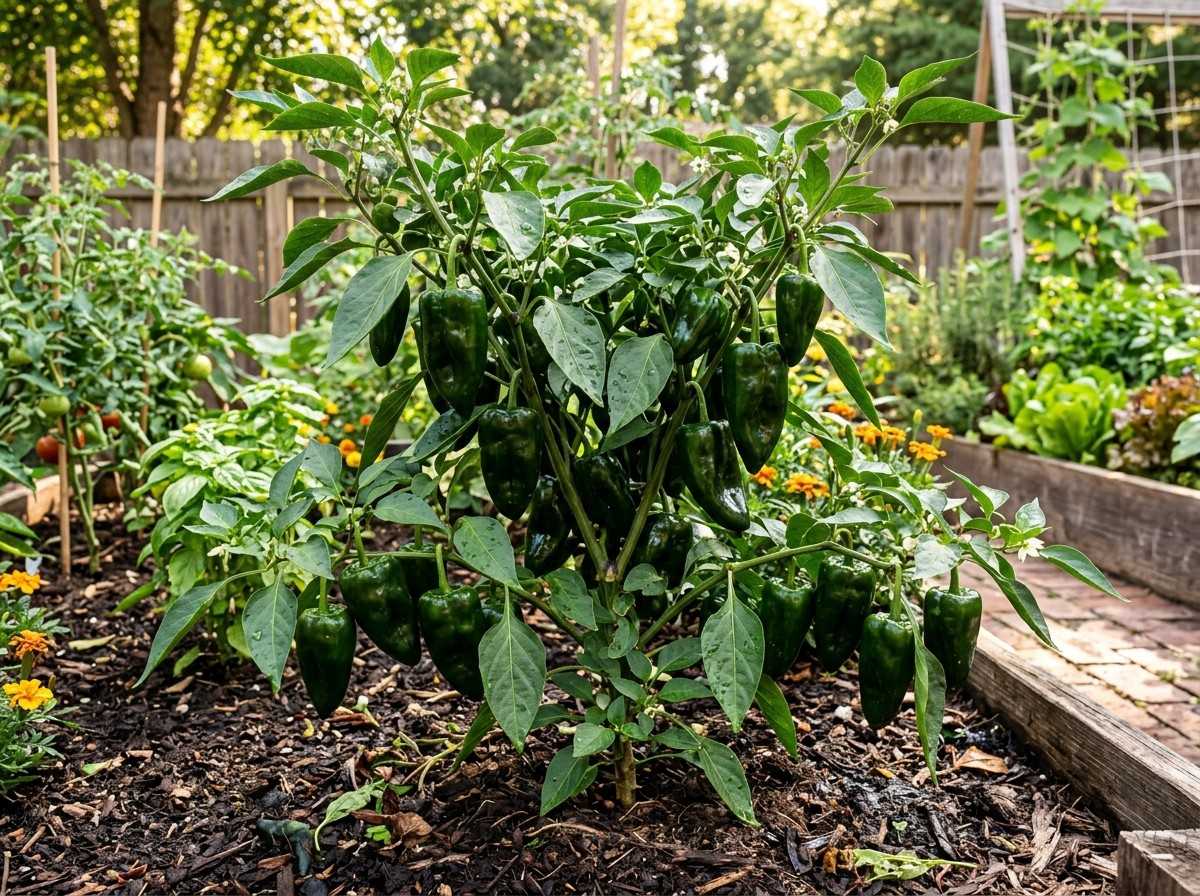
Growing poblano peppers in your garden is exciting. These peppers, famous for their mild heat and rich flavor, are a staple in Mexican dishes like chile relleno. Knowing when to pick poblano peppers is essential—timing affects their taste, texture, and even how you use them in recipes. Harvest too early, and they may lack flavor. Wait too long, and they may become too soft or spicy.
Many gardeners, especially beginners, struggle to recognize the right moment. This guide covers every detail: how to identify ripeness, what signs to look for, mistakes to avoid, and how harvest timing changes the pepper’s flavor and uses.
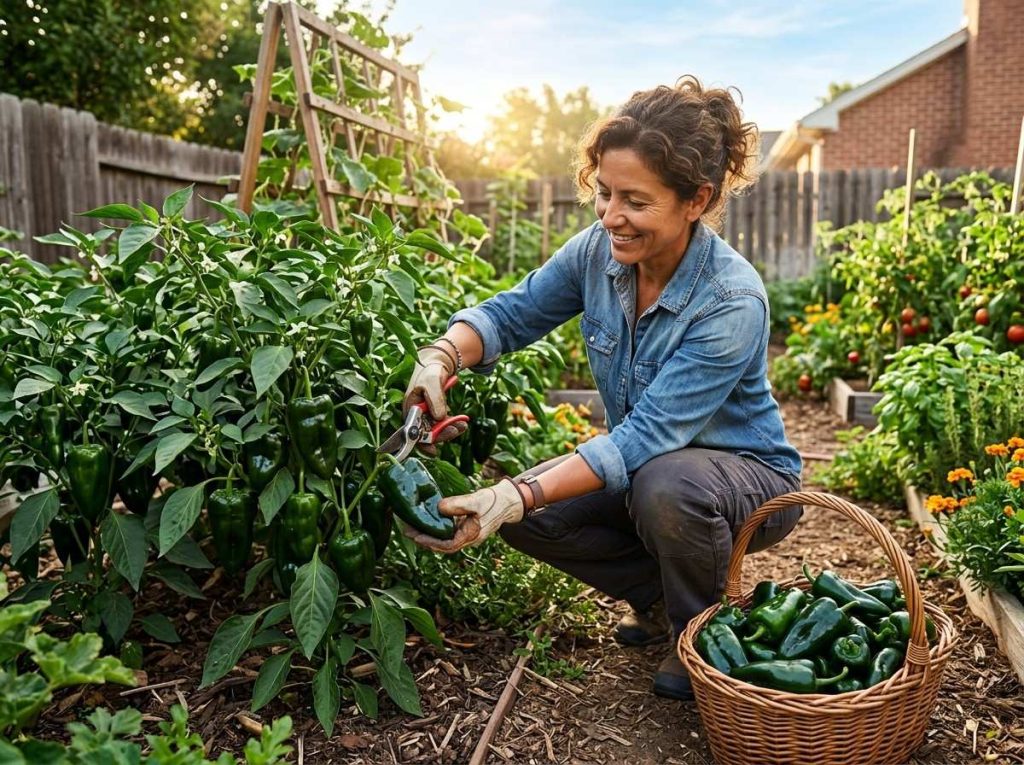
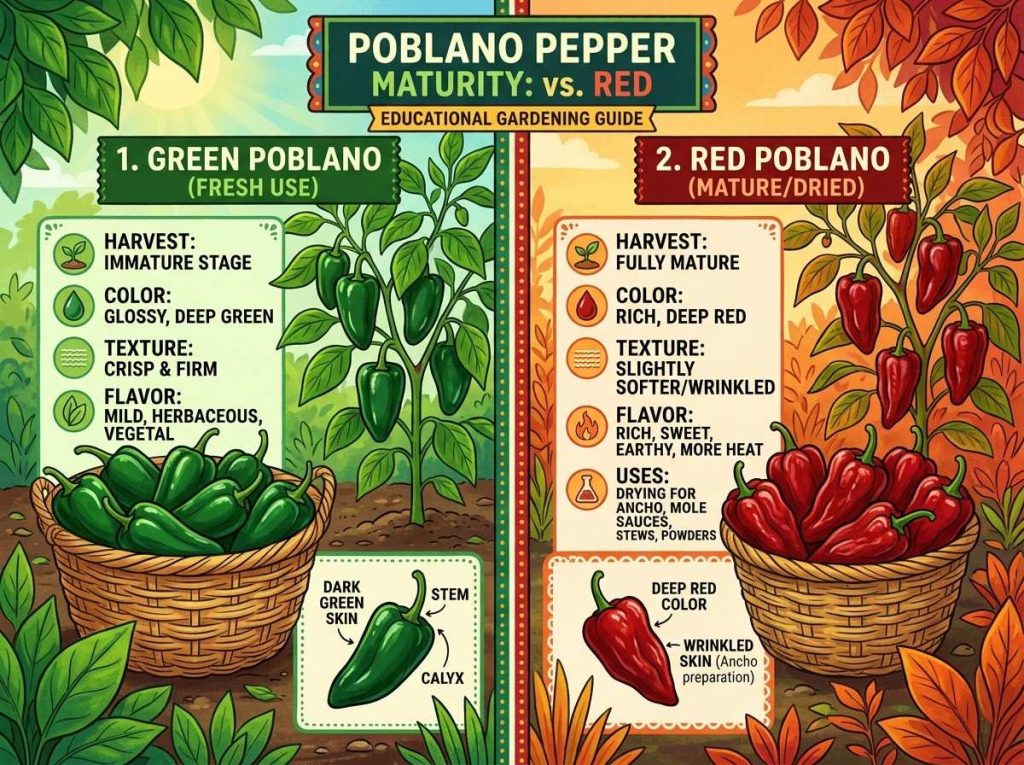
Poblano peppers are one of the most popular chili varieties in North America. They originate from the Puebla region in Mexico and have a mild to medium heat, usually between 1,000 and 2,000 Scoville units. Unlike jalapeños, poblanos are larger, about 4–6 inches long, and have a shiny, deep green skin. As they mature, their color shifts from green to a dark red or brown, and their flavor changes from fresh and earthy to more complex and smoky.
Poblanos are used both fresh and dried. When dried, they are called ancho peppers, which are key ingredients in mole sauces. The time you pick them decides whether you get fresh poblanos or ancho peppers.
Different poblano varieties grow at slightly different speeds. Most take 70–80 days from transplanting to reach maturity, but local climate can change this. Warm, sunny environments speed up growth, while cooler areas slow it down. If you live in a zone with short summers, you may need to pick earlier.
Healthy soil and consistent watering matter. Poblanos need well-draining soil and regular moisture, but not too much—overwatering causes thin skins and dull flavor. If your plants are stressed (due to drought or disease), they may mature faster or slower, affecting harvest timing.
Poblano peppers require full sun for best development. Plants in partial shade may take longer to ripen and produce smaller fruit. Count on picking later if your garden doesn’t get at least 6 hours of direct sunlight daily.
Picking poblano peppers at the right time is more art than science. Here are the most reliable signs:
Timing affects not just flavor, but also how you use poblanos in the kitchen. Picking early gives a crisp, grassy taste, while waiting longer creates a deeper, smoky flavor.
| Harvest Time | Flavor | Best Uses |
|---|---|---|
| Early (Green, 4–5 inches) | Fresh, mild, grassy | Stuffed, roasted, salsa |
| Peak (Deep green, 6 inches) | Rich, earthy, slightly sweet | Grilled, sauces, soups |
| Late (Red/Brown) | Smoky, sweet, complex | Dried as ancho, mole, chili powder |
If you want to make chile relleno, pick poblanos at the peak green stage. For drying and grinding, wait until they turn red or brown.
Harvesting poblanos is simple but requires careful handling. Here’s a step-by-step guide:
Many gardeners make errors that affect flavor or plant health. Here are frequent mistakes and how to avoid them:
It helps to compare poblanos to other popular peppers to understand their harvest timing.
| Pepper Variety | Days to Maturity | Size at Harvest | Color When Ripe |
|---|---|---|---|
| Poblano | 70–80 | 4–6 in | Green, Red/Brown |
| Jalapeño | 60–70 | 2–3 in | Green, Red |
| Bell Pepper | 60–80 | 3–5 in | Green, Red, Yellow |
| Serrano | 60–75 | 1–2 in | Green, Red |
Poblano peppers need a bit longer to mature than jalapeños or serranos, but their larger size and unique flavor make them worth the wait.
Weather plays a key role in pepper growth. Poblanos are sensitive to temperature changes, and extremes can delay or speed up ripening.
If the weather is unstable, check your peppers more often. Sometimes, you may need to pick them a bit early to avoid damage from storms or heat waves.
Once picked, poblanos need proper storage to keep their flavor and texture. Here’s how:
Let poblanos ripen fully to red or brown before drying. Use an oven or dehydrator for best results.
Poblanos are perfect for roasting, stuffing, grilling, or making sauces. Their mild heat makes them versatile for many recipes.
Peppers change nutritionally as they mature. Green poblanos are rich in vitamin C and fiber. As they turn red, their vitamin A and antioxidant levels increase. Choosing when to harvest can influence the health benefits you get.
| Stage | Vitamin C | Vitamin A | Antioxidants |
|---|---|---|---|
| Green | High | Medium | Moderate |
| Red/Brown | Medium | High | High |
If you’re looking for more antioxidants, let your poblanos fully mature. For crisp texture and high vitamin C, pick when green.
Getting the most from your poblano plants involves smart timing and good care. Here are practical tips:
Good pollination increases pepper size and flavor. Poblano plants have self-pollinating flowers, but bees and wind help set more fruit.
Poor pollination leads to small, misshapen peppers that ripen unevenly. If you notice many small peppers, check your garden for pollinator activity.
Sometimes peppers seem stuck—they stay small or green for weeks. Here’s what you can do:
In a study by the University of California, peppers grown in shaded areas took 30% longer to ripen than those in full sun. If your garden is shady, adjust expectations.
The timing depends on your recipe or storage plans.
Always wash your hands after picking peppers. Even mild poblanos can irritate skin. Clean tools and containers before and after use to prevent plant diseases.
If you sell peppers, timing affects price and demand. Market research shows green poblanos fetch higher prices in US grocery stores, while red/brown peppers are valued by specialty chefs and Mexican food producers. The best time to pick for sale is when peppers are deep green, firm, and glossy.
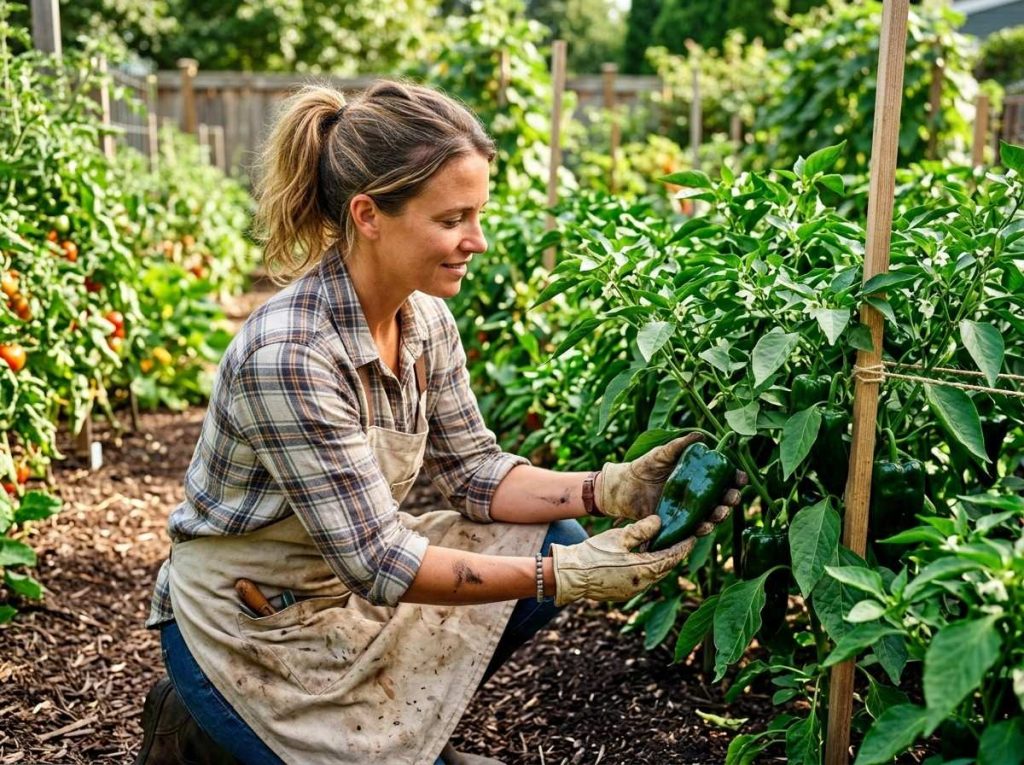
Poblano peppers usually mature 70–80 days after transplanting. However, this can vary based on climate, soil, and variety. Check for size, color, and firmness to confirm readiness.
You can pick small poblanos, but they won’t have full flavor or texture. It’s best to wait until they reach at least 4 inches long and have a deep green color.
If left too long, poblanos turn red or brown and become softer. They’re still edible and can be dried as ancho peppers, but their use changes. Overripe peppers may attract pests or become wrinkled.
A too-ripe poblano will be soft, wrinkled, and may have brown spots. The skin loses its shine, and the stem may dry out. These peppers are best for drying, not fresh eating.
Yes. Picking in wet conditions increases the chance of disease and mold. Always harvest when peppers and plants are dry for best quality and safety.
Growing poblano peppers is rewarding if you learn to spot the right harvest time. Their unique flavor and versatility depend on careful picking. Watch for key signs—size, color, firmness—and avoid common mistakes. Whether you want fresh, roasted poblanos or dried anchos, timing is everything. With these tips, you can enjoy a rich, flavorful harvest and make the most of your garden. For more expert gardening advice, visit The Old Farmer’s Almanac.